
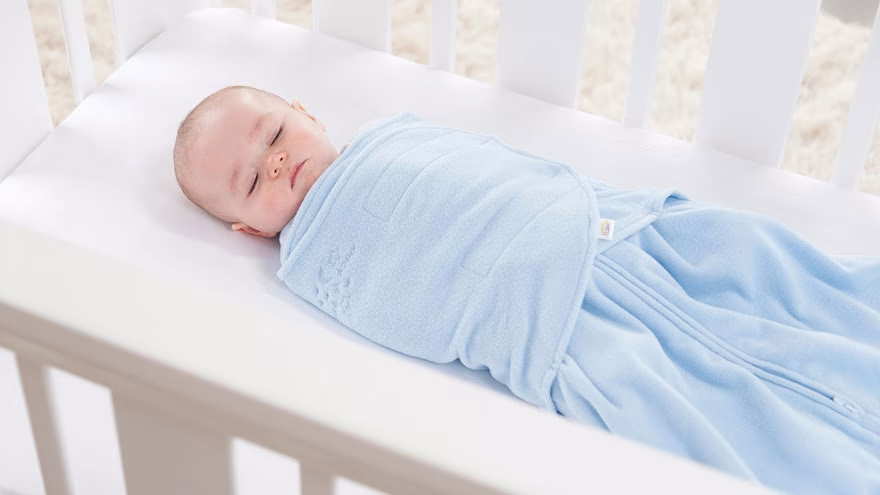
Knowing when to stop swaddling a baby is a safety question, not only a sleep question. The main trigger is any sign the baby is trying to roll.
Parents can move to arms-out sleep clothing or a wearable blanket while keeping the same safe sleep basics.
Stop At The First Signs Of Rolling
HealthyChildren warns that swaddled babies should be placed on their backs and monitored so they do not roll over: HealthyChildren swaddling guidance. Signs of rolling mean the swaddle stage is ending.
Rocking to the side, twisting the hips, pushing with legs, or trying to roll during awake time can be enough to start the transition.
Keep Safe Sleep Rules The Same

AAP safe sleep guidance still applies after swaddling ends: AAP safe sleep guidance. Use a firm, flat sleep surface and place the baby on the back.
Do not add loose blankets to replace the swaddle. Use appropriate sleep clothing or a wearable blanket if warmth is needed.
Remove Loose Or Unsafe Wraps
CPSC tells caregivers to keep soft items out of the sleep area: CPSC safe sleep guidance. A wrap that comes loose becomes a loose blanket.
If the swaddle slides toward the face, loosens often, or requires constant fixing, stop using it for sleep.
Transition One Sleep At A Time If Needed
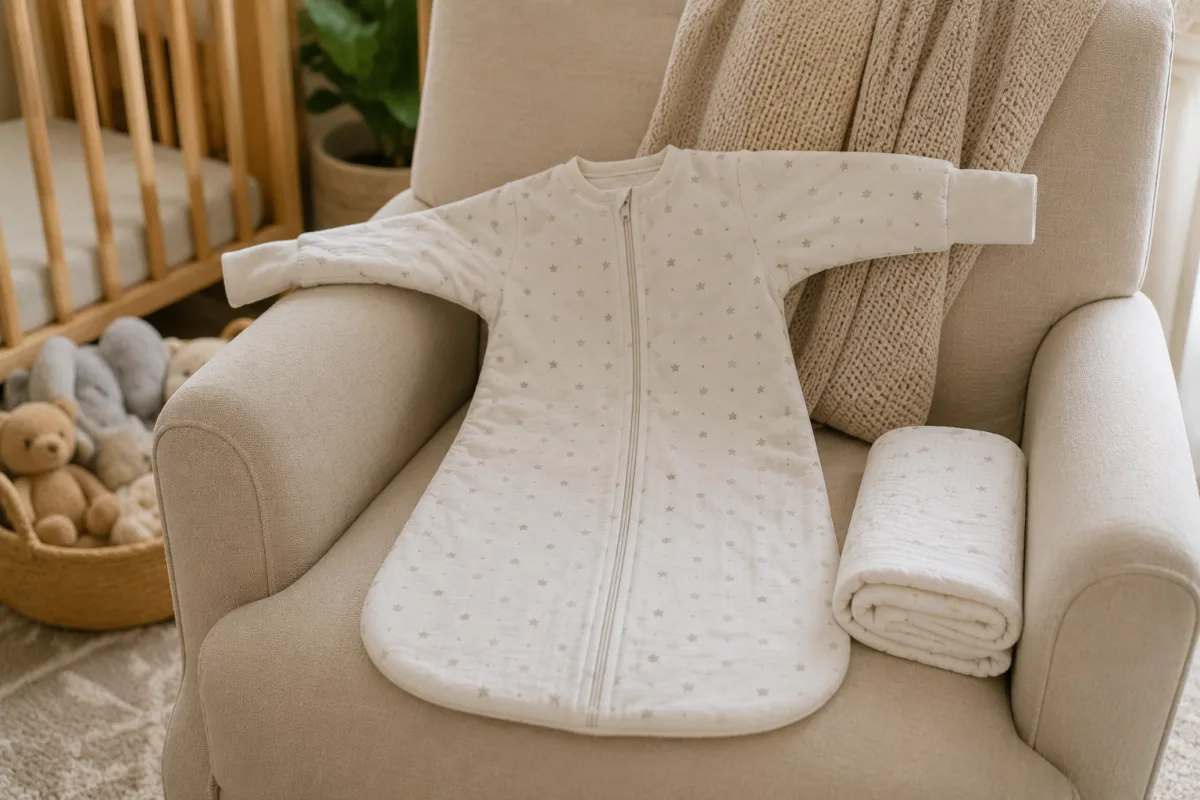
Some babies do fine cold turkey; others do better with one arm out, then both arms out. Safety still comes first if rolling signs have started.
Try the first change at a nap when an adult is alert, then keep the bedtime routine calm and familiar.
Expect A Few Messy Nights

A baby may startle more after swaddling stops. That does not mean the decision was wrong.
Use soothing that does not add loose bedding: rocking before sleep, white noise at a safe volume, a pacifier if used, and a steady bedtime pattern.
Watch The Baby, Not The Clock Alone
For know when to stop swaddling a baby, age and timing help, but the baby's cues matter too. Feeding, sleep, crying, recovery, and bonding all look different from one newborn to another.
If feeding makes hiccups or fussiness part of the picture, Livecub's guide to ease newborn hiccups can help parents sort normal moments from concerns to ask about.
Keep Basic Care Simple
The most useful newborn routines are repeatable: clean hands, safe sleep, calm feeding, diaper checks, and a plan for calling the pediatrician.
Livecub's guide to wash an infant fits that same practical approach: fewer steps, done carefully, by the tired adults who are actually there.
Adjust For Prematurity Or Extra Medical Needs
A premature baby, a baby with feeding concerns, or a baby coming home after extra hospital care may need a different plan. Know when to stop swaddling a baby should follow the baby's medical instructions first.
Parents can pair this article with Livecub's guide to premature baby development when milestones or feeding stamina are part of the question.
Make The Home Ready For Tired Caregivers
Care decisions are harder at night. Keep feeding supplies, clean cloths, safe sleep clothing, diapers, and phone numbers where adults can find them without searching.
As the baby grows, Livecub's room-by-room baby-proofing guide becomes the next layer of safety, but the habit starts with simple organization.
Know When To Call
Call a clinician for fever, poor feeding, dehydration signs, breathing trouble, unusual sleepiness, worsening pain, spreading redness, or any symptom that feels outside the baby's normal pattern.
If skin changes appear while you are focused on know when to stop swaddling a baby, Livecub's guide to baby rash and blister care can help you decide what to document before asking for help.
Share The Routine With Another Adult
A routine that only one parent understands will break under stress. Show another adult how bottles are prepared, where clean wraps are stored, what symptoms to watch, and how the baby prefers to be held.
That backup is not a luxury. It protects sleep, recovery, and safety during the first weeks.
Turn The Advice Into A Short Checklist
After reading about know when to stop swaddling a baby, write a short checklist with the names, dates, documents, phone numbers, and decisions that apply to your situation.
A checklist keeps the next step from getting buried under side questions. It also makes it easier for another adult to help without guessing.
Mark The Deadline
Most know when to stop swaddling a baby problems get worse when deadlines are missed. Put claim dates, court dates, renewal dates, appointment times, filing dates, and payment dates on a calendar.
If there is no formal deadline, create a review date anyway. Waiting without a review date is how small gaps become expensive.
Keep The Human Part Visible
Know when to stop swaddling a baby can involve money, safety, grief, feeding, travel stress, or a tired family. The practical answer should reduce confusion for the people living with it.
Use plain words in notes. A plan that only makes sense to the person who wrote it will not help much during a hard day.
Choose The Source Of Truth
Pick the document or professional source that should settle questions about know when to stop swaddling a baby: a policy certificate, court instruction, clinician guidance, loan contract, safe sleep guidance, or written quote.
If a website, salesperson, relative, and old memory disagree, go back to that source before acting. That habit prevents confident but wrong decisions.
Write Down What Changed
The answer for know when to stop swaddling a baby can change when dates, symptoms, travelers, vehicle use, estate assets, feeding patterns, or payment terms change.
Put the changed fact in writing. A small update can explain why yesterday's good plan is no longer the right plan today.
Keep Proof With The Decision
Save the record that supports your know when to stop swaddling a baby decision: receipt, policy page, court form, discharge note, feeding note, loan quote, or official guidance page.
Proof is easier to save at the start than to rebuild after a claim, appointment, dispute, or family conversation.
Ask For Plain Language
If an answer about know when to stop swaddling a baby uses terms you cannot repeat back clearly, ask for plain language before you rely on it.
This is especially useful with exclusions, court authority, medical warning signs, loan fees, and safe sleep instructions. Clear wording reduces mistakes.
Know The Backup Plan
A good plan for know when to stop swaddling a baby includes what to do if the first call, feed, claim, quote, court filing, or travel arrangement fails.
Write the backup contact, next deadline, or second option in the same note. Stress is lower when the second step is already visible.
Close The Loop
After the main step for know when to stop swaddling a baby is handled, record what was done, who confirmed it, what remains open, and when it should be checked again.
Closing the loop keeps the same problem from returning as a surprise later.
Avoid Solving Side Problems At Once
Know when to stop swaddling a baby often pulls in related worries. Park those side worries on a separate list so they do not derail the main task.
Finishing one clear step is better than opening five related questions and finishing none of them.
Share The Plan With The Right Person
Someone else may need to understand the know when to stop swaddling a baby plan: a partner, adult child, caregiver, traveler, agent, lender, court clerk, or clinician.
Share only the details they need to act. Too little information creates confusion; too much can bury the next step.
Watch The Cost Of Waiting
Delay can change the result for know when to stop swaddling a baby. A missed deadline, worsening symptom, expired quote, lost receipt, or late court filing can narrow the choices.
Waiting can still be reasonable, but it should be chosen on purpose. Put the reason for waiting in the notes.
Frequently Asked Questions
What is the main sign to stop swaddling?
Any sign the baby is trying to roll is the main sign to stop.
Can I keep swaddling for naps only?
Not if rolling signs have started. Sleep safety rules apply to naps and night sleep.
What can replace a swaddle?
Arms-out sleep clothing or a wearable blanket can keep the baby warm without loose bedding.
Will sleep get worse after stopping?
It can for a few nights. Keep the routine calm and safe while the baby adjusts.
This article is for general information only and isn't a substitute for medical advice. Talk to a clinician who knows your full history before making changes.

Chiara Bradshaw
Covers education, culture and creative topics with an emphasis on readable explanations and verifiable references.



Leave a reply
Replying to