
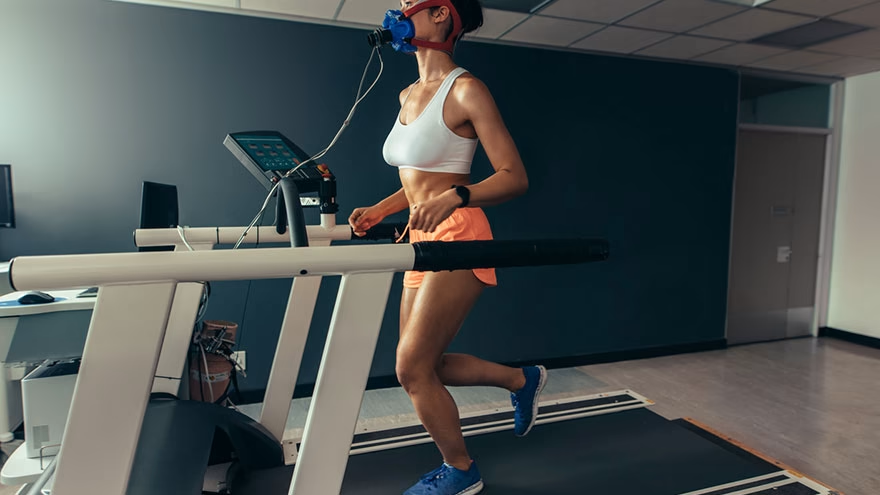
How to Test VO2 on a Treadmill sounds simple until the word "max" enters the room. VO2 max testing is a hard effort that estimates or measures how much oxygen the body can use during intense exercise. A true lab test uses equipment, a graded treadmill protocol, and trained supervision. A home treadmill can support a field-style estimate, but it should not be treated like a medical-grade test or attempted recklessly by anyone with symptoms or risk factors.
What VO2 max actually measures
VO2 max refers to maximal oxygen uptake: the highest rate at which the body can take in, transport, and use oxygen during intense exercise. It reflects the heart, lungs, blood, muscles, and training status working together. Higher values often align with better endurance capacity, but VO2 max is not the only marker of fitness.
Cleveland Clinic's VO2 max overview explains the concept and why it is used as a cardiorespiratory fitness measure. The number matters most when it is interpreted with age, sex, training background, and test method.
VO2 max is context-dependent. A number without the protocol behind it is easy to misread.
Know the difference between lab and field testing
A lab treadmill test usually uses a graded protocol while measuring breathing gases through a mask or mouthpiece. The test may also monitor heart rhythm, blood pressure, symptoms, and perceived exertion. That setup can measure oxygen use directly.
Field tests estimate VO2 max from time, speed, incline, heart rate, or distance. They are easier to access but less precise. A treadmill estimate can be useful for tracking changes if you repeat the same method under similar conditions.
Estimate is not failure. It is simply a different kind of answer.
Check whether a maximal test is appropriate
A maximal treadmill test is not a casual fitness challenge. Do not attempt one if you have chest pain, unexplained shortness of breath, fainting, unstable blood pressure, known heart disease without clearance, or any medical restriction. Even healthy athletes should respect the effort.
If the reason for testing is health, not sport, use a clinician or exercise lab. The American Heart Association's target heart rates page can help with general intensity awareness, but it is not a clearance tool.
Safety comes before curiosity. A number is not worth forcing a risky test.
Prepare the treadmill and conditions
Use a treadmill you know, with a working stop button and enough room around it. Wear running shoes, avoid a heavy meal right before testing, and choose a room that is not hot or crowded. Have water available and avoid testing when sick, sleep-deprived, or unusually stressed.
Set the incline and speed according to the protocol you plan to use. Do not improvise the hardest part. Write down the exact protocol so the test can be repeated later in the same way.
Repeatability beats drama. A controlled test today is more useful than an heroic one you cannot compare next month.
Use a submaximal test when possible
Many people do not need a maximal test. A submaximal treadmill test uses heart rate response at lower intensities to estimate fitness. It can be safer and more repeatable for general tracking, especially when supervised by a qualified professional.
Heart rate data should be reliable. If you use a chest strap, make sure it works before testing. A guide to replacing a Polar T31 HRM battery is practical because bad readings can turn a test into guesswork.
Use the least risky test that answers the question. Many goals only need a trend, not a maximum.
What a graded treadmill test feels like
A graded treadmill test usually starts easy, then gets harder through speed, incline, or both. Breathing rises, legs feel heavier, and talking becomes difficult. The final stage should feel very hard if the test is maximal.
The test should stop if there is chest pain, severe dizziness, faintness, unusual shortness of breath, poor coordination, or other concerning symptoms. In a lab, the staff also stop tests for objective signs the participant may not notice.
Stopping is data too. The reason a test ends can matter as much as the final number.
How to interpret results without overreacting
VO2 max estimates vary by formula, device, and protocol. A watch, treadmill, field test, and lab test may not agree. Use one method for trend tracking, and avoid comparing your number directly with someone who used a different method.
Training can improve VO2 max, but not everyone responds the same way. Age, baseline fitness, genetics, training plan, recovery, and consistency all matter. A low estimate can improve with steady aerobic work, intervals, and strength training.
For people building endurance gradually, endurance exercise principles show the same idea at a simpler level: repeatable work creates adaptation over time.
Use the number to adjust training
A VO2 result should guide training, not become a trophy. If the test shows endurance is low, build an aerobic base. If easy pace is improving but hard efforts stall, add controlled intervals. If fatigue is high, reduce intensity before testing again.
Hard treadmill sessions such as running bleachers can support VO2-related fitness, but they should be balanced with easier days. Too many maximal efforts can bury progress under fatigue.
Test after training blocks. Testing every week creates noise; testing after a block gives the body time to change.
Repeat the same conditions for trend tests
If you are using a treadmill estimate to track progress, test under similar conditions each time. Use the same treadmill, shoes, warm-up, time of day, incline, and protocol when possible. Small changes can shift the estimate.
Do not test after a hard workout, poor sleep, illness, or a stressful day if you want a clean trend. The body brings those inputs onto the treadmill.
Use non-max tests for regular check-ins
A submaximal check can be as simple as watching heart rate at the same easy pace and incline over time. If heart rate drops at the same workload, fitness may be improving even without a formal VO2 number.
This kind of check is less dramatic, but it is easier to repeat and easier to recover from. It can guide training without demanding a maximal effort.
Know what VO2 does not tell you
VO2 max does not measure discipline, health worth, running skill, or race outcome by itself. Economy, pacing, strength, heat tolerance, fueling, and experience all matter. A higher number helps, but it does not run the workout for you.
Use the score as one tool beside training logs, perceived effort, race times, and recovery notes.
Bring a spotter for hard efforts
If you are doing a demanding treadmill estimate outside a lab, have another adult nearby. They do not need to coach the test, but they can watch for stumbling, confusion, or symptoms you might minimize during effort.
Set the stop rules before starting. A test that requires courage to end is poorly designed. The safer plan is to stop early when warning signs appear.
Do not compare lab values with watch estimates
A lab test measures oxygen use directly, while a watch or treadmill usually estimates from heart rate, pace, and formulas. Both can be useful, but they are not interchangeable. A lower watch estimate after a better workout does not always mean fitness fell.
Use lab results for more formal interpretation and device estimates for trends. If a watch number changes sharply, check sleep, heat, fatigue, sensor fit, and recent workouts before changing the whole plan.
The method is part of the result. Always record how the number was produced.
Frequently Asked Questions
Can I test VO2 max on a home treadmill?
You can estimate it with a protocol, but a true VO2 max test requires oxygen-measuring equipment and trained supervision.
Is a treadmill VO2 test safe?
It depends on health status, protocol, and supervision. Anyone with symptoms or heart risk should seek medical guidance first.
How often should VO2 max be tested?
For general fitness, testing every few months after consistent training is more useful than testing constantly.
Why do my watch and treadmill give different VO2 numbers?
They use different estimates, sensors, and assumptions. Track trends within one method rather than treating every number as equal.
This article is general fitness information and is not medical advice. Ask a clinician before maximal exercise testing if you have symptoms, heart concerns, or medical restrictions.
The best VO2 test is the one that answers your training question without turning fitness curiosity into unnecessary risk.

Olivia Prete
Edits culture and personal-development articles, distinguishing opinion and experience from verifiable claims.
Leave a reply
Replying to