
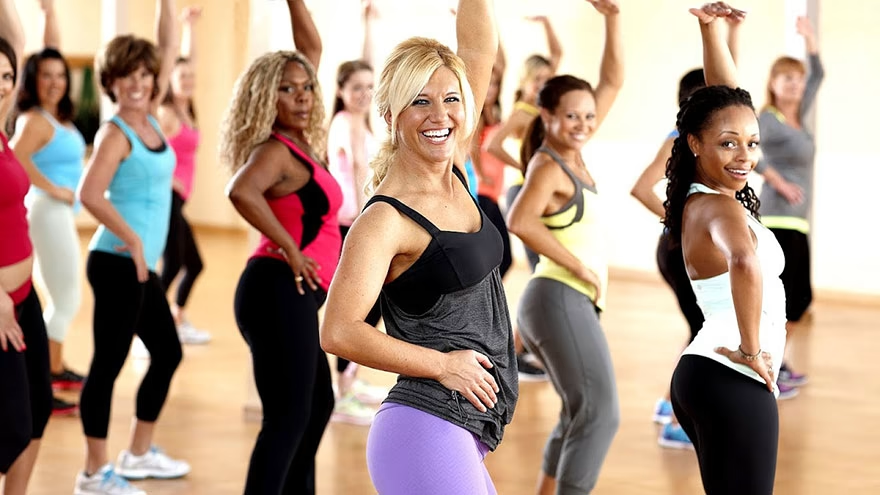
Dance aerobics is cardio with rhythm
Dance aerobics classes use music, repeated steps, arm patterns, and simple choreography to keep the body moving long enough to train aerobic fitness. The class may feel like dancing, but the structure is closer to cardio training: warm-up, working blocks, lower-effort breaks, and cool-down.
The main difference from a dance lesson is the goal. A dance lesson may focus on technique or performance. Dance aerobics focuses on sustained movement, sweat, coordination, and a heart rate that fits the participant.
The class is built from repeatable steps
Most routines come from a small set of moves: march, step touch, grapevine, knee lift, hamstring curl, mambo, chasse, and side tap. Teachers combine them into short phrases, then repeat the phrase until the group can move without thinking too hard.
If the step names feel new, a guide to basic aerobic steps can make the room less intimidating. Knowing the vocabulary lets you spend more energy moving and less energy decoding.
Intensity comes from more than speed
A class can become harder through larger arm motions, deeper knee bends, longer working blocks, faster music, turns, jumps, or less rest. That means two people in the same room can have different workouts without either one being wrong.
The American Heart Association target heart rate guidance can help you understand effort, but breathing, coordination, and joint comfort still matter.
Low-impact classes still count
Low-impact dance aerobics keeps one foot close to the floor and reduces jumping. It can still train endurance if the session is long enough and the arms stay active. People with balance concerns, joint pain, higher body weight, or a long break from exercise often do better starting here.
Seated or supported options can also be useful. A class influenced by chair dancing can keep rhythm and upper-body movement while reducing fall risk.
Music style changes the feel
Some classes use pop, disco, Latin, hip-hop, country, or older aerobic music. The music changes mood and movement quality, but it does not automatically define safety or intensity. A slow song can still be demanding if the moves are large and continuous.
Choose music that helps you return. Enjoyment is not a shallow detail in fitness. A class that feels welcoming is easier to repeat, and repeated sessions are where endurance improves.
A good instructor offers options
A strong class does not force every participant into the same version of a move. The teacher should show lower-impact choices, explain direction changes, cue the next step early, and give people permission to reduce arms, remove turns, or slow down.
Watch how the room treats beginners. If mistakes are normal and nobody turns them into a scene, the class is easier to stay with. Confidence grows in rooms that allow learning.
What to expect in your first class
Arrive early, tell the instructor you are new, and choose a spot where you can see without standing in the front if that feels stressful. Bring water and avoid eating a heavy meal right before class.
During the first session, follow the feet before adding arms. If a turn feels confusing, march in place and rejoin on the next phrase. Missing eight counts is not failure; it is part of learning group fitness.
How dance aerobics fits a weekly plan
The CDC adult activity guidance at cdc.gov supports spreading movement across the week. Dance aerobics can be one part of that plan alongside walking, strength training, mobility, or rest.
If you love energetic classes, balance them with quieter work. Some people rotate dance cardio with mind-body training such as Pilates or tai chi to give joints and attention a different kind of day.
Signs the class is not a fit
Pain, dizziness, repeated ankle rolling, or a teacher who refuses modifications are reasons to step back. So is choreography that stays confusing after several attempts. A class can be popular and still be wrong for your body or learning style.
Try a different format before deciding dance fitness is not for you. Step, Latin cardio, senior dance, barre-cardio, and kickboxing dance all feel different under the same broad label.
Classes usually follow a familiar arc
Most dance aerobics sessions begin with low-intensity movement, build into longer cardio blocks, then slow down for cool-down and stretching. That arc helps the body prepare, work, and return to normal. A class that jumps straight into hard movement can feel rough for beginners.
The structure should be visible. Even if the music is playful, you should be able to tell when the warm-up ends, when the main work begins, and when recovery starts.
Coordination improves with exposure
The first class may feel clumsy because the brain is learning the sequence. That does not mean you are uncoordinated forever. Repeated steps become easier when the body hears the same cues and feels the same transitions.
Let the first few classes be practice. You can still get a workout while missing arms, skipping turns, or simplifying footwork.
Room setup changes the experience
Mirrors, floor material, sound level, lighting, and crowding all affect comfort. A room that is too packed can make direction changes stressful. A floor that grabs shoes can make turns harder. These details are not excuses; they are part of class fit.
Stand near an exit or side wall if that helps you feel calmer. Comfort supports consistency, especially for people who are new to group fitness.
Online classes need extra self-checking
Online dance aerobics can save money and travel time, but nobody is watching your space, shoes, or fatigue. Clear the floor, start with lower-impact options, and avoid fast turns until you know the routine.
Pause whenever needed. The screen does not know your knees, so your own feedback has to guide the session.
Beginners should choose repetition over novelty
A class that changes every routine can be fun for experienced participants, but beginners often need repeated patterns. Repetition lets the brain relax enough for the body to work. New moves every minute can make the session feel like a test.
Learning the routine is part of the workout. Give yourself a few sessions before deciding coordination is the problem.
Social energy is part of the appeal
Many people return to dance aerobics because the room feels friendly. Music, shared mistakes, and group rhythm can make exercise less lonely. That social pull can be useful if solo workouts keep disappearing from your week.
Enjoyment supports consistency. A class does not need to be the hardest option to be useful.
Cost and schedule still matter
A perfect class across town at a bad time may not last. Compare travel time, parking, childcare, locker rooms, and cancellation rules. The practical details decide whether the class fits real life.
If the schedule is hard, try an online version or a shorter community class. A workable routine beats a perfect plan you rarely attend.
Modifications should feel normal
In a healthy class, people modify without apology. One person jumps, another taps, another removes arms, and the class continues. That is what all-levels teaching should look like.
If the room treats modifications as weakness, look elsewhere. A better class lets people work hard at different levels.
Progress can be social as well as physical
Some progress is measured by stamina, but some is measured by comfort. Knowing where to stand, recognizing regulars, and understanding the teacher's cues can make exercise less stressful.
That comfort matters because it helps turn attendance into a routine rather than a weekly negotiation.
Frequently Asked Questions
Are dance aerobics classes good for beginners?
Yes, if the class is labeled beginner, low-impact, or all-levels with clear modifications. A beginner should not be expected to copy every arm, turn, or jump on the first day.
Tell the instructor you are new. A good instructor will help you choose where to stand and how to simplify moves.
Is dance aerobics the same as Zumba?
Zumba is one branded style of dance fitness, but dance aerobics is broader. It can include many music styles, teaching methods, and class structures.
The best choice depends on music preference, impact level, and how much choreography you enjoy.
Can I do dance aerobics if I have bad knees?
Some people can, especially with low-impact options, smaller steps, and fewer turns. Others need a different format. Pain during or after class is a sign to modify or stop.
Ask a clinician if knee pain is new, sharp, swollen, or limiting daily movement.
How do I know if I am working hard enough?
Use breathing, the talk test, and your ability to control movement. You should feel challenged without losing balance or form.
A wearable can help, but it should not override pain, dizziness, or poor coordination.

Chiara Bradshaw
Covers education, culture and creative topics with an emphasis on readable explanations and verifiable references.
Leave a reply
Replying to