
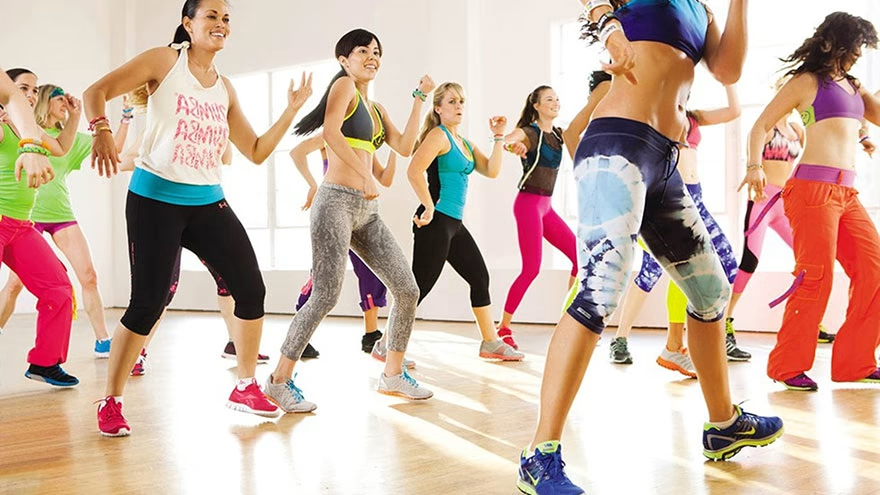
Aerobics Music Needs Count and Tempo
What count should music be for aerobics classes? Most traditional aerobics and step classes work best with predictable musical phrasing, usually in 32-count blocks. The count helps the instructor cue transitions, build combinations, and keep participants moving together.
Tempo matters too. Beats per minute set the speed of the movement. A song can be perfectly phrased and still too fast for the class format.
Good music makes movement easier to follow. It should support the class, not force participants to chase the beat.
Understand the 32-Count Phrase
The International Fitness Association's choreography guide explains that a 32-count phrase is made from eight measures of four beats. For many group fitness formats, those 32 counts become the building blocks for combinations.
In practice, instructors often think in four sets of eight. A move may last eight counts, a combination may last 32, and a new phrase may begin on the next strong "one."
The count gives the class a map. Without it, transitions can feel late, early, or random.
For basic movement vocabulary, Livecub's What Are Basic Aerobic Steps? pairs naturally with this topic because step patterns are easier to teach when the music supports them.
Choose BPM by Class Type
Human Kinetics notes in its group fitness music discussion that BPM affects movement speed and class difficulty. Faster music raises the demand because participants must complete movements more quickly.
Warm-ups usually need slower music than the cardio peak. Step aerobics often needs a controlled tempo so participants can place the foot safely. Older adult, beginner, or low-impact classes may need more room in the beat.
Tempo is a safety choice. If the music is too fast, form gets smaller, landings get rushed, and cueing becomes harder.
Use Warm-Up Music to Teach the Room
The warm-up is not only physical. It teaches the room how you cue, how the beat feels, and how transitions will work. Choose music that lets participants find rhythm without panic.
Start with simple steps: march, step touch, hamstring curl, knee lift, grapevine, and light arm patterns. Build movement before building speed.
If participants struggle to stay on beat in the warm-up, the main set needs simpler choreography or slower music.
The first track is a diagnostic tool. Watch whether the room hears the downbeat, whether new participants can follow your hand cues, and whether the tempo leaves enough time for safe foot placement.
If the class is mixed level, cue options early instead of waiting for people to fail. A slower arm pattern, smaller range, or march-in-place reset keeps the group together without stopping the music.
Match Music to Impact Level
High-impact moves need control. Low-impact moves need enough drive to feel alive without forcing participants to rush. Step work needs special care because the platform adds height and timing demands.
Power Music describes 32-count fitness music as designed for group fitness formats, including step and cardio. That kind of phrasing helps, but instructors still need to choose the right tempo for the people in the room.
For rhythm-based cardio, Livecub's How to Lose Weight on Tae Bo shows how music, room culture, and cueing all shape the participant experience.
Cue Before the Change
Good cueing uses the count to prepare people. If a transition starts on count one, the cue often needs to happen in the previous four or eight counts.
Use clear words, direction, hand signals, and previews. Do not explain a complicated change while the class is already supposed to be doing it.
Late cueing makes the class feel harder than it is. Participants spend energy guessing instead of moving.
Use the same cue language for the same action. If "step touch right" means one pattern in the warm-up and another in the peak track, the count cannot save the class from confusion.
Nonverbal cues matter when the music is loud or the room is tired. A hand sweep, directional point, or visible countdown can prepare the change without crowding the beat with too many words.
Plan Transitions by Phrase
Transitions are where many classes get messy. If one combination is 32 counts and the next starts on a new phrase, the room can feel the shift. If the instructor changes halfway through a phrase without warning, the class may scatter.
Write combinations in counts, not only move names. For example: eight counts march, eight counts step touch, eight counts grapevine, eight counts knee lifts. Then decide how to repeat, layer, or change.
A count sheet is not amateur. It is how an instructor protects the class flow.
Build Blocks Before Layers
New instructors often add arms, turns, travel, and direction changes too quickly. Start with the foot pattern, then add arms, then add travel, then add style. Each layer should fit the same count structure.
If the room loses the phrase, strip the move back to the base pattern for one 32-count block. Rebuilding in time feels cleaner than talking over the music while people keep moving in different directions.
Layering is only useful when the base is stable. The music should tell participants where they are, not hide the mistake.
Adjust Music for the Population
A class for beginners, older adults, or people returning after injury should not use the same tempo as an advanced high-low class. The goal is movement quality and confidence, not only energy.
The CDC's adult physical activity guidance supports regular aerobic activity, but intensity can be moderate or vigorous. Music should help people find the intended intensity without forcing unsafe speed.
For lower-impact rhythm work, Livecub's How to Do Chair Dancing can be a useful comparison because seated movement still needs musical clarity.
Ask what the class is meant to accomplish before choosing the playlist. A beginner cardio class, a step class, a senior fitness class, and an athletic conditioning class may all use counts, but they should not use the same speed or density.
The count stays familiar while the demand changes. That is why 32-count phrasing works across many formats.
Practice Counting Without Teaching
Before teaching a track, listen and count while walking, tapping, or marking moves. Find the downbeat. Notice where verses and choruses begin. Mark any odd breaks before they surprise you in class.
Some songs have dramatic pauses, long intros, or phrase changes that sound great in a car but confuse a workout. Test the music with the choreography before using it live.
Practice cueing out loud, not just in your head. If the words do not fit before the change, simplify the cue or move the transition. A polished class often comes from fewer words delivered earlier.
Keep one emergency track with clean phrasing and moderate tempo. If a playlist fails, a speaker disconnects, or the room struggles, that track can bring the class back to a steady count.
Check Licensing and Class Setting
Music choice is not only a coaching decision. Studios, gyms, schools, and community centers may have rules about licensed music, streaming, volume, and explicit lyrics. Follow the setting's policy before building the playlist.
Also test the sound system from the back of the room. If participants cannot hear the beat or your cue, the count becomes less useful. Clear volume is not the same as maximum volume.
Professional music prep includes the room. A track that works in headphones may fail in a large studio with echo, old speakers, or a noisy fan.
Keep backup versions of key tracks offline when the setting allows it. A class should not depend on weak Wi-Fi, a dead tablet, or an ad-supported stream interrupting the phrase.
Check the backup before class, not while people are waiting.
Music count is not decoration. It is the structure that lets an aerobics class feel organized, safe, and fun.
Frequently Asked Questions
What is a 32-count phrase in aerobics?
It is a block of 32 beats, often counted as four groups of eight. Many aerobics combinations are built around it.
What BPM is best for aerobics?
It depends on class type, level, and impact. Warm-ups are slower, while cardio peaks are faster but still need safe movement.
Why do instructors cue before the change?
Participants need warning before a transition. Cueing a few counts early lets the room move together on the next phrase.
Can regular songs work for aerobics?
Sometimes, but fitness-specific mixes with clear phrasing and steady BPM are often easier for teaching structured classes.

Linda Fehrman
Edits general wellness and relationship explainers. Health material is educational, avoids diagnosis and links to health-authority guidance.
Leave a reply
Replying to