

Who Should Consider a Roth 401(k)? A Roth 401(k) can fit workers who would rather pay income tax now and aim for tax-free qualified withdrawals later. It is not automatically better than a pre-tax 401(k); the choice depends on tax bracket, cash flow, employer plan rules, retirement timeline, and how much tax flexibility someone wants in older age.
This is general finance education, not tax or investment advice. Roth 401(k) rules, plan features, contribution limits, and tax law can change. A tax professional or plan adviser can compare choices using current income, expected retirement income, state tax, and employer match details.
How A Roth 401(k) Works
A designated Roth account inside a 401(k) receives after-tax salary deferrals. The contribution does not reduce current taxable income, but qualified distributions can be tax-free if timing rules are met. IRS explains that designated Roth contributions are kept in a separate account and are included in gross income when contributed.
The IRS page on designated Roth accounts is the starting point for plan-level rules.
Higher Future Tax Bracket

A Roth 401(k) may appeal to someone who expects higher tax rates later. That could be a younger worker early in a career, a resident of a low-tax state who may retire elsewhere, or someone building a pension, rental income, or business income for retirement.
The bet is simple but uncertain: paying tax now may be more attractive if later taxable income is higher. No one knows future law, so this is planning under uncertainty, not a guaranteed win.
Long Time Horizon
Time helps Roth accounts because tax-free qualified earnings can grow for many years. A 25-year-old and a 62-year-old may view the same Roth contribution very differently. The younger saver may have more years for compounding, while the older saver may care more about current cash flow.
Time horizon also affects risk choice inside the account. The Roth label is only tax treatment; investment selection still needs to match age, risk tolerance, and retirement date.
No Roth IRA Income Limit
Roth IRAs have income restrictions, but designated Roth 401(k) contributions do not use the same income test. High earners who cannot contribute directly to a Roth IRA may still be able to use the Roth side of a workplace plan if the plan offers it.
IRS designated Roth FAQs explain that income limits do not determine whether an employee can make designated Roth contributions. See the IRS Roth account FAQs for plan participation basics.
Employer Match Details
Employer matching money may not be taxed the same way as employee Roth deferrals. Plan rules matter, especially as more plans adopt Roth treatment for employer contributions. Employees should read the summary plan description rather than assume every dollar lands in the same tax bucket.
A Roth employee contribution can still receive a traditional employer match depending on plan design. The match is valuable either way, so do not skip the match while debating Roth versus pre-tax.
Current Cash Flow
Roth contributions feel more expensive in the paycheck because there is no current tax deduction. Someone already stretched by rent, debt, medical bills, or child care may prefer pre-tax contributions if that lets them save more total dollars.
The best tax choice on paper can fail if it causes lower savings. Compare take-home pay under each election before changing the whole contribution rate.
Tax Diversification
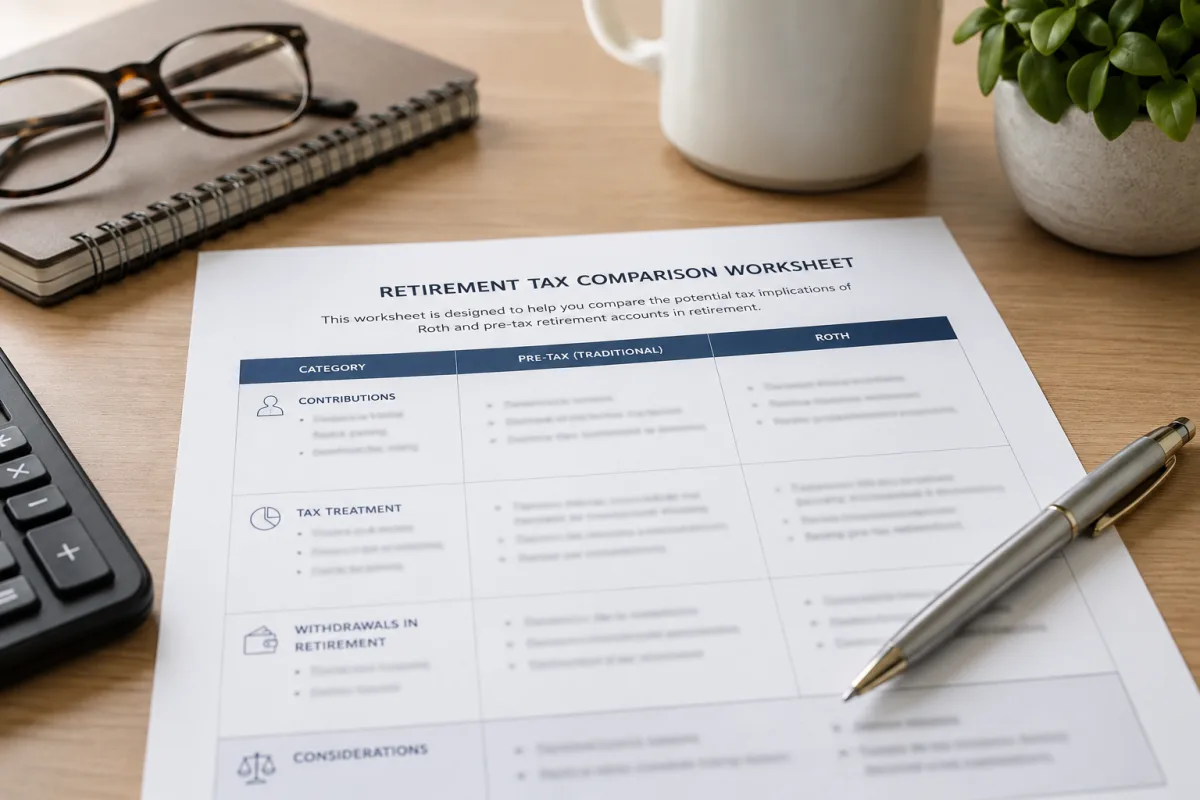
Many savers use both pre-tax and Roth money to create tax options in retirement. Pre-tax withdrawals can fill lower brackets, while Roth withdrawals may help manage taxable income in higher-expense years.
This mix can also help with Medicare premium planning, Social Security tax planning, and estate goals. It does not remove the need for annual tax planning, but it gives the retiree more choices.
Early Career Workers
A worker in a low bracket may favor Roth deferrals, especially if pay is likely to rise. The tax paid today may be modest compared with the tax that could apply after promotions, business growth, or dual-income household changes.
This is why a Roth 401(k) often makes sense for interns, residents, apprentices, new professionals, and younger workers who can afford the reduced paycheck.
Near Retirement Workers
A near-retirement worker should look at Social Security timing, pension income, cash reserves, tax bracket, and planned retirement date. Roth deferrals can still help, but the shorter time window makes the decision more personal.
Workers age 50 or older should also check catch-up rules and plan payroll timing. Livecub's annuity comparison guide may help frame income planning, though annuities are a separate tool.
Investment Choice Still Matters
A Roth 401(k) is not an investment by itself. It can hold mutual funds, target-date funds, stable value, company stock, or other plan menu options. Fees, allocation, and rebalancing still matter.
For fixed-income basics, Livecub's bond calculator guide can help with yield thinking inside broader retirement planning.
Savings Habits
A Roth 401(k) can work well for someone who can keep saving during market drops and job changes. Automatic payroll contributions are useful because the decision happens before the money reaches the checking account.
Families teaching long-term saving can also use Livecub's kids and money guide to build the habits that later make retirement saving easier.
Questions Before Switching

Ask whether the plan offers Roth, how the employer match is treated, how loans work, what investment options are available, and how rollovers are handled after leaving the job. Ask how the change affects take-home pay.
A Roth 401(k) is a tax election tied to real cash flow. Run the numbers before changing all future contributions.
RMD And Estate Planning Angle
Roth 401(k) rules have changed in recent years, and required distribution treatment can differ from older assumptions. Savers should check current plan and IRS rules before making decisions based on something they heard years ago.
The estate angle also matters. A Roth account left to heirs may offer different tax timing than pre-tax retirement money, but beneficiary rules are technical. Name beneficiaries carefully and review them after marriage, divorce, birth, death, or a job change.
State Tax Questions
Federal tax is only part of the decision. A worker in a state with income tax now who expects to retire in a state with no income tax may view Roth differently from someone expecting the opposite move.
State treatment can also affect retirees who split time between states. Before switching fully to Roth contributions, ask a tax professional how your current state and likely retirement state treat wages and retirement withdrawals.
Partial Roth Strategy
The decision does not have to be all-or-nothing. Some workers put enough into pre-tax contributions to reduce current tax pressure, then direct the rest to Roth. Others use Roth during low-income years and pre-tax during high-income years.
A partial strategy can reduce regret because future tax law is uncertain. It also lets the worker test the paycheck effect before changing the full contribution rate.
Career Breaks And Low-Income Years
Roth contributions may be more attractive during a lower-income year caused by graduate school, parental leave, business startup, job transition, or part-time work. The same household may prefer pre-tax contributions in a bonus-heavy year.
Review the choice annually. A Roth 401(k) election made at age 28 may not fit the same person at age 45 with a higher income, mortgage interest changes, dependents, and different state tax exposure.
Frequently Asked Questions
Is a Roth 401(k) better than a regular 401(k)?
Not always. Roth favors paying tax now; pre-tax favors a current deduction. The better choice depends on current and future tax brackets.
Can high earners use a Roth 401(k)?
Yes, if the employer plan offers it. Roth IRA income limits do not apply the same way to designated Roth 401(k) deferrals.
Does a Roth 401(k) get an employer match?
Often yes, but match tax treatment depends on plan rules. Read the plan documents.
Who should avoid Roth 401(k) contributions?
Someone in a high current tax bracket who expects lower retirement taxes may prefer pre-tax contributions.
Can I split contributions?
Many plans allow both Roth and pre-tax deferrals, subject to annual limits and plan rules.
The Practical Takeaway
A Roth 401(k) may fit workers in low current tax brackets, high earners blocked from direct Roth IRA contributions, long-horizon savers, and people who want tax flexibility, but the paycheck impact and plan rules need a real comparison.

Patrick Harwood
Edits sports, consumer-finance and general legal explainers. Regulated or time-sensitive topics link to primary sources and are not professional advice.




Leave a reply
Replying to