
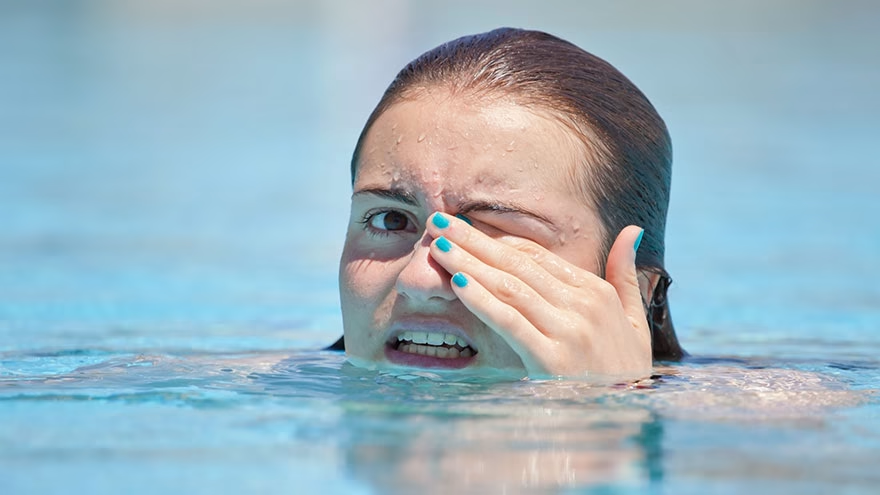
Allergy symptoms caused by swimming can be confusing because the water is not always the problem. Chlorine, pool air, lake parasites, exercise, skin products, sun, and infection can all create symptoms that feel allergic.
The safest approach is to stop guessing, look at the pattern, and get help for breathing symptoms, swelling, or reactions that repeat.
Chlorine Is Often Irritation, Not Allergy
The American College of Allergy, Asthma & Immunology explains that chlorine reactions are often sensitivity or irritation rather than a true allergy: ACAAI chlorine sensitivity guidance. That distinction matters because the fix may be skin care, pool choice, ventilation, or asthma control instead of allergy avoidance alone.
People still use the phrase swimming allergy because the symptoms feel allergic: itchy skin, red eyes, runny nose, cough, or tight breathing. The label is less useful than the pattern. Where you swam, how long you stayed in, and what happened afterward tell the better story.
Watch Skin, Eye, Nose, And Breathing Symptoms
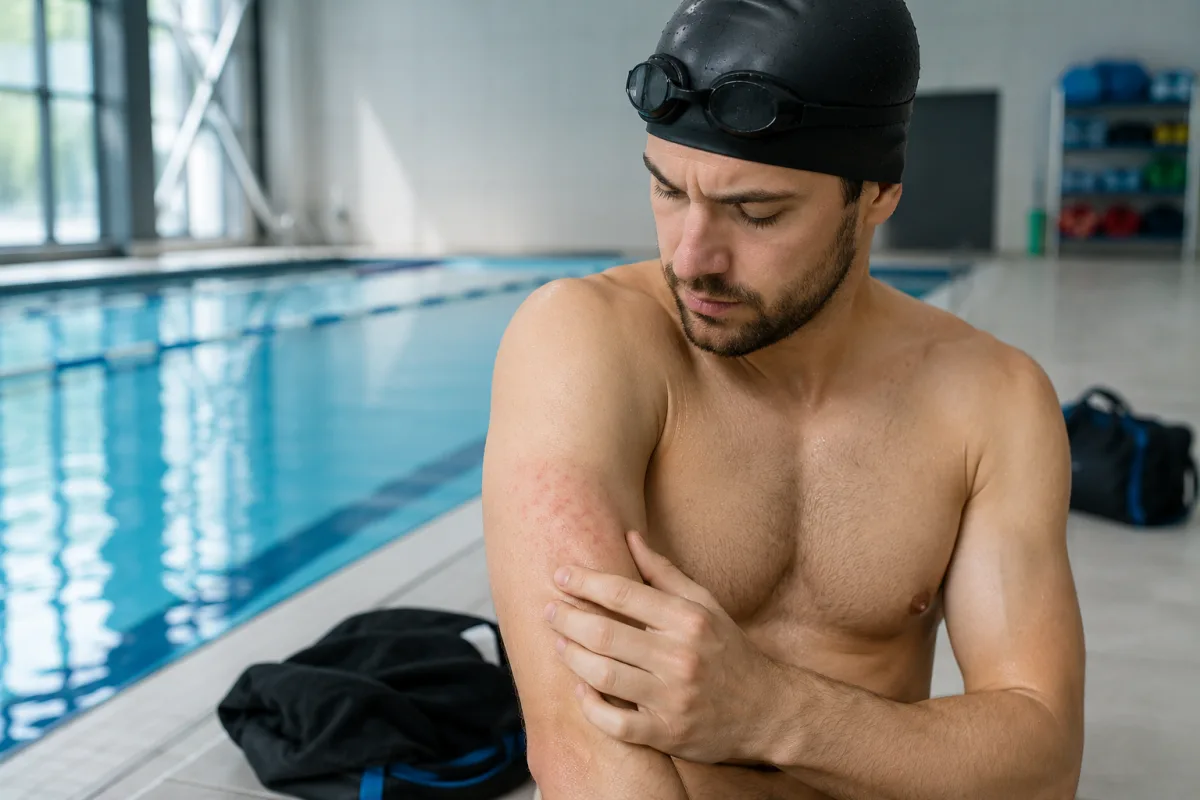
Skin symptoms may show up as dry patches, burning, itchy bumps, or a rash where swimwear trapped water against the body. Eye and nose symptoms may feel like ordinary seasonal allergies, but they appear right after pool exposure.
Breathing symptoms need more caution. Coughing, wheezing, chest tightness, or shortness of breath during or after swimming can involve asthma, irritant exposure, infection, or exercise response. Repeated breathing symptoms deserve medical review.
Separate Pool Rash From Swimmer's Itch

The CDC describes swimmer's itch as a rash caused by tiny parasites in fresh or salt water, not by pool chlorine: CDC swimmer's itch guidance. It often appears after natural-water exposure and can look like small reddish pimples or blisters.
A rash after a lake day and a rash after a chlorinated indoor pool may need different thinking. Location, water type, and timing help separate irritant dermatitis, swimmer's itch, hot tub rash, and unrelated skin flare-ups.
Reduce Germ And Chemical Exposure
The CDC's healthy swimming guidance recommends steps such as staying out of the water when sick and showering before swimming: CDC healthy swimming prevention. These habits reduce contamination and can also make the pool easier on sensitive skin.
For sensitive swimmers, rinse before entering, rinse again after leaving, change out of wet swimwear, and use a simple moisturizer. Avoid testing several new lotions, sunscreens, and detergents on the same day because they make the trigger harder to identify.
Use A Symptom Log Before Guessing
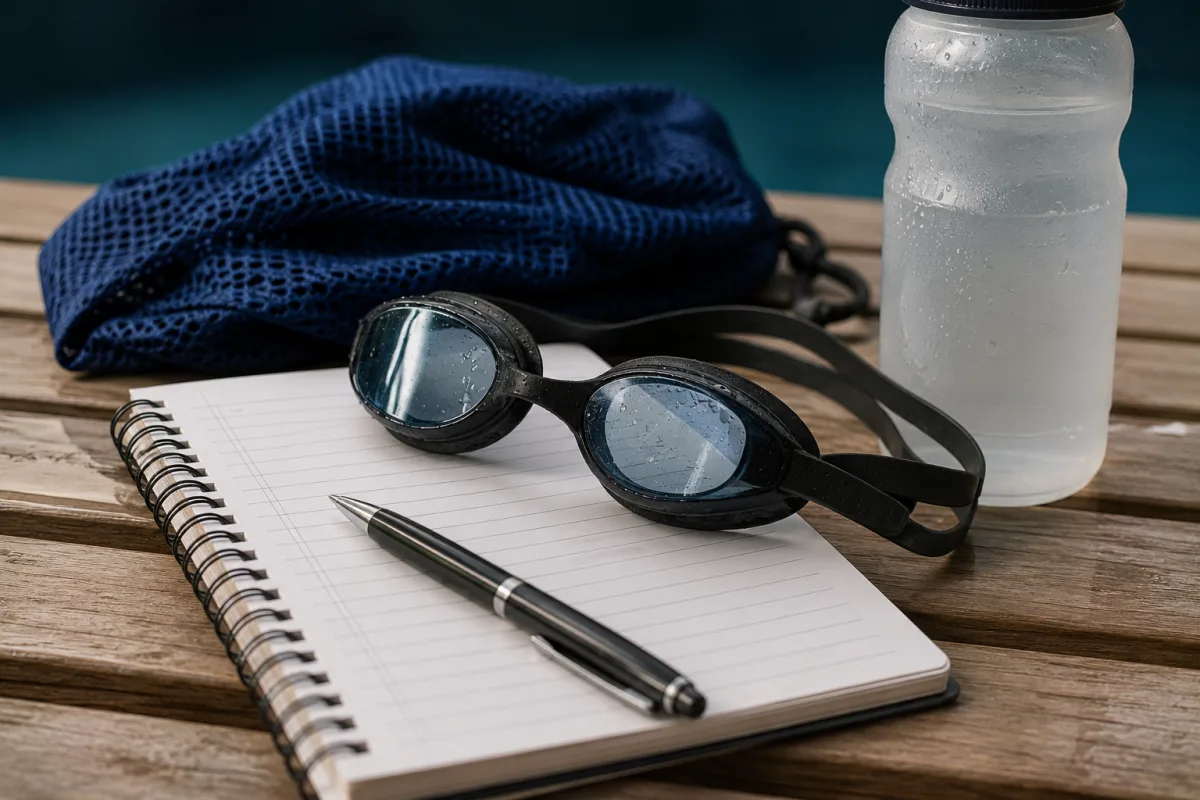
A log is useful when symptoms are scattered. Livecub's guide on how to write a food journal can be adapted into a swim symptom record by tracking exposure, time, foods, medicines, and skin products.
Bring the log to a clinician if the pattern repeats. A few exact notes can be more useful than a long memory of every swim that felt wrong.
Know When To Stop Swimming And Call
Stop swimming right away for wheezing, chest tightness, dizziness, facial swelling, widespread hives, or symptoms that move fast. These are not signs to push through for fitness or team pressure.
Returning after a scare can make practice feel tense. The advice in Livecub's guide to being less nervous for a sports tryout can help with confidence, but it should never replace medical advice for breathing or swelling symptoms.
Make Pool Changes Before Quitting
Some swimmers do better in outdoor pools, pools with better ventilation, shorter sessions, or lanes away from heavy chemical smell. Others need asthma management reviewed or a dermatologist to check recurrent rashes.
If an older swimmer is giving up the water because symptoms are frustrating, use the same practical support described in Livecub's guide to motivate the elderly: ask what would make the routine easier, then test one change at a time.
Handle Anxiety Without Ignoring Symptoms
After a reaction, worry can show up before the next swim. Livecub's guide to overcome stage fright fast has pacing ideas that can apply to returning to a pool, especially before a meet or class.
The line is simple: use calming tools for nerves, and use medical care for symptoms. If the body is sending warning signs, do not talk yourself into staying in the water.
Write Down The Pattern
For allergy symptoms caused by swimming, timing matters. Note the pool, lake, beach, water temperature, chemicals, workout length, skin products, food, medicine, and symptoms. A small log can show whether the pattern is tied to water, exercise, sun, or something else.
Keep the notes plain: what happened, when it started, how long it lasted, and what helped. Bring those notes to a clinician if symptoms repeat.
Plan The Next Swim Carefully
If symptoms were mild, a cautious return plan may include rinsing before and after swimming, using a bland moisturizer, avoiding heavily chlorinated sessions, and stopping as soon as breathing or swelling symptoms appear.
If symptoms were severe, do not test the water again as an experiment. Ask a clinician what signs should send you to urgent care and what activities should wait.
Separate Fear From Warning Signs
A bad reaction can make the next swim feel stressful. That reaction is understandable, but stress and medical symptoms need different plans.
Treat wheezing, facial swelling, widespread hives, faintness, or chest tightness as medical warning signs. Treat worry about returning to practice as a confidence and pacing issue.
Keep Older Swimmers In The Conversation
Older adults may downplay itching, shortness of breath, or dizziness after swimming because they do not want to lose a favorite routine. Ask direct, calm questions and make the plan practical.
A change of pool time, shower routine, or exercise intensity may keep swimming possible while a clinician checks repeated symptoms.
Check The Environment, Not Just The Water
Indoor pool air, cleaning products, locker-room sprays, sunscreen, damp towels, and wet swimwear can all affect skin or breathing. A reaction that appears after swimming may be caused by the whole setting.
Change one variable at a time. If you switch pools, sunscreen, detergent, and workout length on the same day, the next reaction will be harder to understand.
Protect Skin Before It Is Irritated
Dry or cracked skin can react faster to pool chemicals and friction. A gentle rinse, a short shower after swimming, and a bland moisturizer may help some people reduce irritation.
Avoid heavy perfumes, harsh scrubs, and new products right before swimming. Simple routines make it easier to spot the real trigger.
Bring Breathing Symptoms To The Right Visit
A rash question and a breathing question may need different visits. Dermatology can help with repeated skin reactions, while wheezing or chest tightness may need asthma or allergy evaluation.
Tell the clinician if symptoms happen only indoors, only during hard sets, only after lake swimming, or only with a certain pool. Those details can change the next step.
Decide What Counts As A No-Swim Day
A written no-swim rule helps when a swimmer wants to push through. Fever, stomach illness, open wounds, severe rash, breathing trouble, or fast-moving swelling should stop the plan.
The rule protects the swimmer and other people in the water. It also removes the pressure to decide while wet, tired, embarrassed, or in front of a group.
Clean Gear Without Adding New Irritants
Goggles, caps, towels, and swimwear can hold detergent, mildew, sunscreen, and pool residue. Rinse gear well and let it dry fully between sessions.
If skin reacts after every swim, try a fragrance-free detergent and avoid fabric softener on towels and suits. The goal is to remove extra variables, not to create another trigger. Keep the routine steady for several swims before judging it, unless symptoms worsen.
Frequently Asked Questions
Can someone be allergic to chlorine?
A true chlorine allergy is uncommon. Many reactions are irritation or sensitivity, but symptoms can still be uncomfortable and should be taken seriously.
What does swimmer's itch look like?
It can appear as itchy reddish bumps or small blisters after exposure to natural water. A clinician can help if the rash is severe or confusing.
Should I swim again after wheezing?
Do not use another swim as a test. Wheezing, chest tightness, or shortness of breath after swimming should be discussed with a clinician.
Can a symptom log help?
Yes. Timing, water type, products, food, medicine, and symptom duration can help separate irritation, allergy, asthma, and skin conditions.
This article is for general information only and isn't a substitute for medical advice. Talk to a clinician who knows your full history before making changes.

Olivia Prete
Edits culture and personal-development articles, distinguishing opinion and experience from verifiable claims.




Leave a reply
Replying to