
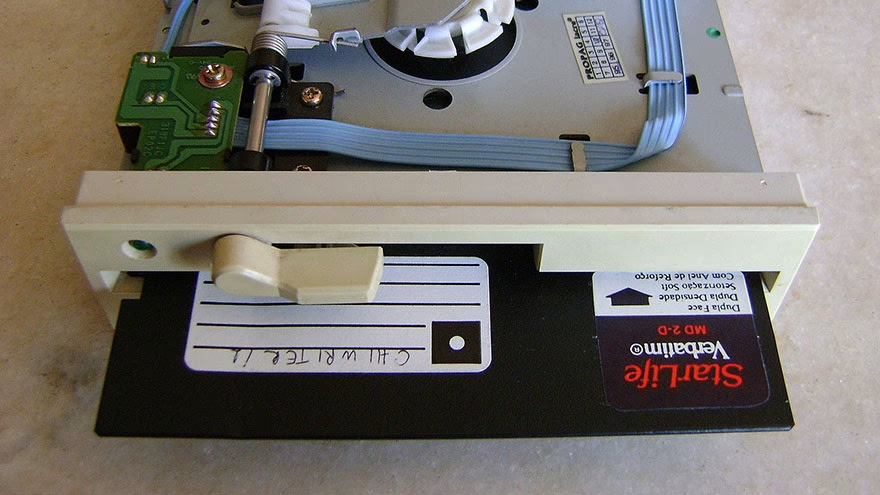
An FDC Failure Is Usually a Legacy Floppy Controller Problem
What Is an FDC Failure? In most PC contexts, FDC means floppy disk controller. The message usually points to a problem with the controller, floppy drive, cable, BIOS setting, or operating-system driver for an old floppy subsystem.
On a modern machine with no floppy drive, the message may be a leftover legacy setting rather than a problem that affects daily use. On a vintage machine, it can block booting from floppy or reading old disks.
The first question is simple: do you actually need the floppy drive?
That answer keeps the repair path grounded. A gamer using a modern desktop can often remove the warning from setup. A shop, lab, museum, or industrial operator may need the controller working because one old disk still runs a real process.
Know What the Controller Does
A floppy disk controller sits between the computer and the floppy drive. Microchip's FDC37C78 data sheet describes a floppy disk controller intended for motherboard applications, showing how specialized this legacy hardware was.
The controller handles communication with the drive, data rates, signals, and control lines. If it fails or is configured incorrectly, the rest of the computer may still work while floppy access does not.
For another failure topic in older storage, Livecub's microdrive failure article is a useful comparison.
A controller fault is narrow, but the symptoms can look broad when the machine tries to boot from a device it cannot reach.
Common Symptoms
An FDC issue may appear as a BIOS or POST error, a Device Manager warning, a floppy drive that never responds, a drive light that stays on, failed reads, or a machine that cannot boot from a floppy disk.
On some systems, the error appears even when no floppy drive is installed because the BIOS still has floppy support enabled.
The symptom matters because not every FDC message means broken hardware.
Write down the exact wording before changing anything. "Floppy disk fail," "FDC failure," and a Windows device error can point to different layers of the same old subsystem.
Check BIOS or UEFI Settings First
Older systems may include a setting for the floppy controller or drive type. If no floppy drive is installed, disabling the controller or setting the drive type to none may clear the message.
If you do use a floppy drive, confirm the correct drive type, boot order, and controller setting. Do not disable the controller on a machine that depends on floppy boot media.
On a shared or business machine, take a photo of the original setup screen first. That gives you a way back if a change affects boot order or makes another legacy device disappear.
Also check the date and battery symptoms. A weak CMOS battery can reset old firmware settings and make a disabled floppy controller reappear after power loss.
Use Device Manager for Windows Errors
Microsoft's Device Manager error code page explains that corrupted drivers can sometimes be handled by uninstalling the device and scanning for hardware changes.
For a legacy floppy controller, this may mean removing the device entry, restarting, and letting Windows redetect it. This is most useful when the hardware is present and the operating system is confused.
Livecub's Winlogon.exe buffer failure article is a different Windows problem, but both topics show why the exact error location matters.
Inspect the Cable on Vintage Hardware
Floppy ribbon cables are easy to misalign. A reversed or shifted connector can keep the drive from working and may leave the drive light on constantly.
Power off and unplug the system before checking internal cables. Old plastics, pins, and connectors can be brittle, so avoid forcing anything.
The twist in a floppy cable can also confuse people who have not handled one in years. Match the cable orientation to the drive and motherboard markings, not to memory.
Gentle inspection beats fast swapping on old hardware.
Check the Drive Light
A drive light that stays on all the time is a classic clue for a reversed cable or wrong connection. It does not prove the controller is dead.
If the light never turns on, the issue could be power, the drive, the cable, a disabled controller, or the motherboard. Treat the light as a clue, not a verdict.
Consider the Drive, Not Only the Controller
A bad floppy drive, dirty heads, failing belt, damaged disk, weak power connector, or broken cable can look like controller failure.
If you have spare known-good parts, test one variable at a time. Swapping everything at once makes it hard to know what changed.
Start with the least invasive check. Cable seating and BIOS settings are easier to reverse than a motherboard replacement.
Do Not Risk Rare Disks on an Unstable Drive
If the goal is to recover old floppy data, avoid repeated attempts on valuable disks with a malfunctioning drive. Bad alignment or dirty heads can damage media.
Use a known-good drive or a professional archival workflow for rare, business-critical, or sentimental disks.
Old media may be the fragile part of the system, even when the error message names the controller.
Know When Software Fixes Are Enough
Microsoft's Device Manager uninstall guidance explains how driver packages can be removed through Device Manager in Windows 10 and Windows 11.
If the controller is only misdetected, driver cleanup may help. If the motherboard controller is physically damaged, software will not repair the silicon.
After a driver change, restart and test with a disk you can afford to lose. Do not use the only copy of old tax records, machine settings, or family files as the first test disk.
Legacy Resource Conflicts Are Possible
Very old PCs used fixed hardware resources for floppy controllers, and conflicts could matter. Modern systems rarely expose this in a way most users can adjust.
If you are working on a vintage PC, consult the exact motherboard, I/O card, or controller manual before changing jumpers or resource settings.
Clues from the board model, BIOS date, and controller card can save time. Two machines from the same era may still use different jumper layouts or BIOS labels.
External USB Floppy Drives Are Different
A USB floppy drive does not rely on the same motherboard floppy controller path. If a USB unit fails, think about USB power, the drive mechanism, the disk, and operating-system support.
This distinction helps avoid the wrong repair. Replacing a motherboard controller will not fix a worn USB floppy drive.
Do Not Confuse FDC With FTP Data Connection Errors
Some people see "FDC" and think of data connection failures in file transfer tools. That is a different topic from floppy disk controller hardware.
Livecub's FileZilla data connection failure article belongs to networking and FTP troubleshooting, not legacy floppy diagnostics.
Keep a Small Change Log
Before changing BIOS values, swapping cables, or removing device entries, note what you changed and when. Legacy troubleshooting can turn messy because each fix attempt may hide the previous state.
A small notebook can prevent a long afternoon of guessing.
When You Can Ignore the Error
If the computer boots normally, you do not use floppy disks, and disabling the unused floppy controller clears the warning, the issue may not affect your actual work.
Still, document what you changed. A future repair or BIOS reset could bring the message back.
That is especially true after service work, motherboard battery changes, or loading setup defaults.
When You Should Repair It
Repair matters if you need to boot old software, read archived disks, operate lab equipment, maintain industrial systems, or preserve vintage hardware.
In those cases, test the drive, cable, controller, BIOS settings, and disks carefully. A working floppy path can be rare enough to treat gently.
For storage trouble that can affect modern data, Livecub's physical HDD failure recovery article belongs in a more urgent category.
Frequently Asked Questions
What does FDC stand for?
In this context, FDC usually means floppy disk controller.
Can I ignore an FDC failure?
If you do not use a floppy drive and the computer otherwise works, you may be able to disable unused floppy support in BIOS or UEFI.
Can Device Manager fix it?
Device Manager can help when Windows has a driver or detection issue. It cannot repair physically damaged controller hardware.
What if I need data from old floppy disks?
Use a known-good drive and avoid repeated attempts on valuable media. Consider professional help for rare or important disks.

Timothy Davidson
Edits step-by-step general-interest guides for clarity, realistic limits and source verification.



Leave a reply
Replying to