
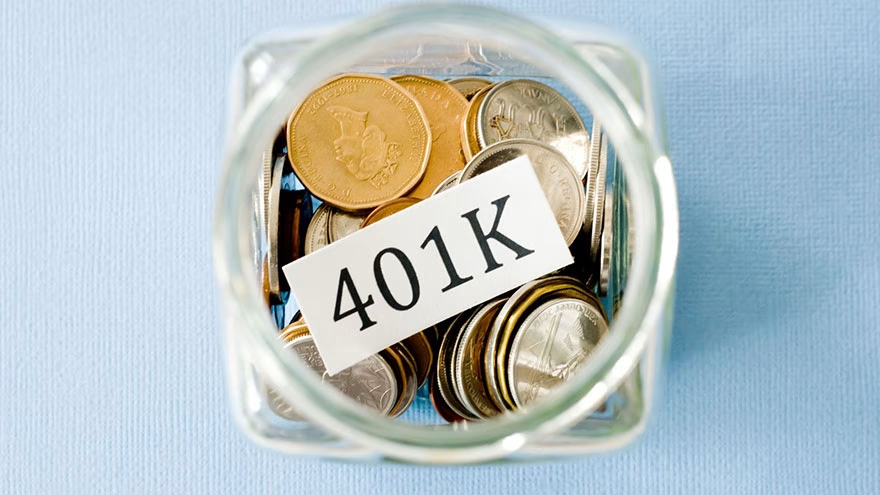
Can I Convert a 401k to a Roth 401k? Sometimes yes, but only if your employer's plan allows an in-plan Roth rollover or conversion and the money is eligible under plan rules.
This is different from making new Roth 401(k) contributions. A conversion moves existing pre-tax or after-tax plan money into a designated Roth account, often creating current taxable income.
Check Whether The Plan Allows It
Not every 401(k) plan has a Roth feature. Not every plan with a Roth feature allows in-plan Roth conversions. The plan document controls the answer.
IRS designated Roth guidance says employees can make designated Roth contributions only if the plan allows them, and the employer must maintain separate accounting for Roth contributions: IRS designated Roth account topic.
Ask HR or the plan administrator for the summary plan description, Roth feature rules, in-plan conversion form, and tax notice.
Understand What Gets Taxed

If pre-tax 401(k) money is converted to Roth 401(k), the taxable amount is usually included in income for that year. The money stays in the plan, but the tax bill may arrive outside the plan.
IRS Roth account FAQs explain that designated Roth contributions are included in gross income when made and are kept separate from pre-tax elective contributions.
A conversion can push income into a higher tax bracket, affect credits, increase Medicare premiums later for some retirees, or complicate estimated taxes.
Plan For The Tax Bill
Before converting, estimate federal tax, state tax, withholding, credits, deductions, and any income-based phaseouts. The conversion amount can spill into several parts of a tax return.
Paying the tax from outside savings often preserves more retirement money. Using plan money to cover tax can reduce future growth and may create distribution issues.
If the conversion is large, ask a tax professional to model several smaller conversions across years instead of one all-at-once move.
In-Plan Roth Rollover Basics

An in-plan Roth rollover moves eligible amounts inside the same plan into a designated Roth account. It does not send money to an outside Roth IRA.
IRS guidance on in-plan Roth rollovers says participants have been able to roll certain amounts in a 401(k), 403(b), or governmental 457(b) plan to a designated Roth account in the same plan since 2010: IRS in-plan Roth rollover background.
Plan rules may limit which sources can convert, how often conversions can happen, and whether spousal consent or distribution eligibility matters.
Roth 401k Versus Roth IRA
A Roth 401(k) stays inside the employer plan. A Roth IRA is opened outside the employer plan. They share Roth tax concepts, but income limits, investment options, fees, withdrawal rules, and plan control differ.
A high earner who cannot contribute directly to a Roth IRA may still make Roth 401(k) contributions if the plan allows them. Roth 401(k) contributions do not use the Roth IRA income limit.
If you are comparing retirement account types with other products, fixed annuity versus fixed index annuity can help with vocabulary, but it is not a Roth conversion guide.
When A Conversion May Make Sense
A conversion may fit if your current tax rate is lower than you expect later, you have cash outside the plan to pay taxes, your retirement horizon is long, or you want more tax diversification.
It may also appeal after a low-income year, business loss, career break, or market decline. Lower income or lower account values can reduce the conversion tax hit.
Still, a good tax year does not make every conversion smart. You need to compare the tax bill with the future tax-free benefit.
When It May Be A Bad Fit
A conversion may be poor timing if it forces you to use retirement money to pay taxes, pushes you into a high bracket, disrupts financial aid planning, or creates cash strain.
It can also be less useful if you expect a lower retirement tax rate, need near-term access, or have plan fees and investment options you do not like.
If the plan has a stable value fund or bond-heavy option, understand how that fits with taxes and risk. calculating bonds with a financial calculator is a related math topic, not a conversion decision.
Do Not Confuse Contributions And Conversions
New Roth 401(k) contributions affect future paychecks. A conversion changes the tax character of money already in the plan. They can both exist, but they are different elections.
If you want Roth treatment slowly, increasing future Roth contributions may be easier than converting a large balance at once.
Ask whether the plan allows partial conversions. A smaller conversion can help manage tax brackets and reduce regret.
Withholding Can Be Confusing
Some in-plan conversions do not withhold enough tax automatically, and some participants assume the plan handled everything. Read the tax notice before signing.
You may need to adjust paycheck withholding or make estimated tax payments. Waiting until April can turn a planned conversion into a cash-flow problem.
Keep the confirmation and tax forms. You will need them when preparing the return for the conversion year.
After-Tax 401k Money
Some plans allow after-tax employee contributions beyond normal deferrals. Those dollars are not the same as Roth contributions until moved or converted under plan rules.
IRS guidance on after-tax rollovers says pretax amounts can go to one destination and after-tax amounts to another in certain direct rollovers: IRS after-tax rollover guidance.
After-tax source tracking can be technical. Do not start a conversion without confirming basis, earnings, and tax reporting.
Questions Before You Convert

Ask what amount is taxable, what tax form you will receive, whether withholding applies, whether partial conversion is allowed, and how investment elections carry over.
Ask whether converted amounts have separate five-year tracking. Roth timing rules can matter if you expect to withdraw money soon.
For conservative assets outside the plan, checking savings bond value and Series EE maturity cover different savings topics.
After The Conversion
Check that the converted amount appears in the Roth source and that future gains are tracked there. Separate accounting is the point of the Roth feature.
Review investments after the conversion. The tax character changed, but the asset allocation may still need to match your age, risk tolerance, and retirement plan.
Update your notes with conversion date, amount, taxable amount, account source, and tax forms expected. Future you will not remember the details.
Small Conversions Can Be Cleaner
A partial conversion can let you fill a tax bracket without jumping into the next one. It can also reduce the chance that one decision creates a surprise bill.
For example, a worker might convert a limited amount during a lower-income year and leave the rest pre-tax. The exact number should come from tax modeling, not guesswork.
If your income is variable, revisit the idea near year-end when pay, deductions, and bonuses are clearer.
Market Declines Are Not A Free Pass
Some investors convert after market drops because the taxable value may be lower. That can help, but only if the tax bill still fits and the money remains invested long enough to benefit.
A market drop does not make a conversion automatically smart. If you need cash soon or may change jobs, plan rules and liquidity matter too.
Keep the focus on after-tax retirement value, not on feeling clever about timing.
Coordinate With Future Contributions
A conversion decision should sit beside your future contribution choice. You might convert some old pre-tax money while making new Roth contributions, or you might keep new contributions pre-tax for cash-flow reasons.
Review the combined tax picture: paycheck withholding, conversion income, bonuses, spouse income, deductions, and state tax. The plan's form is only one part of the decision. Keep notes.
Frequently Asked Questions
Can every 401(k) convert to Roth 401(k)?
No. The plan must allow Roth accounts and in-plan Roth conversions.
Is a Roth 401(k) conversion taxable?
Pre-tax amounts converted to Roth are generally taxable in the conversion year.
Can I convert only part of the balance?
Maybe. Some plans allow partial conversions; others are more restrictive.
Is a Roth IRA conversion the same thing?
No. A Roth IRA conversion moves money to a Roth IRA outside the plan.
Should I convert during a low-income year?
It may be worth reviewing, but a tax professional should model the full effect.
This article is for general information only and isn't financial advice. Consider a qualified financial professional before buying or selling investments.

Patrick Harwood
Edits sports, consumer-finance and general legal explainers. Regulated or time-sensitive topics link to primary sources and are not professional advice.




Leave a reply
Replying to