
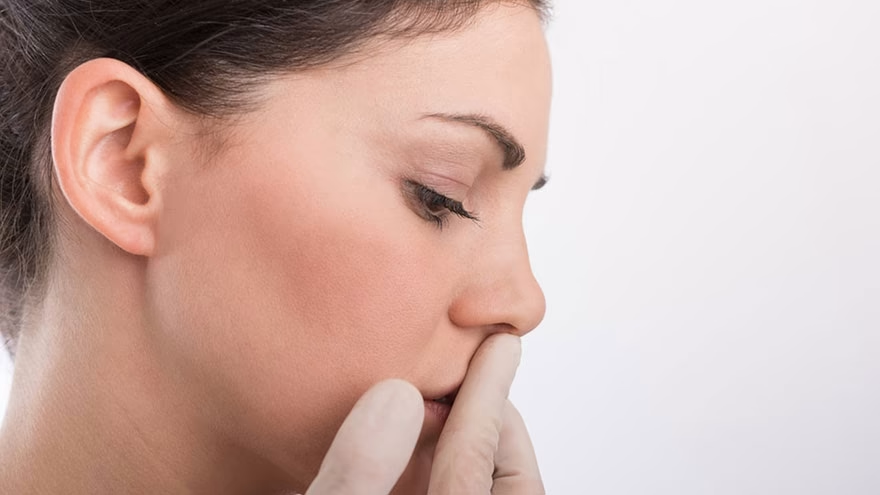
Accepting one's nose can sound small from the outside, but appearance worry can take up real space in a person's day. The goal is not to force love for every feature.
A steadier goal is reducing checking, comparison, and harsh self-talk while treating the face as one part of a full life.
Watch For Body Dysmorphic Patterns
NIMH describes body dysmorphic disorder as involving preoccupation with perceived flaws: NIMH body dysmorphic disorder information.
If nose worry takes hours or drives avoidance, seek professional help.
Reduce Mirror Checking
NIMH eating disorder information notes that body image concerns can connect with serious mental health issues: NIMH eating disorders.
Checking often feeds the anxiety it is meant to settle.
Use Stress-Aware Self-Talk
APA stress guidance explains stress effects on mood and behavior: APA stress effects.
Use neutral language: this is my face today.
Limit Comparison Triggers

Photo filters, front cameras, and old comments can distort the way a feature feels.
Take breaks from the trigger that makes checking worse.
Practice Body Neutrality

You do not have to love your nose to stop punishing it.
Respect is a lower-pressure starting point.
Track The Pattern
For accept one's nose, a plain log can show what changes with sleep, stress, food, screens, light, work, movement, or social contact.
Livecub's guide to write a food journal can be adapted into a mood or habit log.
Lower The Pressure
Accept one's nose gets harder when every choice feels like a test. Pick one small step, not a full personal overhaul.
Livecub's guide to overcome stage fright fast is a different topic, but the same idea of reducing pressure applies.
Use Support Without Force
Support should be concrete: a walk, check-in, meal, appointment help, or help turning off a screen.
Livecub's guide to motivate the elderly offers a gentle support frame.
Know When To Get Help
Get professional help if symptoms affect sleep, eating, safety, work, relationships, or daily function.
Livecub's guide to treat selective mutism is another reminder that trained help matters.
Make A Short Checklist
After reading about accept one's nose, write a short checklist with the signs, supplies, documents, habits, or calls that matter.
A checklist keeps the next step visible and prevents side issues from taking over.
Choose The Source Of Truth
Pick the source that should settle questions about accept one's nose: a clinician, official agency, written plan, policy, or licensed professional.
If advice conflicts, go back to that source before acting.
Name The Red Flag
Every accept one's nose plan should name the sign that changes the next step: suicidal thoughts, severe sleep loss, panic, financial loss, or symptoms that worsen.
Writing the red flag down makes it easier to act under stress.
Use One Small Test
If you change something for accept one's nose, change one thing at a time. That might be a bedtime rule, screen limit, support call, journal prompt, or spending choice.
One change is easier to judge than five changes at once.
Keep Help Easy To Reach
Put the most relevant help for accept one's nose where it can be used: clinician, crisis line, therapist directory, state plan, insurer, or trusted person.
A support number buried in a search history is not enough.
Review After Two Days
Unless the issue is urgent, review the accept one's nose plan after two days. Look for better sleep, clearer thinking, calmer mood, or fewer avoided tasks.
If the pattern is worse, do not keep repeating the same plan just because it took effort to start.
Protect Basic Needs
Before optimizing accept one's nose, protect sleep, food, movement, safety, medication routines, and social contact.
Basic needs are not glamorous, but they often decide whether a plan is possible.
Close The Loop
When the main step for accept one's nose is handled, record what was done, who confirmed it, what remains open, and when to check again.
Closing the loop keeps the same issue from returning as a surprise.
Leave A Hand-Off
If someone else takes over accept one's nose, they should see the current status quickly: what happened, what helped, what failed, and what comes next.
A clear hand-off protects the next person from repeating work or missing a warning sign.
Decide What Can Wait
Not every part of accept one's nose needs to be solved today. Separate the urgent safety, health, or money issue from the task that can wait.
This keeps attention on the part where delay would cause the most harm.
Use A Two-Day Check
Unless accept one's nose involves immediate danger, check the plan again after two days. Look for sleep, mood, focus, spending, or routine changes.
If the pattern is worse, stop repeating the same plan and ask for help.
Do Not Let Shame Drive It
Accept one's nose can bring shame, especially when the issue touches money, body image, mental health, or relationships.
Shame makes people hide problems. A better plan names the issue and connects it to practical support.
Make The Environment Help
Change the setting around accept one's nose: phone location, bedtime cues, paperwork folder, light exposure, room clutter, or who is nearby.
Environmental changes often work better than asking for more willpower.
Protect Sleep First
Sleep loss can make accept one's nose feel larger and harder to solve. Protect the next bedtime whenever possible.
If sleep is already badly disrupted, bring that fact to a clinician or trusted support person.
Avoid All-Or-Nothing Rules
All-or-nothing rules can make accept one's nose brittle. Use a rule that can survive a hard day.
A flexible plan is easier to restart after one bad night, missed task, or emotional setback.
Write The Plain Version
Turn the accept one's nose plan into one plain sentence: if this happens, I will do this next.
Plain wording helps during stress because it removes the need to rethink the whole problem.
Keep A Low-Energy Option
Choose a low-energy version of the accept one's nose plan for days when motivation is low.
That might be a five-minute tidy, one journal line, one support text, or one account check.
Check For Avoidance
Sometimes accept one's nose becomes harder because the first step is being avoided. Name the avoided step without judging it.
Avoidance is information. It points to the part of the plan that needs to be smaller or supported.
Use Human Contact
Many accept one's nose problems improve when the person is not handling them alone. Contact can be brief and still useful.
A text, appointment, group, family conversation, or professional call can break the closed loop.
Keep The Record Kind
Notes about accept one's nose should be factual, not insulting. Write what happened, what helped, and what needs review.
Kind records are easier to keep and easier to share.
Stop The Harmful Input
If one input reliably worsens accept one's nose, reduce it. That input might be late news, a comparison account, a clutter pile, a fee, or an unhelpful conversation.
Removing one harmful input can create enough space for the next useful step.
Plan For The Next Bad Day
Do not judge the accept one's nose plan only on the best day. Decide how it will work on a tired, busy, or anxious day.
A plan that survives a bad day is more useful than one that only works in ideal conditions.
Ask A Narrow Question
When asking for help with accept one's nose, make the question narrow. Ask about the symptom, deadline, rule, or decision that is actually blocking the next step.
Narrow questions get clearer answers than long stories with the key fact hidden.
Notice Small Wins
Small wins count with accept one's nose: one call made, one walk, one earlier bedtime, one account reviewed, or one boundary kept.
Noticing small wins helps the plan continue without pretending everything is fixed.
Keep The Next Step Visible
Put the next step for accept one's nose somewhere visible: calendar, sticky note, phone reminder, folder tab, or message thread.
A visible next step lowers the chance that stress will erase the plan.
Frequently Asked Questions
Do I have to love my nose?
No. Acceptance can start with neutrality and less checking.
When should I get help?
Get help if appearance worry takes hours, causes avoidance, or affects eating, work, or relationships.
Can filters make it worse?
For some people, yes. Limit tools that increase comparison or checking.
What is a neutral phrase?
This is my face today, and I can still live my life.
This article is for general information only and isn't a substitute for medical advice. Talk to a clinician who knows your full history before making changes.

Cashie Evans
Covers parenting and practical household topics with clear steps, safety notes and links to current guidance.




Leave a reply
Replying to