

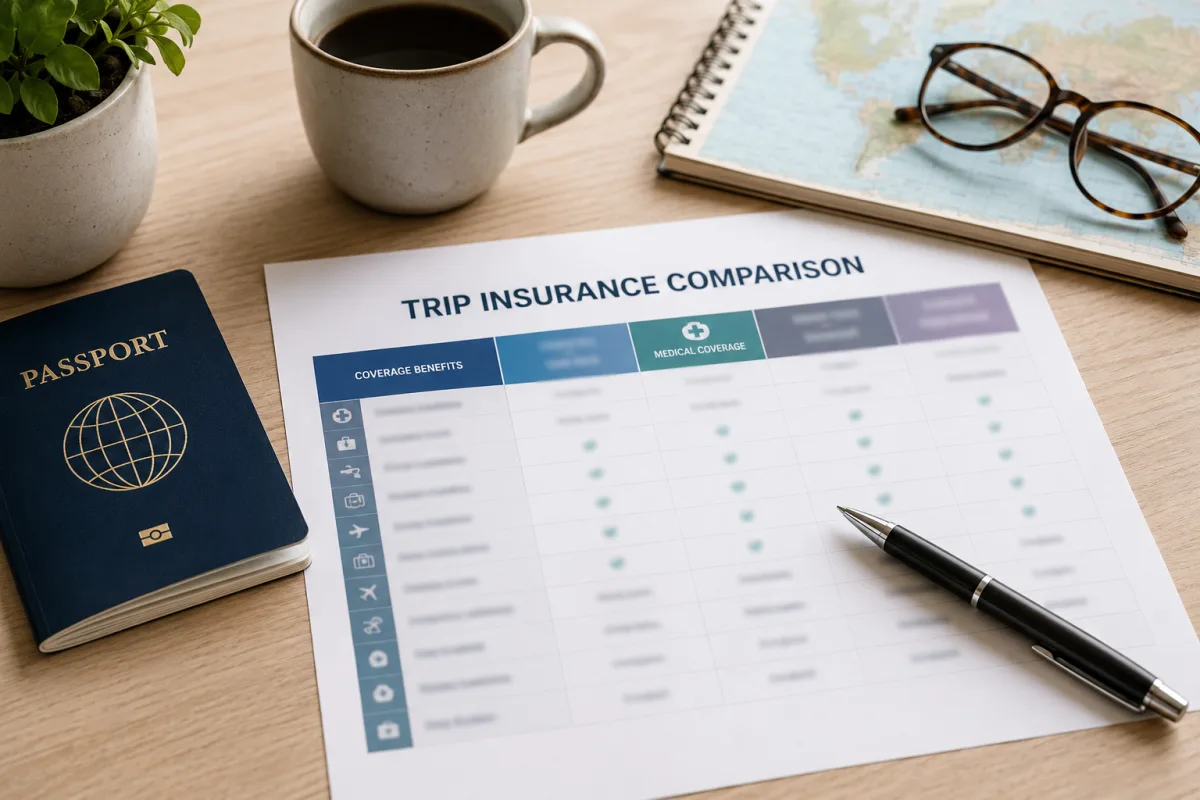
Comparison of Trip Insurance should start with the risks you actually need covered. A cheap policy can be fine for a small domestic trip and weak for a prepaid international itinerary.
This is general insurance education, not a recommendation for any insurer. Read the policy certificate, not only the sales page, before buying.
Compare Trip Cost
Start with prepaid, nonrefundable costs: flights, lodging, cruise fare, tours, deposits, and event tickets. The more money you cannot recover, the more cancellation coverage may matter.
Do not insure refundable costs unless the policy requires total trip cost for a specific benefit such as a preexisting condition waiver.
Compare Covered Reasons
Trip cancellation and interruption benefits cover listed reasons. Common examples include illness, injury, death, severe weather, or other named events, but every policy differs.
NAIC explains that travel insurance can include trip cancellation, interruption, medical, evacuation, baggage, and other benefits in its consumer travel insurance guide.
Compare Medical
Domestic trips may rely more on your regular health insurance. International trips need closer review because many health plans do not cover care abroad well.
CDC explains that travel disruption insurance, travel health insurance, and medical evacuation insurance are different products that may be bundled or bought separately: CDC travel insurance guidance.
Compare Evacuation
Medical evacuation can be the largest risk on remote, cruise, adventure, or international trips. Check the dollar limit, approval process, and whether transport home is covered.
A policy with low medical limits and no evacuation may not fit a trip far from appropriate care.
Compare Preexisting Rules
Preexisting condition waivers often require buying soon after the first trip payment and insuring the full trip cost. Lookback periods vary.
If anyone traveling has recent treatment, medication changes, or chronic illness, read this section before choosing by price.
Compare CFAR

Cancel for any reason coverage is broader but not unlimited. It usually costs more, has purchase deadlines, requires cancellation before departure, and reimburses a percentage.
Use CFAR when the risk is not a listed covered reason, such as work uncertainty, family concerns, or general hesitation.
Compare Delay Benefits
Travel delay coverage may pay after a set number of hours for meals, lodging, or transportation. Trip interruption and missed connection benefits may have different triggers.
A traveler with tight connections needs more than a generic delay benefit.
Compare Baggage
Baggage loss and delay benefits have limits, waiting periods, and exclusions. Electronics, jewelry, medical devices, sports equipment, and cash often have special rules.
Keep receipts, photos, airline reports, and claim numbers. Documentation matters.
Compare Credit Card Benefits
Credit card travel protections may cover some cancellation, delay, or baggage risks if the trip was paid with the card. They may not cover medical care or evacuation enough.
Livecub's bond calculator guide is unrelated to insurance, but the same discipline applies: read inputs before trusting the output.
Compare Supplier Waivers
Airline, tour, and cruise waivers may not be insurance. Some return credit instead of cash or cover only that supplier's charges.
Ask whether the benefit is regulated insurance, a waiver, or a store-credit promise.
Compare Exclusions
Common exclusions may involve foreseeable events, fear of travel, intoxication, high-risk activities, pregnancy limits, mental health events, epidemics, or travel against government advice.
Exclusions are where many claim surprises live. Read them before buying.
Compare Claims Process

A policy is only as useful as the claim process. Check deadlines, proof required, how to file, and whether you must call before seeking medical care.
The State Department also warns travelers to understand insurance and evacuation coverage before leaving the United States: State Department insurance guidance.
Compare With Savings
For low-cost trips, self-insuring small losses may make sense if medical and evacuation risks are low. For expensive or remote trips, risk can be different.
Livecub's savings bond value guide and Treasury bond article are separate finance reads for thinking about reserves.
Annual Plans
Frequent travelers may compare annual plans with single-trip policies. Annual plans can be convenient, but per-trip limits and medical terms still matter.
Do not assume annual means unlimited. Read the caps.
Primary Or Secondary
Some policies pay primary, while others reimburse after another insurer responds. This affects paperwork and timing.
If you want fewer reimbursement layers, compare primary versus secondary language before buying.
Travel Advisories
Government advisories, known storms, strikes, or already announced events may affect coverage because insurance is meant for unexpected losses.
Buy early if you want broader protection, and read how foreseeable events are handled.
Domestic Trips
For a domestic weekend with refundable hotel and low airfare, cancellation coverage may matter less than delay or baggage coverage. Medical coverage may already come from regular health insurance.
Still check out-of-network costs if the trip crosses state lines or involves remote areas.
International Trips
International trips usually need closer review of medical, evacuation, translation, prescription, and hospital payment rules.
Some foreign hospitals may require payment guarantees or upfront payment, so assistance services can matter as much as the dollar limit.
Adventure Trips
Adventure travel can trigger exclusions for climbing, diving, backcountry skiing, racing, scooters, or other activities. Do not rely on a brochure image; read the activity exclusions.
If the trip depends on an activity, buy a policy that names or allows that activity.
Documentation Checklist
Before travel, save policy number, emergency assistance number, receipts, itinerary, proof of payment, and medical contacts. During a claim, save reports, bills, delay notices, and emails.
A comparison should include how realistic the documentation burden is for your situation.
Refund Versus Insurance
Some losses are handled by airline waivers, hotel cancellation policies, cruise credits, or supplier refunds before insurance pays. Insurance may reimburse only what remains nonrefundable.
Compare refund rules and insurance together, not separately.
Policy Certificate
The comparison page is not the contract. The certificate or policy wording controls the claim, including definitions, exclusions, and deadlines.
Download it before buying if possible, and search for the words that matter to your trip.
Family Definitions
Policies define family member differently. A sick cousin, unmarried partner, pet, business partner, or caregiver may or may not trigger cancellation benefits.
If a specific person is the reason you worry about canceling, check that definition before purchase.
Pregnancy Terms
Pregnancy coverage varies. Some policies cover unexpected complications but not normal pregnancy, routine care, or travel against medical advice.
Pregnant travelers should compare cruise, airline, medical, and insurance rules together.
Rental Car Add-Ons
Rental car damage coverage may be included, excluded, or sold separately. It often excludes certain countries, vehicle types, off-road use, or liability.
Compare this with your auto policy and credit card before paying twice.
Claim Timing
Some claims must be filed within a set period. Others require notice before spending money or before changing travel plans.
A policy with strong benefits can still be difficult if the timing rules are missed.
Decision Shortcut
A useful shortcut is to rank risks: medical, evacuation, cancellation, delay, baggage, rental car, and flexibility. Buy for the top risks, not every possible fear.
This keeps the comparison practical instead of endless.
Annual Plans
Frequent travelers may compare one annual plan with several single-trip policies. Annual plans can save time, but benefit limits may be lower per trip and cancellation coverage may work differently.
Count real trips, not hoped-for trips, before deciding the annual plan is cheaper.
Credit Card Coverage
Some credit cards include trip delay, baggage, rental car, or cancellation benefits, but coverage depends on paying with that card and meeting the card's rules.
Read the benefits guide before buying a separate policy, then fill only the gaps that still matter.
Medical Evacuation
Evacuation coverage is easy to overlook because most travelers picture lost bags before serious illness. For remote, cruise, or international trips, it can be the benefit that changes the plan most.
Compare who decides evacuation, where you may be taken, and whether a hospital-to-home transfer is included.
Frequently Asked Questions
How do I compare trip insurance?
Compare covered reasons, medical limits, evacuation, delay benefits, baggage, preexisting rules, exclusions, and claims process.
Is the cheapest policy enough?
Sometimes, but cheap policies may have lower limits or narrower covered reasons.
Do I need CFAR?
Only if you want cancellation flexibility beyond the listed covered reasons and can meet purchase rules.
Does travel insurance cover medical care abroad?
Some policies do, but limits, deductibles, and exclusions vary.
Are credit card benefits enough?
Maybe for some trips, but check medical, evacuation, cancellation, and documentation rules.
A good comparison of trip insurance looks past price and checks the actual covered reasons, limits, exclusions, and claim steps for your trip.

Timothy Davidson
Edits step-by-step general-interest guides for clarity, realistic limits and source verification.




Leave a reply
Replying to