
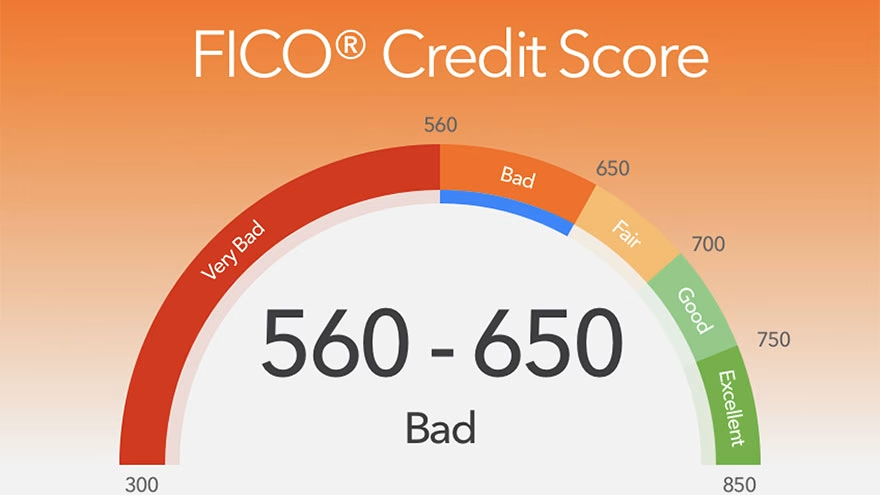
Getting a loan with a low FICO score is possible in some cases, but it is usually more expensive and easier to get wrong. A low score tells lenders that they may be taking more risk, so the offer may come with a higher rate, smaller amount, fees, collateral, or a required co-signer.
The safest path is not grabbing the first approval. It is checking your credit, understanding the monthly payment, comparing real offers, and avoiding lenders that use desperation as a sales tool.
Know What Is Hurting The Score
FICO says payment history is a major score factor and explains why lenders care about past repayment: myFICO payment history. Late payments, collections, charge-offs, and defaults can all shape offers.
FICO also says amounts owed are a major factor: myFICO amounts owed. High revolving balances can make a score look riskier even when income is steady.
Check Reports Before Applying

Pull your credit reports and check for errors: wrong balances, accounts that are not yours, old debts reported incorrectly, duplicate collections, or payments marked late by mistake. Dispute incorrect information through the credit bureaus.
Do not pay a company that promises to erase accurate negative information. Accurate credit history usually cannot be wished away. Fix errors, then plan around the facts that remain.
Try Prequalification First
Many lenders offer prequalification with a soft credit check. It is not a final approval, but it can show likely rates and loan sizes without the same score effect as a hard inquiry. Compare several options before choosing.
Look at APR, origination fee, term, monthly payment, late fee, prepayment penalty, and total repayment. A lower monthly payment with a long term may cost more over time.
Livecub's guide to teaching kids about money is a separate topic, but the same principle applies: understand the terms before the decision.
Consider Credit Unions And Community Banks
A local credit union or community bank may look beyond the score to income, job history, membership, savings pattern, or relationship history. Some offer credit-builder loans or small-dollar loans with clearer terms than payday products.
Ask directly: Do you offer loans for members rebuilding credit? Will prequalification use a soft inquiry? Are there fees? Can autopay reduce the rate? What happens if I pay early?
Use Collateral Carefully
A secured loan may be easier to get because the lender has collateral. The risk is that you can lose the collateral if you default. A car-title loan can be especially dangerous if it puts transportation to work at risk.
Do not pledge something you cannot afford to lose unless the loan solves a problem larger than that risk and the payment is realistic.
Think Hard Before Using A Co-Signer
A co-signer can improve approval odds, but it transfers risk to someone else. If you miss payments, their credit can be damaged and they may owe the debt. That can harm family and friendship long after the loan money is gone.
If you use a co-signer, put the payment plan in writing and set automatic reminders. Treat their risk as seriously as your own.
Avoid Advance-Fee Scams

The FTC warns that advance-fee loan scams target people with bad credit or trouble getting loans: FTC advance-fee loan warning. Red flags include guaranteed approval, pressure, and demands for money before a loan is made.
Do not pay with gift cards, wire transfers, crypto, or prepaid cards to get a loan. Verify the lender's license in your state and confirm the website, address, and contact details.
Compare Alternatives To Borrowing
If the loan is for a bill, call the creditor first. You may be able to get a hardship plan, payment extension, medical bill discount, utility assistance, or nonprofit counseling. A new loan is not always cheaper than negotiating the existing problem.
If you have savings bonds or Treasury holdings, Livecub's article on finding out what savings bonds are worth may help you understand one possible asset before borrowing.
Improve Approval Strength Before Applying
If the need is not urgent, spend one to three months reducing card balances, making every payment on time, correcting report errors, avoiding new hard inquiries, and documenting income. Even small changes may affect offers.
Prepare proof: pay stubs, bank statements, ID, address, debt list, and explanation for any temporary hardship. A clean application cannot erase a low score, but it can reduce friction.
Watch The Monthly Payment

Approval is not affordability. Put the payment into your real budget with rent, food, utilities, gas, insurance, medicine, child care, and minimum debt payments. If the payment only works in a perfect month, it may fail in a normal month.
Livecub's article on calculating bonds with a financial calculator is about a different tool, but the habit of doing the math before committing belongs here too.
Use The Loan To Rebuild
If you accept a loan, set autopay if safe, keep a buffer in the account, and track due dates. Paying on time can help rebuild credit history. Missing payments can make the next loan harder and more expensive.
If conservative investing is part of your broader money plan, Livecub's piece on investing in U.S. Treasury bonds is a separate finance topic to read with care.
Know When To Pause
Pause if the lender rushes you, hides APR, avoids written terms, demands upfront money, ignores state licensing, or tells you to lie. A bad loan can turn a hard month into a hard year.
Low FICO borrowing should be deliberate: compare, verify, calculate, and take the smallest loan that actually solves the problem.
Do Not Borrow To Look Stable
A loan used to preserve appearances can become a quiet trap. Borrow for a defined purpose with a repayment path, not to hide that the budget needs repair.
Check Payday And Title Loan Risk
Short-term high-cost loans can create repeat borrowing. If the repayment takes most of the next paycheck or risks your car, pause and look for credit union, employer, or hardship options first.
Use A Smaller Loan If Possible
Borrowing less can improve approval odds and reduce total interest. If only part of the expense is urgent, cover the urgent part and build a separate plan for the rest.
Ask About Reporting
If rebuilding credit is part of the reason, ask whether the lender reports to the major credit bureaus. A loan that does not report may solve cash flow but may not help credit history.
Read The Default Terms
Know what happens after a missed payment: fee, rate change, repossession, collections, lawsuit, or credit reporting. A low-score borrower needs the downside in plain view before signing.
Ask For A Payment Date That Fits
If income arrives on a predictable date, ask whether the due date can match it. A good payment date can reduce accidental late fees.
Avoid Multiple Applications At Once
Submitting many full applications can create hard inquiries and confusion. Use prequalification where possible, then apply only when the offer looks realistic.
Check Debt-To-Income
A lender may care about income and existing payments as much as score. List every monthly debt before applying so the new payment is not a surprise.
Get The Payoff Terms
Ask how to pay the loan off early, how interest accrues, and whether there is any prepayment penalty. A borrower rebuilding credit needs flexibility when possible.
Keep The Purpose Visible
Write the loan purpose at the top of your notes. If the offer does not solve that purpose at a manageable cost, approval alone is not enough.
Plan The First Payment Early
Before accepting, know when the first payment is due and where the money will come from. First-payment confusion is a bad start for a rebuilding plan.
Frequently Asked Questions
Can I get a loan with a low FICO score?
Possibly, but rates, fees, collateral requirements, and loan limits may be worse than for higher-score borrowers.
Will prequalification hurt my score?
Many prequalification checks are soft inquiries, but confirm this with the lender before submitting information.
Are bad credit loans scams?
Not all are scams, but people with low scores are often targeted. Avoid guaranteed approval and upfront payment demands.
Is a co-signer a good idea?
It can help approval, but it puts the co-signer's credit and money at risk if you miss payments.
What should I compare?
Compare APR, fees, term, monthly payment, total repayment, prepayment rules, and late payment consequences.
This article is for general information only and is not financial, legal, insurance, medical, or tax advice. Policy terms, prices, eligibility, and laws change; read the policy and ask a licensed professional.

Timothy Davidson
Edits step-by-step general-interest guides for clarity, realistic limits and source verification.




Leave a reply
Replying to