
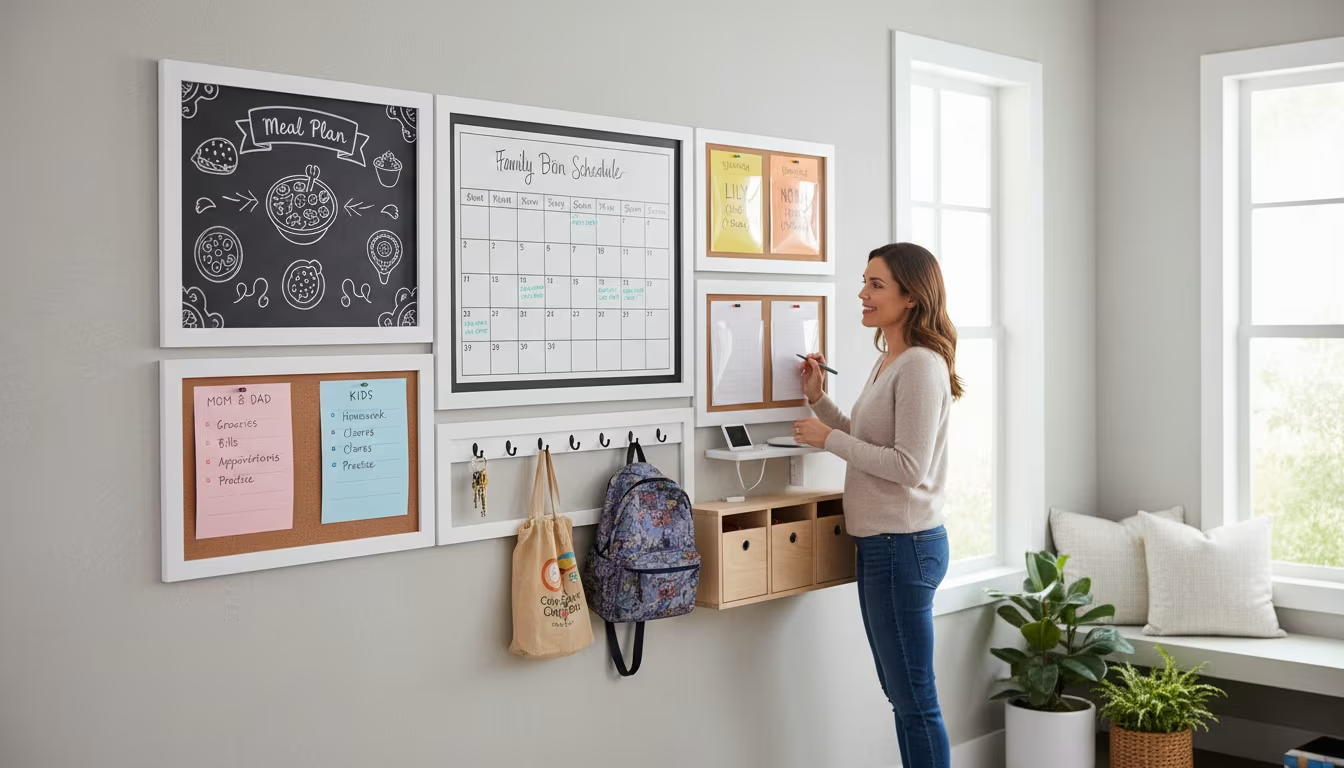
Any system that only works when everyone slept well is not really a system. The tidy app, the perfect pantry, the color-coded wall calendar — all of them collapse on the day a child wakes at 5 a.m. with a fever and the permission slip is due. The honest goal is narrower and more useful: fewer lost forms, fewer mystery dinners, fewer frantic searches for one small shoe, and fewer decisions trapped inside a single person's head. Getting organized is not about controlling the whole house. It is about making the next ordinary step visible on a bad day.
Start with a capture list instead of memory
Mental load builds when every small task has to be remembered by the same person. Permission slips, snacks, refills, appointments, laundry, returns, library books, birthday gifts, and medicine pickups all need somewhere to land. A capture list gives those loose tasks a home outside your head, which is the only place they stop waking you at night.
Use whatever you will actually check — a notes app, a paper notebook, a whiteboard, or a shared family app. The tool matters far less than the habit of catching tasks the moment they appear and reviewing them at a set time. And do not sort while you capture. Write the task down first; sorting can wait for the two quiet minutes when you have a clearer sense of what is urgent and what can slide.
Build one calendar the household can see
A family calendar fails the moment it lives only in one parent's phone. The household needs a shared view of school dates, work travel, sports, childcare, bills, family events, and appointments. Put it where people already look, or share it digitally with notifications that are genuinely useful rather than constant background noise.
Reserve the calendar for real commitments, not every good intention. If “clean garage” has been copied forward for six months, it is not a calendar item — it is a project, and it belongs on a separate list. Calendar space should stay reserved for things with dates, times, or people waiting on the other end.
CDC's parenting essentials material points parents toward routines and predictable responses. A visible calendar supports the same idea at the household level: fewer surprises, less last-minute scolding, and more responsibility that everyone can actually see and share.
Create landing spots for daily clutter
Backpacks, keys, shoes, mail, water bottles, jackets, and daycare bags all need homes near the door. When the assigned home is too far from the point of use, the item lands on the floor, the chair, the counter, or the back seat instead. Put hooks low enough for children, baskets where bags already fall, and a small tray for keys and badges where you already drop them.
One landing spot should also handle paper. School notices, receipts, coupons, medical forms, and invitations should not spread across five surfaces. Give paper a single inbox and review it daily or every other day. The principle underneath all of this is simple: design for the path people actually take, and put storage where the mess already appears rather than where it looks tidiest.
Meal plan around repeatable building blocks
A meal plan does not need seven new recipes. It needs a handful of building blocks that survive the week: cooked rice, pasta, tortillas, eggs, beans, roasted vegetables, salad greens, a couple of sauces, and a protein or two. With those on hand, dinner becomes assembly far more often than invention, which is the whole point on a Tuesday that went sideways.
Freezer planning helps when portions are realistic. A giant frozen casserole is often too much for a rushed night, while single portions of soup, muffins, rice, or chopped vegetables solve a specific problem fast. The same portion logic used for freezing fresh vegetables works for family meals. Keep flavor separate when you can: plain rice, vegetables, and chicken become three different dinners if the sauces are ready, and a few stir fry sauces can turn last night's leftovers into a skillet meal without starting from zero.
Make mornings boring on purpose
Mornings punish every missing system. Choose clothes, pack bags, check forms, and prep breakfast pieces the night before whenever possible. Children can own simple visual checklists — shoes, lunch, water bottle, folder, jacket — long before they can follow a spoken list of the same length.
Do not build a morning routine that depends on the most optimistic version of your family. Add buffer for a spill, a missing shoe, a bathroom delay, or a child who needs one more hug before the door. The routine should have slack because children are not production lines. The night-before reset is not decoration; it is what protects the next morning from becoming a chain of tiny emergencies before anyone has had coffee.
Keep documents and passwords findable
Every family needs a simple document home. Include birth certificates, medical cards, school records, insurance information, emergency contacts, pet records, car details, leases or mortgage papers, and copies of forms that get reused constantly. Store originals safely and keep digital copies where the responsible adults can reach them without a scavenger hunt.
Estate planning and guardianship documents belong in the larger picture too. A resource such as questions to ask an estate lawyer can help a family prepare before meeting a professional, so the appointment is spent on decisions rather than gathering basics. Ready.gov's family emergency planning guidance is a good reminder that contact information, meeting plans, and access to key records are not just paperwork — they are part of how a household responds when ordinary routines are suddenly interrupted.
Organize kids' events with reusable bins
School parties, class snacks, sports days, and birthday events generate the same supplies over and over. Keep a small bin for paper goods, tape, markers, gift bags, thank-you cards, batteries, candles, and a few simple decorations, and restock it after use instead of rebuilding from nothing each time. Store by event, not by category — a single birthday bin is far easier to grab than candles in one room, tape in another, and napkins in a third.
If your family hosts children's parties, a guide like how to throw a Hi-5 birthday party shows how quickly a theme multiplies into details. A reusable party bin keeps those details from turning into a last-minute store run on the morning of the event.
Protect energy, not just time
APA's parental burnout material treats chronic parenting stress as more than a scheduling problem. A family calendar can look perfectly balanced while one parent never gets recovery time or always carries the invisible work of remembering, planning, and worrying. Time management alone does not touch that.
Once a week, mark the tasks that drain the most energy, not just the ones that eat the most minutes. A twenty-minute school form may cost more mental space than a forty-minute grocery trip. Share those draining tasks where possible, automate the ones that repeat, and quietly drop the ones that exist only because of guilt. An organized home still needs rest — if every open hour becomes another task slot, the system is only making exhaustion more efficient.
Use a weekly reset that takes less than half an hour
A weekly reset should not become another exhausting project. Set a timer for twenty or thirty minutes and review the calendar, school notes, grocery basics, laundry pinch points, bills, and the top three tasks for the coming week. Stop when the timer ends, even if the house is not perfect.
The reset earns its place because it catches small problems while they are still small. A missing permission slip, an empty lunchbox drawer, or expired medicine is far easier to fix on a Sunday afternoon than during a school-morning scramble. Keep it short enough to repeat — a plain weekly habit that survives real life beats a two-hour planning session that happens once and never returns. And when a system stops fitting, retire it: what worked for toddlers may fail for school-age children, so review baskets, calendars, and routines when the season changes rather than after months of friction.
Finally, share the system out loud, because it fails if only one person knows how it works. Show the household where forms go, where snacks live, what the calendar colors mean, and what the weekly reset actually covers. Children can learn small parts, and other adults can stop asking the same location questions five times a day.
If another adult lives in the home, hand them whole lanes rather than tiny delegated tasks. “You own school lunches” works far better than being asked to help after the plan has already gone invisible. The best family organization system is not the prettiest one on the shelf. It is the one that still works when someone is late, someone is crying, and dinner has to be simpler than planned.
Frequently Asked Questions
What is the easiest first step for an overwhelmed mom?
Start one capture list and one landing spot near the door. Those two changes cut lost tasks and daily clutter quickly, without asking you to reorganize the whole house at once.
Should I use a paper planner or a digital app?
Use the tool you will actually check. Digital sharing helps when several adults need the same information, while paper can work better as a visible family command center everyone walks past.
How do I keep kids involved without nagging?
Use simple visual routines, low hooks, labeled bins, and repeated reset times. Making the next step visible works better than repeating long spoken instructions.
Why do my organizing systems keep failing?
They are usually too far from the mess, too detailed for busy days, or built around your ideal schedule instead of your real one. Move them closer, simplify them, and design for a hard day.

Tory Stearns
Edits practical household, travel and lifestyle explainers. Claims that can change are linked to current primary or subject-authority sources.



Leave a reply
Replying to