

How to Mount Dance Poles on Popcorn Ceilings starts with one uncomfortable truth: the texture is not the support. A dance pole must be installed according to the manufacturer's instructions and supported by a suitable ceiling joist, beam, or approved mount. Popcorn texture can crush or flake, but drywall texture is not what holds the pole.
If you rent, have an older popcorn ceiling, do not know what is above the drywall, or plan advanced pole tricks, get written permission and professional help. A failed installation can damage the ceiling, injure the user, and create repair costs.
Check The Ceiling Before Buying
Look at ceiling height, slope, texture condition, cracks, water damage, ceiling fans, lights, vents, and floor space. Many poles require a specific height range and a flat, stable contact area. Vaulted ceilings, drop ceilings, weak drywall, and damaged plaster need special mounts or should be avoided.
Do not assume that a pole that worked in one apartment will work in the next. The ceiling structure, joist spacing, and flooring can be different.
Consider Asbestos Risk
Popcorn ceilings in older homes may contain asbestos. EPA's asbestos exposure guidance says asbestos-containing material that is in good condition and will not be disturbed is usually best left alone. Installing a pole may disturb texture, especially if you scrape, drill, sand, or compress it repeatedly.
If the ceiling may contain asbestos, do not scrape or drill it casually. Ask a licensed asbestos professional about testing and safe options before mounting anything.
Find A Real Joist
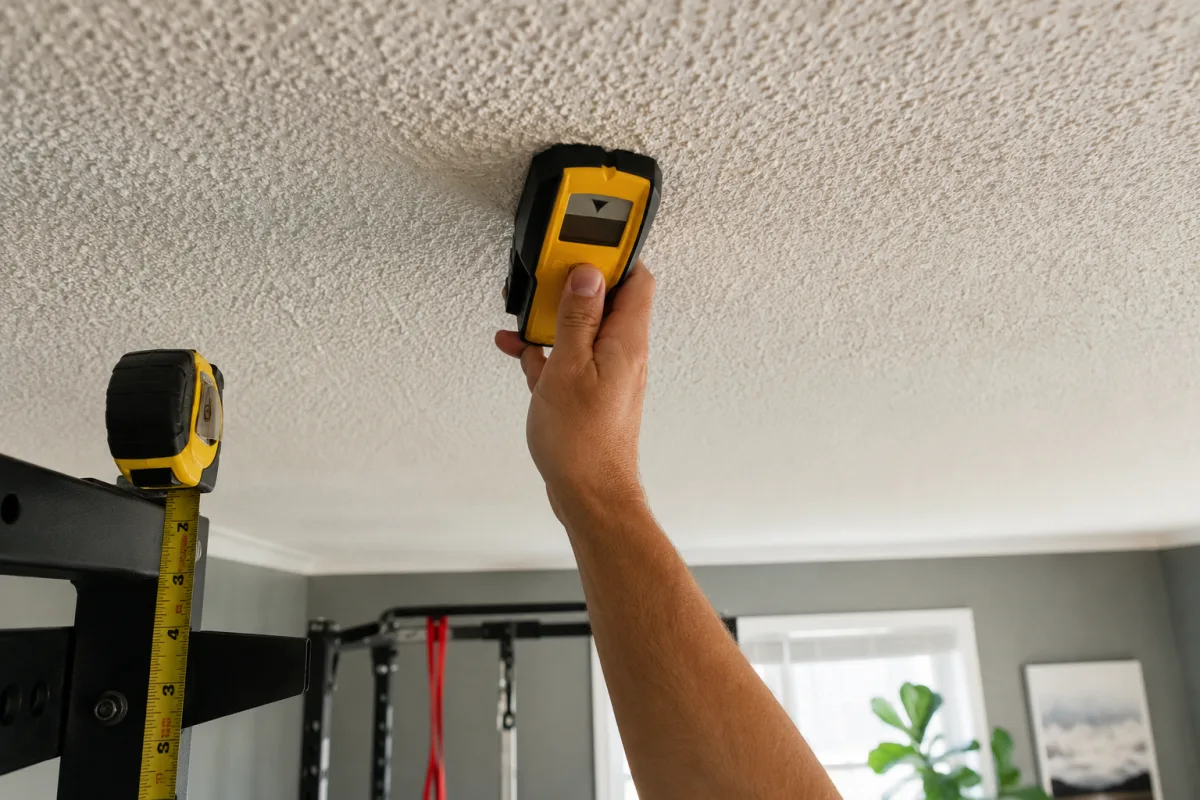
The pole must line up with a joist or beam if the product requires ceiling support. A stud finder can help, but popcorn texture can make readings less reliable. Confirm by checking from several directions, measuring from known framing, and listening for solid versus hollow areas.
Many pole installation guides, including home pole advice from Bees Knees Knee Pads, stress centering the ceiling dome or mount on a joist to avoid pushing through the ceiling. If you are not sure, stop and ask a contractor or experienced installer.
Choose Temporary Or Permanent Mounting
Pressure-mounted poles are popular because they avoid screws, but they still press hard against the ceiling and floor. Permanent mounts attach to structure and may be safer for some serious training, but they create holes and require correct fastening.
For renters, permanent mounting may violate the lease. For homeowners, permanent mounting may still require patching later. Decide based on permission, training level, manufacturer rules, and the ceiling you actually have.
Prepare The Area
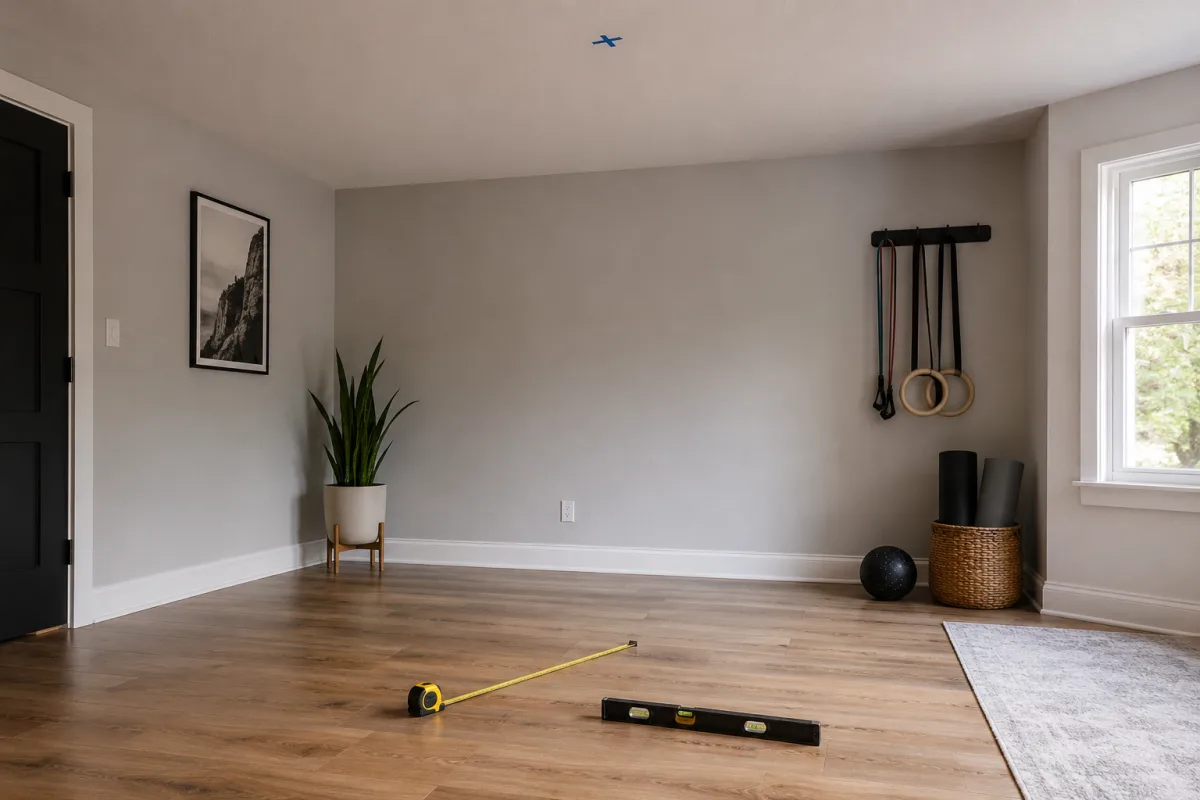
Clear furniture, rugs that slide, lamps, mirrors, pets, and clutter. Measure the spin radius with arms and legs extended. You need space for movement, not just enough room for the pole to stand upright.
If pole fitness is part of a broader workout plan, Livecub's chair dancing guide, Pilates jump board article, and Pilates or tai chi comparison can help you think about conditioning, balance, and movement control.
Check The Floor Too
The ceiling gets most of the attention, but the floor matters. A pressure pole needs a stable, clean, level base. Thick carpet, loose laminate, soft flooring, or a rug under the base can let the pole settle or shift. The base should sit exactly as the manufacturer describes.
If the floor flexes, slopes, or squeaks, do not ignore it. The pole transfers force between ceiling and floor. Weak support at either end can make the setup unsafe.
Protect The Popcorn Texture
Some people place a board between the dome and ceiling to spread pressure, but this is not safe for every pole or every ceiling. Follow the pole manufacturer's instructions first. A homemade spacer can slip, hide a bad fit, or change how pressure transfers.
If the texture crushes slightly under a pressure dome, that may be cosmetic. If the ceiling cracks, flakes heavily, sags, or shifts, remove the pole and reassess before using it.
Install Slowly And Level
Read the manual from start to finish before assembling. Lay out all pieces, confirm ceiling height range, and check that the floor and ceiling contact points are clean. Tighten in small steps and use a level from more than one direction.
A pole that looks straight from one side can lean from another. Recheck after the first gentle test and again after a short practice session. Temperature, flooring, and ceiling texture can settle.
Test Before Training
Do not start with spins, climbs, inversions, or forceful moves. Begin with gentle pressure tests, light pushes, and basic walking around the pole while watching the ceiling and floor contact points. If anything shifts, creaks, grinds, or slides, stop.
Conditioning matters too. Livecub's basic aerobic steps and running bleachers benefits are different workouts, but they point to the same idea: build capacity before asking the body or equipment for more.
Know What Moves Are Too Much
Beginner spins and low-flow work place less demand on a setup than drops, heavy dynamic spins, doubles work, and advanced inversions. Your pole may be rated for certain uses, but the rating assumes correct installation and appropriate structure.
If you plan to invert, climb high, or train fast spins, get instruction. A pole class, coach, or experienced spotter can reduce bad habits and unsafe progressions.
Use Mats And Spotting
A crash mat cannot fix a bad ceiling mount, but it can reduce injury risk during floor work and beginner skill practice. Use a mat sized for the movement, not a thin yoga mat that slides away.
Livecub's tumbling mat guide can help with the idea of padding, though pole mats have their own size and firmness needs.
Plan For Removal And Repairs
Before installing, think about how the ceiling will look later. Popcorn texture can flatten where the dome presses, and permanent mounts leave screw holes. Keep paint color, texture repair products, and lease rules in mind before making a choice.
Take photos before installation, after installation, and after removal. Photos help if you rent, if damage appears later, or if you need advice from an installer.
Maintenance Checks
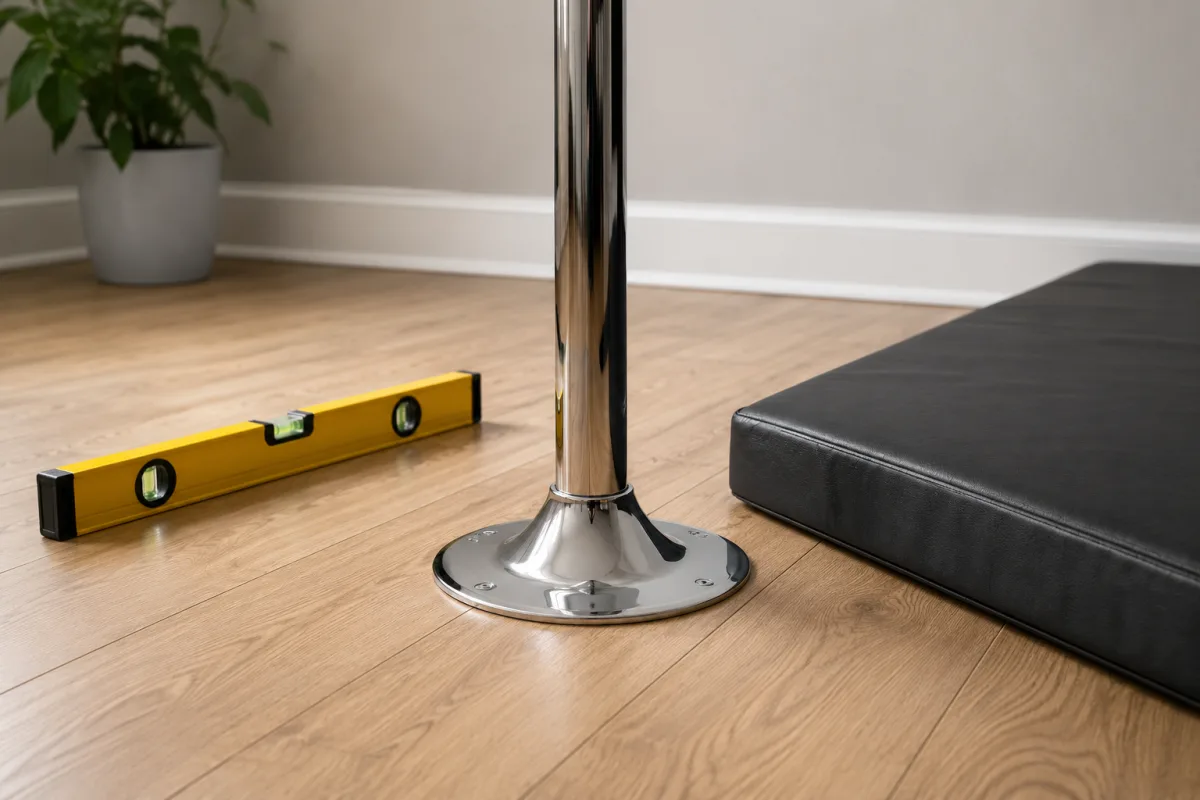
Before each session, check the pole's tightness, height adjustment, screws, dome, base, floor grip, and ceiling surface. Wipe grip surfaces according to manufacturer instructions. Sweat, dust, lotion, and residue can affect safety.
Spinning Wild's popcorn ceiling pole installation guide also emphasizes joist placement, level installation, and checking the fit. Treat these checks as part of training, not an optional chore.
Respect Weight And Use Limits
Every pole has limits. Read the manual for ceiling height, surface type, user weight, spin/static settings, and allowed moves. Do not rely on social media installation clips if they conflict with the manual for your model.
If several people will use the pole, teach each person the same checks. One careful installer cannot make the setup safe if the next user loosens, moves, or overloads it.
Keep the manual nearby, not buried in a closet. You may need torque, height, or part numbers later, especially if the pole is moved, tightened, cleaned, stored, or disassembled.
When Not To Install
Do not install on a drop ceiling, visibly damaged ceiling, wet ceiling, weak plaster, unknown asbestos material, loose flooring, or any setup that the manufacturer excludes. Do not install near glass, sharp furniture, ceiling fans, hanging lights, or open stairs.
If the pole is for weight loss or fitness goals, a lower-equipment workout may be a better temporary option while you sort out a safe home setup.
Frequently Asked Questions
Can you mount a dance pole on a popcorn ceiling?
Sometimes, but the pole must be supported by proper structure, not by the popcorn texture.
Do I need to scrape the popcorn ceiling first?
Do not scrape older popcorn texture without checking asbestos risk and safe removal rules.
Is a pressure-mounted pole safe?
It can be if the ceiling, floor, joist placement, height range, and installation match the manufacturer's instructions.
Can I use plywood under the ceiling dome?
Only if the pole manufacturer allows it. Homemade spacers can change the fit and create slip risk.
How often should I check the pole?
Check before every session and after any strong movement, ceiling shift, or flooring change.
The Safe Installation Rule
Mount a dance pole on a popcorn ceiling only when you know the structure, follow the manual, account for asbestos risk, center the pole on proper support, test gently, and stop at the first sign of movement or damage.

Olivia Prete
Edits culture and personal-development articles, distinguishing opinion and experience from verifiable claims.


Leave a reply
Replying to