

How to Remove a Foreclosure from Credit Report starts with a hard truth: accurate negative information usually cannot be removed just because it hurts. A foreclosure can be disputed if it is wrong, duplicated, outdated, or tied to identity theft.
Avoid credit-repair promises that sound too easy. The lawful path is to get your reports, identify exact errors, dispute with the credit bureaus and furnisher, keep records, and escalate only when the facts support it.
Start With All Reports
Pull reports from Equifax, Experian, and TransUnion because the foreclosure may appear differently on each report.
AnnualCreditReport.com says federal law allows consumers to dispute inaccurate information on a credit report for free: AnnualCreditReport.com dispute information.
Know The Seven Year Rule
CFPB says you generally cannot remove accurate negative information from a credit report, and most negative information remains for seven years: CFPB accurate negative information.
If the foreclosure is accurate and not too old, rebuilding credit may be the realistic path.
Find Actual Errors
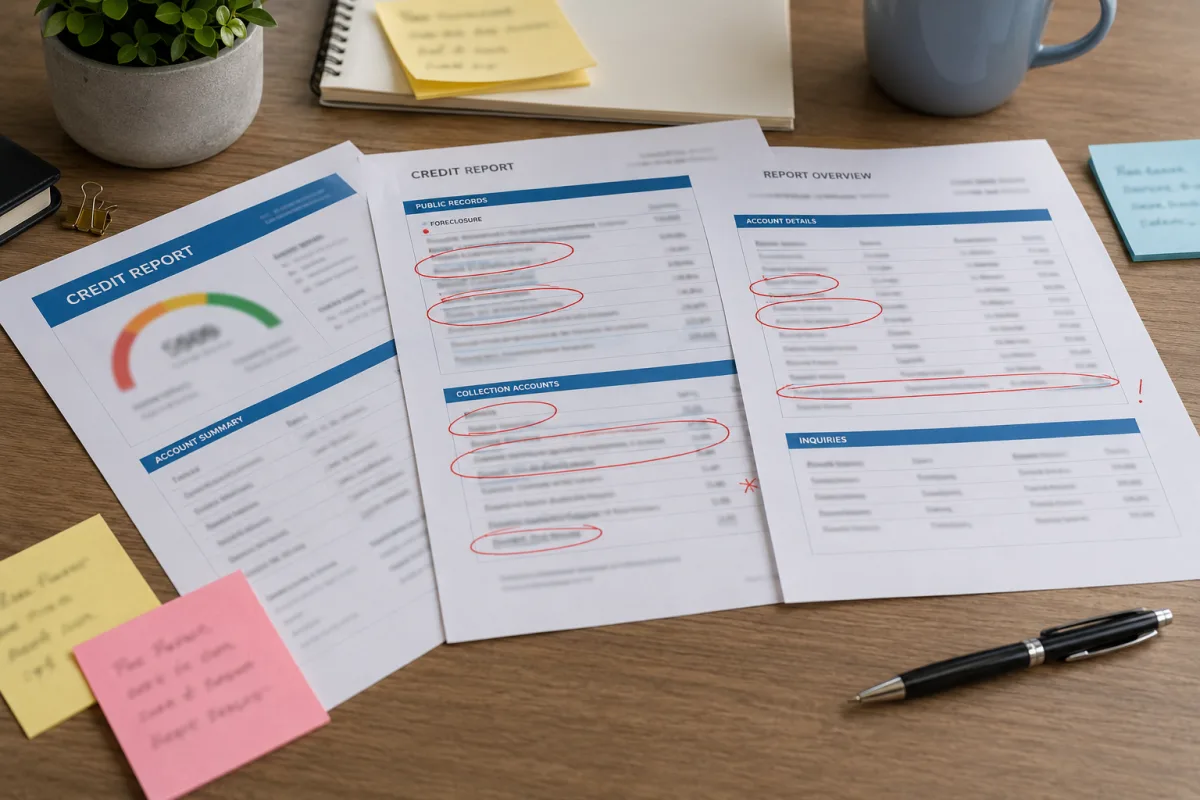
Look for wrong dates, wrong balance, duplicate entries, accounts that are not yours, incorrect status, missing bankruptcy context, or a foreclosure still reporting after the allowed period.
Do not dispute vague feelings. Dispute facts.
Dispute With Bureaus
Fixing a credit report error generally means contacting both the credit reporting company and the company that provided the information.
Send the dispute through a method that gives you proof of submission.
Dispute With The Furnisher
The furnisher is often the mortgage servicer, lender, debt buyer, or company that reported the foreclosure information.
Tell them exactly what is wrong and what correction you want.
Use The FTC Format
FTC advises consumers to identify each disputed item, state the facts, explain why it is disputed, and ask for correction or deletion: FTC credit report dispute guidance.
Attach copies, not originals, of proof.
Gather Documents
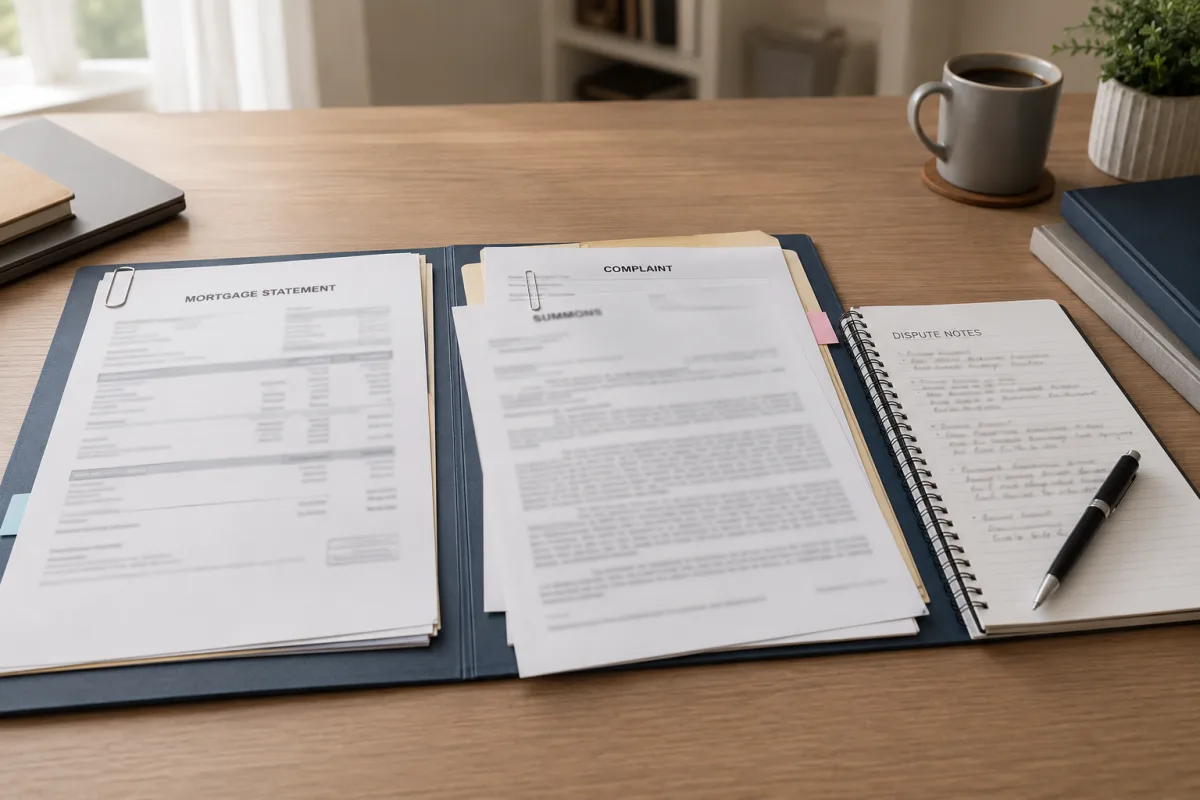
Useful records may include mortgage statements, foreclosure notices, court papers, bankruptcy discharge, short-sale approval, payoff letters, identity theft reports, or county records.
Circle or label the proof so the investigator can see the error quickly.
Track The Timeline

Credit reporting companies generally have a limited investigation window after receiving a dispute, with some cases taking longer when more information is added.
Mark the date you filed and save confirmation numbers.
Handle Identity Theft
If the foreclosure is tied to identity theft, use IdentityTheft.gov and follow the credit bureau identity theft process.
Identity theft disputes need stronger documentation than an ordinary date correction.
Check For Duplicates
A foreclosure may appear under the mortgage account, a collection account, a public record reference, or a servicer transfer.
Some reporting may be accurate, but duplicated inaccurate reporting can be disputed.
Outdated Reporting
If the item is older than the reporting period, dispute it as obsolete or too old to report.
Use dates from the report and supporting account records.
Do Not Pay For False Promises
No company can lawfully remove accurate, current negative information just by sending a magic letter.
Be wary of anyone promising deletion before reviewing the facts.
Estate Related Foreclosure
If foreclosure followed a death, estate, or inherited property issue, legal questions may overlap with probate.
Livecub's probate court guide and estate lawyer question guide may help frame those separate legal issues.
Debt Responsibility Questions
A credit report dispute is not the same as deciding who legally owes a debt.
Livecub's surviving spouse debt guide is a related example of why debt liability and reporting are different questions.
Power Of Attorney Issues
If someone used authority for mortgage or property matters while the owner was incapacitated, get legal advice.
Livecub's power of attorney form guide explains why authority documents need careful review.
After Investigation
Read the investigation result carefully. If the bureau verifies the item, compare the explanation with your proof.
If the answer ignores documents, you may need a stronger follow-up dispute or legal help.
Add A Statement Carefully
A consumer statement may let you explain an unresolved item, but it does not change the score the way a deletion might.
Use it only if it adds clear context and does not create confusion.
Rebuild While Waiting
Pay current bills on time, keep balances low, avoid unnecessary hard inquiries, and keep records of corrected errors.
New positive history does not erase the foreclosure, but it can help over time.
Know When To Escalate
If the item is clearly wrong and disputes fail, consider a CFPB complaint, state attorney general complaint, or consumer law attorney.
Bring a clean file: reports, disputes, proof, responses, and dates.
Keep Copies
Save every credit report, dispute letter, upload receipt, mail receipt, investigation result, and furnisher response.
A dispute without records is much harder to prove later.
Avoid Frivolous Disputes
Repeating the same unsupported dispute can be treated as weak or frivolous.
If a dispute failed, add new facts, better proof, or a clearer explanation before trying again.
Use Certified Mail When Needed
Online disputes are convenient, but mailed disputes can make it easier to include documents and prove what was sent.
Use certified mail or another trackable method when the error is serious.
Servicer Transfers
Mortgage servicing can move from one company to another. A foreclosure may be reported by more than one company over time.
Check whether each entry has the correct dates, balance, status, and account ownership.
Bankruptcy Context
If the mortgage was included in bankruptcy, the credit report should not imply new personal liability that was discharged.
Bankruptcy reporting is technical, so consider legal help if the foreclosure and discharge information conflict.
Short Sale Or Deed In Lieu
A short sale, deed in lieu, foreclosure, and charge-off are not the same event.
If the report uses the wrong status, dispute with closing documents or lender letters.
Court Record Errors
If the foreclosure came through court, county or court records may help prove dates, case status, or dismissal.
Get certified copies if the credit bureaus or furnisher ignored informal screenshots.
Mortgage Account Dates
The date that matters for reporting may not be the sale date alone.
Review the first missed payment, charge-off, foreclosure sale, and account transfer dates with a consumer law professional if timing is unclear.
After A Correction
If an item is corrected or deleted, pull fresh reports later to confirm the change stayed fixed.
Sometimes one bureau updates while another keeps the old version.
Build A Positive File
While the dispute runs, focus on current accounts: on-time payments, low card balances, and no unnecessary applications.
Credit recovery is slower than deletion, but it is still work you control.
Watch Credit Repair Fees
If you hire help, read the contract, understand the fee, and avoid anyone asking you to lie or create a new identity.
A legitimate dispute should be based on accurate facts.
Prepare For Lenders
If you are applying for a mortgage or large loan, ask the lender how a pending dispute or old foreclosure affects underwriting.
Sometimes a corrected report and a written explanation are both needed.
Do Not Reset Old Debt Carelessly
Before paying or negotiating an old mortgage-related debt, ask how payment could affect reporting, taxes, or collection rights.
Get settlement terms in writing before sending money.
Complaint Options
If a bureau or furnisher ignores clear proof, a CFPB complaint can create a documented escalation path.
Keep the complaint factual: what is wrong, what proof you sent, and what result you want.
Legal Claims
If repeated accurate disputes are ignored or the reporting causes financial harm, a consumer law attorney can explain possible FCRA claims.
Bring organized documents so the attorney can evaluate facts quickly.
Emotional Distance
A foreclosure can feel personal, but the dispute process is paperwork.
Keep letters calm, specific, and evidence-based even if the experience was painful.
Frequently Asked Questions
Can I remove an accurate foreclosure?
Usually no. Accurate negative information generally remains until the legal reporting period expires.
When can a foreclosure be removed?
It may be removed or corrected if it is inaccurate, duplicated, outdated, not yours, or tied to identity theft.
Who should I dispute with?
Dispute with both the credit reporting company and the company that supplied the foreclosure information.
How long does a dispute take?
Credit reporting companies generally investigate within 30 days, with some investigations taking up to 45 days.
Should I hire a credit repair company?
Be cautious. No one can lawfully guarantee deletion of accurate, current negative information.
To remove a foreclosure from a credit report, focus on facts: pull all reports, identify exact errors, dispute with proof, track deadlines, and rebuild if the item is accurate.

Tory Stearns
Edits practical household, travel and lifestyle explainers. Claims that can change are linked to current primary or subject-authority sources.


Leave a reply
Replying to