
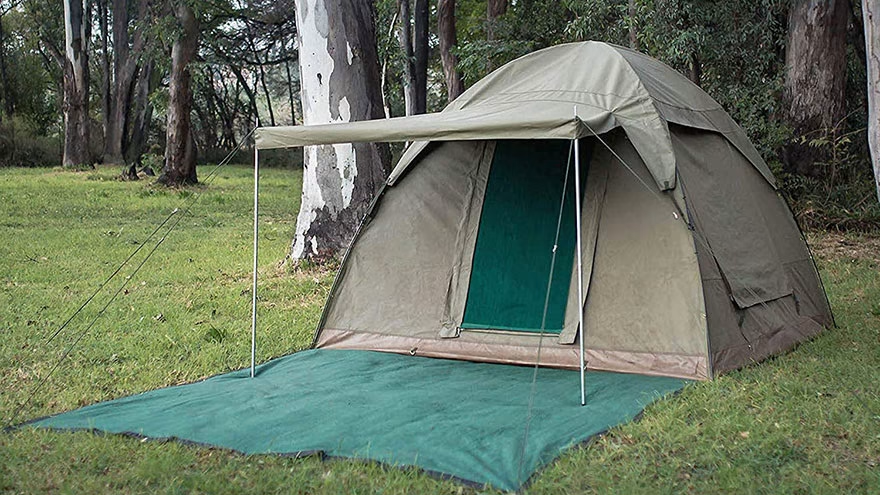
A tent can become the hottest place in camp by midmorning if it sits in full sun with the rainfly sealed tight. To stay cool while tent camping, plan shade, airflow, water, clothing, meal timing, and escape options before the heat peaks. Comfort matters, but heat safety matters more when the forecast stops feeling like a normal summer day.
How hot is too hot for tent camping?
There is no single safe temperature for every camper. Humidity, sun exposure, wind, age, health, medications, sleep, and water access all change risk. The National Weather Service says heat is one of the leading weather-related killers in the United States and urges people to know heat alerts, symptoms, and safety actions.
The National Weather Service heat safety page is the right pre-trip check because heat advisories and excessive heat warnings can change your plan. If the forecast is extreme, moving the trip is not failure. It is judgment.
If the campsite has no shade, no water, no breeze, and no nearby cooling option, treat the trip as higher risk. A beautiful view does not cool a tent.
Where should you pitch a tent to stay cooler?
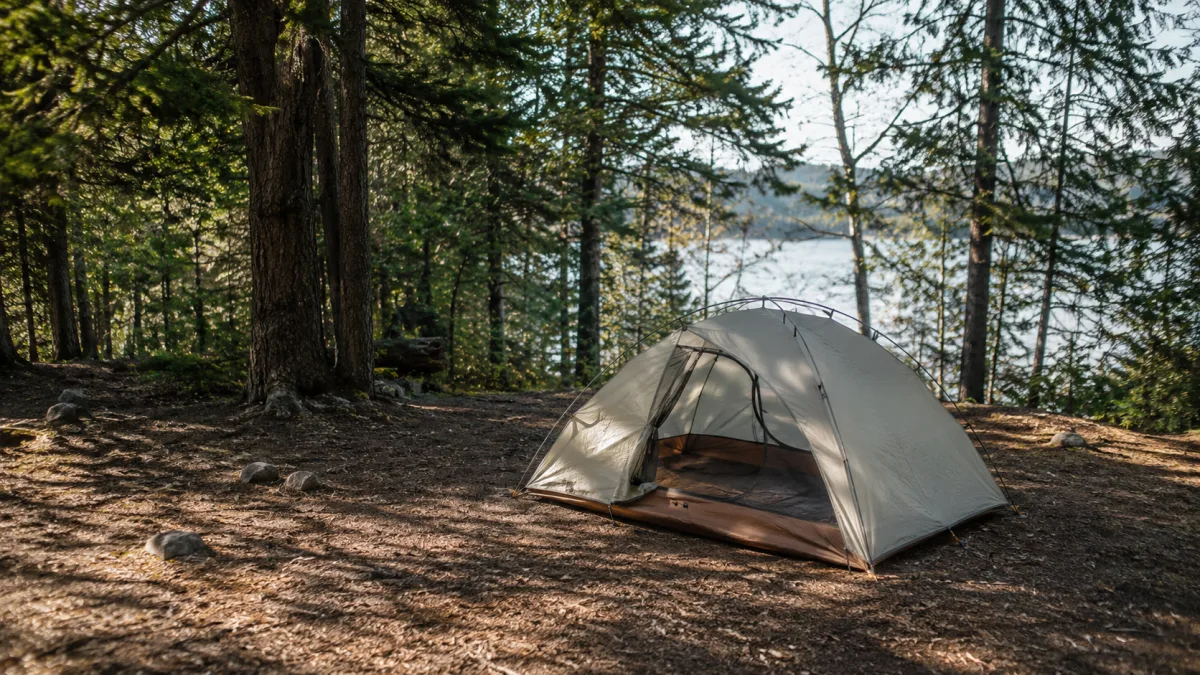
Choose morning and afternoon shade if you can. Afternoon shade matters most because late-day heat builds in the tent, the ground, and your gear. Avoid low, windless basins where heat sits, and avoid exposed rock or sand that radiates heat back at you.
Set the tent so prevailing breeze can pass through doors or mesh panels. Use natural shade without damaging vegetation. Do not trench, cut branches, or create a new campsite just to get a cooler angle.
Shade beats gadgets. A battery fan helps, but it cannot undo a tent baking under direct sun for six hours. Choose the site before relying on gear.
A tarp or shade canopy can help if campground rules and wind allow it. Pitch it high enough for air to move, not tight against the tent like a second heat-trapping roof. Use existing durable anchor points or freestanding poles rather than tying lines to fragile plants.
If your trip includes short hikes, Livecub's walking-stick adjustment guide can help reduce effort on hot, uneven trails where wasted energy turns into extra heat.
How do you improve tent airflow?
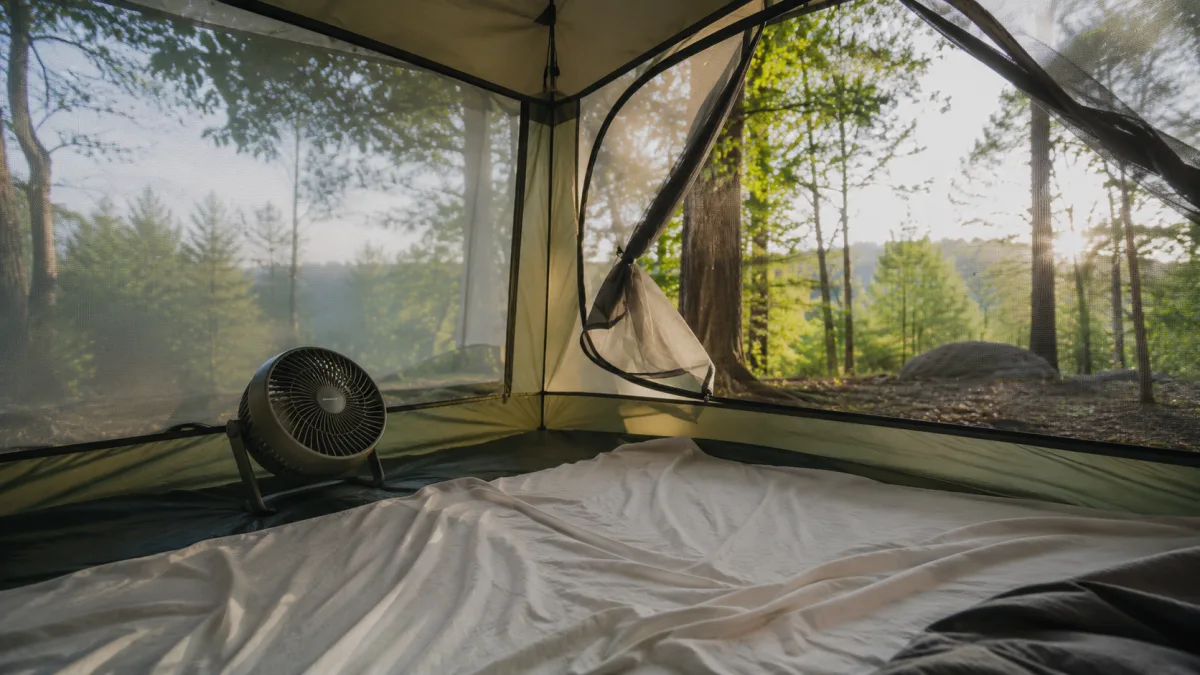
Use the tent's mesh, vents, and doors intentionally. If weather allows, roll back part of the rainfly or stake it so air can move under the edges. Keep privacy needs in mind, but do not seal every panel just because that is how the tent looked at setup.
Open high and low vents to create a path for warm air to leave. Keep gear from blocking mesh walls. A small battery fan aimed across, not directly at your face all night, can help move humid air out.
Ventilation is a sleep tool. A stuffy tent raises discomfort before the temperature reading looks dramatic. If you wake sweating at midnight, adjust airflow before you simply remove all bedding.
What should you wear in hot camp weather?
Choose light, loose clothing that protects skin from sun while allowing sweat to evaporate. A wide-brim hat, breathable long sleeves, and dry sleep clothes can be more comfortable than wearing as little as possible and burning early.
The CDC heat guidance recommends staying cool, staying hydrated, and staying informed during extreme heat. The CDC extreme heat prevention page also advises drinking more fluids and avoiding very sugary or alcoholic drinks during heat.
Keep one dry shirt for sleep. Even in hot weather, damp clothing can feel clammy once the night breeze arrives. Dry sleep clothes also help prevent chafing and skin irritation.
How much water should you plan for?
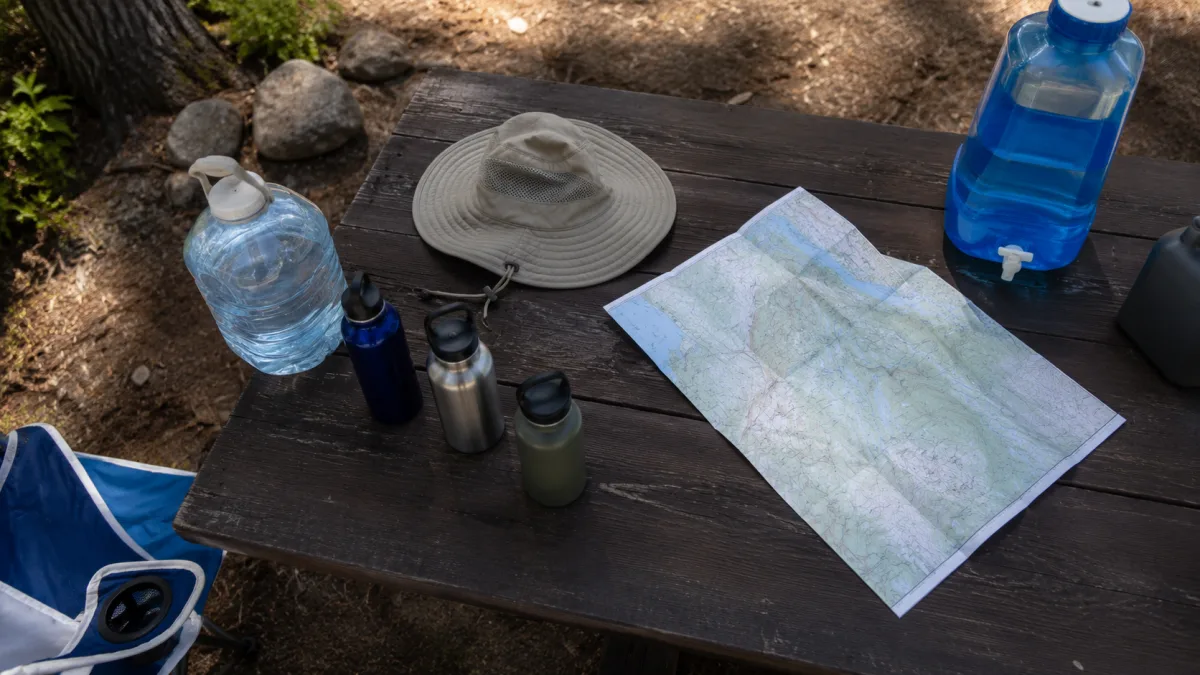
Plan water before you plan meals. Hot weather increases drinking, cooking, dish washing, hand washing, and pet needs. If the campground has no reliable potable water, carry more than your usual trip amount or choose a different site.
Electrolytes can help during heavy sweating, but they are not a substitute for water, shade, and rest. Check urine color, headache, dizziness, cramps, and unusual fatigue. If someone stops sweating and seems confused, treat that as urgent.
Do not ration water to save the campsite. If water runs low, leave. A good trip has an exit plan before heat turns into a medical problem.
Keep water visible. Bottles buried in the car do not get used often enough. Put a filled bottle at the tent door, one at the kitchen, and one in the daypack so drinking does not depend on remembering where the cooler is.
How should you time activities in summer heat?
Do the hardest tasks early. Hike, set up, cook, and collect water before the afternoon peak. Use midday for shade, swimming where safe, reading, naps, or a drive to a cooler place. Evening can handle camp chores after the heat drops.
Livecub's Skyline Drive waterfalls guide is a different setting, but it shows the same planning logic: start early, respect parking and weather, and keep energy for the return.
Children, older adults, dogs, and people with medical conditions need wider margins. Do not judge the group's safety by the strongest person's comfort.
Build a cooling errand into the plan if the forecast is rough: a shaded visitor center, grocery store, laundromat, lake access where swimming is legal, or a drive with air conditioning. Remote trips like Livecub's Spiral Jetty travel guide show why exposed landscapes need a backup when sun and distance stack up.
What food and cooking choices keep camp cooler?
Plan low-cook meals for hot afternoons. Sandwiches, grain salads, tortillas, fruit, nuts, yogurt in a cooler, cold noodles, and pre-cooked proteins reduce stove time. Cook breakfast early and dinner late if you want hot meals.
Set the kitchen in shade and away from the tent. A stove adds heat, and food smells inside the tent create wildlife and hygiene problems. Keep coolers closed, drained as needed, and shaded.
Heat changes appetite. Pack salty, easy snacks that people will actually eat. A camp menu that looks perfect at home may feel heavy at 95 degrees Fahrenheit.
Pack food so the first day's dinner is easiest. The hottest arrival day is the wrong time for a complicated stove meal. Cold wraps, pre-washed fruit, and a quick protein keep everyone fed while you focus on shade and water.
How do you sleep cooler in a tent?
Use a light sheet or liner instead of a heavy sleeping bag when conditions allow. Sleep on an insulated pad only if the ground temperature or comfort requires it; some pads trap warmth. Keep the fly vented, doors screened, and fan running if you have safe battery power.
Cool your body before bed. Wipe down with a damp cloth, soak feet where allowed, change into dry clothes, and drink water. Do not sleep in direct sun after sunrise if the tent heats quickly; set an early alarm if needed.
Keep tomorrow's water ready before you finally fall asleep at camp.
What heat-illness warning signs should campers know?
Heat cramps, heavy sweating, weakness, dizziness, nausea, headache, and faintness can signal trouble. Heat stroke is an emergency. NPS heat safety guidance says heat stroke includes hot, red skin, confusion, and loss of consciousness and requires urgent medical help.
The NPS heat illness page is useful for campers because it frames symptoms in outdoor settings. Move the person to shade, cool them, and seek help for serious symptoms.
Remote camping makes heat illness harder to handle. If the trip has no cell service, no shade, and no vehicle escape, reduce activity earlier than you would at a developed campground.
Frequently Asked Questions
Should I remove the rainfly to stay cooler?
Remove or roll it back only if weather, privacy, insects, and dew allow. A vented fly can balance airflow with overnight protection.
Do battery fans work in tents?
They help move air, especially in humid conditions, but they do not replace shade, hydration, ventilation, or a safer forecast.
Is it cooler to sleep outside the tent?
Sometimes, but consider insects, wildlife, dew, privacy, and campground rules. A screened shelter or mesh-heavy tent is often safer.
How do I keep a dog cool while tent camping?
Provide shade, water, rest, cool ground, and no midday overexertion. Never leave a dog shut in a hot tent or vehicle.
Pick shade first, open the tent second, and leave before water, symptoms, or the forecast force the decision for you.

Timothy Davidson
Edits step-by-step general-interest guides for clarity, realistic limits and source verification.


1 Comment
Join the discussion. Comments are moderated before appearing.