
Free Atlanta Works Best as a Neighborhood Plan
How to enjoy free attractions in Atlanta, Georgia is not about rushing across the whole metro area with an empty wallet. Atlanta is spread out, traffic can eat a day, and the free sights feel better when they are grouped by neighborhood.
Build the day around one anchor, then add nearby walks, parks, murals, markets, or views. That gives the trip shape without turning a free itinerary into an exhausting scavenger hunt.
Free does not mean unplanned. The best no-cost Atlanta days still need timing, transit choices, weather awareness, and a backup for tired feet.
Start With Martin Luther King, Jr. National Historical Park
The Martin Luther King, Jr. National Historical Park is one of Atlanta's strongest free attractions because it combines history, walking, and a clear sense of place. The National Park Service plan-your-visit page lists visitor information and notes that some ranger-led presentations are free but limited.
Arrive early if you want structured presentations or birth home access, because capacity can fill. Even without a tour, the district gives visitors a meaningful route through Ebenezer Baptist Church, the visitor center area, and the surrounding historic streets.
Do not treat it like a quick photo stop. Give the site enough time to breathe, read, and walk.
If your travel style includes historic sites, Livecub's How to Tour Haunted Waverly Hills Sanitarium in Louisville Kentucky is a different kind of destination, but it has the same planning lesson: check hours before building the day.
Walk the Atlanta BeltLine for Art and Neighborhoods
The Atlanta BeltLine is one of the easiest free ways to understand the city's newer public-space energy. The official BeltLine visitor information page covers access points, maps, transportation, and trail details.
Pick one section rather than trying to do the whole loop. The Eastside Trail is popular and busy. Other sections can feel quieter and more local. Public art, skyline views, small parks, and food-hall edges make it easy to turn the walk into a half day.
The trail is free; the temptations are not. Decide ahead of time if the plan is only walking or also includes coffee, lunch, or market browsing.
For another travel day built around walking and views, Livecub's Waterfalls on Skyline Drive in Virginia shows how a route can be the attraction, not only the destination.
Use Parks as Real Itinerary Stops
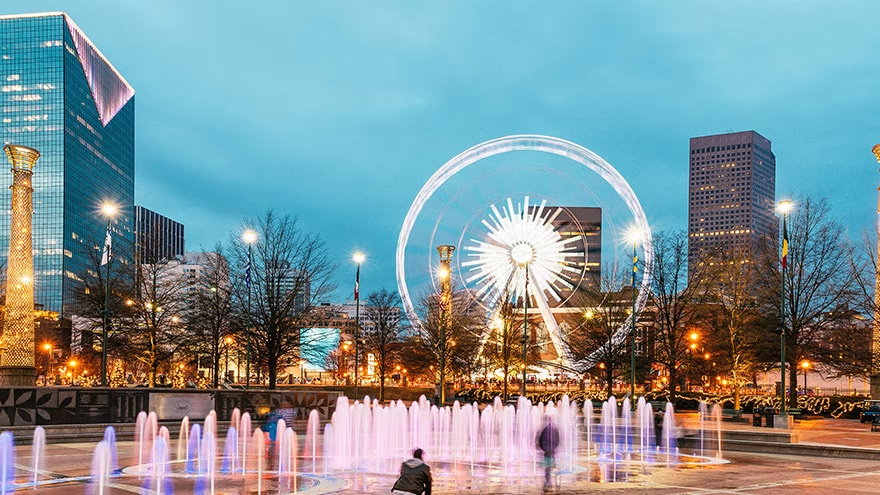
Piedmont Park, Centennial Olympic Park, neighborhood greenspaces, and trail-connected parks can carry a budget day when museums and ticketed attractions are too expensive. Bring water, sunscreen, and a plan for shade.
Do not treat parks as leftover time. A picnic, skyline photo walk, playground break, or quiet hour on a bench can be the part of the day people remember.
Families should check restrooms and playground locations before promising a long walk. A free attraction loses charm fast when everyone is hungry and nobody knows where the bathroom is.
For a slow morning, pair Piedmont Park with nearby Midtown streets and save the King historic district or BeltLine for another day. For a downtown hotel stay, Centennial Olympic Park can be a practical pause between larger sights, especially when the group needs shade, snacks, or a break from traffic.
Parks are also where the budget resets. Sitting down for twenty minutes can stop the small purchases that happen when people are tired, thirsty, and drifting without a plan.
Look for Public Art and Murals
Atlanta has murals and public art throughout intown neighborhoods, along parts of the BeltLine, and near commercial corridors. Public art turns a walk into a low-cost sightseeing route, especially if you enjoy photography.
Make the route compact. Choose one neighborhood, park once or use transit, and explore on foot. Trying to collect murals across the entire city in one afternoon creates more driving than discovery.
Free sightseeing is better when it stays slow. The point is not to prove you saw everything.
Give yourself permission to skip a mural if reaching it means another rideshare or a long walk along an unpleasant road. The best public art walk is the one that fits naturally between food, shade, restrooms, and transit.
Mix Free Stops With One Paid Treat
A realistic budget day may still include one paid item: coffee, parking, transit, a snack, or a small museum. Build that into the plan so the day does not feel like constant refusal.
Discover Atlanta's free and cheap things to do page is useful for spotting a mix of free options and low-cost splurges. Check current hours and prices before you go, because listings can change.
If shopping districts are part of your travel style, Livecub's The Top 5 Best Places to Shop In Gatlinburg is a reminder to separate browsing from buying before a budget day gets away from you.
Use Transit and Parking Strategically
Atlanta visitors should price transportation honestly. Parking, rideshares, fuel, and time in traffic can turn a free day into a costly one. MARTA works well for some routes and poorly for others, depending on where you stay and what you want to see.
Group stops near a rail station or one parking area when possible. If you need to drive, decide where the car will stay for several hours. Moving it repeatedly costs money and patience.
Saving money is not only about tickets. Transportation choices can be the biggest difference between a cheap day and an expensive one.
Before leaving the hotel, compare three options for the main move of the day: transit, one rideshare, or one paid parking spot. The cheapest answer changes by neighborhood, weather, and group size. A family of four may not make the same choice as a solo traveler.
If you use MARTA, check the walking distance at both ends of the ride. A station can be close on the map and still feel inconvenient in heat, rain, or late evening.
Bring a Budget Kit for the Day
A small bag can protect the whole free-day plan. Pack water, a snack, sunscreen, a hat, a phone battery, any medication you need, and a light layer if you will stay out after sunset.
Families may want wipes, a small first-aid pouch, and a simple game or notebook for downtime. None of that is glamorous, but it prevents the paid convenience stops that drain a budget.
The cheapest attraction still asks for basic comfort. A prepared bag lets you enjoy the free parts of the city without treating every inconvenience as a reason to spend.
Build a Simple Free-Day Route
A strong day might start at the King historic district, continue with lunch nearby, and end with a BeltLine walk. Another day could focus on Piedmont Park, Midtown public art, and a low-cost snack.
For road-trip style planners, Livecub's Things to See Around Laughlin, Nevada shows the same principle in another city: cluster stops so the day has rhythm.
Leave one hour unassigned. Atlanta traffic, heat, and restaurant waits can bend a schedule, and an open hour keeps the day from feeling like a punishment. If everything runs smoothly, use that hour for a second park, a coffee, or a slower walk.
For a first visit, keep the route emotionally balanced as well as geographically sensible. A heavy historic morning, a crowded trail, and a noisy market can all be worthwhile, but stacking them without quiet time makes the day feel rushed.
End near dinner, transit, or the car rather than ending at the farthest stop on the map. That small choice often decides whether a free day finishes calmly or turns into an expensive ride back.
Free Atlanta is not a compromise version of the city. It is often the best way to feel the neighborhoods, history, and public spaces without hiding indoors all day.
Frequently Asked Questions
What is the best free attraction in Atlanta?
Martin Luther King, Jr. National Historical Park is one of the strongest free choices because it combines history, walking, and a clear sense of place.
Is the Atlanta BeltLine free?
Walking the trail is free. Food, drinks, parking, rentals, and shopping along the route can add costs.
Can I enjoy Atlanta without a car?
Some routes work with MARTA, walking, and rideshare, but Atlanta is spread out. Cluster attractions by neighborhood to reduce transportation trouble.
How do I keep a free Atlanta day from getting expensive?
Plan parking or transit, bring water, set one paid treat, and avoid moving across the city for every single stop.

Linda Fehrman
Edits general wellness and relationship explainers. Health material is educational, avoids diagnosis and links to health-authority guidance.



Leave a reply
Replying to