Travel

Best Staycation Ideas for Families: Fun at Home Guide 2026

June 27, 2026 | By Olivia Prete
Best Staycation Ideas for Families: Fun at Home Guide 2026

staycations have become an increasingly popular choice for families looking to take time away from their regular routines without the expense and hassle of traveling. A staycation—spending your vacation time at home or in your local are:

  • a—offers numerous advantages for busy families
  • including cost savings
  • reduced stress
  • the opportunity to rediscover the beauty and attractions of your own community

The beauty of a staycation lies in its flexibility and customization. You can design your vacation entirely around your family's interests, your children's ages, and your budget.

From exciting outdoor adventures in your backyard to cozy indoor activities that support family bonding, staycations provide the perfect opportunity to spend quality time together without the pressures of travel.

This guide explores numerous creative staycation ideas that will transform your home and local community into an exciting vacation destination.

Creating a Backyard Camping Experience

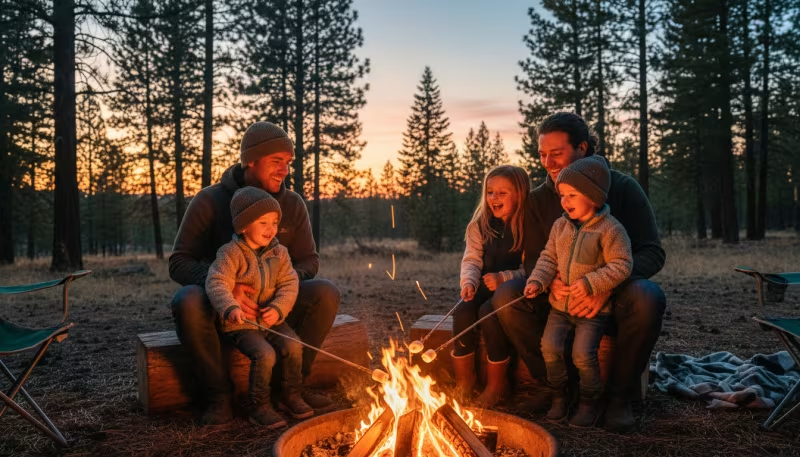
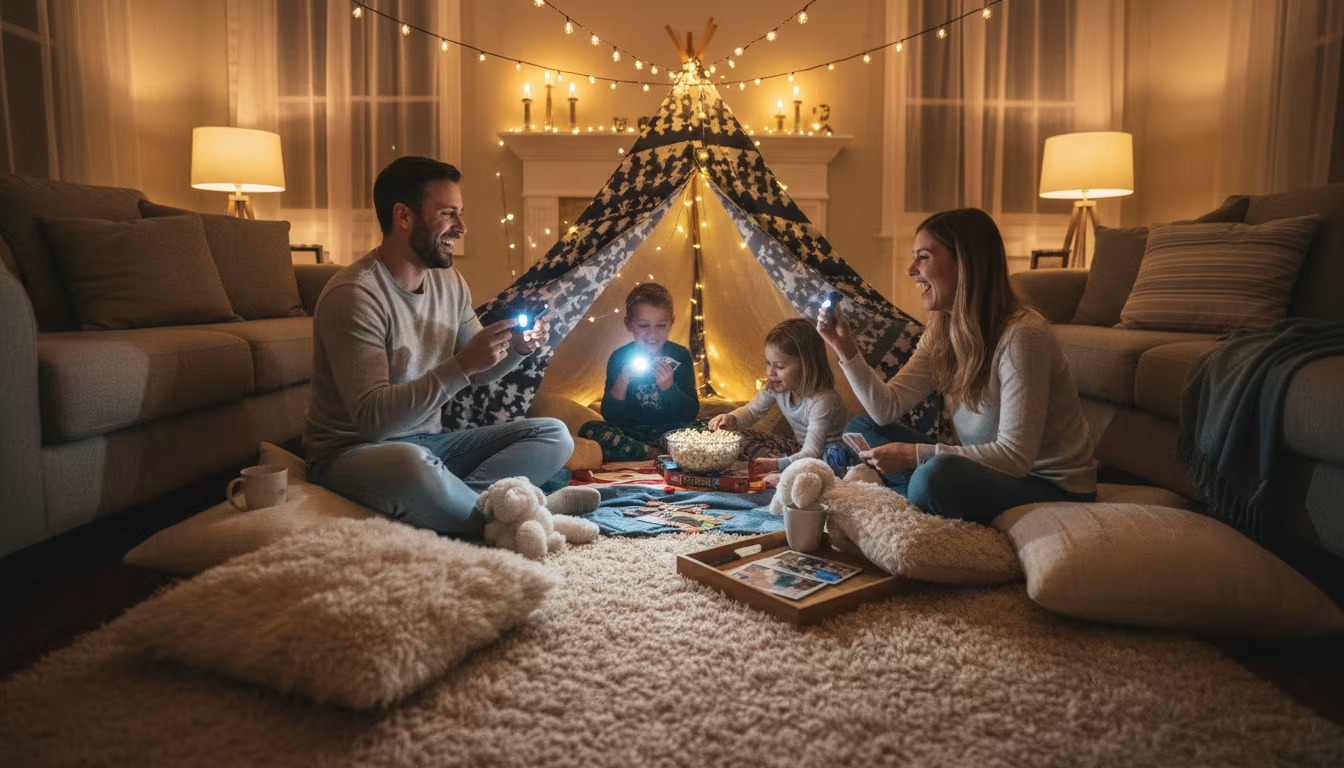
One of the most beloved staycation activities for families is backyard camping, which offers the adventure and excitement of camping while maintaining the safety and comfort of being close to home. You can set up a tent in your backyard, or if you don't have outdoor space, create an indoor camping experience with a tent or blanket fort in your living room. The key is creating an atmosphere that feels like a real adventure for your children.

When planning a backyard camping trip, involve your children in setting up the tent, arranging sleeping bags and pillows, and gathering camping essentials. Consider creating a checklist of camping supplies together, turning preparation into an educational activity. You might discuss what campers need to stay safe and comfortable, helping children understand the basics of outdoor survival and preparedness.

For the camping experience itself, prep are:

  • meals that evoke traditional camping
  • such as hot dogs
  • s'mores
  • camping breakfast with pancakes and bacon

Extend the camping experience by doing camping-appropriate activities like making crafts from nature, learning about local wildlife, or teaching wilderness skills suitable for your children's ages. Younger children might enjoy creating nature collages or learning to identify local birds, while older children might appreciate learning navigation skills with a compass or studying local ecology. The key is making the experience feel authentic and exciting for your family.

Organizing Movie Marathons and Entertainment Days

Movie marathons are a classic staycation activity that provides relaxation and family entertainment. Choose a theme for your marathon—perhaps all movies from a particular franchise, movies from a specific decade, or films based on books your family enjoys. Create an event around it with popcorn, candy, homemade snacks, and comfortable seating arrangements.

Make the movie experience special by creating a home theater atmosphere. Hang blankets over windows to darken the room, set up a concession stand with various snacks, and create movie tickets on cardstock that family members can use. Let children take turns being the ticket taker or concession stand operator, adding role-play elements that extend the fun beyond just watching movies.

Alternatively, organize themed entertainment days around different types of media. Comedy day might feature family-friendly funny movies, adventure day could include action or fantasy films, and educational day might include documentaries or films that teach about interesting topics. Between movies, discuss what you've watched, create crafts related to the films, or act out favorite scenes together.

You might also host a family talent show or karaoke session as part of your entertainment days. Create a simple stage with cushions and curtains, prepare a playlist of favorite songs, and take turns performing. Record the performances to create lasting memories, and award silly prizes like Best Dance Moves or Most Enthusiastic Performer to make everyone feel special and appreciated.

Cooking Projects and Culinary Adventures

Cooking together is not only a practical life skill but also a wonderful bonding activity that makes an excellent centerpiece for a staycation. Plan a week where each day features a different cooking project or cuisine. Monday might be Taco Tuesday where the family makes their own tacos, Wednesday could be Homemade Pizza Night, and Friday might be "International Cuisine Day" where you explore foods from different countries.

Start with recipes that match your children's skill levels. Younger children can help with simple tasks like: washing vegetables, mixing ingredients, arranging toppings, and while older children can handle more complex preparation techniques.

Consider creating a unique family recipe book together. Have children help prep are:

  • familiar recipes
  • then create illustrated recipe cards with drawings
  • instructions
  • personal notes about why the recipe is special

Extend cooking adventures by baking bread, making pasta from scratch, or canning and preserving foods if you have a garden. These projects teach patience, chemistry, and food safety while creating tangible results the family can enjoy. Challenge the family to a cooking competition where different family members prepare dishes and everyone votes on their favorites, making it fun and interactive rather than just task-oriented.

Craft Projects and Artistic Endeavors

Dedicating time to craft projects during a staycation provides an excellent outlet for creativity and produces memorable creations. Set up a craft station in your home with art supplies—markers, colored pencils, paint, glue, scissors, and various craft materials—and let creativity flow. The goal isn't necessarily to create masterpieces but to enjoy the creative process together as a family.

Plan specific craft projects that align with seasons or upcoming holidays. In spring, create flower arrangements or paint flower pots for your garden. During fall, make autumn leaf crafts or prepare decorations for Halloween. Winter crafts might include making paper snowflakes, creating holiday ornaments, or building gingerbread houses. These seasonal projects connect crafting to the world around you and create decorations you can display proudly in your home.

Consider more ambitious craft projects like building a birdhouse from scrap wood, creating a mural on a large sheet of paper to decorate your home, or making tie-dye clothing. Older children might enjoy building model rockets, creating jewelry from beads and string, or attempting woodworking projects. These projects teach problem-solving, fine motor skills, and support a sense of accomplishment when completed.

Document your craft projects through photos and videos. Create a family art gallery by displaying crafts on walls or shelves, taking pride in your creative work. Consider starting a family craft competition with different categories and silly awards. This makes crafting more interactive and fun while celebrating everyone's creative contributions to the family.

Planning Scavenger Hunts and Mystery Games

Scavenger hunts and mystery games transform your home and yard into an exciting adventure space while keeping kids engaged and active. Create a scavenger hunt list with items to find around your house and yard, using clues that challenge your children based on their reading and problem-solving abilities. Younger children might hunt for items by color or shape, while older children can solve riddles to find each item's location.

Theme your scavenger hunts around holidays, seasons, or interests your children enjoy. A pirate-themed hunt might involve finding buried treasure, a detective-themed hunt involves solving mysteries to find clues, and a nature-themed hunt searches for specific plants or insects. Create maps with X marks the spot, write clues in code that needs deciphering, or hide items that form a larger picture when assembled.

Murder mystery games are excellent for older children and teens. Create a mystery scenario where family members take on different character roles, each with motives and secrets. Players gather clues, interrogate suspects, and work together to solve the mystery. You can purchase mystery game kits or create your own scenario with simple props and a handwritten script. These games develop critical thinking skills while providing hours of entertainment.

Extend mystery games by creating escape room experiences in your home. Design rooms where family members must solve puzzles and find keys or codes to progress through the house. Use simple puzzles like number codes, pattern recognition, or riddles that require working together to solve. Time how long it takes to complete the escape room, allowing family members to compete against their own best times.

Exploring Virtual Tours and Digital Adventures

Virtual tours and online experiences have made it possible to explore the world's greatest museums, landmarks, and attractions from your home. Many major museums including the Louvre, British Museum, and Smithsonian Institution offer free virtual tours, allowing your family to explore priceless artifacts and artworks from your living room. The Google Arts & Culture platform provides thousands of virtual museum tours, street view explorations, and cultural experiences.

Create a world tour staycation by visiting a different country virtually each day. Explore famous landmarks, research the country's culture and history, prepare a traditional meal from that country, and learn about native languages and customs. This educational adventure costs nothing but provides knowledge and cultural awareness that enriches your family's understanding of the world.

Virtual tours extend beyond museums. You can explore national parks, zip through the streets of world cities using Google Street View, take virtual tours of famous landmarks like Big Ben or the Eiffel Tower, and even explore space through NASA's online resources. Planetarium shows, aquarium live feeds, and wildlife cams bring nature into your home in real-time, allowing you to observe animals in their natural habitats.

Combine virtual tours with hands-on learning activities. After exploring an ancient Egyptian museum, create your own hieroglyphic messages. After touring the Louvre, create your own artwork inspired by the masterpieces you've seen. After visiting a rain forest virtually, research rain forest animals and create crafts representing them. This multi-sensory approach transforms passive viewing into active learning and creativity.

Game Nights and Family Competition

Game nights are a staycation staple that provides entertainment while strengthening family bonds. Dedicate one or more evenings to games, creating a fun atmosphere with snacks, scorekeeping, and lighthearted competition. Mix board games, card games, video games, and active games to keep everyone engaged and entertained.

Create a tournament bracket with multiple games competing for the family championship title. Award points for winning, and track standings throughout the week. Create silly trophies from craft materials or household items—a trophy made from a plastic bottle and gold spray paint is just as satisfying as an expensive one. Celebrate the winners with special privileges like choosing dinner, a later bedtime, or first pick of dessert.

Introduce new games your family hasn't played before. Visit your local library to borrow games you're curious about, or try online games as a family. This introduces variety while keeping costs minimal. Consider games that promote teamwork rather than only individual competition, ensuring all family members feel like valuable contributors regardless of skill level.

Make game nights more interactive by creating house rules that add humor or challenge. Perhaps every player must use a funny accent while playing, or players must answer trivia questions before taking their turn. These variations keep games fresh even when playing the same game multiple times. Document favorite moments with photos or videos that capture your family's joy and laughter.

At-Home Spa Day and Relaxation Activities

Creating a spa experience at home provides relaxation and pampering that makes a staycation feel like a special getaway. Transform your bathroom or bedroom into a spa atmosphere with candles, soft music, plush towels, and essential oils or bath products. Prepare homemade or simple spa treatments like face masks, foot soaks, and hand treatments.

Younger children especially enjoy spa activities like nail painting, hair braiding, and face masks made from natural ingredients. Create simple masks from ingredients like honey, avocado, or yogurt. Paint nails with colorful designs, and teach children to give and receive massages (age-appropriately). Older family members might enjoy more sophisticated treatments like salt scrubs, hot stone massages, or cucumber eye treatments.

Create a spa schedule where family members can book appointment times for different treatments. Serve spa snacks like fresh fruit, herbal tea, and light refreshments. Play calming music, use dimmed lighting, and create an environment that encourages relaxation and rejuvenation. This activity is especially valuable for stressed parents, providing opportunities to prioritize self-care while bonding with children.

Extend the spa experience with relaxation activities like yoga, meditation, or tai chi. Follow along with beginner-friendly videos designed for families, learning breathing techniques and stretches together. These activities teach children valuable stress-management tools while providing quality time with parents. Even simple activities like: sitting together quietly, listening to music, drinking tea can create a peaceful, and restorative atmosphere.

Reading Challenges and Literary Adventures

A reading challenge transforms your staycation into a literary adventure, encouraging family members to engage with books and share stories together. Create a reading challenge with a goal—perhaps reading a certain number of books in a week, or each family member reading books from a specific category or genre.

Choose books that appeal to different family members and ages. Older children might read independently while younger children enjoy being read to, and everyone can discuss what they've read. Create a reading corner with comfortable seating, good lighting, and easy access to books. Make it a special space where family members can escape and immerse themselves in stories.

Host a family book club where you read the same book together (or a simpler version if reading levels vary), then discuss it as a family. Ask questions about characters, plot, and themes. Encourage children to share their favorite parts or draw illustrations of important scenes. This activity develops reading comprehension, discussion skills, and creates shared literary experiences.

Extend reading adventures by creating your own stories as a family. Have each person contribute a sentence or paragraph to a continuing story, creating a unique narrative that combines everyone's imagination. Write and illustrate a family book, creating a keepsake that documents your creative collaboration. Perform dramatic readings where family members take character roles and read aloud with expression and enthusiasm.

Science Experiments and STEM Learning

Transform your kitchen or basement into a science laboratory where your family conducts experiments together. Simple experiments using household items teach scientific principles while entertaining and engaging children. Volcano experiments using baking soda and vinegar, crystal growing, and slime-making are classics that never fail to excite.

Research age-appropriate experiments online through sites like Science Bob or National Geographic Kids. Gather supplies and conduct experiments together, discussing observations and results. Have children make predictions before conducting experiments, encouraging scientific thinking and hypothesis testing. Document experiments with photos and written observations, creating a family science journal.

Extend STEM learning beyond just experiments. Build structures with household items, design and build marble runs, create simple machines using pulleys and levers, or program robots if you have access to age-appropriate coding toys. These activities teach engineering principles, problem-solving, and creative thinking while providing hours of engagement.

Challenge the family to accomplish specific STEM goals—building the tallest tower, constructing the strongest bridge, or designing a solution to a practical problem. This transforms learning into play and competition, maintaining engagement while children acquire valuable skills. Celebrate successful projects and learn from unsuccessful ones, teaching resilience and the scientific method.

Frequently Asked Questions

Q: How can I plan a successful staycation without spending a lot of money? A: Focus on free or low-cost activities like: picnicking in local parks, backyard camping, virtual museum tours, game nights, cooking together, craft projects, and reading challenges.

Q: What are the best staycation activities for very young children?A: Backyard camping, simple craft projects, cooking and baking, water play, scavenger hunts, spa days with face masks, movie marathons, and game nights adapted for young children work wonderfully for toddlers and preschoolers.

Q: How can I keep older kids and teens engaged during a staycation?A: Mystery games, escape rooms, more challenging STEM projects, video game tournaments, movie marathons, cooking competitions, virtual tours with research projects, and challenging scavenger hunts appeal to older children.

Q: Should I let my kids use screens during a staycation? A: Screens can be part of a balanced staycation including virtual tours, educational videos, and age-appropriate games. However, balance screen time with active play, crafts, and outdoor activities for a healthier vacation experience.

Q: How can I create a staycation atmosphere that feels like a real vacation?A: Create special meals, decorate your home, establish a vacation schedule, minimize work and chores, plan themed days, use music and lighting to create atmosphere, and treat the time as special and separate from regular routines.

Q: What should I do if my family gets bored during the staycation?A: Have backup activities planned, allow flexibility to try new ideas, visit local attractions you haven't explored, invite friends for collaborative activities, and encourage children to suggest activities they'd enjoy doing together.

Q: Can I combine staycation activities with exploring my local community?A: Absolutely! Visit local parks, hiking trails, museums, attractions, and restaurants you haven't explored. Create a tourist in your own town day where you explore your community with fresh eyes.

Q: How do I balance relaxation and activity during a staycation? A: Create a loose schedule that include: s active activities, creative projects, relaxation time, and meals.

Q: What supplies should I gather before starting a staycation? A: Stock craft supplies, snacks, games, books, and ingredients for cooking projects. Ensure you have sufficient paper, markers, art supplies, board games, and entertainment options to support your planned activities.

Q: How can a staycation benefit my family beyond entertainment? A: Staycations reduce expenses, reduce travel stress, increase quality family time, teach children about their local community, encourage creativity and learning, and provide opportunities for parents to rest and recharge.

Olivia Prete

Olivia Prete

For the past 5 years, she has been sharing her thoughts and experiences through her blog, covering topics ranging from personal development to pop culture. Olivia's writing is honest, relatable, and always thought-provoking.

No comments yet

Join the discussion. Comments are moderated before appearing.

Leave a reply

Your email will not be published. Comments are moderated before appearing.

Travel