

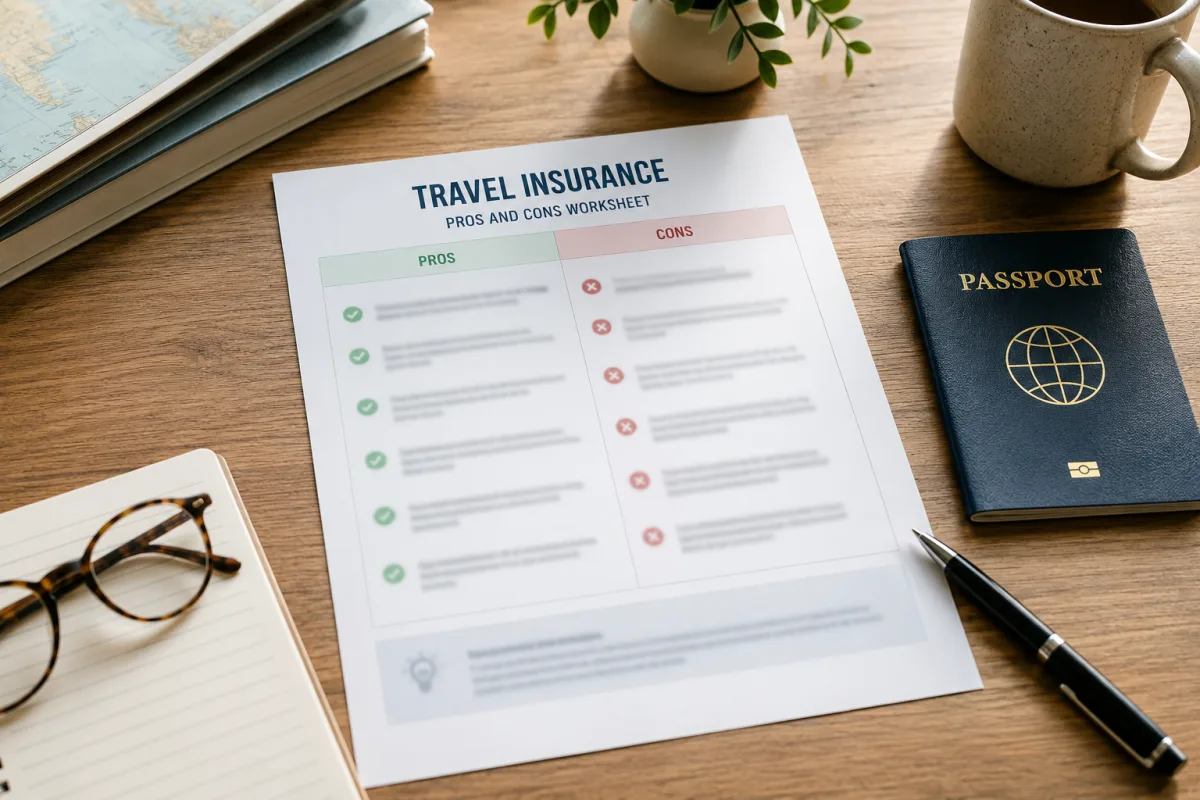
Pros & Cons of Travel Insurance are easiest to judge when you compare the policy to the trip. A $200 weekend drive, a prepaid safari, a cruise, and an international family trip do not carry the same risk.
Travel insurance can be useful, but it is not magic. It pays only for covered losses, within limits, after exclusions, deadlines, and documentation rules are met.
Pro: Covered Cancellation
Trip cancellation coverage can reimburse prepaid, nonrefundable costs if a listed covered reason prevents travel.
NAIC describes trip cancellation, interruption, and delay coverage as protection for prepaid, nonrefundable travel expenses when covered events prevent all or part of a trip: NAIC travel insurance overview.
Con: Not Every Reason Counts
A standard policy usually does not cover changing your mind, fear of travel, a bad forecast, or deciding the trip is too expensive.
For broader cancellation flexibility, travelers may need CFAR, and even that usually pays only part of the loss.
Pro: Medical Help Abroad
Travel medical coverage can matter when your regular health plan has limited coverage outside the country.
This is one of the strongest reasons to consider insurance for international travel.
Con: Medical Limits Vary
Medical benefits can be primary or secondary, low or high limit, and may exclude certain conditions or activities.
Read the emergency medical and evacuation sections instead of assuming the word medical is enough.
Pro: Emergency Evacuation
Evacuation coverage can help when a traveler needs medically necessary transport to a better facility or home.
This matters more for remote trips, cruises, adventure travel, and international routes.
Con: Exclusions Are Real

Known events, pre-existing conditions without a waiver, intoxication, high-risk activities, and travel against medical advice may be excluded.
InsureMyTrip explains that policies exclude known events, pre-existing conditions, and nonlisted cancellation reasons unless a waiver or add-on applies: InsureMyTrip exclusions overview.
Pro: Delay And Baggage Benefits
Delay and baggage benefits can help with meals, hotels, essentials, or lost items after covered problems.
The amounts may be modest, but they can reduce the sting of a disrupted travel day.
Con: Paperwork Takes Time
Claims require receipts, notices, medical notes, refund proof, and policy compliance.
If you hate paperwork, buy with that reality in mind and keep a travel folder from day one.
Pro: Cruise Protection
Cruises carry special risks: missed embarkation, medical care at sea, evacuation, port changes, and prepaid excursions.
A cruise policy should be checked against flights, hotels, embarkation rules, excursions, and medical care at sea.
Con: Duplicate Coverage
A credit card, airline, cruise line, health plan, auto policy, or homeowner policy may already cover part of the risk.
Duplicate coverage is not always bad, but paying twice without reading benefits is wasteful.
Pro: Early Purchase Options
Buying early can help preserve options such as CFAR or pre-existing condition waivers.
The first payment date matters because some policy options disappear if the traveler waits too long.
Con: Cost
Travel insurance adds cost to the trip. For low-cost refundable trips, the premium may not make sense.
For high-cost nonrefundable trips, the premium may feel more reasonable.
Pro: Better Planning
Shopping for a policy forces you to list prepaid costs, refund rules, health risks, and emergency contacts.
That planning can help even if you never file a claim.
Con: False Security
A traveler who sees insured and stops reading may be more exposed, not less.
The policy certificate, not the marketing headline, decides the claim.
Pro: Family Trips
A family trip has more people who can get sick, miss flights, lose bags, or need care.
For broader household budgeting, Livecub's money guide for families can help with trip cost conversations.
Con: Claim Denials
A claim can be denied if the reason is not covered, documents are missing, deadlines are missed, or exclusions apply.
Buy from a company you can contact and read complaint information if available.
Pro: Accident Benefits
Some plans include accidental death and dismemberment coverage.
That benefit should be read separately from cancellation, medical, and baggage coverage.
Con: Investment Confusion
Travel insurance is not savings, investment, or a way to profit from a canceled trip.
Livecub's small Treasury bond guide covers a different kind of financial planning.
Con: Contract Confusion
Travel policies, card benefits, annuities, and savings products all use formal contract language.
Livecub's annuity comparison guide is a useful reminder to read terms before relying on a product.
Pro: Cash Flow Protection
Insurance reimbursement can help replace money already spent on a covered loss.
That can protect savings that would otherwise be used to rebook flights or replace essentials.
Con: Reimbursement Is Later
You may need to pay first and wait for reimbursement.
Keep emergency funds or available credit for expenses that happen before a claim is approved.
How To Decide

Compare trip cost, refundability, health risk, destination, weather season, medical coverage, and how painful the loss would be.
NAIC's consumer travel insurance material suggests understanding policy types, limits, and exclusions before buying: NAIC consumer travel insurance guide.
Pro: Helps With Expensive Timing
Travel insurance can help when the cancellation schedule gets harsher as the trip approaches.
This is common with cruises, tours, vacation rentals, and international packages.
Con: You Must Prove The Loss
A covered reason still needs proof. A claim may need medical records, carrier notices, police reports, receipts, or employer letters.
Travelers who cannot document the loss may struggle even when the story is true.
Pro: Helps Risk Conversations
Buying a policy can force a family to discuss who is traveling, who is medically fragile, who has documents, and who has emergency contacts.
Those conversations reduce confusion if the trip changes.
Con: Benefits May Be Secondary
Some benefits pay after another insurance source responds first.
That can slow reimbursement and require extra paperwork.
Pro: Useful For Remote Trips
Remote destinations can make medical care, transport, and replacement travel more expensive.
Evacuation and assistance benefits may matter more than cancellation on those trips.
Con: Limits Can Be Low
Delay, baggage, dental, or accidental benefits may have lower limits than travelers expect.
A benefit name is not enough. The dollar amount and per-day cap decide usefulness.
Pro: Can Cover Companions
Some plans consider a traveling companion's illness, injury, or death a covered reason.
Read how companion is defined, because casual group travel can be treated differently than family travel.
Con: Definitions Are Narrow
Policy definitions can be narrower than everyday language. Family member, trip, common carrier, sickness, and injury may all have defined meanings.
If a definition matters to your trip, read it before buying.
Pro: Helps With Supplier Failure
Some plans include limited coverage if a travel supplier fails financially, but the rules can be strict.
Check waiting periods, excluded suppliers, and whether the supplier was already in trouble.
Con: Known Events Are Excluded
Travelers sometimes buy after a storm is named, a strike is announced, or a diagnosis is already known.
Late purchase usually cannot turn a known problem into a covered event.
Pro: Assistance Numbers
Many policies include emergency assistance numbers for medical referrals, translation help, or coordination during a crisis.
That service can be useful even when reimbursement is not the first concern.
Con: It Can Encourage Overbuying
Insurance is easy to add when every booking page asks for it.
Pause and compare against refundability, existing benefits, and actual trip risk before buying multiple overlapping plans.
Pro: Helps With Documentation Habits
A good policy review can push travelers to save invoices, refund terms, medical contacts, passport copies, and emergency numbers.
Those habits help even if no claim is filed.
Con: It Can Be Misread
Some travelers read the policy only after the loss and discover that the covered reason was narrower than expected.
The fix is simple but unglamorous: read the certificate before the trip is paid in full.
Frequently Asked Questions
Is travel insurance worth it?
It can be worth it for expensive, nonrefundable, international, cruise, or medically risky trips, but less useful for cheap refundable travel.
What is the biggest advantage?
Covered reimbursement for prepaid trip costs, medical emergencies abroad, evacuation, delay, or baggage losses can be the main advantage.
What is the biggest downside?
Policies have exclusions, deadlines, paperwork, and costs. A standard policy will not cover every reason for canceling.
Does travel insurance cover changing my mind?
Usually no, unless you bought qualifying cancel-for-any-reason coverage and meet its rules.
How should I compare plans?
Compare covered reasons, limits, exclusions, medical and evacuation coverage, CFAR rules, claim process, and duplicate credit card benefits.
The pros and cons of travel insurance depend on the trip. It can protect against covered losses, but only if the policy fits the risk and the paperwork is done.

Patrick Harwood
Edits sports, consumer-finance and general legal explainers. Regulated or time-sensitive topics link to primary sources and are not professional advice.




Leave a reply
Replying to