
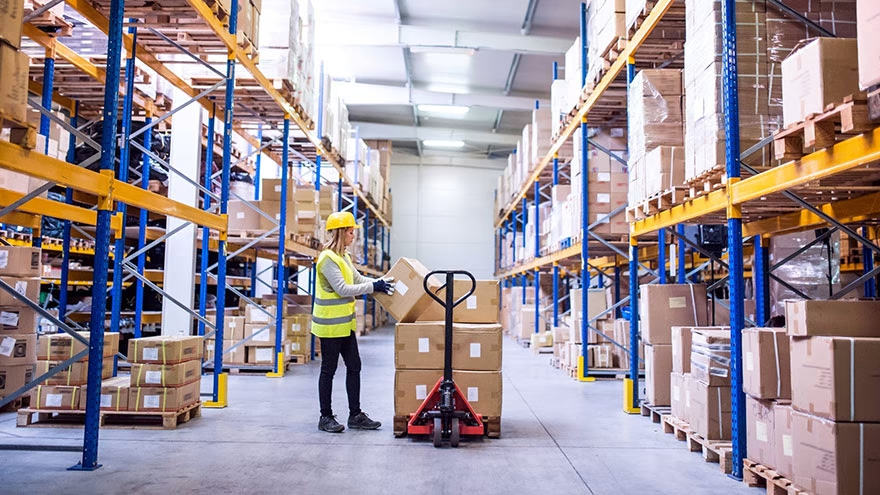
Warehouse Safety Issues Usually Come From Routine Work
Warehouse safety issues are not limited to dramatic accidents. Many begin with ordinary habits: a pallet left in a walkway, a rushed forklift turn, a blocked exit, a wobbly stack, a wet floor, or a worker lifting awkwardly to keep the line moving.
Good safety work looks for those routine weak points before they become injuries.
The danger is often familiar. That is why people stop seeing it.
Forklifts and Powered Equipment
Forklifts, pallet jacks, order pickers, and other powered equipment create collision, tip-over, crush, and struck-by risks. Traffic lanes, pedestrian routes, mirrors, speed limits, horns, lights, and training all matter.
OSHA's powered industrial trucks page gives federal safety context for forklifts and similar equipment. Employers must train and evaluate operators according to applicable rules.
For physically demanding work in another field, Livecub's Nutrition and Physical Fitness for Law Enforcement Officers shows why demanding jobs need preparation, not only toughness.
Slips, Trips, and Housekeeping
Loose shrink wrap, broken pallets, spilled liquids, cords, uneven dock plates, and cluttered aisles can cause injuries even in a warehouse with no heavy equipment moving nearby.
Housekeeping is not cosmetic. It protects walking paths, emergency access, product quality, and morale.
Clean aisles are a safety system. They are not only a supervisor's preference.
For workplace habits that affect alertness, Livecub's How to Stay Awake at Work in 5 Steps connects because fatigue can make basic hazards easier to miss.
Racking, Stacking, and Falling Objects
Improper stacking can send products, pallets, or boxes falling onto workers or equipment. Racking damage from forklift impacts can also create hidden risk.
Inspect racks, respect load limits, report damage, keep heavy items lower when appropriate, and avoid overhanging pallets. Do not treat bent uprights or missing guards as normal wear.
A stable stack is not a guess. It depends on weight, shape, pallet condition, and placement.
Manual Material Handling and Ergonomics
Warehouse workers may lift, push, pull, reach, bend, twist, carry, and repeat movements for hours. Injuries can build slowly before anyone calls them serious.
OSHA's ergonomics page explains how fitting work to workers can reduce musculoskeletal disorders. In warehouses, that may mean lift assists, better shelf height, team lifts, rotation, and redesigning awkward tasks.
For training design in a workplace setting, Livecub's Fun Customer Service Training is a reminder that safety instruction has to be understood, not just delivered.
Loading Dock Hazards
Loading docks combine trucks, trailers, forklifts, pedestrians, dock plates, gaps, weather, and time pressure. Falls from docks, trailer creep, early departure, and poor communication can be severe.
Use wheel chocks or restraint systems as required, confirm trailer condition, check dock plates, and keep pedestrians out of active loading zones.
The dock is not just another doorway. It is one of the highest-risk areas in many warehouses.
Chemicals, Batteries, and Fire Risks
Warehouses may store cleaning chemicals, fuels, aerosols, flammables, lithium batteries, propane, or charging equipment. Poor labeling, blocked extinguishers, damaged cords, and cluttered charging areas can raise risk.
OSHA's warehousing safety page highlights common industry hazards such as forklifts, docks, conveyors, materials storage, and manual lifting.
If the workplace includes customer-facing pressure, Livecub's How to Handle Restaurant Customer Service Complaints is a useful contrast: speed and service goals still need boundaries.
Heat, Cold, and Fatigue
Warehouses can become hot, cold, loud, dusty, or physically draining. Heat stress, cold stress, dehydration, and fatigue can affect judgment and reaction time.
Plan water access, breaks, acclimatization, ventilation, warm layers, and shift pacing. Workers should know how to report symptoms without being treated as weak.
Fatigue turns small hazards into bigger ones.
Training Gaps and Reporting Culture
A safety rule that exists only in a binder will not protect anyone. New hires, temporary workers, supervisors, and experienced staff all need clear training and refreshers.
Reporting should be easy and non-punitive. Near misses, damaged racking, broken pallets, blocked exits, and unsafe shortcuts should be reported before someone gets hurt.
For workplace communication under strain, Livecub's How to Deal With a Rude and Demeaning Coworker shows why people need safe ways to speak up.
Make Safety Visible During the Shift
Pre-shift checks, short huddles, visible walkways, clear labels, updated signage, and supervisor walk-throughs help keep safety from becoming an annual training topic only.
The strongest warehouse safety programs treat workers as observers, not obstacles. The person doing the job often sees the weak point first.
Conveyors and Automation Need Guarding
Conveyors, sorters, wrappers, dock equipment, and automated systems can create pinch points, caught-in hazards, and maintenance risks. Guards should stay in place, lockout procedures should be followed, and workers should know where emergency stops are located.
Do not let productivity pressure normalize reaching into moving equipment. If a jam happens often, the process needs review rather than another risky workaround.
Machine speed should not outrun training.
Rushed Work Creates Hidden Risk
Many warehouse injuries happen when people are trying to save a few seconds: jumping from a dock, carrying too much, skipping a spotter, cutting through forklift lanes, or leaving wrap in the aisle.
Supervisors should watch what deadlines reward. If the fastest worker is praised while safe workers are ignored, the culture has already chosen speed over control.
Safety has to survive the busy hour. A rule that disappears under pressure is not really a rule.
New Workers Need Close Support
Temporary and new workers may not know the unofficial hazards: blind corners, tricky dock plates, unstable product, loud zones, or shortcuts that experienced staff avoid.
Pair new workers with patient trainers, check understanding, and invite questions. A quick orientation is not enough for a complex warehouse.
Personal Protective Equipment Has to Match the Task
PPE can include safety shoes, high-visibility clothing, gloves, eye protection, hearing protection, hard hats, or respiratory protection depending on the work. The right equipment depends on the hazard, not habit.
Workers also need to know the limits of PPE. Gloves can protect hands, but they do not make a moving conveyor safe to reach into.
PPE is the last layer, not the whole system.
Investigate Near Misses Like Real Warnings
A pallet that almost falls, a forklift that nearly strikes a pedestrian, or a worker who almost slips at a dock is not a harmless story. It is a preview.
Ask what allowed the near miss: layout, lighting, speed, training, staffing, damaged equipment, unclear signs, or production pressure. Then fix the condition, not only the person.
Keep Supervisors Accountable Too
Warehouse safety cannot sit only on frontline workers. Supervisors control pace, staffing, priorities, enforcement, and whether workers feel safe reporting problems.
If supervisors reward unsafe speed, workers will learn the real rule quickly. If supervisors stop work to fix hazards, workers learn that safety has authority.
Use Layout to Remove Temptation
Good warehouse layout reduces the need for risky choices. Put fast-moving items where they can be reached safely, keep pedestrian paths direct, and avoid storing heavy items where workers must twist or reach overhead.
If employees keep taking the same unsafe shortcut, study the layout. The shortcut may be telling you that the official path does not match the work.
Design can prevent rule-breaking. It is better than relying on reminders all day.
Do Not Ignore Contractors and Visitors
Drivers, vendors, maintenance workers, auditors, and office staff may enter warehouse areas without knowing the traffic pattern. Give them clear routes, high-visibility gear if required, and instructions before they walk into active zones.
A visitor does not need full warehouse training, but they do need enough information to avoid becoming a hazard.
Sign them in, escort them when needed, and keep them out of active loading and picking areas.
Clear visitor control also protects employees who would otherwise have to improvise around unfamiliar people.
Warehouse safety improves when the daily system makes the safe choice easier than the risky shortcut.
Frequently Asked Questions
What are common warehouse safety issues?
Forklift traffic, slips, falling objects, bad stacking, lifting strain, dock hazards, chemicals, heat, fatigue, and weak training are common issues.
Why are forklifts so risky?
They are heavy, move in tight spaces, carry loads, and operate near pedestrians. Training and traffic control are essential.
How can warehouses reduce lifting injuries?
Use better layout, lift assists, team lifts, task rotation, training, and reporting for painful or awkward tasks.
What is a near miss?
A near miss is an event that could have caused injury or damage but did not. Reporting it helps prevent future incidents.

Tory Stearns
Edits practical household, travel and lifestyle explainers. Claims that can change are linked to current primary or subject-authority sources.




Leave a reply
Replying to