
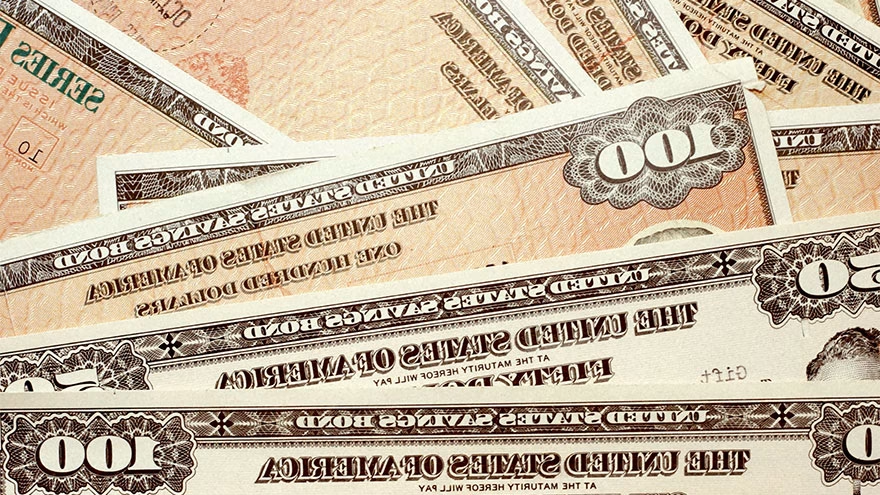
Who buys U.S. Treasury bonds? The short answer is almost everyone with a reason to hold very liquid U.S. government debt: individual savers, banks, mutual funds, pension funds, insurers, foreign central banks, foreign private investors, corporations, state and local governments, and the Federal Reserve. They do not all buy for the same reason.
A household may buy a Treasury note for predictable interest. A money market fund may buy bills for liquidity. A foreign reserve manager may hold Treasuries because the market is deep and dollar-based. A bank may need safe assets for balance-sheet management. The buyers are different, but the security is the same promise from the U.S. Treasury.
Who Buys Treasury Bonds Directly?
Individuals can buy marketable Treasury securities through TreasuryDirect or through a bank, broker, or dealer. TreasuryDirect also says individuals, organizations, fiduciaries, and corporate investors may buy through banks, brokers, or dealers. That means direct ownership is not limited to Wall Street desks.
Retail buyers usually care about safety, maturity date, interest income, and simplicity. A person building a conservative ladder may compare bills, notes, bonds, TIPS, and savings bonds. Livecub's Series EE savings bond maturity guide is useful because savings bonds are Treasury debt too, even though they are not traded like marketable notes and bonds.
Do Ordinary Investors Buy Treasuries At Auction?
Yes. Treasury auctions allow noncompetitive and competitive bids. For most individual buyers, noncompetitive bidding is simpler because the buyer accepts the auction result instead of naming a yield. TreasuryDirect's auction guidance says noncompetitive bids are limited to $10 million per auction and most individual investors use that route.
The practical appeal is certainty of allocation rather than the ability to bargain. A noncompetitive bidder is not trying to beat institutions on price. The bidder is saying, in effect, "I want this amount at the auction's final rate." That fits many households better than trading bonds minute by minute.
Why Do Banks And Funds Buy Treasury Securities?

Banks, money market funds, bond funds, pension funds, insurers, and corporate treasuries buy Treasuries because the market is large, liquid, and widely accepted as high-quality collateral. They may need a short-term place for cash, a duration position, a regulatory asset, a hedge against risk, or an instrument they can sell quickly.
Institutional buyers also use Treasuries to match liabilities. A pension fund may care about long-term interest-rate exposure. A money market fund may live in short bills. A corporation may park cash in bills while waiting for payroll, taxes, acquisition costs, or capital spending. If you want math help on bond pricing, Livecub's bond calculator guide explains the mechanics behind price, yield, and maturity.
How Do Foreign Buyers Fit Into The Treasury Market?

Foreign buyers include central banks, ministries of finance, sovereign funds, commercial banks, insurers, pensions, and private investors outside the United States. They may hold Treasuries as dollar reserves, liquid collateral, or a conservative asset in global portfolios.
The U.S. Treasury's Treasury International Capital system tracks cross-border holdings and flows. The details move with exchange rates, trade flows, interest-rate expectations, and reserve policy, so a clean explanation is better than treating one monthly country table as the whole story.
Foreign demand does not mean foreign governments control the entire market. Domestic investors, the Federal Reserve, banks, funds, and households all matter. The mix changes as rates, deficits, currency needs, and risk appetites change.
The same buyer can also change behavior. A foreign reserve manager may prefer short bills during uncertainty and longer notes when yields look attractive. A household may do the opposite if it needs cash soon. Buyer labels help, but the reason for holding the security tells the better story.
Does The Federal Reserve Buy Treasury Bonds?
Yes. The Federal Reserve can hold Treasury securities as part of monetary policy operations and balance-sheet management. The Fed's Financial Accounts of the United States track financial assets and liabilities by sector and instrument, which is one way to see who holds what across the system.
The Fed is not a normal investor trying to build a retirement ladder. Its Treasury holdings connect to monetary policy, reserve conditions, and market functioning. When people ask who buys Treasuries, the Fed belongs in the answer, but it should not be confused with a household, mutual fund, or foreign reserve manager.
What Role Do Primary Dealers Play?
Primary dealers are banks and broker-dealers that trade directly with the Federal Reserve Bank of New York and participate in Treasury market activity. They help distribute newly issued securities and support secondary-market trading, but they are not the only final owners.
A dealer may buy at auction, hold inventory briefly, finance positions, and sell to customers. The final buyer could be a mutual fund, pension fund, insurer, hedge fund, bank, foreign investor, or individual using a brokerage account. Dealers are part of the pipework. They are not the whole water supply.
Why Do People Say Treasuries Are Safe?
Treasuries are backed by the U.S. government, and the market is among the deepest in the world. That does not mean every Treasury trade is risk-free. If you sell a bond before maturity after rates rise, the price can be lower. If inflation runs hotter than your yield, purchasing power can suffer. If you buy a long bond when you need cash soon, the maturity may be wrong for your need.
Safety has layers: credit risk, price risk, inflation risk, liquidity risk, and reinvestment risk. A Treasury bill held to maturity has a different risk profile than a 30-year bond sold in the secondary market next month. Livecub's T-bill selling guide explains why timing and interest-rate changes matter.
Buyers should match the security to the job. Bills fit short parking needs better than long bonds. Long bonds offer more rate exposure, which can help or hurt depending on timing. TIPS address inflation differently than nominal Treasuries. The buyer's problem should choose the tool.
How Do Treasury Funds Differ From Owning Bonds?

A Treasury mutual fund or ETF owns a pool of securities. The investor owns shares of the fund, not a specific bond with a personal maturity date. That can be convenient, but the share price can move as rates change and as the fund rolls holdings.
Direct ownership gives a clearer maturity path if the buyer holds to maturity. Funds give diversification, daily pricing, professional management, and easier reinvestment. Neither structure is automatically better. The right choice depends on taxes, account type, time horizon, liquidity needs, and how much price movement the investor can tolerate. Livecub's 100% Treasury bond investing article can help frame the portfolio question.
How Can Buyers Check What Their Bonds Are Worth?
Marketable Treasury prices move with rates and time to maturity. Savings bonds have separate rules and tools. If someone holds older paper or electronic savings bonds, Livecub's savings bond value guide is the better starting point than a market quote screen.
For marketable securities, brokerage statements usually show current value, yield, and maturity. TreasuryDirect shows holdings inside the account, but selling marketable securities before maturity requires moving them to a broker. That detail matters if liquidity is the reason for buying.
Frequently Asked Questions
Are foreign governments the main buyers of U.S. Treasury bonds?
No. Foreign official buyers are only one group. Domestic funds, banks, households, insurers, pensions, and the Fed also hold Treasuries.
Can an individual buy the same Treasury securities as institutions?
Individuals can buy Treasury bills, notes, bonds, TIPS, and FRNs through TreasuryDirect or brokers, though institutions use more complex systems.
Why do banks buy Treasuries?
Banks may use Treasuries for liquidity, collateral, interest-rate positioning, capital planning, and balance-sheet management.
Do Treasury bonds lose money?
They can lose market value if sold before maturity, especially when rates rise. Holding to maturity changes the risk picture.
Who buys Treasury bonds during high-rate periods?
Higher yields can attract households, money funds, pensions, insurers, and foreign private investors, but the exact mix changes over time.
This article is general financial education, not investment advice. Your tax status, time horizon, cash needs, interest-rate risk, and broader portfolio may change the right Treasury choice for you. Consider a licensed financial adviser for personal guidance.
What Is The Plain Answer?
U.S. Treasury bonds are bought by a broad market, not one single buyer. Individuals, institutions, foreign investors, dealers, funds, banks, and the Federal Reserve all participate for different reasons. The better question is not only who buys them, but why a specific buyer needs safety, liquidity, income, collateral, duration, or dollar reserves.

Patrick Harwood
Edits sports, consumer-finance and general legal explainers. Regulated or time-sensitive topics link to primary sources and are not professional advice.




Leave a reply
Replying to