
Being told to love your body every single day can feel like one more task you are failing. On a tired, stressed, or self-critical morning, the demand to celebrate your reflection often backfires, and the gap between the message and how you actually feel just adds guilt on top of everything else.
That is the quiet appeal of a lower-pressure approach: instead of demanding daily admiration, it asks for respect, care, and a little less monitoring. For many people, that is a target they can actually reach.
Why Lowering Appearance Pressure Helps
Body positivity asks you to reframe every insecurity as something to appreciate. That reframing genuinely helps some people, but for others it sets an impossible standard, because you cannot force an emotion on command. Body neutrality removes the requirement to feel positive and replaces it with a simpler stance: your body deserves care whether or not you like how it looks today.
This matters beyond mood. The National Institute of Mental Health notes that body image and eating concerns can develop into serious conditions rather than staying mild preferences (NIMH eating disorders). A neutral stance should never be used to wave away dangerous restriction, purging, or binge patterns. If those are present, the priority is professional care, not a mindset tweak.
The same caution applies to obsession. There is a difference between disliking a photo and being unable to stop thinking about a perceived flaw. When appearance worry consumes hours, drives repeated checking, or keeps someone from leaving the house, it can point to body dysmorphic disorder, which NIMH describes among obsessive-compulsive related conditions. Neither body positivity nor body neutrality is a treatment for that; if appearance thoughts are eating into work, relationships, or daily function, that is a reason to talk with a clinician rather than to try harder at self-love.
Use Function-Based Self-Talk

Stress shapes how we talk to ourselves, and the American Psychological Association points out that stress affects mood and behavior in ways that can sharpen self-criticism (APA on stress). Neutral, function-focused language can lower the fight with the mirror because it is easier to believe.
Instead of "I love how I look," which may feel false, try statements grounded in what your body did today: "these legs carried me through a long shift," or "my body deserves food and rest after this week." Function is observable. You do not have to argue yourself into it.
The aim is not forced gratitude either. It is a plain acknowledgment that reduces the emotional charge around your appearance so you can get on with the day.
Reduce The Checking Habits
Repeated mirror checks, pinching or measuring, and endless comparison scrolling tend to feed appearance anxiety rather than settle it. Each check promises reassurance and usually delivers a fresh reason to worry.
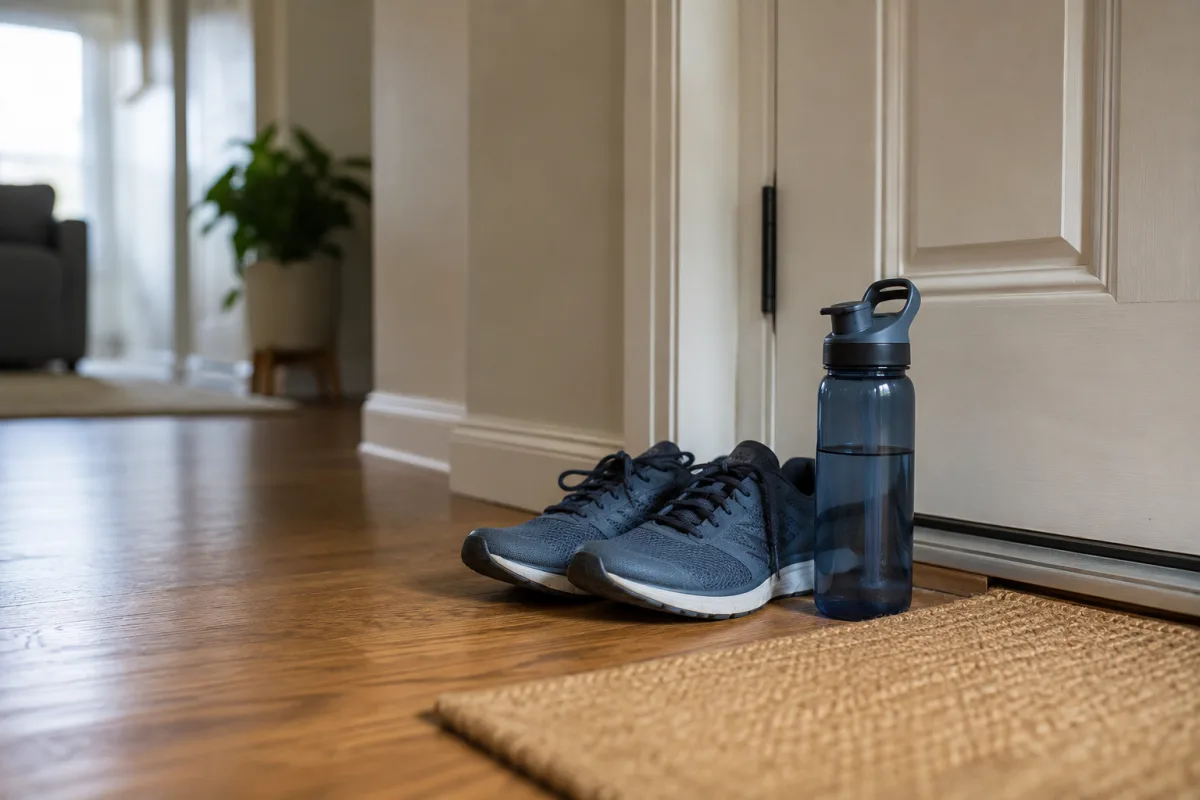
You do not have to quit all of it at once. Pick the one habit that reliably worsens your mood and put a small barrier in front of it: cover a mirror you pass too often, unfollow two comparison accounts, or move your phone out of reach at night. Notice which behaviors help you actually live your day and which just keep you stuck rehearsing the same judgment.
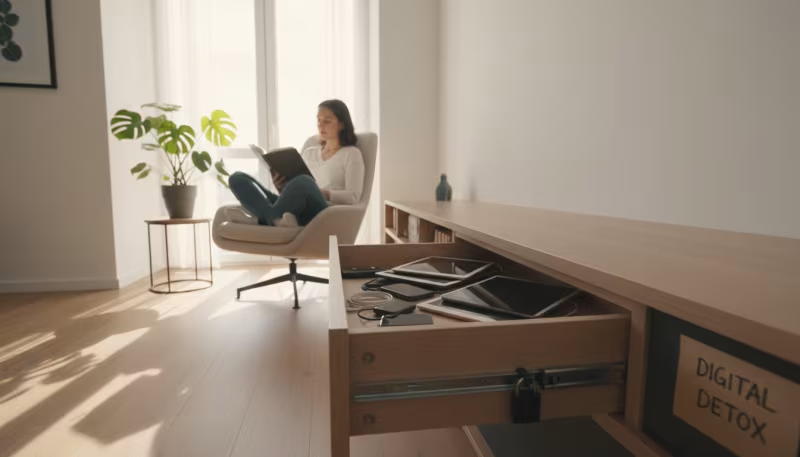
If scrolling is the main trigger, a screen limit during vulnerable hours, such as late evening, often does more than any affirmation. It also helps to curate what remains: following accounts that show bodies doing ordinary things, rather than posed and edited ones, gives your eyes a less punishing baseline to compare against. Comparison is hard to switch off entirely, so it is worth changing what you are comparing yourself to.
Track The Pattern Without Judgment

Body image rarely moves on its own. It shifts with sleep, stress, food, screen time, light exposure, work pressure, movement, and social contact. A plain log can reveal which of those actually change how you feel about your body, so you stop guessing.
Keep the record factual and kind: what happened, what you felt, and what helped. Notes that insult you are harder to keep and useless to share with a clinician. Livecub's guide to writing a food journal can be adapted into a simple mood-and-body log rather than a calorie tracker.
Watch for one common trap: the tracking itself becoming another way to monitor and criticize your body. If the log starts to feel like surveillance, shorten it to one line a day or drop it entirely. The tool is supposed to reduce pressure, not add a new source of it.
Make Changes Small And Livable
The approach gets harder when every choice feels like a test of your self-worth. Pick one small step rather than a full personal overhaul, and change one thing at a time so you can actually tell what made a difference. That might be a bedtime rule, a screen limit during a vulnerable hour, a single neutral phrase you reach for, or a support text to a friend.
Choose rules that survive a bad day. All-or-nothing standards tend to shatter after one hard night and leave you back where you started. A flexible plan can be restarted the next morning without a sense of total failure. Keep a low-energy version ready too: on a depleted day, one kind note or one skipped mirror check still counts.
Protect the basics underneath all of it. Sleep loss, skipped meals, and isolation make body image feel larger and harder to manage, so guarding sleep, regular food, movement, and human contact often does more than any single mindset technique.
Know When To Get Real Help
Self-directed strategies have limits. Get professional help if body image is affecting your eating, your safety, your work, your relationships, or your ability to get through an ordinary day. Trained support exists for exactly these situations, and reaching for it early is a strength, not a last resort.
When you do ask, keep the question narrow. "I have been skipping meals and checking mirrors constantly for three weeks" gives a clinician something concrete to work with, far more than a long story with the key fact buried inside. If talking about it out loud feels impossible, Livecub's piece on selective mutism is a reminder that difficulty speaking is itself something trained help can address.
Pick one place to start this week, whether that is dropping a single checking habit, drafting one neutral phrase, or making one appointment. Respect and care are things you can practice on an ordinary day, without waiting to feel positive first.
Frequently Asked Questions
What is body neutrality?
An approach that emphasizes respect and function over constant appreciation of how you look.
Is body positivity bad?
No. It genuinely helps some people. Body neutrality is simply another option for those who feel pressured by it.
What is a neutral phrase?
Something like: "My body deserves care, even when I do not love how it looks today."
When should I get help?
If body image is affecting eating, safety, work, relationships, or daily life.
This article is for general information only and isn't a substitute for medical advice. Talk to a clinician who knows your full history before making changes.

Chiara Bradshaw
Covers education, culture and creative topics with an emphasis on readable explanations and verifiable references.


Leave a reply
Replying to