

Widows Mortgage Rights often turn on three separate questions: who owns the home, who is legally liable on the note, and how the mortgage servicer must treat a confirmed successor in interest.
This is general legal and housing information, not legal advice. A surviving spouse should get state-specific help quickly if foreclosure, probate, reverse mortgage issues, or title disputes are present.
First Separate Title And Debt
A widow may own the home, be on the mortgage note, be on the deed but not the note, inherit the home after death, or have no ownership yet because probate is not finished.
Those details matter. Being allowed to pay or seek information is not always the same as being personally liable for the debt.
Successor In Interest
CFPB Regulation X defines successor in interest to include certain people who receive an ownership interest after events such as death, divorce, or transfer from a spouse or parent. See CFPB Regulation X definitions.
Once confirmed, a successor in interest can receive many mortgage servicing protections even if they were not the original borrower.
What Servicers May Request
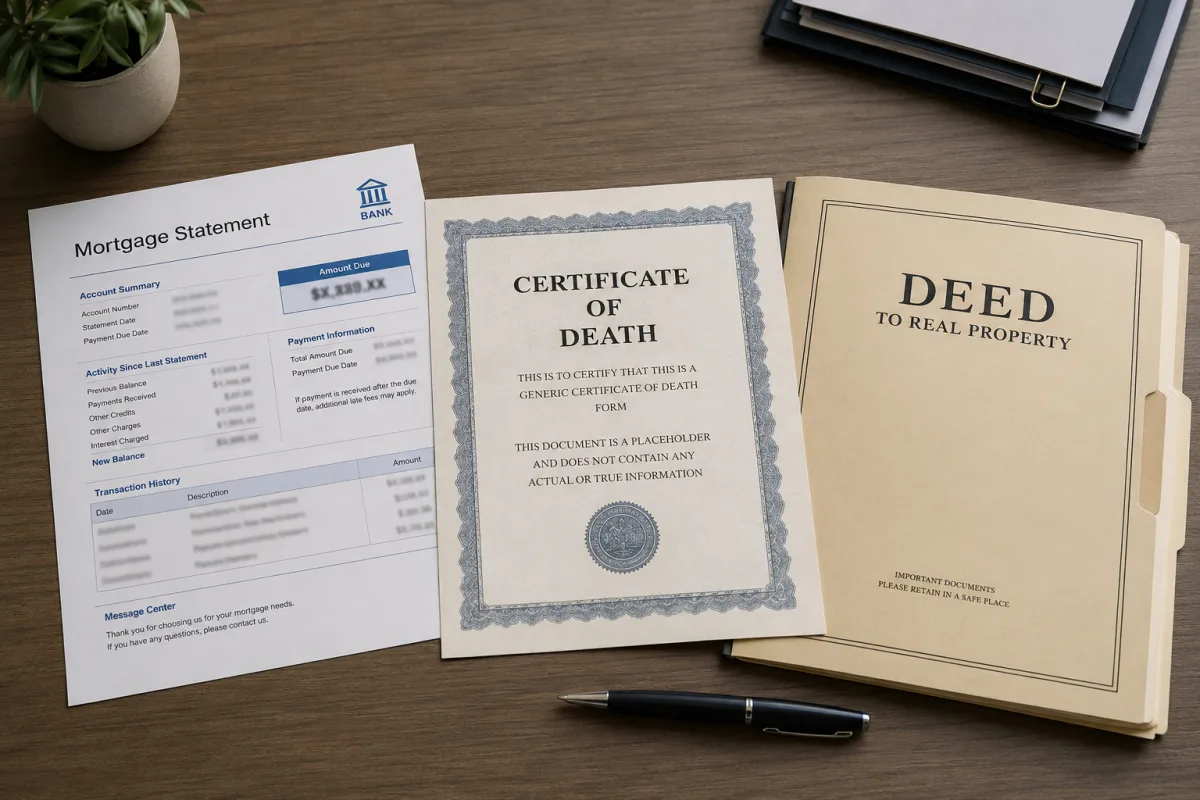
A servicer may ask for reasonable documents to confirm identity and ownership interest. Depending on state law, that may include a death certificate, will, court order, affidavit, deed, or other proof.
CFPB's official interpretation says the documents required must be reasonable in light of the situation and existing records. The CFPB servicing interpretation gives examples.
Keep Paying If Possible

If the goal is to keep the home, staying current matters. A death may prevent a due-on-sale call in many cases, but it does not erase missed payments, taxes, insurance, escrow shortages, or foreclosure risk.
If you cannot pay, contact the servicer in writing and ask about successor confirmation, loss mitigation, assumption, repayment plans, or modification options.
Due-On-Sale Protection
Many mortgages contain a due-on-sale clause, but federal law limits enforcement in several family and death-related transfers. The Garn-St Germain Act includes transfers to relatives resulting from a borrower's death and transfers where a spouse or child becomes an owner.
Cornell's Legal Information Institute provides the text of 12 U.S.C. 1701j-3, including the protected transfer list.
Not The Same As Free Housing
These protections do not mean the mortgage disappears. The loan still has payments, property taxes, insurance, maintenance, and default rules.
A surviving spouse should ask for written payoff, payment history, escrow information, and options before deciding whether to keep, sell, refinance, or modify the loan.
If Your Name Was Not On The Loan
A widow who inherits or already owns the home may still be able to communicate with the servicer after confirmation as a successor in interest. Servicers sometimes mishandle this step, so document every contact.
The CFPB has reported complaints from homeowners after divorce or death of a loved one, including servicers creating obstacles or pushing unnecessary refinancing. That pattern is why written records matter.
Reverse Mortgage Warning
Reverse mortgages have different rules. A co-borrowing spouse, eligible non-borrowing spouse, and ineligible spouse may have very different rights after death.
Do not rely on ordinary mortgage advice for a reverse mortgage. Contact the servicer, a HUD-approved housing counselor, and a lawyer as early as possible.
Probate And Deed Steps
The servicer may need proof that the widow owns or inherited the property. That proof may come from joint tenancy, tenancy by the entirety, a deed, probate order, trust document, or other state-law record.
Livecub's probate court overview and death certificate search guide are related starting points for gathering records.
Medical Bills And Other Debt
A mortgage is separate from hospital bills, credit cards, funeral bills, and estate claims. A widow should avoid mixing every debt into one panic folder.
Livecub's surviving spouse medical bills guide explains why debt responsibility can depend on state law, signatures, estate rules, and marriage rules.
Ask The Right Questions

Ask the servicer: What documents do you need to confirm me as successor in interest? Where do I send them? Can I keep making payments? What loss mitigation options exist? Is foreclosure scheduled?
Also ask for answers in writing. Keep copies of letters, portal messages, fax confirmations, tracking receipts, and call notes.
Get Legal And Housing Help
A widow facing foreclosure should contact a foreclosure defense lawyer, estate lawyer, legal aid office, or HUD-approved housing counselor quickly. Deadlines can move faster than grief.
Livecub's estate lawyer questions can help organize the first legal conversation, especially if probate and mortgage issues overlap.
Escrow And Insurance
A surviving spouse should check property insurance, tax bills, and escrow status quickly. A missed insurance or tax issue can create mortgage trouble even when monthly payments are current.
Ask the servicer for escrow history and confirm that the property remains insured in the correct names.
Do Not Rush Refinancing
A servicer or lender may suggest refinancing, but a widow should not assume it is required. The existing rate may be better than a new loan, and refinancing can add costs.
Ask whether successor confirmation, assumption, or modification is available before applying for a new loan.
Foreclosure Notices
If foreclosure letters arrive, do not wait for successor confirmation to seek legal help. Court and sale deadlines can move while paperwork is still being reviewed.
Keep envelopes and notices. Dates on letters may matter.
Joint Accounts And Autopay
If mortgage payments came from the deceased spouse's bank account, autopay may stop when the account is frozen or closed. Set up a legal payment method quickly.
Ask the servicer how to make payments while successor paperwork is being reviewed, and keep proof of every payment.
Property Title Search
A title search or deed review can show whether the widow already owns the home by survivorship or needs probate, trust action, or a new deed.
Do not rely only on memory of how the home was bought. The recorded deed matters.
Tax And Insurance Notices
Property tax, homeowner insurance, HOA, and flood insurance notices may still go to the deceased spouse. Update mailing addresses where allowed.
Missed non-mortgage bills can still threaten the home. Keep a calendar of every housing-related due date.
Scam Risk
Widows may receive pressure from buyers, rescue companies, or fake helpers after a death. Be careful with anyone asking for deed signatures, upfront fees, or quick sale authority.
Talk with a lawyer or trusted housing counselor before signing documents that transfer title or promise mortgage relief.
Communication Script
A widow can say: I am requesting confirmation as a successor in interest. Please tell me exactly what documents you require and where to send them.
Using the same wording in each call and letter makes the request harder to misclassify as a general customer service question.
Modification Requests
If payments are unaffordable, ask whether you can be reviewed for loss mitigation after successor confirmation. Do not assume refinance is the only path.
Keep copies of every application page and document upload. Servicer errors are easier to challenge with dates and proof.
Sale Decisions
Keeping the home is not always the right financial choice. A widow may need time to compare payment, taxes, insurance, repairs, estate claims, and available income.
Selling can be a valid decision, but it should be made with clear title information and without pressure from a rushed buyer.
Written Error Notices
If the servicer gives conflicting answers, ask how to send a written notice of error or request for information. Mortgage servicing rules often treat written requests differently from ordinary calls.
Keep the request focused: identify the loan, the homeowner, the document problem, and the answer needed.
Frequently Asked Questions
Can a widow keep paying the mortgage after her spouse dies?
Often yes, but she should also work with the servicer to confirm ownership or successor status and understand her options.
Is a widow automatically personally liable for the mortgage?
Not always. Liability depends on whether she signed the note, assumed the loan, state law, and other documents. Ownership and debt liability are separate.
Can the lender demand full payment because the spouse died?
Federal due-on-sale protections may prevent that in many family death transfers, but missed payments can still lead to foreclosure.
What is a confirmed successor in interest?
It is someone whose identity and ownership interest have been confirmed by the servicer under mortgage servicing rules.
What documents should a widow gather?
Death certificate, deed, mortgage statements, will, trust, probate papers, tax and insurance bills, payment records, and servicer letters are common starting points.
Widows mortgage rights are strongest when title, successor status, payment history, and servicer communications are documented early. Keep paying if possible, ask for confirmation in writing, and get legal help before deadlines close.

Linda Fehrman
Edits general wellness and relationship explainers. Health material is educational, avoids diagnosis and links to health-authority guidance.



Leave a reply
Replying to