
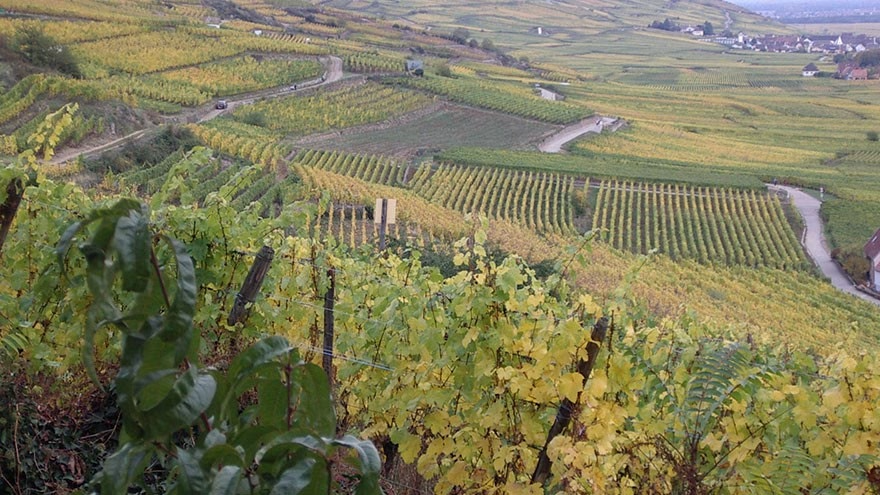
Alsace is a white-wine region that often gets explained with the wrong word. Travelers ask about Alsace wines and champagnes, but Champagne is a protected designation tied to a different French region. In Alsace, the sparkling bottle to know is Cremant d'Alsace, and the still wines are usually labeled by grape: Riesling, Pinot Gris, Gewurztraminer, Muscat, Sylvaner, Pinot Blanc, Pinot Noir, and related varieties.
Are Alsace wines and champagnes the same thing?
No. Alsace makes still wines and Cremant d'Alsace, but Champagne comes from the Champagne region and follows that appellation's rules. The official Champagne site explains that a designation of origin protects a product name by linking it to a defined geographical area and strict specifications.
That distinction is useful when ordering. If a restaurant list says "Champagne," it should mean Champagne. If an Alsace producer pours bubbles, the label will usually say Cremant d'Alsace. The Champagne designation page is the cleanest source for why the name is not a casual synonym for sparkling wine.
This kind of label precision matters in travel too. Livecub's cruise line identification guide is about ships, not wine, but the lesson is similar: a visible label or shape can tell you more than a generic category name.
What are Alsace wines known for?
Alsace wines are known for aromatic whites, strong grape identity, a tall flute-shaped bottle, and food-friendly acidity. The official Vins d'Alsace AOC page says AOC Alsace was recognized in 1962 and that AOC Alsace wines may be made from one grape variety, with the grape name on the label, or from blends.
The AOC Alsace guide also notes that AOC Alsace represents over 70 percent of production, including 90 percent white wines. That helps explain why a visitor sees so many white labels in tasting rooms, even though Pinot Noir is part of the region too.
Read the grape first. In many French regions, the place name carries the main clue. In Alsace, grape names are more visible, so a traveler can choose by style instead of guessing from a village name alone.
Which Alsace grape varieties should travelers know?
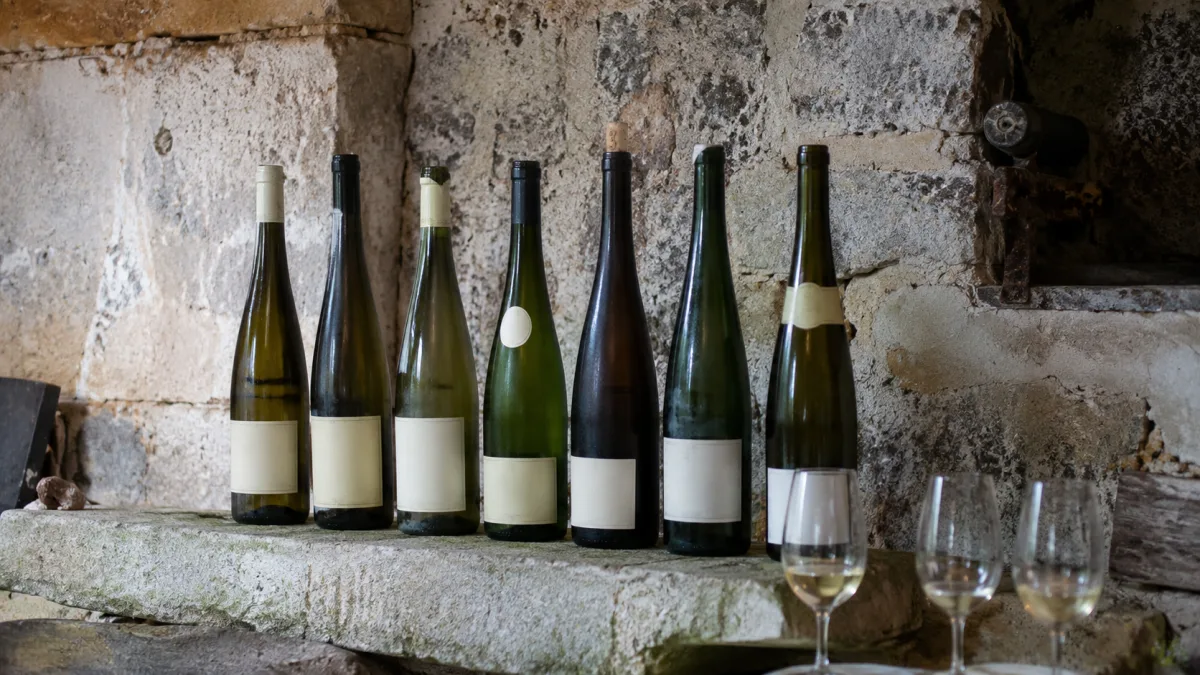
The official Vins d'Alsace grape page groups wines by style, from fresh and dry to powerful, sweet, red, and sparkling. For a first trip, learn the main grapes by how they behave at the table rather than memorizing every village.
Riesling
Alsace Riesling is usually the sharp, dry, mineral-leaning choice for fish, pork, choucroute, and dishes with acidity. It can age well, but young bottles are often bright and precise. If you dislike sweet Riesling elsewhere, do not assume Alsace Riesling tastes the same.
Gewurztraminer
Gewurztraminer is aromatic, spicy, and often richer in texture. It can smell floral and exotic, which makes it useful with strong cheeses and fragrant dishes. The trade-off is that it can overwhelm delicate food.
Pinot Gris
Pinot Gris in Alsace is fuller than many light Pinot Grigio bottles. It can handle poultry, mushrooms, cream sauces, and roasted dishes. Check sweetness cues because some examples feel rounder than a dry aperitif wine.
Pinot Blanc and Auxerrois
Pinot Blanc and Auxerrois are often easier, softer, and less showy. They are good starting points for casual meals, picnic food, and simple restaurant orders. When you want a bottle that will not fight the table, start here.
Pinot Noir
Pinot Noir is the red side of Alsace. It can be light, fresh, and useful with charcuterie or poultry. Travelers who only expect white wine from Alsace may miss it on the list.
What is Cremant d'Alsace?
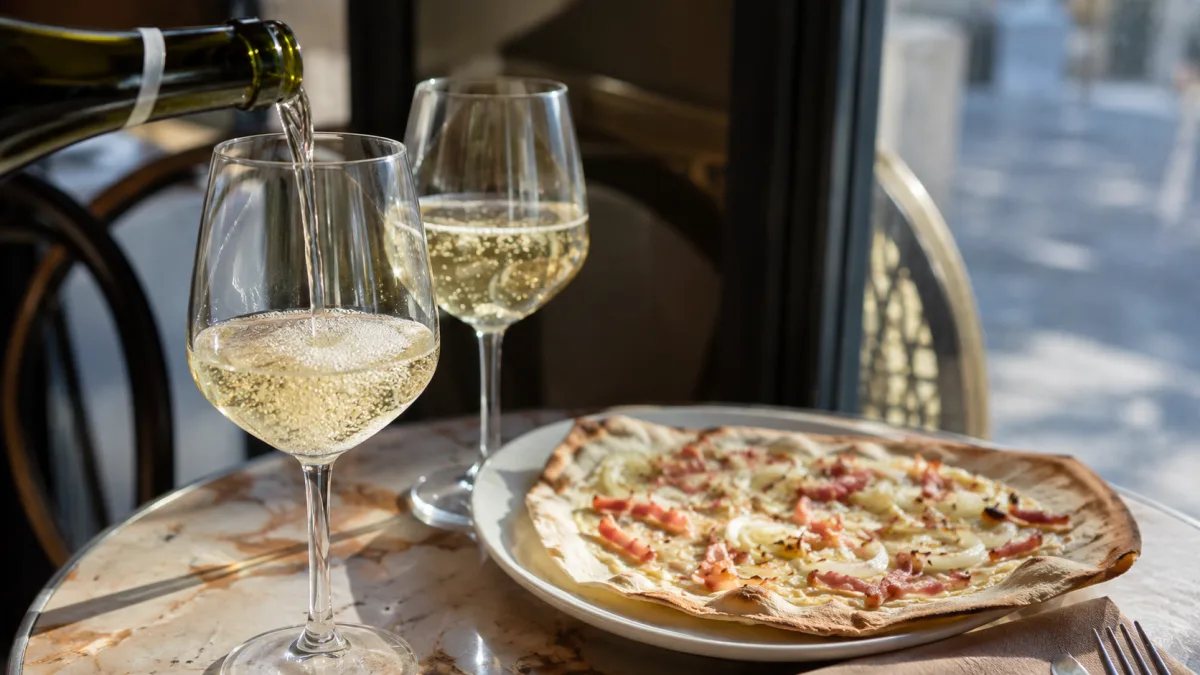
Cremant d'Alsace is the region's traditional-method sparkling wine. The official Vins d'Alsace Cremant page says the AOC was established in 1976 and represents about a quarter of Vins d'Alsace production. It is the bottle to order when you want local bubbles rather than Champagne.
The AOC Cremant d'Alsace page describes sparkling wines made using the traditional method. In practical terms, that means Cremant can feel festive, dry, and food-friendly without pretending to be Champagne.
Cremant is not a downgrade word. It is a different appellation. A good Cremant d'Alsace can be the better local choice for aperitifs, tarte flambee, seafood, or a first pour before a tasting flight.
How should you read an Alsace wine label?
Start with the producer, grape, AOC, vintage, sweetness clue, and any Grand Cru or lieu-dit reference. AOC Alsace is the broad regional designation. Alsace Grand Cru narrows the origin to one of the named grand cru sites and usually signals a more site-specific bottle.
Do not assume every aromatic bottle is sweet. Also do not assume every dry-sounding bottle is bone dry. Ask the server or producer where the wine sits on the dry-to-sweet range. Many tasting rooms are used to that question.
If label rules interest you, pair the wine route with another place-driven trip. Livecub's Spiral Jetty guide has nothing to do with France, but it shares the same travel habit: understand the site before you arrive.
What does Grand Cru mean in Alsace?
Grand Cru points to a delimited vineyard site with stricter rules than the broad regional AOC. It does not mean every bottle will match your taste, but it does tell you the producer is working within a narrower place-based frame. In a tasting room, ask what the site changes: acidity, ripeness, aroma, texture, or ageability.
Do not buy only by status. A fresh AOC Alsace Riesling may be better for lunch than a richer Grand Cru Pinot Gris. Save Grand Cru bottles for meals and moments where concentration, texture, and site character have room to show.
What order should you taste Alsace wines in?
Start lighter, then move richer. A practical order is Cremant, Pinot Blanc or Sylvaner, Riesling, Pinot Gris, Gewurztraminer, Pinot Noir, then sweeter late-harvest styles if offered. This keeps perfume and sweetness from overpowering the earlier wines.
Spit or share pours if you are visiting more than one cellar. Alsace villages look close on the map, but cobbles, stairs, lunch, and winding roads make fatigue real. A good tasting day ends with notes you can read, not a trunk full of bottles you barely remember choosing.
What foods pair well with Alsace wines?
Alsace wines make sense with food because acidity, aroma, and texture do real work. Riesling cuts through fat and salt. Gewurztraminer can stand up to spice and pungent cheese. Pinot Gris handles richer dishes. Cremant resets the palate between bites.
Regional classics include tarte flambee, choucroute, Munster cheese, pork dishes, freshwater fish, and onion-forward cooking. Outside Alsace, use the same logic. Choose Riesling for acid and lift, Pinot Gris for body, Gewurztraminer for aroma, Pinot Blanc for ease, and Cremant for bubbles.
Match intensity first, then match flavor. A delicate fish with a powerful Gewurztraminer can feel buried. A salty, smoky dish with a thin wine can make the wine disappear.
How do you plan an Alsace wine route day?
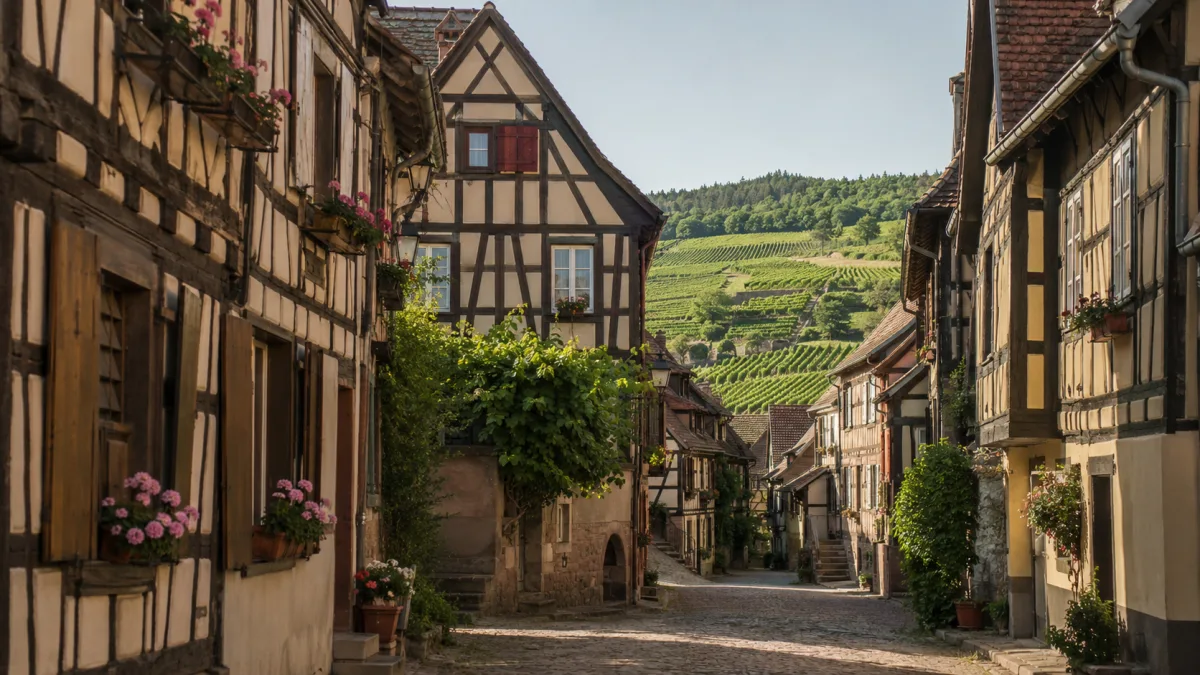
Keep the day small. Alsace villages are close together, but tastings, lunch, parking, and narrow streets slow everything down. Choose two or three producers, one village walk, and one real meal instead of trying to collect labels all day.
If you are traveling by car, name a driver or book local transport. If you are walking vineyard paths, wear shoes that can handle cobbles, slopes, and wet tasting-room courtyards. Livecub's walking-stick adjustment guide is useful if your trip includes vineyard walks or hilly village approaches.
Alsace rewards slow travel the way scenic drives do. Livecub's Skyline Drive waterfalls guide is a different landscape, but the route-planning rule still applies: leave space for weather, parking, and a view that takes longer than expected.
Frequently Asked Questions
Can sparkling wine from Alsace be called Champagne?
No. Sparkling wine from Alsace is usually Cremant d'Alsace. Champagne is tied to the Champagne designation and region.
Is Alsace wine usually sweet?
Not always. Many Alsace wines are dry, but grape, producer, vintage, and style matter. Ask for the dry-to-sweet position if the label is unclear.
What is the best first Alsace wine to try?
Try Riesling if you like crisp wines, Pinot Blanc if you want something easy, Gewurztraminer if you like aroma, and Cremant d'Alsace if you want bubbles.
Do you need reservations for Alsace wine tastings?
Some producers welcome walk-ins, while others prefer reservations. Book ahead for small estates, weekends, harvest periods, and groups.
Order Alsace by the grape and the occasion. Save "Champagne" for Champagne, and let Cremant d'Alsace be its own local pleasure.

Timothy Davidson
Edits step-by-step general-interest guides for clarity, realistic limits and source verification.




Leave a reply
Replying to