
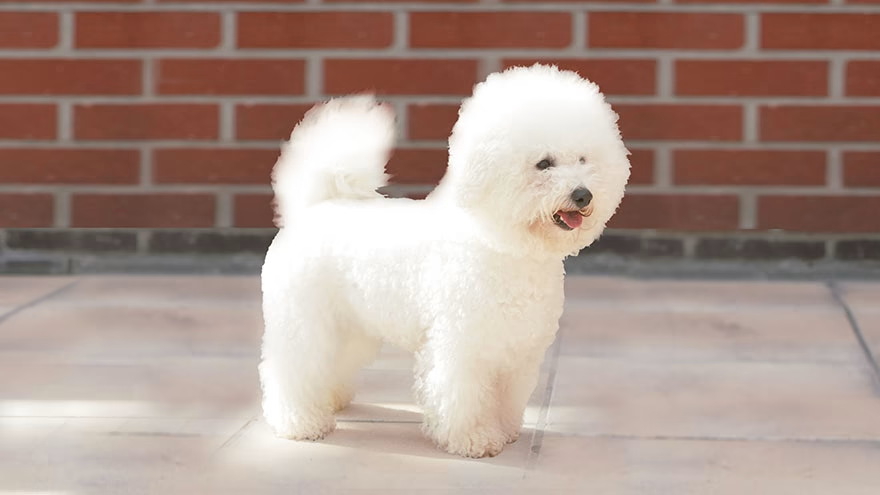
The Bichon Frise has a cheerful face, a soft white coat, and a reputation as a bright companion dog. That sunny look can make health issues easy to miss. Itchy skin may hide under curls. Dental disease can build in a small mouth while the dog keeps eating. Bladder discomfort may look like house-training trouble. A practical Bichon Frise health plan is not about worrying over every scratch; it is about knowing the patterns that show up often enough to deserve attention.
The American Kennel Club describes the Bichon as small, sturdy, resilient, and known for personality. That sturdy build is real, but it does not cancel the need for regular skin, dental, urinary, eye, and orthopedic checks.
What Health Issues Are Most Common In Bichons?
The Bichon Frise Club of America lists the breed's primary health problems from a health survey as skin allergy or atopy, bladder infections and stones, orthopedic problems such as patellar luxation, dental disease, eye disease, cardiac issues, cancers, metabolic disease, liver and spleen disease, and ear problems. The club's Bichon health issue summary is useful because it comes from the parent-club health perspective rather than a generic pet article.
For owners, the short list is easier to remember: skin, ears, teeth, urine, knees, eyes, and weight. These systems influence one another. Allergies can lead to ear infections. Dental pain can change appetite. Extra weight can make kneecap problems worse. A dog with bladder stones may have accidents that are mistaken for behavior.
Small companion breeds share some patterns, so it can help to compare care notes with breeds such as the Maltese or Miniature Schnauzer. Still, your veterinarian should evaluate the individual dog in front of them.
Skin Allergies, Ears, And Grooming
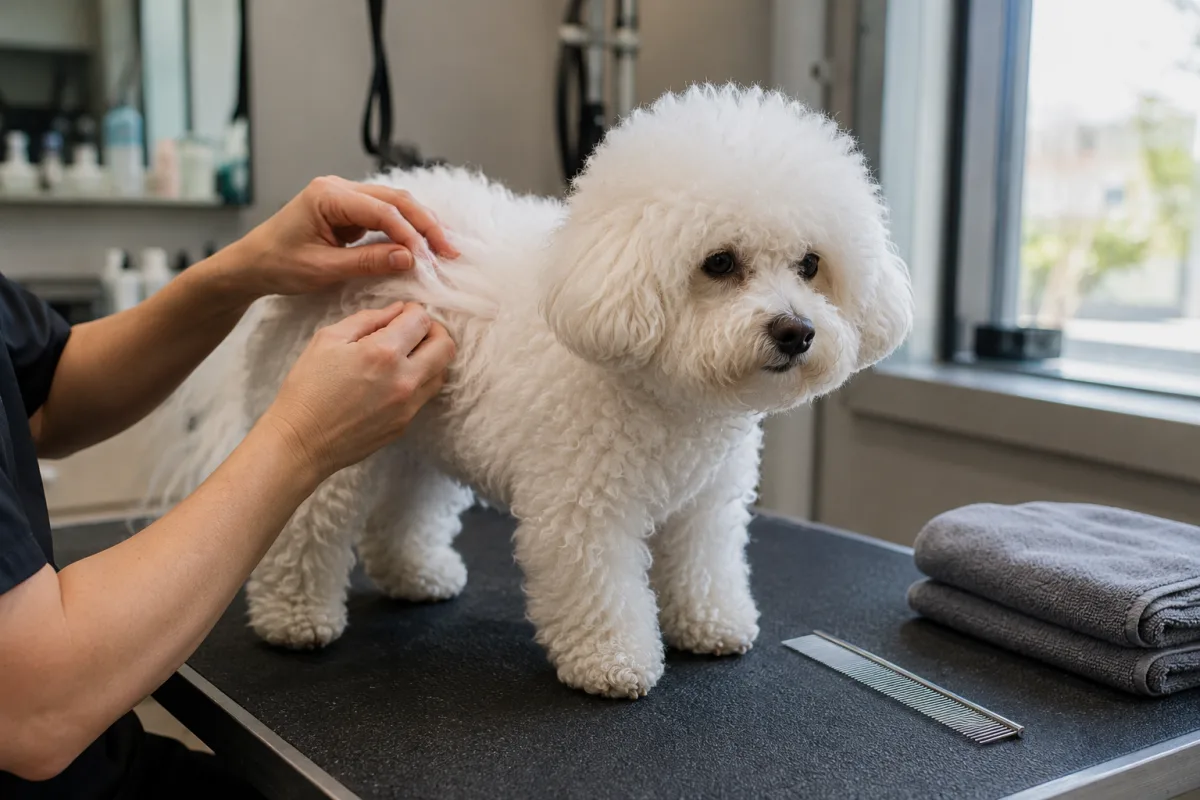
Bichons often show allergy trouble through the skin rather than sneezing. Watch for paw licking, face rubbing, red belly skin, repeated ear infections, hot spots, chewing at the tail base, or a yeasty smell. Fleas, food, pollen, dust, mold, and other triggers can all be involved. Guessing at the cause is less useful than bringing a pattern to your vet.
The coat makes routine grooming part of health care. Curls can mat close to the skin, and mats trap moisture and irritation. VCA Animal Hospitals describes the Bichon coat as curly, coarse, and dense, and says brushing and combing every other day are needed to prevent matting. Many Bichons also need regular professional clipping.
Grooming should include ears, nails, face, feet, and sanitary areas. A Bichon that suddenly hates ear handling may have infection pain. A dog that licks the feet after every walk may need allergy care, paw rinsing, or a change in environment. A groomer can notice problems early, but diagnosis belongs with a veterinarian.
The lesson is similar in coat-heavy breeds. Reading about grooming a longhair Dachshund reinforces the same principle: skin trouble often starts where humans stop parting the coat.
Dental Disease And Daily Mouth Care
Dental disease is one of the easiest Bichon problems to underestimate. Small dogs can develop plaque, gum inflammation, loose teeth, and pain while still eating. Bad breath is not just a personality trait. It is often a sign that the mouth needs care.
Lift the lips weekly. Look for red gums, brown tartar, broken teeth, drooling, pawing at the mouth, or chewing on one side. Daily brushing with dog-safe toothpaste is the best home habit. Dental chews may help some dogs but do not replace brushing or professional dental exams.
Ask your vet how often your Bichon needs dental cleanings. The answer depends on mouth shape, age, home care, diet, and previous dental disease. A young Bichon can start with handling practice before disease appears. An older Bichon with bad breath needs an exam, not just a minty product.
Bladder Stones And Urinary Signs
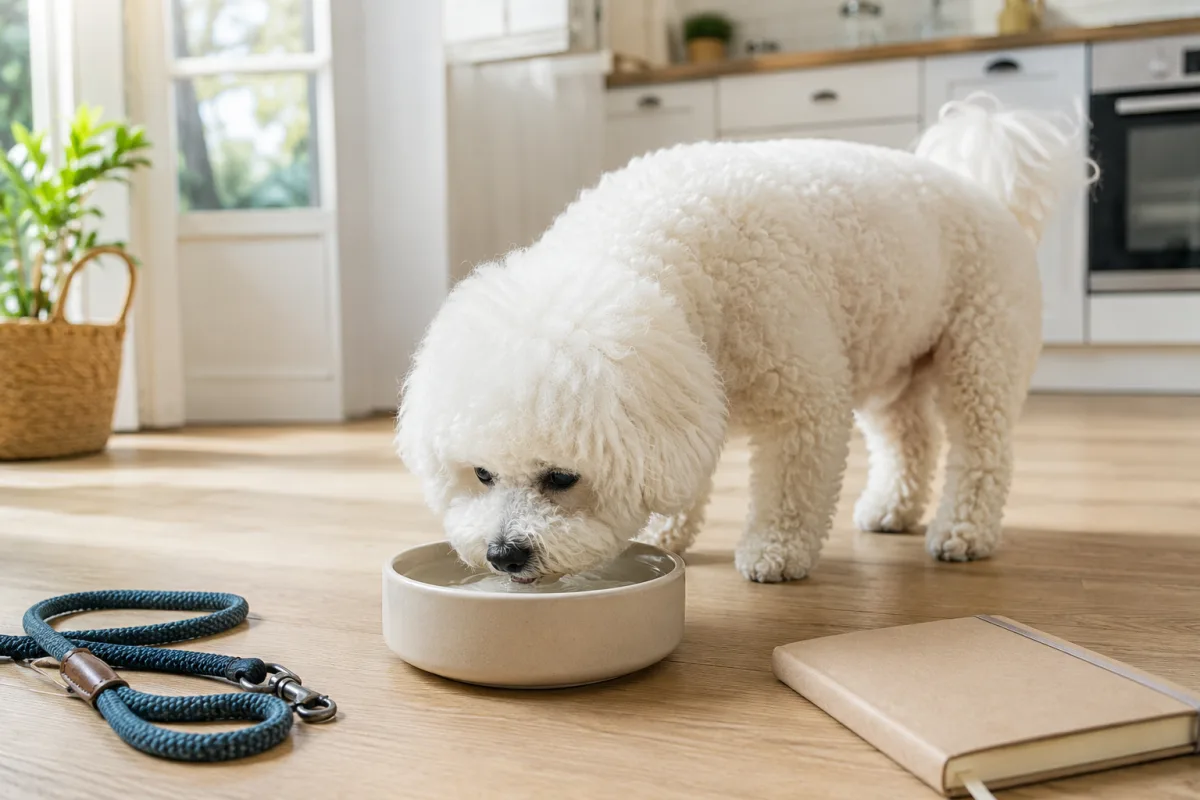
Bladder stones are important in this breed because urinary discomfort can look like training failure. The Bichon Frise Club of America notes in its urinary stone education that Bichons appear to be at increased risk for some bladder stones, also called uroliths. Owners should watch for frequent urination, straining, blood in urine, accidents, licking, discomfort, or inability to pass urine.
A male dog that cannot urinate is an emergency. Do not wait to see whether it passes. Even partial blockage can become dangerous. A dog with repeated urinary signs may need urinalysis, imaging, culture, diet changes, or other veterinary care depending on the stone type or infection pattern.
Fresh water matters, but water alone does not solve stones. Prescription diets should not be started or stopped casually. The type of stone changes the treatment plan, so testing matters.
Keep a simple urinary note if symptoms repeat: time of accidents, frequency, visible blood, discomfort, water intake changes, and any diet changes. That kind of record helps the veterinarian separate behavior, infection, stones, and other urinary disease more quickly than a vague memory can.
Knees, Weight, Eyes, And Aging
Patellar luxation means the kneecap slips out of place. Owners may notice skipping steps, sudden rear-leg lifting, stiffness after rest, reluctance to jump, or a hop that disappears quickly. Mild cases may be monitored; severe cases can need surgery. Keeping a Bichon lean reduces strain on knees, hips, and back.
Eye disease is also on the parent-club list. Watch for cloudiness, redness, squinting, discharge, bumping into furniture, or face rubbing. Do not treat eye symptoms with leftover medication. Some drops that help one condition can worsen another.
Older Bichons need more structured checks: weight, teeth, eyes, urine, skin, mobility, appetite, thirst, and behavior. Increased thirst or urination, sudden weight change, coughing, weakness, or confusion should not be brushed off as age alone.
Comparing across dog health guides can help owners think in systems. A guide to Staffordshire Bull Terrier health problems covers different breed risks, but the habit is the same: notice changes early and ask better vet questions.
Breeder And Vet Questions To Ask

Ask breeders about allergies, bladder stones, teeth, patellas, hips, eyes, cardiac history, diabetes, Cushing's disease, seizures, and ages of older relatives. Ask what health testing has been completed and whether results are public. A confident breeder should not act offended by health questions.
The Bichon Frise Club of America's 5 Star Health Award page says the dog must have a CHIC number showing eye, hip, and patella tests completed and published, plus current eye and patella certification requirements for the award. This does not guarantee a disease-free puppy, but it tells you the breeder is working with known screening tools.
With your vet, build a repeatable plan: dental schedule, skin and ear strategy, weight target, urine monitoring, eye checks, parasite prevention, vaccines, and what signs should trigger an appointment. A Bichon health plan is not one dramatic decision. It is a set of small routines that catch quiet problems early.
For rescues or adult adoptions, ask for whatever records exist, then schedule a baseline exam soon after the dog comes home. Adult Bichons may arrive with dental disease, untreated skin irritation, or incomplete vaccine history. Starting with a clear baseline makes future changes easier to judge, especially during the first months of adjustment.
Frequently Asked Questions
Are Bichon Frises generally healthy dogs?
Many are lively and long-lived, but the breed has recurring concerns including allergies, ear infections, dental disease, bladder stones, patellar luxation, eye disease, and metabolic issues.
Do Bichons really need frequent grooming?
Yes. Their dense curly coat mats easily. Regular brushing, combing to the skin, and professional clipping help prevent skin irritation and hidden problems.
What urinary signs should worry a Bichon owner?
Frequent urination, straining, blood in urine, accidents, pain, licking, or inability to urinate should prompt a vet call. Inability to urinate is urgent.
Why is dental care so important for Bichons?
Small dogs can develop gum disease and tooth loss while still eating normally. Brushing, exams, and professional cleanings help prevent chronic pain.
What health testing should I ask a breeder about?
Ask about eyes, hips, patellas, urinary history, allergies, dental disease, metabolic issues, and older relatives. Ask to see published test results when available.
Bichon Frise health is not hidden in rare diagnoses alone. It is in the daily details: a paw that will not stop itching, breath that gets worse, urine that changes, a hop on the back leg, or a coat that mats close to the skin. Notice those details early, and the white fluff stays much easier to care for.

Timothy Davidson
Edits step-by-step general-interest guides for clarity, realistic limits and source verification.


Leave a reply
Replying to