
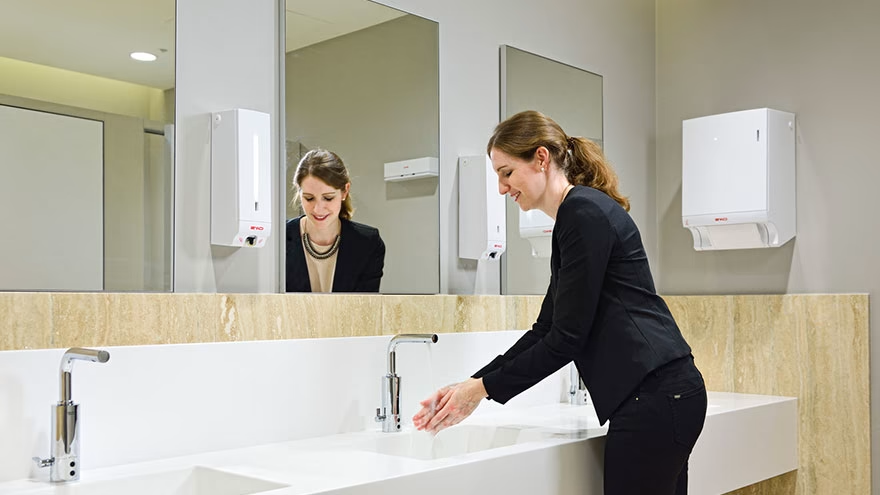
Corporate Washroom Hygiene Rules Need Clear Ownership
Corporate washroom hygiene rules fail when they sound like a poster no one owns. A useful policy names what employees should do, what the facilities team handles, how problems get reported, and how privacy is protected. The goal is a washroom that stays usable during a full workday, not a rule sheet that blames people after supplies run out.
OSHA's restrooms and sanitation guidance says workers need prompt access to sanitary restroom facilities. That baseline matters in offices, warehouses, call centers, restaurants, clinics, and any workplace where people share fixtures for hours at a time.
A clean washroom is a shared system: employee habits, stocked supplies, cleaning schedules, and quick reporting all have to work together.
Start With Access, Supplies, and Privacy
The first rule is simple: employees need a washroom they can use without delay, embarrassment, or a hunt for soap. Stock toilet paper, soap, hand-drying supplies, menstrual products where policy allows, covered trash containers, and a way to report missing items.
Privacy belongs in the same policy. Do not ask employees to announce medical needs, explain restroom frequency in public, or report problems through a channel that exposes private details. A direct facilities ticket, front-desk contact, or manager route is enough.
For offices where reception staff become the first point of contact, Livecub's administrative assistant office duties guide gives useful context for the kind of practical coordination that keeps shared spaces moving.
Access without supplies is not real access.
Handwashing Rules Should Be Easy to Follow
Handwashing rules work only when the sink area supports the behavior. Soap dispensers should be filled, faucets should function, trash should not overflow, and drying supplies should be easy to reach without touching multiple shared surfaces.
The CDC's handwashing guidance recommends scrubbing with soap and water for at least 20 seconds. A workplace rule can say that plainly without turning the washroom into a lecture hall.
Place a small sign near the sink, not ten warnings on the door. Short wording, working supplies, and visible maintenance beat scolding. People comply more often when the expected action is obvious and convenient.
Cleaning Schedules Need Names and Times
A cleaning schedule should say who checks the washroom, how often it is checked, and what counts as urgent. The schedule does not need to list every private task in public, but it should give staff confidence that someone is responsible.
High-use workplaces may need checks before shift changes, lunch breaks, and customer peaks. A small office may only need routine checks plus a fast reporting path. The right schedule depends on traffic, fixtures, business hours, and whether customers also use the space.
The CDC's facility cleaning and disinfecting advice separates routine cleaning from disinfecting after messes, illness concerns, or higher-risk surfaces. That distinction keeps the policy practical.
Cleaning is not only a night-shift task if the washroom is crowded at noon.
Stocking Rules Should Prevent the Small Failures
Most washroom complaints start with small failures: no soap, empty paper, a broken lock, a clogged toilet, a bad odor, or a trash bin that needed attention two hours earlier. A good rule assigns those issues to a check routine instead of waiting for frustration.
Keep backup supplies in a controlled but reachable location. If only one person can access paper towels and that person is off-site, the rule breaks during the first busy morning. A manager, receptionist, facilities lead, or shift supervisor should know the backup route.
Use checklists for staff, but keep public signage minimal. Employees do not need to see an operations manual on the wall. They need a washroom that works.
Keep Food and Personal Items Out of Washrooms
Food, mugs, lunch bags, and personal grooming tools should stay out of washrooms. The rule is less about judging habits and more about separating eating, storage, and toilet areas. This matters more in workplaces where employees move between customers, desks, kitchens, and shared equipment.
If people are eating near sinks because the break area is poor, fix the break area. A washroom rule cannot solve a workplace that gives employees no decent place to eat. Livecub's office cubicle personalization article is a different topic, but it points to the same idea: workspaces need clear zones for different needs.
Do not make the washroom carry jobs it was never meant to do.
Reporting Problems Without Embarrassing People
Employees should know how to report a clog, spill, empty dispenser, broken lock, leak, odor, or safety issue. The process should be fast and low-drama. A QR code, facilities email, desk phone extension, or named contact can work if someone actually responds.
Do not ask employees to identify who caused a mess unless there is a repeated misconduct issue that management is already handling. Most reporting should focus on the condition, location, and urgency.
If conflict develops around shared spaces, Livecub's guide to rude coworker behavior is a useful internal reference for keeping complaints specific and behavior-based.
The best report is boring: what happened, where it happened, and what needs to be fixed.
Signage That Helps Instead of Scolding
Washroom signs should be short, calm, and useful. "Wash hands with soap" works better than a paragraph about germs. "Report supply problems to extension 204" works better than a vague request to keep the room clean.
Avoid signs that sound childish, sarcastic, or hostile. Public shaming rarely improves workplace hygiene, and it can make employees less willing to report problems. Use the same tone you would use for any other workplace instruction.
Signs should also be accessible. Use readable type, good contrast, plain language, and placement where people naturally look. Replace damaged or stained signs because neglected signs send the wrong message about the room itself.
Customer-Facing and Shift Workplaces Need Extra Checks
Restaurants, retail sites, clinics, gyms, factories, and call centers may need different washroom rules from a small professional office. Customer-facing washrooms affect the public impression of the business. Shift workplaces need checks when one crew hands the space to the next.
In service environments, complaint handling and restroom maintenance often meet. Livecub's restaurant customer service complaints guide is a useful companion because cleanliness complaints can become customer trust issues quickly.
Document the busiest windows and build checks around them. A rule that ignores traffic patterns will look fine on paper and fail at the exact time people need it.
How Managers Should Enforce the Rules
Managers should enforce washroom rules through maintenance, training, and respectful correction. Start by making the expected behavior easy. If supplies are stocked, signs are clear, and reporting works, repeated problems become easier to address fairly.
Do not use cameras, gossip, public accusations, or humiliating messages. Privacy rules are not optional because a manager is frustrated. When an employee repeatedly damages property or ignores a basic hygiene policy, handle it through normal conduct channels.
Keep records of maintenance issues separately from conduct issues. A clogged fixture, a broken dispenser, and an employee behavior problem are not the same thing.
Audit the Rules Every Few Months
Washroom policies should change when the workplace changes. A new shift, more employees, customer access, construction, or a return-to-office plan can make old cleaning routines too light. Review complaints, supply use, repair logs, and employee feedback.
Ask one practical question during the audit: can a normal employee use the washroom, wash hands properly, dry hands, dispose of waste, and report a problem without friction? If not, revise the rule or the setup.
Track repeated failures without turning the record into a blame list. If soap runs out every Tuesday afternoon, the answer may be a larger dispenser, a restock check after lunch, or a second storage point nearby. If the same lock breaks twice, replace the hardware instead of sending another reminder.
Share only the pattern that staff need to know. "We added a 2 p.m. supply check" is useful. A public note about who complained is not.
The strongest policy is quiet. People notice it because the room works, not because the wall is covered in warnings.
Frequently Asked Questions
What should corporate washroom hygiene rules include?
They should cover handwashing, stocked supplies, cleaning checks, reporting steps, privacy, food restrictions, respectful use, and manager follow-up.
How often should workplace washrooms be checked?
It depends on traffic, staffing, and customer use. Busy sites may need checks around shift changes, lunch periods, and public rushes.
Can employers post handwashing signs?
Yes. Short, clear signs near sinks can help, especially when they are paired with soap, drying supplies, and regular maintenance.
How should employees report washroom problems?
Use a direct, low-embarrassment route such as a facilities ticket, desk contact, extension, or manager, and describe the condition and location.

Tory Stearns
Edits practical household, travel and lifestyle explainers. Claims that can change are linked to current primary or subject-authority sources.




Leave a reply
Replying to