
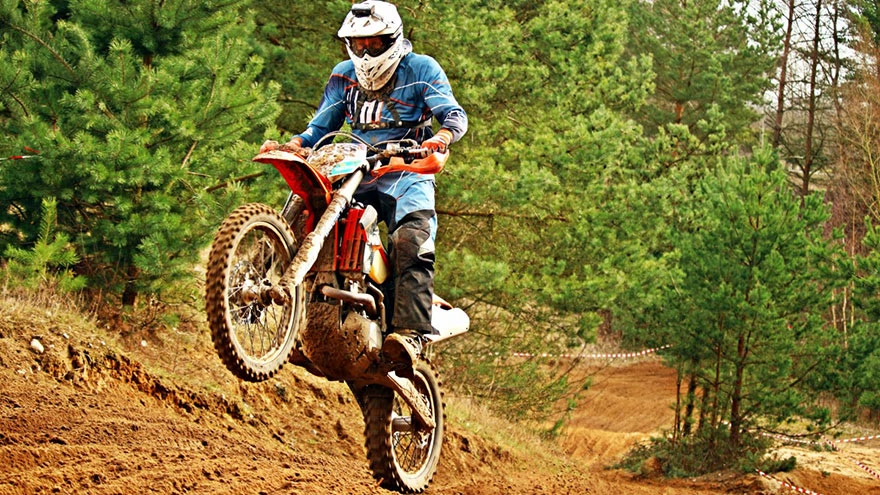
Start with legal riding areas
Washington has strong off-road riding options, but the first question is not which trail looks exciting. The first question is where motorized use is legal today. Closures, seasonal rules, fire risk, logging, storm damage, and restoration work can change access.
Washington DNR publishes information for areas such as Reiter Foothills and Walker Valley on its official recreation page. Start there before trusting an old forum post.
Use clubs and land managers together
Local riding groups can explain trail character, but land managers confirm rules. The Northwest Motorcycle Association's Washington riding areas page is useful for orientation, while DNR and Forest Service pages settle the legal details.
Treat rider reports as helpful leads, not permission slips. A trail that was open last spring may be closed after storm damage or a resource-protection order.
Know the Forest Service OHV picture
The Mt. Baker-Snoqualmie National Forest lists off-highway vehicle opportunities through its OHV information. Forest rules can vary by district, road, trail class, and vehicle type.
Carry a map that distinguishes motorcycle trails from roads, nonmotorized paths, and closed routes. Riding the wrong surface can damage access for everyone.
Match the ride to skill and bike setup
Washington terrain can mean roots, rock, mud, loose climbs, tight forest, exposed roads, and wet bridges. A beginner-friendly area in dry weather can feel very different after rain.
If a trip includes hiking to a viewpoint or walking sections, the balance tips toward the same preparation used for adjusting walking sticks: body position, footing, and fatigue matter.
Plan permits, noise, and spark arrestors
Check registration, ORV permit requirements, Discover Pass rules where relevant, sound limits, and spark arrestor expectations before loading the truck. A missing permit can end the day before the first mile.
Noise etiquette matters near trailheads, campgrounds, and homes. Keep warmups short, avoid roosting near people, and do not turn a shared area into a private track.
Pack for wet and remote conditions
Even a short ride can need rain gear, gloves, water, snacks, tools, tow strap, first-aid supplies, tire repair, and a way to communicate without cell service. Washington weather can punish a light kit.
Remote public-land habits overlap with public land route planning: know where you are allowed to go, keep a backup map, and leave the place usable for the next person.
Protect trails by how you ride
Stay on designated routes, avoid widening mud holes, yield where required, slow down near other users, and turn around before a trail becomes a damage problem. Skill includes knowing when not to force a section.
Shared-travel discipline also appears in scenic trips like planning around popular stops. Access survives when visitors make less work for land managers.
Check conditions close to departure
Do the final check the day before riding, not two weeks earlier. Look for road closures, fire restrictions, event conflicts, weather advisories, avalanche or flood issues in mountain areas, and trailhead parking limits.
If the official source is unclear, call the district or choose a better-confirmed area. A legal, ordinary day beats a dramatic plan that ends with a locked gate.
Make the plan fit real life
The useful version of this topic is the one that fits the reader's actual situation. The trail choice should fit current legal access, rider skill, bike setup, weather, permits, and the group's ability to self-rescue. A plan that only works on paper will not survive a normal week, a tired afternoon, or a small mistake.
Start with the constraint that is least flexible. That may be time, money, safety, access, health, policy, family expectations, or local rules. Once that limit is clear, the rest of the choices become easier to sort.
Watch for the mistake that changes the outcome
The common mistake is following an old ride report without checking current land-manager rules and closures. It usually happens because people want the answer to be simpler than it is. Slow down long enough to separate facts from hopes.
Good judgment is often quiet. It looks like reading the policy, checking the weather, asking one more question, saving a record, or choosing the smaller step before the larger one.
Use a short checklist before you commit
Before acting, check the basics: legal area, permit, trail class, spark arrestor, weather, map, tools, first aid, fuel, communication, exit plan Keep the list short enough that you will actually use it. A long checklist that nobody opens is just decoration.
If another person is involved, confirm the same points in plain language. Most bad decisions in everyday life are not caused by missing expert knowledge; they are caused by assumptions nobody tested.
Know when to pause
Pause when official pages show a closure, the route type is unclear, weather has changed the trail, or the bike is not prepared. A pause is not failure. It is a way to keep a small uncertainty from becoming a costly problem.
If the situation involves health, legal rights, safety, money, or another person's trust, get qualified help instead of forcing a quick answer. The right next step may be slower, and that is often the point.
Turn the advice into one next step
Do not try to solve the whole subject at once. Pick the first item that can change the decision today, then check it against the practical list: legal area, permit, trail class, spark arrestor, weather, map, tools, first aid, fuel, communication, exit plan That keeps the work grounded instead of letting the topic become a vague intention.
A small verified step is better than a confident guess. In practice, that may mean reading the rule, checking the map, saving the message, measuring the space, asking the clinic, reviewing the profile, or confirming the payment terms before anything else moves.
Keep notes while details are fresh
Good notes do not need to be formal. Write down the date, source, name, rule, price, condition, or answer while it is still fresh. That record gives you something calmer to use later if memory, stress, or another person's version of events starts to blur the issue.
For this topic, notes should focus on the decision point rather than every side thought. Record the fact that would change your choice, then leave room for updates if a source, policy, weather report, profile detail, or schedule changes.
Match the advice to the stakes
Low-stakes choices can move with common sense and a short check. Higher-stakes choices need more patience, especially when safety, health, pay, travel money, family trust, or another person's comfort is involved. The amount of checking should rise with the possible cost of being wrong.
This is where the earlier pause point matters: official pages show a closure, the route type is unclear, weather has changed the trail, or the bike is not prepared. If that line is close, slow the plan down. Speed is useful only when the basic facts are solid.
Think about the second effect
Many everyday decisions have a second effect that shows up later. A message changes trust, a campsite affects access, a workplace rule changes morale, a food choice affects leftovers, and a travel booking can affect the whole budget. Look past the first convenient answer.
The second effect is usually where regret hides. Before you finish, ask who else is affected, what becomes harder tomorrow, and what proof you would want if the decision had to be explained later.
Close the loop cleanly
Once the choice is made, finish the small administrative work around it. Save the link, send the note, pack the item, label the container, confirm the route, update the file, or tell the other person what happens next.
A clean close keeps the subject from staying half-open in your head. It also makes the advice easier to repeat the next time, because you are not rebuilding the whole decision from memory. A short final note can also reveal a weak plan before it creates extra work for someone else later. That is often the difference between knowing what to do and actually doing it.
Frequently Asked Questions
Where can I find legal dirt bike trails in Washington?
Start with Washington DNR, National Forest pages, and local OHV organizations. Then confirm the specific trail or area before leaving.
Do not rely only on old social posts.
Do I need a permit?
Often yes, but the exact requirement depends on land manager, vehicle, and parking area. Check ORV and pass rules for the site.
Carry proof where rules require it.
Can beginners ride Washington OHV trails?
Yes, if they choose beginner-suitable areas and conditions. Wet roots, steep climbs, and tight forest can raise difficulty quickly.
Ride with someone experienced and turn around early.
How do I avoid trail closures?
Stay on designated routes, respect seasonal limits, avoid riding around obstacles, and check current rules.
Trail damage and user conflict are common reasons access gets tighter.

Chiara Bradshaw
Covers education, culture and creative topics with an emphasis on readable explanations and verifiable references.



Leave a reply
Replying to