
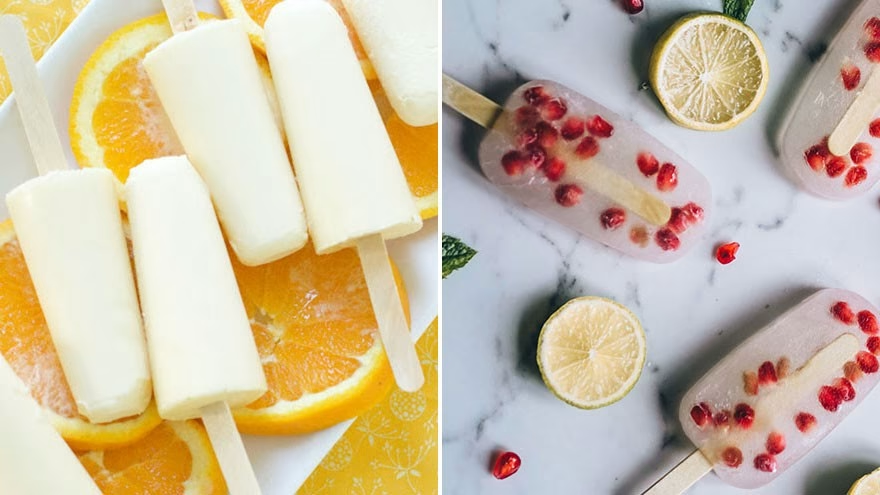
Start with a base that freezes well
USDA SNAP-Ed recipes show how simple fruit and yogurt can become budget-friendly snacks at SNAP-Ed recipes. Popsicles follow the same idea.
Fruit, yogurt, coconut milk, juice, and blended melon all work. A dessert like cookie ornaments needs structure too, just in a different form.
Sweeten less than you think
Cold dulls sweetness, but fruit already brings sugar. Taste the mix before freezing and add honey, maple, or juice only when needed.
For babies under one year, avoid honey. For young children, think about choking-safe textures.
Blend smooth or leave texture on purpose
Smooth pops freeze evenly. Layered pops look good but need time between pours. Chunks of fruit should be small enough to bite safely.
If you like seasoning blends, seasoning mix can inspire ginger, mint, lime, or chile for adult versions.
Use molds that release cleanly
Leave headspace because liquid expands. Tap molds to remove air pockets and insert sticks straight.
To release, run warm water briefly over the mold. Do not yank until the stick loosens.
Keep freezer storage clean
FoodSafety.gov's cold storage chart explains freezer storage is mainly a quality issue when food stays frozen continuously at 0 F or below.
Wrap pops after unmolding so they do not pick up freezer odors.
Make flavors by category
Fruit and yogurt gives creaminess. Juice and fruit gives iciness. Blended banana or mango gives body. Herbs and citrus add brightness.
If serving with party food, display planning helps keep frozen treats from sitting out too long.
Start with the decision that changes the outcome
The first useful move is not always the most dramatic one. For this topic, the practical checks are: base, fruit size, sweetness, age safety, molds, headspace, freezer time, wrapping, labels, serving time Those checks keep the advice tied to the real situation instead of a tidy idea.
Handle the constraint before the preference. Cost, safety, timing, health, storage, consent, childcare, or policy can change the right answer even when the basic idea sounds simple.
Make the plan fit the setting
Popsicle success depends on fruit water content, sweetness, dairy, mold size, freezer time, eater age, and storage wrapping. A plan that ignores the setting usually creates extra work later. It may look efficient at first, but the weak spot shows up when the food sits, the schedule shifts, the child needs attention, or the relationship boundary is tested.
Adjust the method before the problem gets expensive. A small change early is easier than a large repair later.
Watch for the avoidable mistake
The mistake to avoid is pouring a watery mix with large fruit chunks and expecting it to freeze into a smooth, easy-to-eat pop. It usually appears when someone wants the answer to move faster than the facts allow.
Speed is useful only after the basic facts are clear. Slow down long enough to separate a real signal from a habit, a sales label, a craving, or pressure from another person.
Use one cue you can trust
Choose a cue that can be observed or recorded: a temperature, label, date, texture, return-to-work right, storage time, child routine, emotional pattern, or task list.
That cue becomes the anchor. Without it, the plan depends on memory and mood, which are both unreliable when people are tired.
Keep notes while details are fresh
A short note can prevent later confusion. Write down the source, date, rule, recipe change, storage time, conversation point, or next step before the detail fades.
Useful notes are plain. They should help you repeat the good choice, explain the decision, or notice when the situation has changed.
Protect the person who carries the risk
Every topic has someone who carries the cost of a rushed choice: the person eating, the baby being fed, the parent returning to work, the child at home, the partner in the relationship, or the cook handling knives.
If the risk lands on someone else, the plan needs extra care. Convenience is not a good enough reason to ignore their comfort or safety.
Choose the smaller next step
The next step should reduce confusion. Buy the thermometer, check the label, plan one meal, ask HR one precise question, set one boundary, clear one counter, or make one freezer label.
A smaller step can still be decisive. It works when it answers the question that is actually blocking progress.
Review after the first try
After the first attempt, look at what happened. Did the texture hold, did the schedule work, did the child settle, did the boundary help, did the budget stretch, or did the workday become clearer?
Use that review to adjust the next round. Ordinary improvements add up faster than starting over each time.
Set the point where you pause
The point to pause is this: ingredients are spoiled, dairy has warmed too long, fruit chunks are unsafe for the child, or honey is planned for an infant. That line protects the plan from becoming stubborn. It gives you permission to stop, check a source, call a qualified person, change the purchase, or move the conversation to a safer place.
A pause is not wasted time. It is the moment where a rushed choice becomes a considered one, especially when food safety, children, health, work rights, money, or relationship pressure is involved.
Prepare a backup before you need it
A backup keeps one weak detail from ruining the whole plan. Keep a second side dish, a simpler recipe, a cooler, a storage label, a written question for HR, a childcare fallback, or a support contact ready before the busy part begins.
The backup should be modest. It only needs to carry the situation through the next hour, meal, workday, conversation, or shopping trip.
Match the tools to the real job
The right tool is often ordinary: a thermometer, sharp knife, clean board, calendar, freezer tape, grocery list, notebook, quiet room, or saved phone number. Fancy tools matter less than tools that remove guessing.
Use the tool at the point where mistakes usually start. That might be before heat touches food, before a child routine collapses, before a budget trip begins, or before a hard sentence is said out loud.
Keep the language plain
Plain language makes the plan easier to follow under pressure. Write the actual cut, date, temperature, task, question, boundary, appointment, or serving plan instead of a vague reminder.
Clarity is a practical safety habit. It reduces rework, lowers conflict, and helps another person understand what needs to happen if you are not the one doing every step.
Make the second round easier
Before you move on, save one useful detail from the first round. It could be the brand that worked, the pan timing, the child's texture preference, the cheaper store, the workplace contact, or the sentence that kept a boundary calm.
This is how a one-time fix turns into a repeatable routine. The next attempt starts with evidence from your own kitchen, home, schedule, or relationship instead of starting from scratch.
Remove one source of friction
Most plans fail at the same small point more than once. The bag is not labeled, the knife is dull, the support person was not asked, the ingredient was bought without a use, the browser tab was lost, or the hard conversation began too late.
Choose one friction point and remove it before the next try. Put the note where you will see it, prep the container, sharpen the knife, save the link, set the reminder, or write the first sentence before emotions are high.
Know what success looks like
Success should be visible in a simple way. The steak rests well, the soup reheats safely, the knife feels controlled, the grocery total drops, the baby accepts a texture, the workday has fewer surprises, or the boundary holds without a long argument.
Do not measure success by perfection. Measure it by whether the next decision is cleaner, safer, cheaper, calmer, or easier to repeat.
If the answer still feels vague, make the goal smaller. A narrow goal is easier to test, adjust, and trust.
Keep the record short enough that you will actually use it the next time the same choice appears.
Frequently Asked Questions
What fruit works best?
Mango, berries, peaches, melon, banana, pineapple, and citrus blends can work well.
Water content changes texture.
How long do popsicles take to freeze?
Many need several hours or overnight, depending on mold size and freezer temperature.
Plan ahead.
Can I make lower-sugar pops?
Yes. Use ripe fruit, yogurt, and small amounts of juice or sweetener only as needed.
Taste before freezing.
How should I store homemade pops?
Unmold and wrap once frozen, then keep them sealed in the freezer.
Label flavors and dates.

Linda Fehrman
Edits general wellness and relationship explainers. Health material is educational, avoids diagnosis and links to health-authority guidance.

Leave a reply
Replying to