

Does a Baby Stay in One Position in the Womb? No. Babies move, stretch, roll, kick, turn, and change position through pregnancy. They usually have more room earlier and less room near the end.
Late in pregnancy, position matters more because the baby may settle head down, breech, posterior, or sideways. Your clinician checks position as birth gets closer.
Babies Move A Lot
A baby does not stay still like a posed photo. Movement can include kicks, rolls, stretches, hiccup-like rhythms, and shifts you feel in different parts of the belly.
If you are thinking ahead to newborn hiccups, Livecub's newborn hiccups guide can help after birth, but womb movements are a different topic.
Room Changes Over Time
In mid-pregnancy, there may be enough room for frequent turning. Later, the baby grows and movements may feel more like rolls, stretches, jabs, or pressure.
Less dramatic movement does not mean no movement. A change in your baby's usual pattern should be reported to your maternity team.
Head Down Position
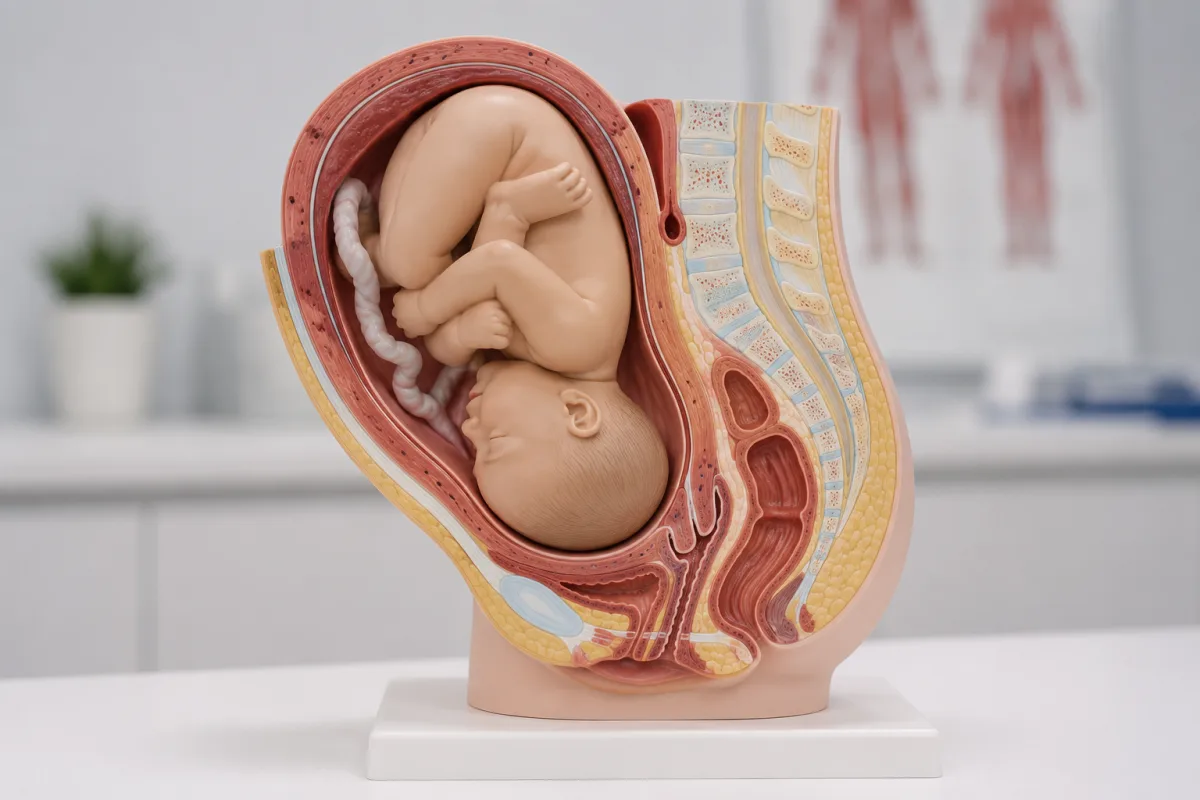
Cleveland Clinic says the ideal fetal position for labor is head down, facing the mother's back, called cephalic or occiput anterior presentation: fetal positions for birth.
Many babies turn head down near the end, but not all do it on the same day or week.
Breech Position
A breech baby has the buttocks, feet, or both positioned to come first. ACOG says breech presentation happens in 3-4% of full-term births: ACOG breech baby FAQ.
Breech early in pregnancy is not the same as breech at term. Your clinician will interpret timing.
Posterior Position
A baby can be head down but facing the mother's belly, often called posterior. Some babies rotate during labor; others may make labor longer or more uncomfortable.
Position is only one part of birth. Pelvis, contractions, baby size, and labor progress all matter too.
Transverse Lie
Transverse means the baby is lying sideways. This is more concerning near birth because the baby is not lined up for vaginal delivery.
If transverse position persists late, the birth team will discuss options and safety. Do not try aggressive turning methods at home.
How Position Is Checked

Clinicians may feel the abdomen, check where the heartbeat is heard, or use ultrasound. What you feel from the outside can be misleading.
A hard round area might be the head or bottom. Guessing from belly shape is not reliable enough for decisions.
External Cephalic Version
Cleveland Clinic explains that external cephalic version is a procedure used around 37 weeks to try to turn a breech baby head down: external cephalic version overview.
ECV is done by trained clinicians with monitoring. It is not the same as stretches or internet turning exercises.
Movement Patterns

Pay attention to your own baby's usual movement pattern. Some are busy at night, some after meals, some when you lie down.
If movement seems reduced or very different, call your clinician. Do not wait because an app, forum, or home trick says it is fine.
Preterm Babies
Babies born early may not have had the same time to settle into final birth position. Preterm development and positioning questions belong with the neonatal team.
Livecub's premature baby development guide and low-birth-weight and preterm infant guide may help after birth.
Preparing The Home
Position in the womb is a birth-planning issue; preparing the home is a separate newborn-safety issue. Do both at the right time.
Livecub's room-by-room baby-proofing guide can help later, but it does not change fetal position.
What Not To Do
Do not press hard on the belly, use unsafe inversions, skip appointments, or ignore reduced movement because you are trying to make the baby turn.
Ask before trying positioning exercises, especially if you have bleeding, placenta concerns, high blood pressure, preterm labor risk, or other restrictions.
Hiccups Are Not Position
Rhythmic little pulses may be fetal hiccups, not proof of where the head is. Hiccups can be felt in different places depending on position and perception.
Use clinical checks for position questions, not hiccup location alone.
Ask At Visits
Ask your clinician what position they think the baby is in and how confident they are. If needed, ultrasound can clarify.
This is a normal question near the end of pregnancy, not something you have to guess alone.
Why Movement Feels Different
Movement can feel different as pregnancy changes. Early flutters may become kicks, then rolls, stretches, pressure, and smaller shifts as the baby grows. The placenta position, your activity, and your body position can change what you notice.
Different does not automatically mean dangerous, but reduced movement or a pattern that feels clearly off should be taken seriously. Your maternity team would rather hear from you than have you wait in worry.
Position Is Not A Parenting Test
Parents sometimes feel they caused breech or posterior position by sleeping wrong, sitting wrong, or missing a stretch. Most fetal position changes are not that simple.
Your job is to attend visits, ask questions, report movement concerns, and follow medical guidance. Blame does not help birth planning. Clear information does.
Online Turning Advice
Pregnancy forums often share exercises, inversions, music tricks, cold packs, and positioning routines. Some may be harmless for some people, but they are not safe for every pregnancy.
Ask before trying anything that puts pressure on your belly, changes circulation, or makes you dizzy. Placenta location, bleeding, blood pressure, preterm labor risk, and prior pregnancy history can change what is safe.
What To Ask Near Term
Near term, ask three direct questions: What position is the baby in today, how do we know, and what changes the plan if the position stays this way?
Those answers give you more than a label. They tell you whether the team is watching, whether ultrasound is needed, and when birth options should be discussed.
Daily Life Does Not Give A Perfect Map
Feeling kicks low, pressure high, or movement on one side can be interesting, but it does not give a perfect map of the baby. Hands, feet, knees, elbows, and the bottom can all create surprising sensations.
This is why many parents guess wrong even when they are paying close attention. Use your observations as questions for the visit, not as final answers. The clinician can combine touch, heartbeat location, and ultrasound when needed.
Movement Counts And Anxiety
Some maternity teams recommend paying attention to movement patterns, while exact counting advice can vary. Follow the instructions your own clinician gives you, especially if you have a higher-risk pregnancy.
Anxiety can make every quiet stretch feel frightening, but reduced movement still deserves a call. You are not bothering the office by asking. Clear guidance is better than sitting at home trying to argue yourself out of concern.
Birth Plans Can Change
A birth plan is useful, but fetal position can change the discussion near the end. Breech, transverse, posterior, and head-down positions may lead to different monitoring, timing, or delivery conversations.
That does not mean the whole plan failed. It means the plan has to respond to the baby and your health on the actual day. Flexible planning is often calmer than trying to predict every turn weeks ahead.
Do Not Compare Belly Shape
Two pregnant bellies can look different even when babies are in similar positions. Muscle tone, prior pregnancies, fluid, placenta location, and baby size can all change the outside shape.
Comparing photos online can create worry without giving reliable information. If position matters for a decision, ask for a clinical check instead of using appearance as proof.
The same is true for where you feel kicks. Sensation gives clues, but it cannot replace a visit, exam, or ultrasound when your team needs a clear answer.
Frequently Asked Questions
Does a baby stay in one position in the womb?
No. Babies move and change position through pregnancy, especially before the final weeks.
When does baby position matter most?
Position matters more near the end of pregnancy and during labor because it can affect birth options.
Can I tell position by feeling my belly?
You may guess, but belly feeling is not reliable enough. Clinicians may use exam or ultrasound.
What does breech mean?
Breech means the baby's buttocks, feet, or both are positioned to come first instead of the head.
Should I call about reduced movement?
Yes. Call your clinician if your baby's movement pattern is reduced or feels very different.
Babies do not stay in one position throughout pregnancy. They move often, then may settle closer to birth, when position becomes part of delivery planning.

Linda Fehrman
Edits general wellness and relationship explainers. Health material is educational, avoids diagnosis and links to health-authority guidance.




Leave a reply
Replying to