
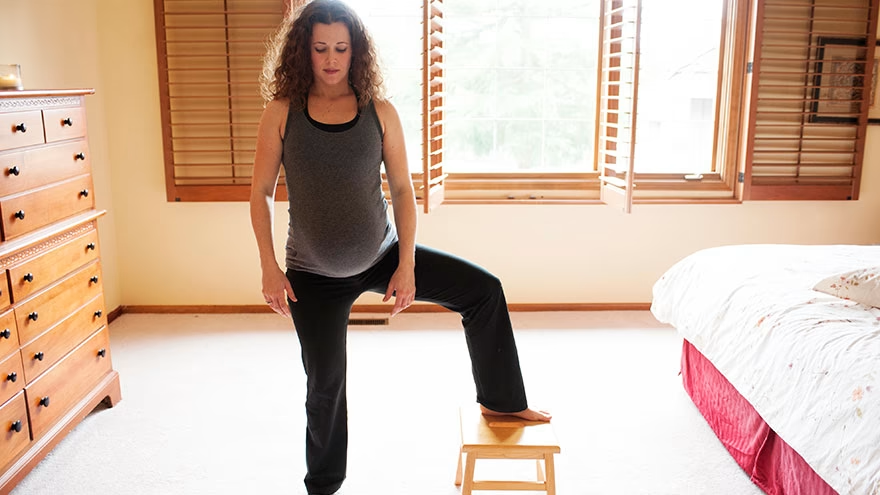
How to Stretch Your Back in Labor Using a Hands and Knees Position is about comfort, not forcing a pose. Hands and knees can reduce pressure on the back for some people and make room for gentle movement.
Use it only if the laboring person wants it and the care team says it fits the situation. Equipment, monitoring, epidural use, fatigue, and medical needs can change the safest setup.
Ask Before Moving
Before helping someone into hands and knees, ask if they want to try it. Consent matters even when the goal is comfort.
If there are monitors, IV lines, epidural effects, or staff procedures underway, ask the nurse or clinician for help.
Set Up The Surface
Use a bed, floor mat, or firm surface approved by the care team. Add pillows under knees, hands, wrists, chest, or belly as needed.
A stable setup matters more than copying a picture. Slipping or wrist strain can make the position harder.
Move Slowly

Help the person roll or shift into position between contractions if possible. Keep cords clear and move one limb at a time.
Cleveland Clinic lists hands and knees as a labor position that can help relieve back pain and can be supported with pillows, a birth ball, or a couch: Cleveland Clinic labor positions.
Rock Gently
Once stable, the person may rock forward and back, circle hips, or stay still. Small movements can stretch the lower back without adding strain.
Do not push the hips or back into a deeper stretch. The laboring person controls the movement.
Use A Birth Ball

The person can lean over a birth ball, stacked pillows, or raised bed if wrists or arms get tired. This keeps the back accessible while reducing upper-body effort.
Livecub's early labor support guide can help support people time help without crowding.
Counterpressure
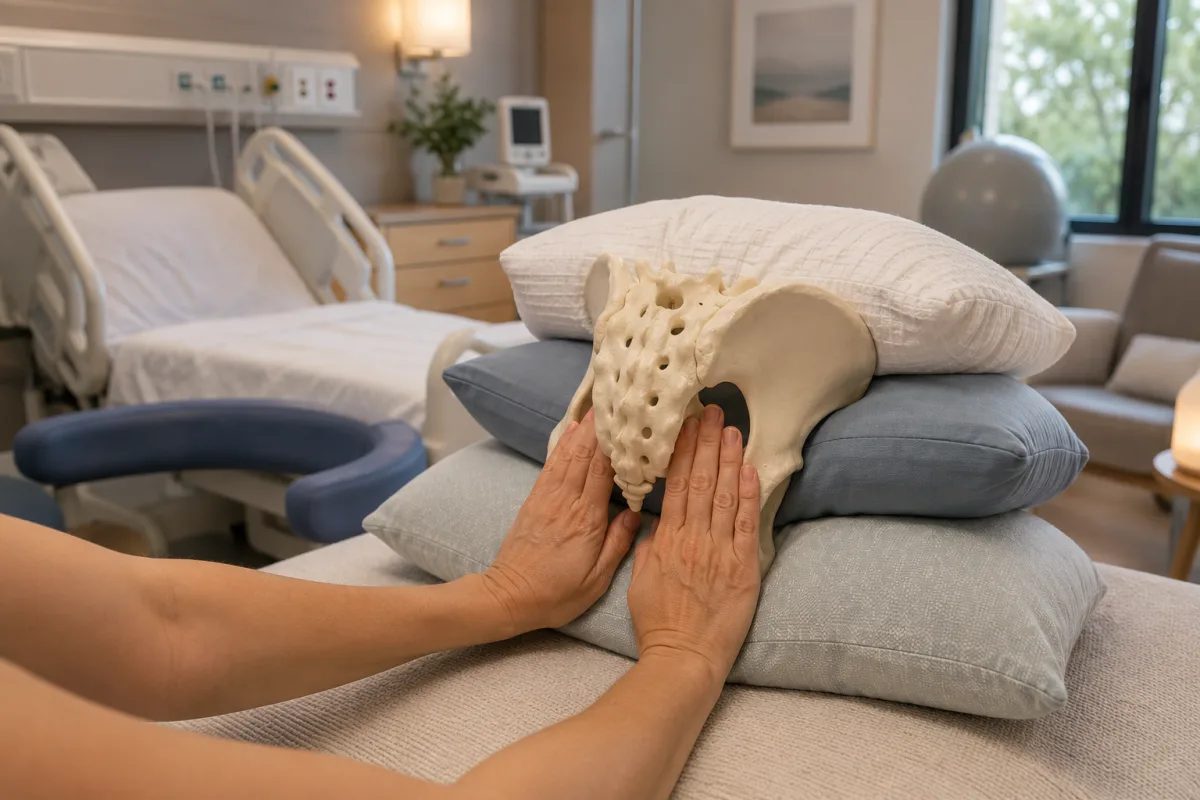
A support person can apply steady pressure to the sacrum or lower back if invited. Use body weight, not sharp finger pressure.
Ask in short words: more, less, same, stop? Then respond immediately.
Breathing And Rest
Hands and knees can be active, but it should not become a workout. Between contractions, rest the upper body on pillows or a ball if that feels good.
Mayo Clinic notes that people may push in different positions, including on hands and knees, and can try positions that feel best: Mayo Clinic stages of labor.
Back Stretch Variation
Try a gentle cat-cow style movement only if it feels good: round the back slightly, then return to neutral. Keep the motion small.
Labor is not the time to chase a deep yoga pose. Comfort and safety lead.
Knee And Wrist Care
Use folded towels, pillows, or pads under knees and hands. If wrists hurt, try forearms on pillows or leaning over a ball.
Stop if numbness, sharp pain, dizziness, or exhaustion appears.
With An Epidural
Hands and knees may not be safe with numb legs unless staff can assist and approve. Side-lying or supported positions may be safer in some cases.
Do not move numb legs without help.
Position Changes
ACOG says frequent position changes during labor can support comfort and fetal positioning when the chosen positions are appropriate: ACOG labor position changes.
If hands and knees stops helping, try side-lying, standing lean, sitting, or another staff-approved position.
Emotional Safety
Some people feel exposed in hands and knees. Cover with a sheet, limit visitors, and ask before photos or video.
Livecub's staying intimate during pregnancy guide can help partners remember that touch and privacy depend on consent.
Nausea Or Fatigue
If nausea or shaking appears, help the person rest and ask staff what fluids or food are allowed.
Livecub's bland pregnancy foods guide may help during pregnancy nausea, but labor intake rules come from the care team.
When To Stop
Stop for pain that feels wrong, dizziness, numbness, monitor issues, staff requests, or the person's simple no.
A useful labor position should make the next few minutes more manageable, not prove toughness.
Support Person Position
The support person should stand where they can help without blocking staff. Keep hands, knees, and cords visible.
A useful helper stays calm, close enough, and easy to move. If staff needs access, step back quickly without making it a debate.
Short Holds
Hands and knees can be used briefly. Try a few contractions, then reassess comfort, fatigue, and monitoring.
Short use can still help. The position does not need to last an hour, and changing after two contractions is not failure.
Privacy
Cover the person with a sheet or gown if wanted. Comfort includes feeling less exposed.
Ask before inviting anyone into the room during this position. Privacy can be part of pain coping, not a separate preference.
Pillow Map
Put support where pressure shows up: knees, wrists, chest, belly, or forehead. Do not add pillows just because they are available.
Too many props can make movement clumsy. Start simple, then add one support at a time.
Sacral Pressure
For back labor, steady pressure over the sacrum may feel better than rubbing. Ask for more, less, same, or stop during each contraction.
Use broad hands, a folded towel, or a firm object only if the person wants it. Sharp pressure can feel irritating fast.
Forearm Variation
If wrists hurt, lower onto forearms over pillows or a raised bed. This can keep the back open while reducing load through the hands.
Check that the neck is not hanging. A supported head can make the position easier to keep for another contraction.
Rocking Range
Rocking should stay small. Big movements can tire the arms, shift monitors, or make the person feel unstable.
If the motion helps, keep it. If stillness helps more, stillness is the right version of the position.
Partner Words
Use fewer words than usual. Labor can make normal sentences feel too large, especially during intense back pressure.
A partner can ask one question at a time: pressure, water, pillow, stop? Then wait for the answer.
Staff Timing
Move between contractions when possible. If staff needs to check dilation, adjust monitoring, or manage medication, pause the stretch and follow the room's timing.
The position should fit the care plan in the moment. It should not create a tug-of-war over access.
After The Position
When leaving hands and knees, move slowly. Arms and knees may feel shaky, and blood pressure or fatigue can change how standing feels.
Roll to the side, sit back, or lean onto support before standing. Ask staff before major movement if lines or numbness are present.
Emotional Reset
Some people feel relief in hands and knees; others feel frustrated or exposed. Both reactions are normal.
If the position brings tension instead of relief, change the setup or leave it. Comfort includes the mind as well as the back.
Hydration Break
After several contractions in hands and knees, offer a sip if fluids are allowed and help wipe the face or neck if requested.
Small care tasks can make the next position easier without interrupting the rhythm of labor.
Knee Exit
To leave the position, bring one knee forward or roll to the side with help. Avoid sudden twisting through the lower back.
A slow exit protects tired arms and hips, especially after strong contractions or a long hold.
Heat And Cold
A warm pack on the lower back may feel good for some people, while others prefer a cool cloth on the neck.
Use only what the care team allows, wrap temperature packs in cloth, and remove them quickly if the sensation becomes irritating.
Do Not Force Symmetry
The body may not look perfectly even in labor. One knee may need more padding, one shoulder may drop, or one hip may want more space.
Comfort matters more than a tidy pose. Adjust for the person in the bed, not for a picture of the position.
Frequently Asked Questions
Can hands and knees help back labor?
It may help some people by changing pressure and allowing gentle rocking or counterpressure, but it does not help everyone.
How do I set up hands and knees in labor?
Use a stable surface, pillows under knees or hands, clear cords, and ask the care team for help if equipment is present.
Can I use hands and knees with an epidural?
Only with care-team guidance. Numbness can make the position unsafe without support.
What movement should I do in hands and knees?
Small rocking, hip circles, or gentle back rounding may help if comfortable. Avoid forcing a deep stretch.
When should I change positions?
Change if pain, numbness, dizziness, exhaustion, monitoring issues, staff requests, or the person's preference changes.
Hands and knees can stretch the back in labor when it is wanted, supported, and safe. Keep movement gentle, ask often, and change positions without forcing it.

Olivia Prete
Edits culture and personal-development articles, distinguishing opinion and experience from verifiable claims.



Leave a reply
Replying to