
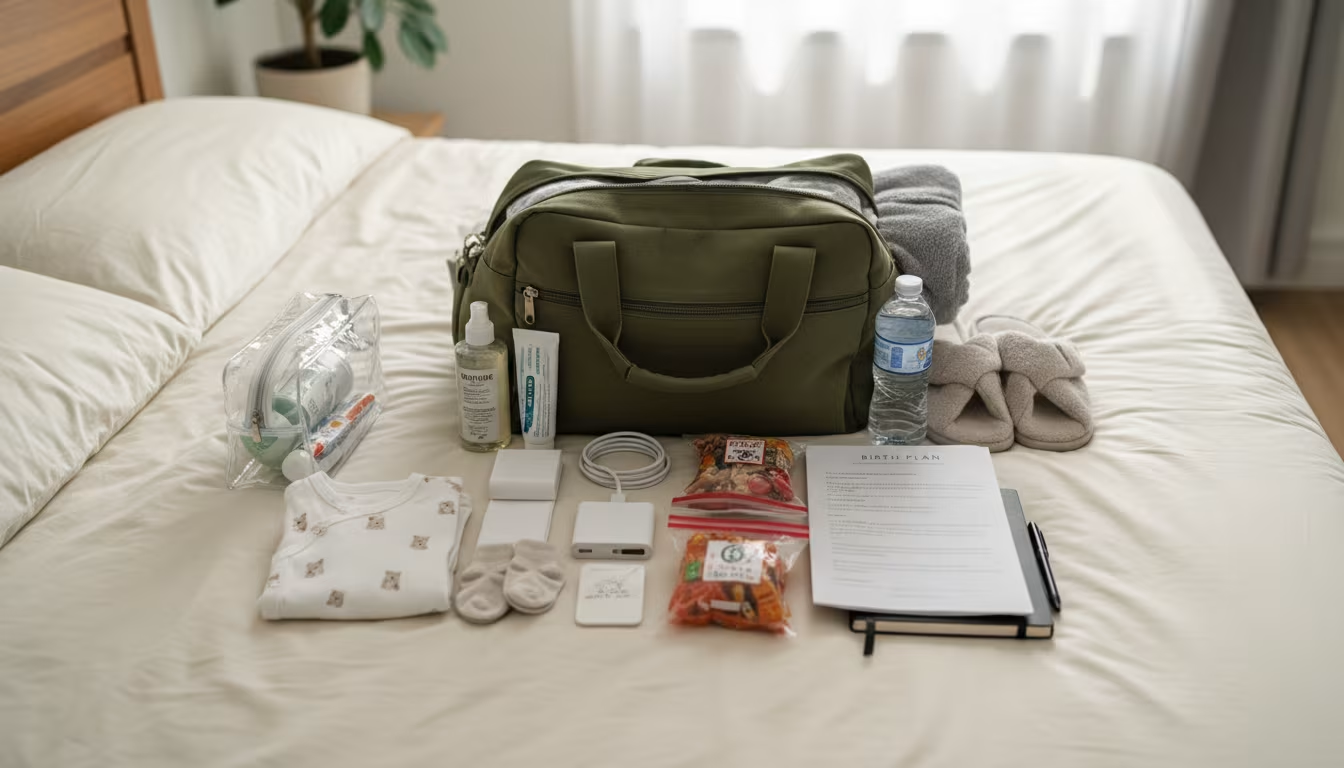
A good hospital bag should make labor easier, not turn packing into a second nursery project. The version that actually works is organized, realistic, and simple enough that a tired support person can find anything in it without asking you mid-contraction. Before you buy a single extra item, call your hospital or birth center — many already provide pads, mesh underwear, diapers, wipes, a peri bottle, and basic newborn supplies, which changes what you truly need to carry.
Split It Into Two Bags
Use one smaller labor bag and one postpartum-and-baby bag. During contractions, nobody wants to dig through newborn outfits to find lip balm, a phone charger, or your paperwork. Keep the things you will reach for during labor in the small bag, and leave the rest for later in the stay.
The NHS keeps its recommendations refreshingly practical — birth plan, notes, loose clothing, nightwear, underwear, pads, and baby items. Its hospital bag checklist is a sensible base to adapt to your own stay.
Documents and the Labor Bag
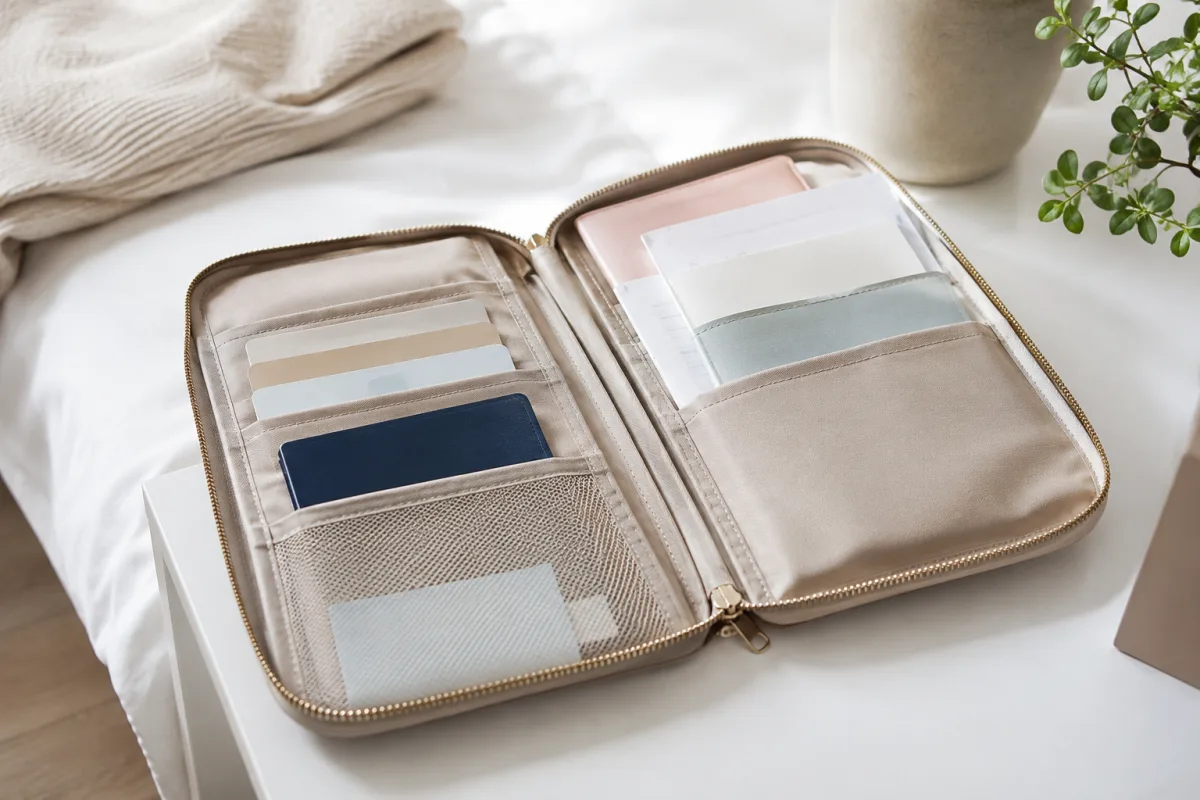
Put the paperwork where it is easiest to grab: photo ID, insurance card, hospital registration papers, a medication and allergy list, any required prenatal records, and your birth plan if you have one. Keep that plan short enough that a busy nurse can read it in under a minute — a wall of text tends to go unread exactly when it matters.
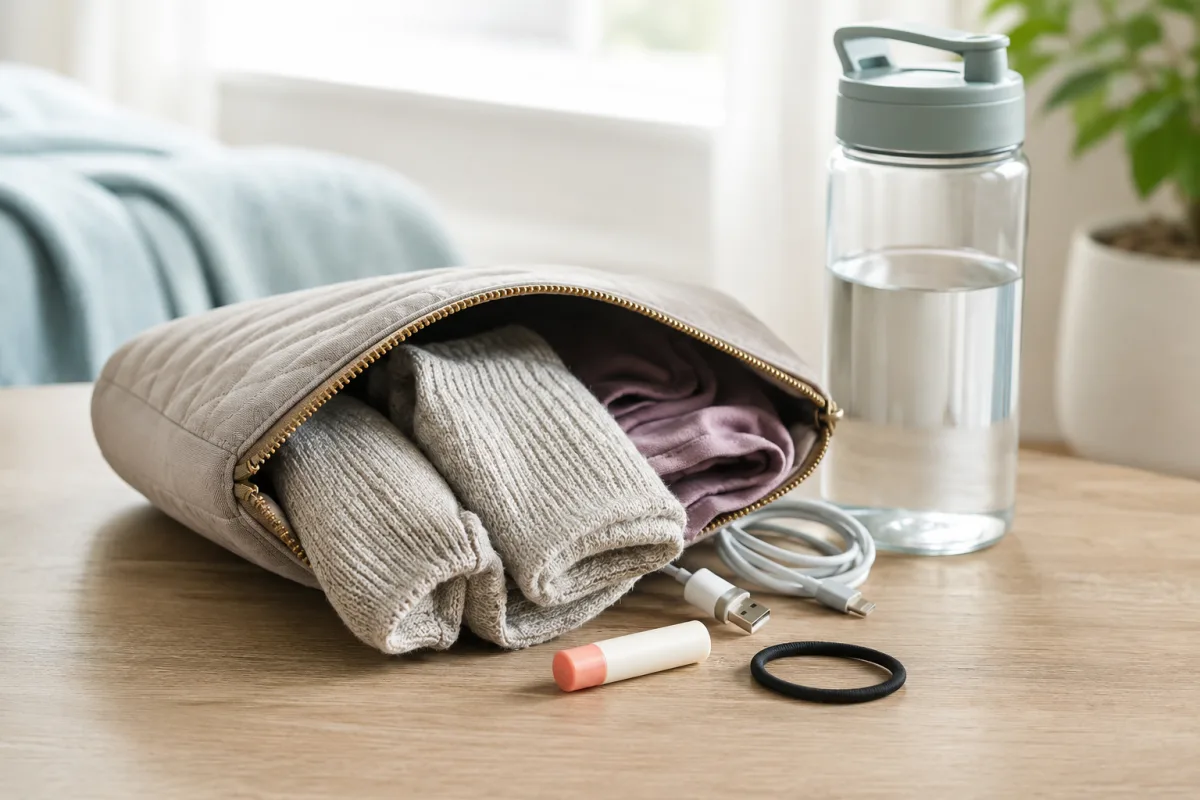
Everything else in the labor bag is about comfort and endurance: lip balm, hair ties, glasses or a contacts case, socks, a warm layer, a long phone charger, and a refillable water bottle. Hospitals run dry and warm, so those last two get used far more than most of the "cute extras" people pack.
Comfort and Clothes for You
Choose loose, dark, washable clothing. A front-opening top or a loose nightgown makes breastfeeding, skin-to-skin, exams, and IV lines much easier. Pack one going-home outfit sized like late-pregnancy clothes rather than pre-pregnancy ones — comfort and access beat a photo op. Add a small toiletries kit (toothbrush, deodorant, hairbrush, face wipes, lip balm, lotion, shower shoes) and keep liquids small so the bag stays light. If your support person is going to help with comfort measures, giving them a real role — like the ideas in this guide to emotional support during early labor — beats having them hover.
For the Baby and Going Home
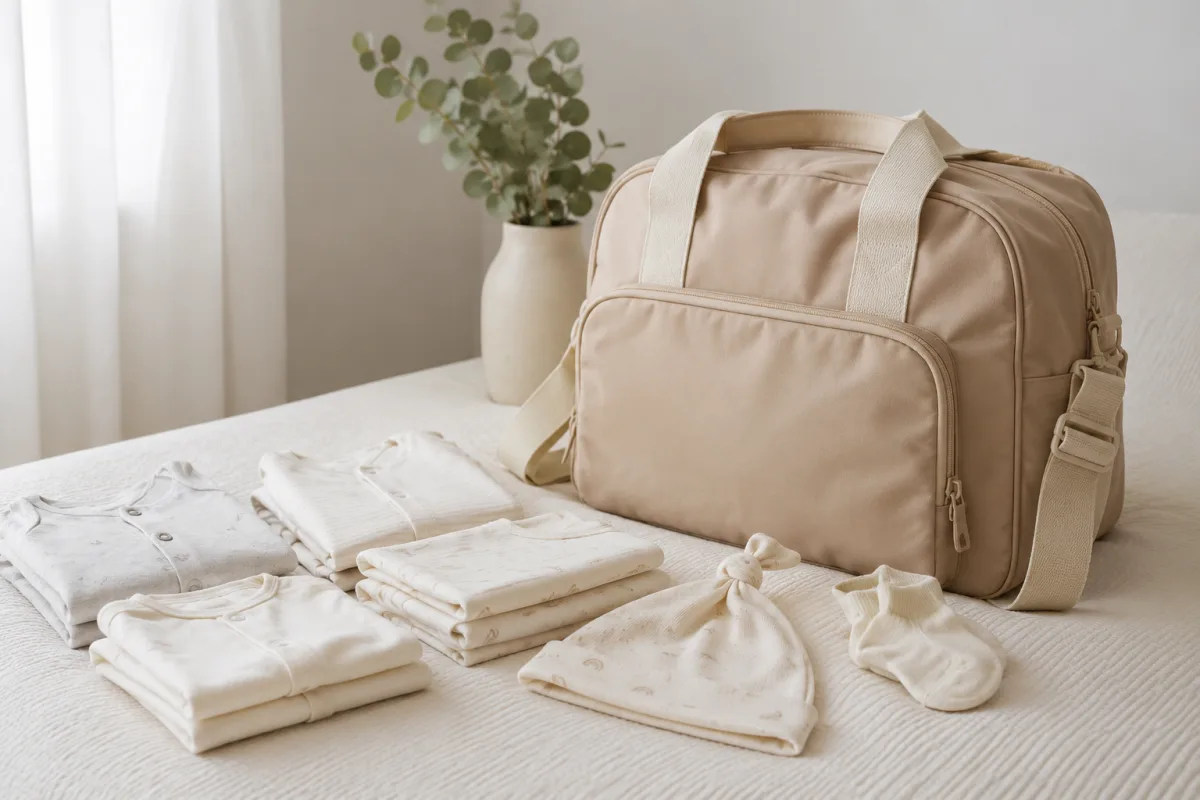
Newborns need very little: two or three simple outfits, a going-home outfit, socks or booties, and a hat if your hospital suggests one. Pick clothes that open easily for diaper changes and checks, and skip stiff fabrics, fiddly buttons, and oversized accessories. If you are feeding, add nursing bras and breast pads, or ask what the hospital provides for formula.
The one non-negotiable is the car seat. ACOG notes you cannot take a newborn home without one and suggests having it ready about three weeks before your due date; its car safety FAQ covers the details. The seat usually stays in the car until discharge, but it should be installed and checked before labor begins. Dress the baby for the ride and the weather, and keep bulky coats out from under the harness straps.
Postpartum supplies for you deserve a small corner of the bag too. The hospital often provides large pads, disposable underwear, a peri bottle, and ice packs, but many people prefer to pack their own soft underwear or pads for going home. If a cesarean is planned or possible, add high-waisted underwear and loose pants that will not rub the incision, and expect a slightly longer stay — it is easier to have someone bring extra clothes than to overpack the first bag.
The Checklist at a Glance
| Bag | Pack |
|---|---|
| Documents pouch | Photo ID, insurance card, registration papers, medication and allergy list, prenatal records, birth plan |
| Labor bag | Lip balm, hair ties, glasses, socks, warm layer, long charger, water bottle, allowed snacks |
| For you | Loose front-opening tops, nightgown, going-home outfit, toiletries, preferred pads or underwear |
| Baby | 2–3 simple outfits, going-home outfit, socks, hat, feeding items, installed car seat |
| Support person | Snacks, water, charger, sweater, toiletries, medication, payment card, key contacts list |
| Leave at home | Valuables, heavy books, lots of makeup, candles, strong scents, many baby outfits |
Pack around 34 to 36 weeks — earlier if there is a higher chance of preterm birth or you live far from the hospital — and keep the bag somewhere obvious. It also helps to know the early signs of labor so you know when to head in; March of Dimes lists strong regular contractions, low back and belly pain, bloody mucus discharge, and water breaking in its signs of labor guide. Tape a short last-minute list (phone, charger, glasses, wallet, medication, pillow) to the handle so someone else can finish packing while you focus on labor.
Frequently Asked Questions
When should I pack my hospital bag?
Many people pack around 34 to 36 weeks. Pack earlier if your clinician expects a preterm birth is more likely or if you live far from the hospital.
Do I need to bring diapers and wipes?
Ask your hospital. Many provide newborn diapers and wipes during the stay, but a small backup pack for the trip home is handy.
How many baby outfits should I bring?
Two or three simple outfits plus a weather-appropriate going-home outfit are usually enough for an uncomplicated stay.
Should I bring my own pillow?
You can, but use a nonwhite pillowcase so it is not mixed up with hospital linens. Leave expensive or sentimental items at home.
What should my support person pack?
Snacks, water, a charger, medication, a sweater, toiletries, a change of clothes, a payment card, and a list of key contacts.
A hospital bag exists to reduce friction, not to prove you thought of everything. Pack the documents, comfort items, simple clothes, baby basics, charger, and car seat plan, tell your support person where it all lives, and then stop — before the bag becomes harder to use than helpful.

Tory Stearns
Edits practical household, travel and lifestyle explainers. Claims that can change are linked to current primary or subject-authority sources.



Leave a reply
Replying to