
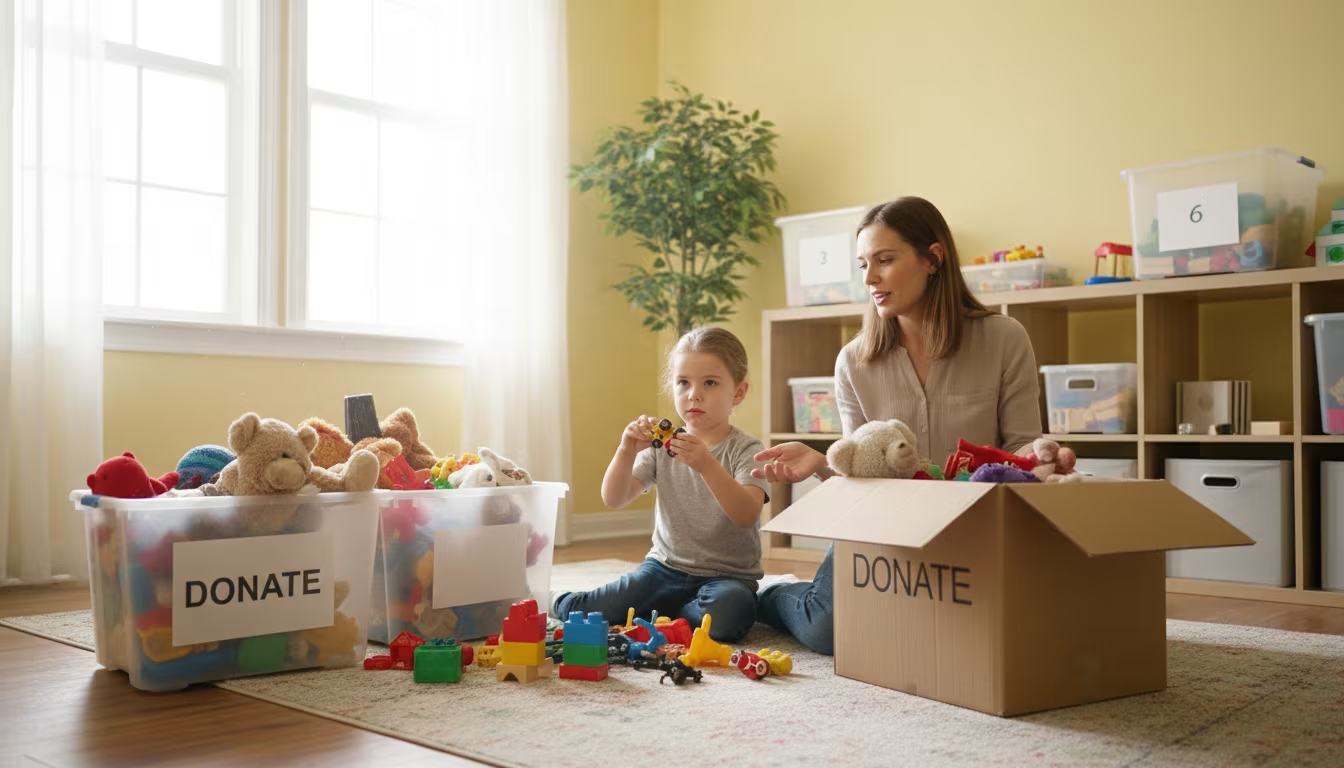
Start where the family actually lives
A household with young children produces clutter faster than any single weekend purge can clear it. Toys migrate between rooms, clothes are outgrown in a matter of months, and paper arrives from school in a steady daily stream. The trick is to give each room one clear job and work through them one at a time, rather than pulling the whole house apart at once and ending the day with piles everywhere and nothing actually put away.
Begin with the space the family uses most, usually the living room or a shared playroom. Momentum matters more than order here: finishing one visible area gives everyone proof that the effort works, which makes the bedrooms and closets easier to face later. Set a timer for a manageable block, thirty to forty-five minutes, and stop when it rings even if the room is not perfect. A reset you can repeat beats a marathon nobody wants to attempt again.
Sort by safety before sentiment
Before deciding what to keep, walk the room for hazards. Broken toys, cracked plastic with sharp edges, loose batteries, and anything small enough to be a choking risk for a baby or toddler should come out first, regardless of how much a child likes it. The U.S. Consumer Product Safety Commission's toy safety guidance is a useful reference for age-appropriateness and recalls, especially for hand-me-downs and secondhand items whose history you do not know.
Keep exits and walkways clear as you sort. Bins that block a doorway or a trailing cord across a play area are the kind of everyday hazard that gets ignored until someone trips. The American Academy of Pediatrics maintains a home safety page that covers the ordinary risks worth checking room by room.
Only after safety comes the harder question of sentiment. Give children a small, defined role: let a preschooler choose which three stuffed animals stay on the bed, rather than asking an open-ended "what do you want to keep?" Limited choices let kids help without handing them an adult-sized decision they cannot manage.
Give storage a repeatable home
Storage only works if a tired adult and a distracted child can both use it without thinking. Assign a clear home for each category: a low open bin for daily toys, a labeled box for building sets, a hook height children can actually reach for coats, and a single folder or drawer for school papers and keepsakes. Open containers and picture labels beat lids and small parts, because a system that is annoying to use gets abandoned within a week.
Resist the urge to buy more bins before you finish sorting. Extra containers often just relocate clutter instead of reducing it. Decide what stays, then match storage to what is left, keeping the number of separate bins low enough that putting things away at the end of the day takes a few minutes rather than a full cleanup session.
Paper and keepsakes need their own rule, because they accumulate invisibly. Set up one shallow "landing" tray for incoming school papers and clear it weekly, keeping only what has a lasting reason to stay. For artwork and mementos, decide on a fixed container per child, a single box or portfolio, and let that container set the limit: when it is full, something old comes out before something new goes in. A boundary you set once does more than a decision you have to remake every week.
Keep each reset small enough to finish
Once a room is sorted, the real goal is a space that can be reset quickly by the people who live in it. Sort outgoing items into three plain destinations: donate, recycle, and discard. Check donation guidelines before bagging anything, since recalled products, stained clothing, and incomplete sets are not usable and only shift the problem to someone else. Bag donations and move them to the car the same day, because a full bag left by the door tends to drift back into the house.
Build the interruption into the plan rather than treating it as failure. Sentimental piles, an overtired toddler, and a box you cannot decide about will slow every session, so keep a "decide later" bin with a firm size limit and a review date. When it fills, you sort it before adding more.
Finish by choosing one concrete action you can complete today: drop the donation bag off, label the school-paper folder, or set a five-minute nightly tidy that the kids help run. One finished step gives the next room a cleaner starting point, and a short daily reset does more to keep clutter down than any single big purge ever will.
Frequently Asked Questions
What should I check first when decluttering a kid's room?
Check safety before sorting keepsakes: remove broken toys, choking-size pieces, loose batteries, and anything blocking an exit. Everything else can wait until hazards are handled.
How do I get children to help without a meltdown?
Offer limited choices, such as picking three toys to keep on a shelf, instead of open-ended questions. Short timed sessions also keep the task from feeling endless.
What is the most common decluttering mistake?
Emptying every room at once before deciding where things will live. It creates overwhelming piles and usually ends with items shoved back out of sight rather than sorted.

Tory Stearns
Edits practical household, travel and lifestyle explainers. Claims that can change are linked to current primary or subject-authority sources.



Leave a reply
Replying to