
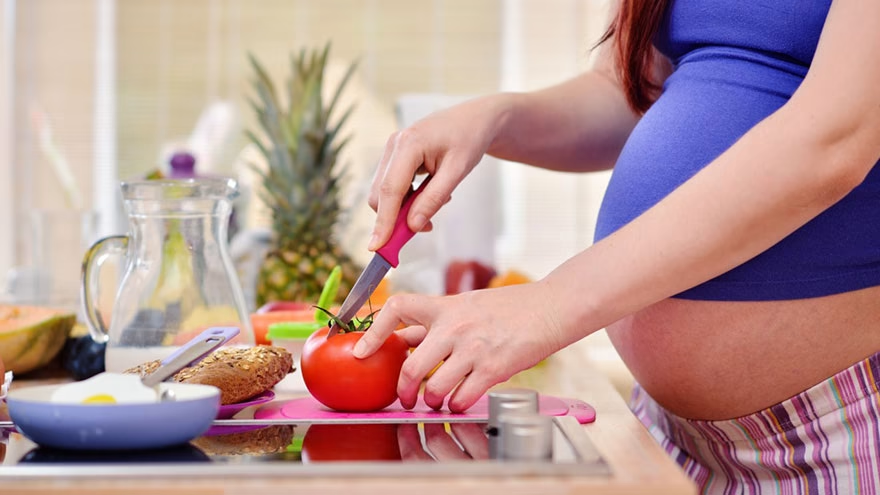
Bland diets for pregnancy are not about eating perfectly. They are about getting through days when nausea, reflux, smell sensitivity, or food aversions make normal meals feel impossible. A bland meal may be toast, rice, banana, applesauce, potatoes, crackers, broth, noodles, oatmeal, eggs, yogurt, baked chicken, or another food that your body will tolerate. The goal is not a forever diet. The goal is enough food and fluid while symptoms are difficult.
If you cannot keep fluids down, are losing weight, urinating much less, feeling dizzy, vomiting repeatedly, or seeing blood, call your pregnancy care team. Bland food helps mild symptoms; it does not replace medical care for severe nausea or dehydration.
Why Bland Foods Can Help During Pregnancy
Pregnancy nausea is often worse when the stomach is empty, when smells are strong, or when meals are rich, greasy, spicy, or too large. Bland foods tend to be lower in fat, milder in smell, and easier to nibble. They are not magic. They simply reduce the number of triggers in the meal.
ACOG suggests trying bland foods such as the BRATT pattern of bananas, rice, applesauce, toast, and tea for nausea and vomiting of pregnancy, while also noting that other foods may work if those do not appeal. That flexibility matters. A food list is only useful if you can actually eat from it.
Some people need bland foods mainly in the morning. Others need them late at night or during reflux flares. Keep a few tolerated foods nearby so you do not get too hungry before eating. A few crackers before getting out of bed may help some people, while others prefer cold fruit, cereal, or yogurt.
The blandest food is not always the best food for you. If plain crackers make you feel shaky an hour later, add a protein you can tolerate. If warm meals smell impossible, try cold foods. If large drinks make nausea worse, use small sips. The point is to adjust the shape of eating until your body can participate again.
Early symptoms can be confusing, especially before pregnancy is confirmed. If test timing is part of the uncertainty, a guide to evaporation lines on EPT results can help with test interpretation, but ongoing nausea still deserves care if it becomes severe.
Gentle Foods To Try
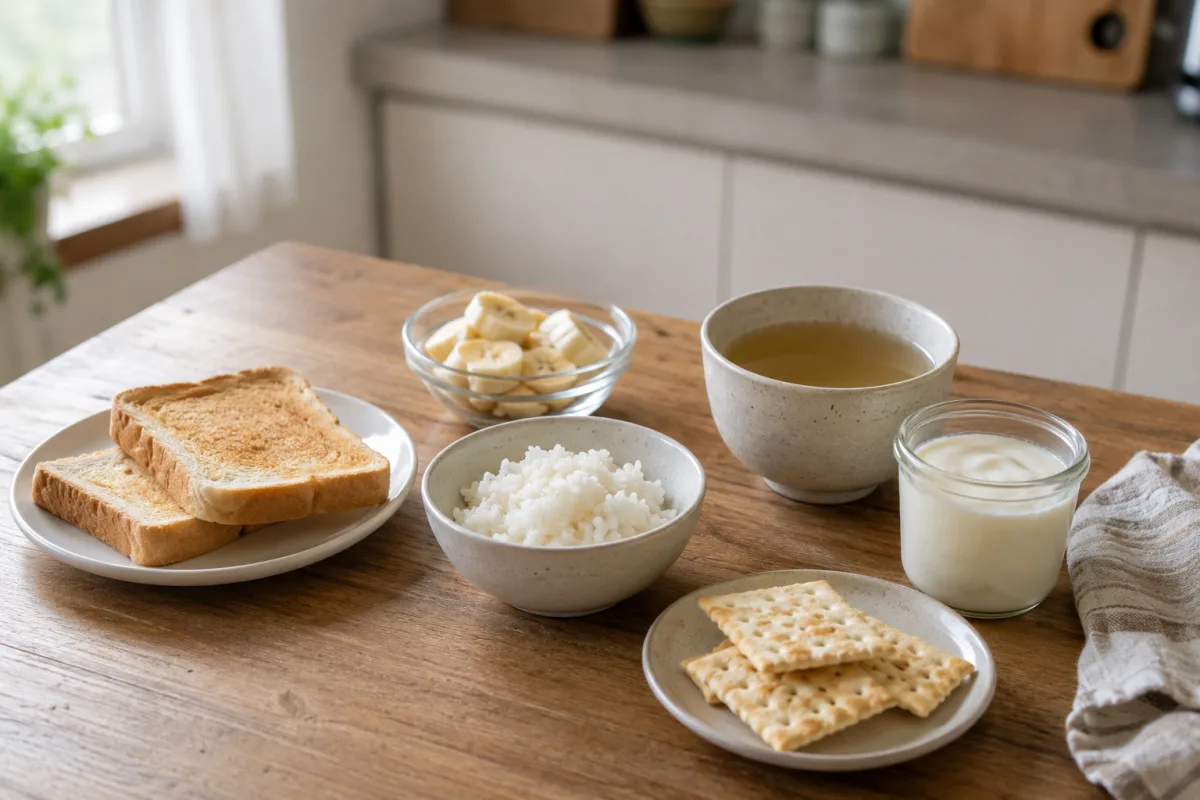
Start with foods that are plain, cool or room temperature, and easy to portion. Toast, rice, crackers, pasta, noodles, oatmeal, potatoes, bananas, applesauce, broth, gelatin, dry cereal, pretzels, and simple soups are common starting points. If hot food smells trigger nausea, try cold leftovers, yogurt, smoothies, or a sandwich with mild fillings.
March of Dimes advises eating small meals five or six times a day, drinking water as tolerated, and choosing nutritious foods you can tolerate, while avoiding spicy or fatty foods if they upset your stomach. That is a more realistic goal than forcing three normal meals.
Do not let bland mean only white starch for weeks if you can help it. Add protein in gentle ways: eggs, Greek yogurt, cottage cheese, peanut butter, mild cheese, baked chicken, tofu, beans if tolerated, or a small glass of milk. Protein can help some people feel steadier between meals.
If pregnancy changes the way you feel in your clothes or body, food aversions can become emotionally frustrating. A guide on feeling attractive during pregnancy is not nutrition advice, but it may help separate body image stress from the practical job of eating what stays down.
How To Stay Hydrated

Fluids may be easier between meals than with meals. Sip water, diluted juice, broth, ice chips, popsicles, or electrolyte drinks if your clinician approves. Very cold drinks can be easier for some people because they smell less. Others prefer warm tea or broth. Use the temperature that works.
MedlinePlus suggests eating protein and carbohydrates, trying bland foods such as broth and saltine crackers, avoiding high-fat foods, and eating before hunger and nausea build. It also emphasizes that morning sickness can happen at any time of day.
Watch urine color and frequency as a rough signal. Dark urine, very little urine, dizziness, dry mouth, racing heart, or inability to keep fluids down should prompt a call. Pregnancy dehydration can become serious faster than people expect.
Emotional support matters too. A partner or family member can keep bland foods stocked, reduce cooking smells, and handle meals when you cannot. That same steady support is useful later in pregnancy; early labor support starts with the same habit of paying attention without taking over.
What To Avoid On A Bland Diet
Avoid foods that reliably trigger your symptoms, even if they are usually healthy. Common triggers include fried food, heavy cream sauces, strong garlic or onion smell, spicy meals, acidic drinks, large meals, and very sweet foods. Reflux may worsen with chocolate, peppermint, citrus, tomato, coffee, and lying down soon after eating.
Also avoid using a bland diet as a reason to skip prenatal nutrition entirely. If you can only eat a few foods for a short stretch, that is one thing. If the restriction lasts, talk with your clinician about prenatal vitamins, iron tolerance, vitamin B6, medication options, hydration, and weight patterns.
Do not start supplements, herbs, or anti-nausea medicines without checking with your pregnancy care team. Ginger, vitamin B6, and medications may help some people, but pregnancy care should be individualized.
If nausea is tied to anxiety, isolation, or low mood, do not treat it as a food problem only. Pregnancy can bring mental health strain, and resources about depression during pregnancy may help you decide when to ask for more support.
When Bland Food Is Not Enough

Call your clinician if you cannot keep fluids down, vomit many times in a day, lose weight, feel faint, have signs of dehydration, have severe abdominal pain, have fever, see blood in vomit or stool, or notice reduced urination. Severe nausea and vomiting can become hyperemesis gravidarum, which may need medical treatment.
Mayo Clinic notes that mild nausea and vomiting of pregnancy usually do not cause harm, but severe untreated vomiting can lead to dehydration and electrolyte imbalance. The difference is not willpower. Some bodies need medical help.
Keep a short food and symptom note if symptoms are persistent. Include what stayed down, fluids, vomiting, urine changes, weight if your clinician asked you to track it, and any medications or vitamins. Bring that note to your appointment so the conversation is specific.
Do not wait until a routine visit if the symptoms are escalating. Pregnancy teams answer nausea calls all the time, and early treatment can sometimes prevent a small problem from becoming dehydration, missed work, or a cycle of fear around food.
If a prenatal vitamin worsens nausea, ask about timing, formulation, or alternatives rather than stopping on your own. Some people tolerate vitamins better at night, with food, or in a different form. Iron can be especially rough on the stomach, so it is worth discussing instead of silently skipping it or dreading every dose. Small adjustments can make consistency easier. Even one steady snack can help today.
This article is general health information and is not medical advice. Ask your obstetrician, midwife, registered dietitian, or qualified healthcare professional about severe nausea, vomiting, reflux, weight loss, dehydration, medication, supplements, or pregnancy nutrition.
A bland diet during pregnancy should feel like a bridge, not a rulebook. Use the foods that stay down, add protein and fluids where you can, and call for help when symptoms move beyond ordinary morning sickness.
Frequently Asked Questions
What are good bland foods for pregnancy nausea?
Common options include toast, crackers, rice, bananas, applesauce, oatmeal, potatoes, noodles, broth, eggs, yogurt, baked chicken, and simple soups.
Is the BRAT or BRATT diet enough during pregnancy?
It can help for short nausea flares, but it is limited. Add protein, fluids, and other tolerated foods as soon as you can.
Should I eat if I feel nauseated?
Small bites may help if an empty stomach worsens nausea. Try bland snacks before hunger builds, but call your clinician if you cannot keep food or fluids down.
Can bland foods help pregnancy reflux?
They may help if spicy, fatty, acidic, or large meals trigger reflux. Smaller meals and staying upright after eating may also help.
When should I call a doctor for pregnancy nausea?
Call for repeated vomiting, dehydration signs, weight loss, faintness, severe pain, fever, blood, or inability to keep fluids down.

Cashie Evans
Covers parenting and practical household topics with clear steps, safety notes and links to current guidance.


Leave a reply
Replying to