
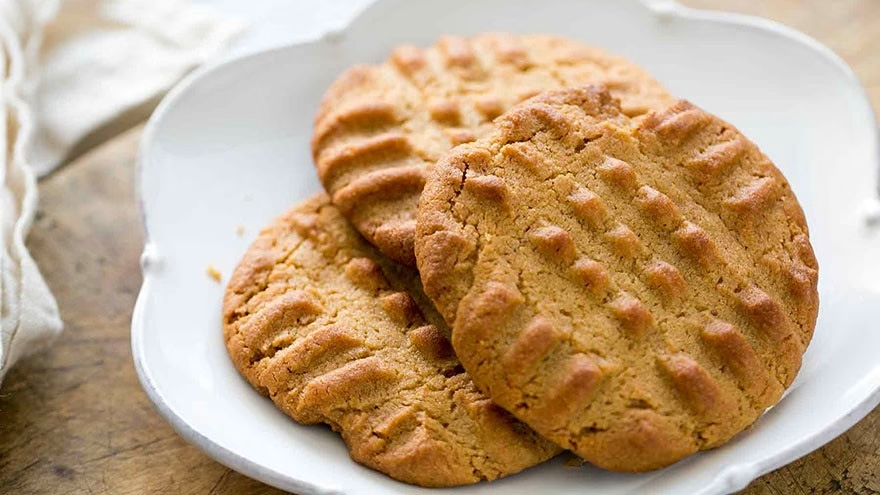
My Favorite Peanut Butter Cookies are the kind with crisp edges, a soft middle, and enough roasted peanut flavor that they do not need chocolate to make sense. The dough is simple, but the texture depends on small choices: the peanut butter style, butter temperature, sugar balance, fork marks, and how early you pull the cookies from the oven.
This recipe uses pantry peanut butter, butter, brown sugar, granulated sugar, egg, vanilla, flour, baking soda, and salt. It is written for a classic cookie, not a flourless version. The goal is a cookie that bends slightly while warm, sets as it cools, and stays tender for a few days.
What Ingredients Make The Best Peanut Butter Cookies?
Use 1/2 cup softened unsalted butter, 1/2 cup creamy peanut butter, 1/2 cup brown sugar, 1/3 cup granulated sugar, 1 large egg, 1 teaspoon vanilla, 1 1/4 cups all-purpose flour, 3/4 teaspoon baking soda, and 1/2 teaspoon fine salt. The dough should be soft but scoopable.
Conventional creamy peanut butter gives the most predictable texture because it contains stabilizers that keep oil from separating. Natural peanut butter can work, but it must be stirred very well, and the dough may spread differently. For a chocolate finish later, Livecub's Mom's Best Fudge Icing can inspire a drizzle or sandwich-cookie filling.
The sugar split matters. Brown sugar brings moisture and a faint molasses note. Granulated sugar helps the edges crisp. If you use only brown sugar, the cookies may stay softer but less crisp. If you use only white sugar, they can turn drier.
Should The Butter Be Soft Or Melted?
Use softened butter, not melted butter. Soft butter traps a little air with the sugars and keeps the dough thick enough to hold a fork mark. Melted butter makes a denser dough and can push the cookies toward spreading.
If your kitchen is warm, chill the bowl for 10 minutes before scooping. Peanut butter dough can go from soft to oily quickly. A short chill is enough; a long chill may make the dough too firm to press neatly.
How Do You Mix The Dough?
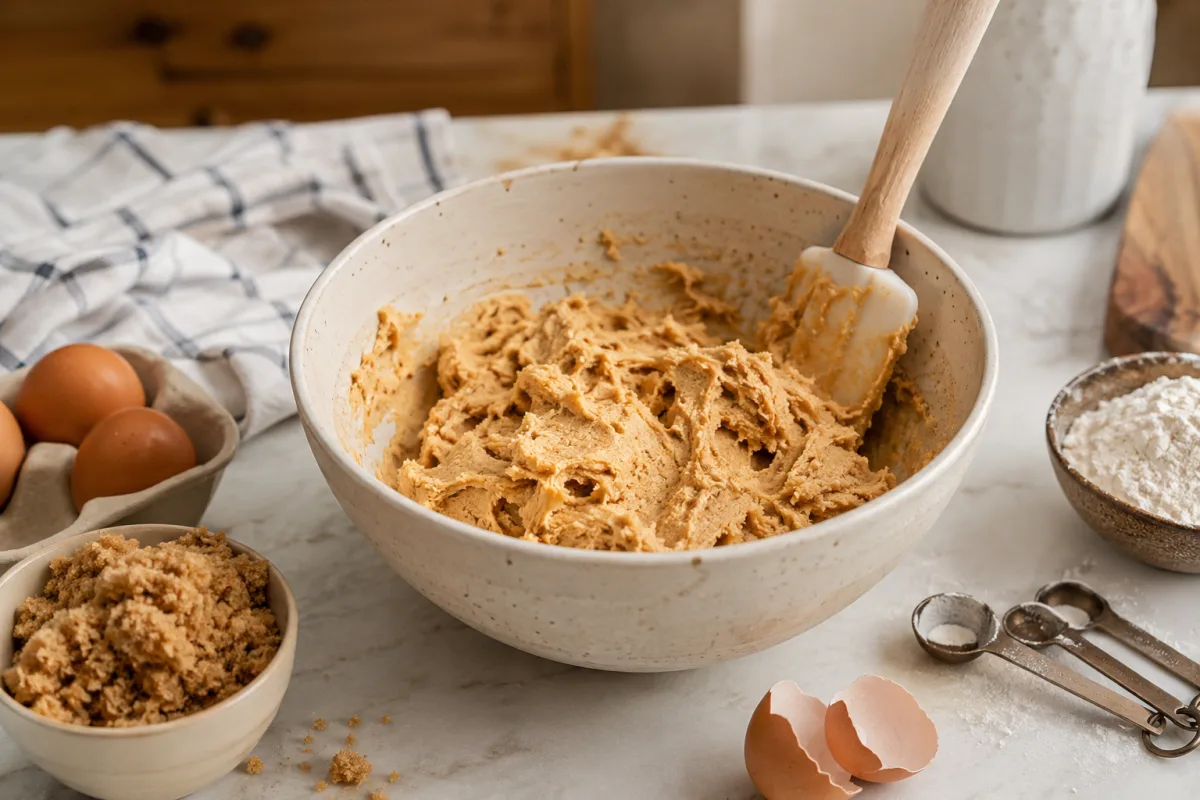
Beat butter, peanut butter, brown sugar, and granulated sugar until smooth and lighter. Add the egg and vanilla. Whisk flour, baking soda, and salt separately, then mix them into the wet ingredients only until no dry patches remain.
Do not overmix after the flour goes in. Too much mixing can make the cookie tougher. Scrape the bowl once from the bottom so hidden flour does not streak the last few cookies.
The dough should smell strongly of peanut butter and hold together when scooped. If it looks crumbly, press a bit in your hand before adding liquid. Peanut butter brands vary, and some doughs come together after a short rest.
Why Do Peanut Butter Cookies Have Fork Marks?
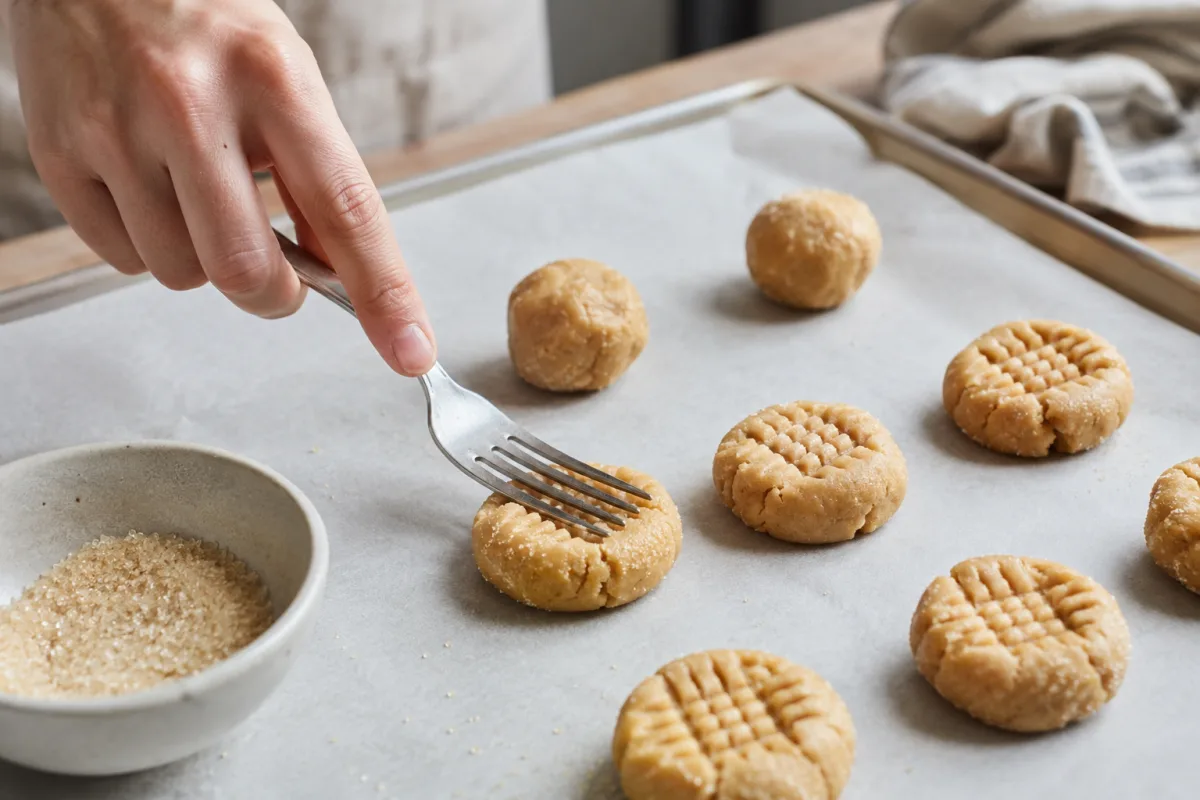
Peanut butter dough is dense, so the crosshatch helps flatten the cookie for more even baking. Roll or scoop the dough into balls, place them on parchment, then press gently with a fork in one direction and again across the first marks.
Dip the fork in sugar if it sticks. The marks should flatten the cookie without smashing it thin. If the dough cracks wildly at the edges, let it sit for a few minutes or press less firmly.
How Long Should You Bake Them?
Bake at 350 degrees Fahrenheit for about 9 to 11 minutes, depending on scoop size and pan color. The cookies should look set at the edge and slightly soft in the center. They will continue firming on the sheet pan.
King Arthur Baking uses 350 degrees Fahrenheit for classic peanut butter cookies and focuses on a smooth creamed dough. That baseline is useful. The biggest home-baking mistake is waiting until peanut butter cookies look fully dry in the oven.
How Do You Keep Them Soft?
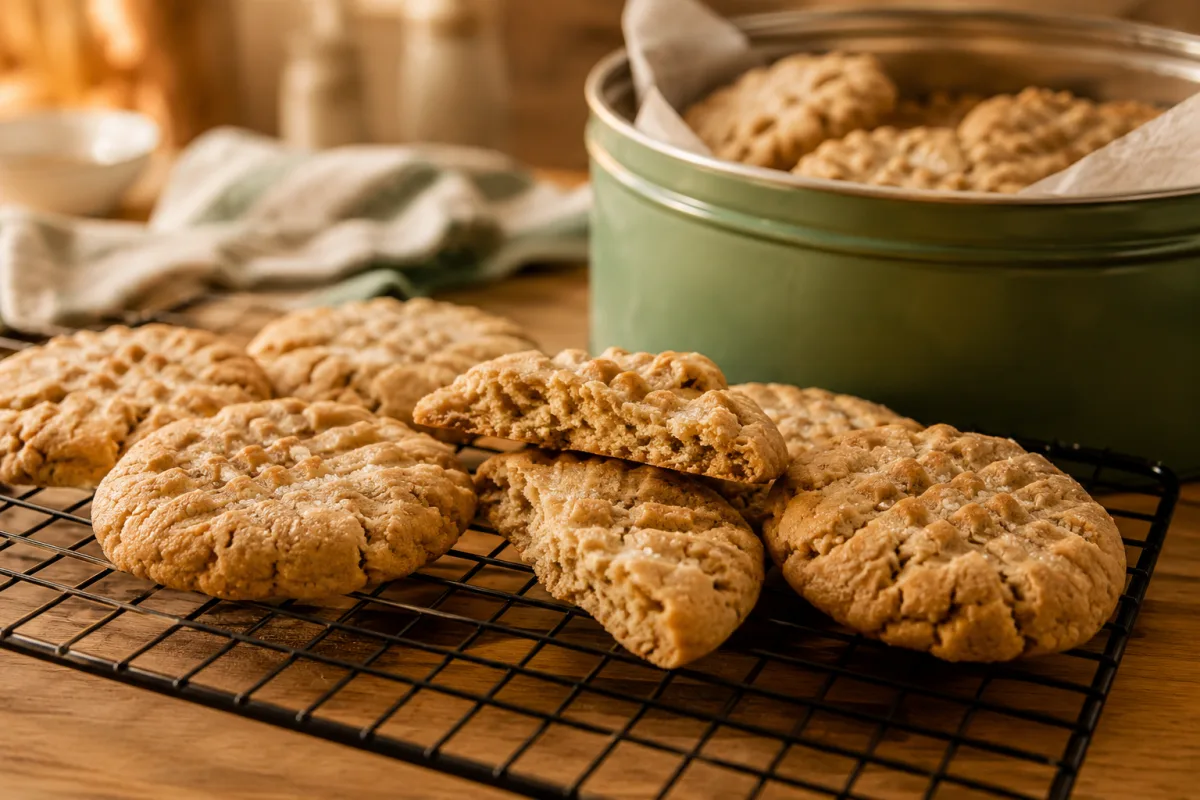
Use brown sugar, avoid overbaking, and let the cookies cool on the sheet for 5 minutes before moving them. Store them in an airtight container once fully cool. A slice of sandwich bread in the container can help keep cookies softer, though it should be replaced if it dries out.
If your cookies turn sandy, they likely baked too long or had too much flour. Spoon-and-level flour or weigh it if you bake often. A packed measuring cup can add enough flour to change the texture. Livecub's Christmas cookie ornaments article shows a different cookie goal, where firm structure matters more than softness.
Pan choice changes browning too. Dark pans brown bottoms faster than light pans. If your first tray gets too dark underneath, stack two sheet pans or move the rack higher. Small changes save the batch without rewriting the recipe.
Can You Add Chocolate Or Nuts?
Yes, but keep additions modest. Add 1/2 cup chocolate chips, chopped roasted peanuts, peanut butter chips, or small candy pieces. Too many mix-ins make the dough crumble and weaken the peanut butter texture.
For a cleaner look, press a few chips or peanut pieces onto the top after making the fork marks. If you are building a dessert tray, Livecub's cookie display guide can help with spacing, height, and visual contrast.
If you add chopped peanuts, use roasted unsalted nuts or reduce the salt in the dough. Salted peanut butter plus salted nuts can push the cookie past pleasant. Taste the peanut butter first if you are unsure.
Is Raw Peanut Butter Cookie Dough Safe To Eat?
No. The FDA explains that flour is a raw food and should not be eaten uncooked in dough or batter. Eggs are also a raw ingredient in this recipe.
The CDC gives the same guidance: do not taste raw dough or batter, and wash hands, bowls, utensils, and counters after handling raw flour, eggs, or dough. If you want edible cookie dough, use a recipe built for that purpose with heat-treated flour and no raw egg.
Can The Dough Be Made Ahead?
Yes. Scoop the dough, press lightly, freeze the portions on a tray, then move them to a freezer bag. Bake from frozen with a little extra time. You can also refrigerate dough balls overnight, then press the fork marks just before baking.
For best shape, freeze dough before it sits at room temperature. Peanut butter dough softens fast. If you need a non-cookie dish for the same gathering, Livecub's basic corn souffle recipe covers a savory baked item that can share oven planning.
Label frozen dough with the bake temperature and date. Frozen dough balls look alike after a month, and peanut butter can absorb freezer odors if the bag is thin. Double bagging protects flavor.
What Mistakes Should You Avoid?
Do not use separated peanut butter without stirring it fully. Do not melt the butter unless you want a flatter cookie. Do not skip salt, because peanut butter needs it. Do not overbake. Do not taste raw dough.
Also avoid crowding the baking sheet. Peanut butter cookies need enough room for heat to circulate and for edges to set. Use parchment so the bottoms brown evenly and release cleanly.
Let the first tray teach you. Bake six cookies, check spread and color, then adjust chill time, oven rack, or bake time before filling every sheet. Test batches are faster than being disappointed by three trays at once.
Frequently Asked Questions
Can I use crunchy peanut butter?
Yes. Crunchy peanut butter gives texture, though the fork marks may look less neat.
Why are my cookies dry?
Too much flour or too much baking time is the usual cause. Pull them while the centers still look soft.
Can I make these gluten-free?
Use a tested gluten-free peanut butter cookie recipe or a reliable cup-for-cup blend if you experiment.
Do peanut butter cookies need chilling?
Not always. Chill briefly if the dough is warm, oily, or spreading too much.
Can I freeze baked cookies?
Yes. Freeze fully cooled cookies in an airtight container with parchment between layers.
What Makes This Recipe A Favorite?
The best peanut butter cookie is not complicated. Use softened butter, smooth dough, fork marks, careful baking, and enough salt to sharpen the peanut flavor. Pull the cookies before they look done, then let the pan finish the texture. Let them cool fully before stacking, because warm cookies bend, steam, and soften quickly.

Chiara Bradshaw
Covers education, culture and creative topics with an emphasis on readable explanations and verifiable references.




1 Comment
Join the discussion. Comments are moderated before appearing.