
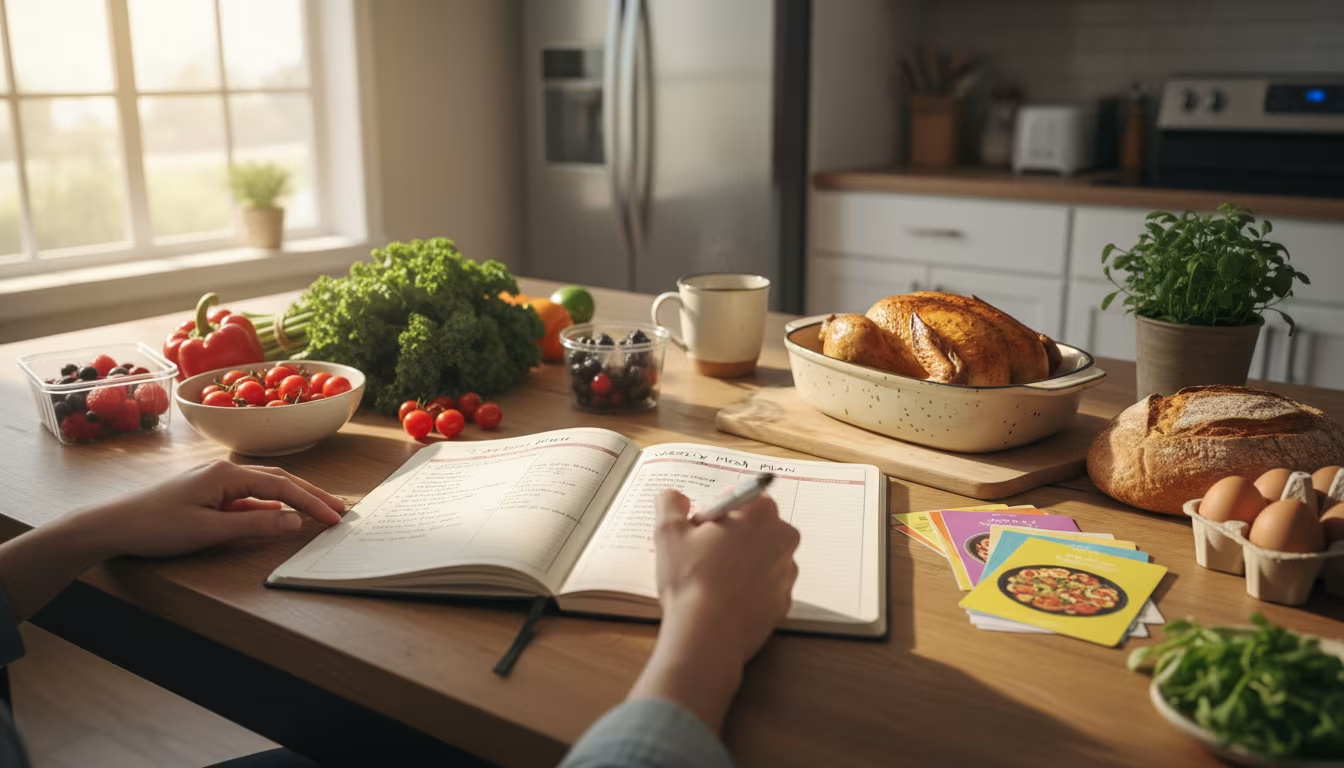
Start from your calendar, not a cookbook
Most beginner meal plans fail in the same place: they are built around recipes someone wants to try instead of the week that actually exists. Before choosing a single dish, look at your seven days and mark the late nights, the school events, the work shifts, and the evenings when nobody will want to cook. The calendar tells the truth that ambition hides.
Once those hard nights are visible, you plan for them honestly. A chaotic Tuesday gets leftovers or a quick egg dinner, not a braise. Planning is less about cooking more and more about matching effort to the time you truly have, which is why USDA's SNAP-Ed program frames it primarily as a way to save money and eat well on its meal planning and budgeting page.
It also helps to count how many dinners you genuinely need to cook, which is often fewer than seven once leftovers and a flexible night are in the mix. Many beginners find that three or four real cooking sessions cover a whole week, with the remaining nights filled by planned repeats. Naming that number up front keeps the plan from ballooning into something you quietly abandon by Wednesday.
Choose three dinner templates, not seven recipes
The fastest way to burn out is to plan seven brand-new recipes in one week. Beginners do far better with templates: a format you can repeat with different ingredients so the structure stays familiar while the flavors change. Pick three you already like, such as a grain bowl, a soup, a pasta, tacos, a sheet-pan dinner, breakfast-for-dinner, or a big salad with a protein.
A template removes the daily question of what to make, which is where decision fatigue quietly wrecks good intentions. If chicken is a staple in your house, a dish like this Yugoslavian chicken stops being one isolated recipe and becomes a repeatable protein you can drop into a bowl, a wrap, or a plate with rice and vegetables.
A simple starter week
Seeing a week laid out makes the templates concrete. The plan below mixes cooked nights, deliberate leftovers, and one flexible slot so the structure survives a schedule that shifts.
| Day | Template | Effort |
|---|---|---|
| Monday | Sheet-pan protein and vegetables | Cook, make extra |
| Tuesday | Grain bowl from Monday's leftovers | Assemble only |
| Wednesday | Pasta with a quick sauce | Cook |
| Thursday | Tacos or wraps | Cook |
| Friday | Flex night (leftovers, takeout, or eggs) | Minimal |
| Weekend | Soup or a bigger cook, plus light prep | Cook and batch |
Copy the structure, not the exact meals. The point is the rhythm: cook, reuse, cook, cook, flex. Once that shape feels natural, swapping in new dishes is easy.
Build the grocery list from the plan
The list comes after the plan, never before it. With your templates chosen, check the pantry, fridge, and freezer first so you buy what is missing rather than a second version of what you already own. This one habit prevents the slow accumulation of three open jars of the same sauce.
Write the list by section, roughly matching the store layout, so you move through the aisles once without backtracking into impulse buys. A printed or phone list also keeps you honest at the shelf, where unplanned extras are how a tidy budget quietly slips. If you shop the same store each week, ordering the list to match its aisles shaves real minutes off the trip and cuts the doubling-back that leads to grabbing things you did not need.
Group the list around your templates rather than by recipe, so shared ingredients get bought once. If two dinners lean on onions, garlic, and rice, they land on a single line instead of scattered across the page. This is also where you catch overlap with breakfast and lunch, which keeps the cart, and the receipt, from filling with near-duplicates you already had at home.
Plan leftovers on purpose
Leftovers are the beginner's best friend, but only when they are intentional. Cook extra when you already know how it will be used, so leftover rice becomes tomorrow's bowl, extra chicken becomes a wrap, and roasted vegetables fold into a soup. Random extra food with no plan is just future waste in a container.
Storage timing keeps this safe. Cool cooked food quickly, refrigerate it promptly, and use or freeze it within a few days. FoodSafety.gov's cold food storage charts give realistic limits so you are reheating leftovers with confidence instead of guessing whether last week's rice is still fine.
Prep one hour, not the whole day
The image of a fridge full of matching glass containers convinces beginners that meal prep means an exhausting all-day marathon, and that expectation is what makes people quit after one weekend. Aim for a single focused hour instead. Wash the fruit, chop one vegetable you will use twice, cook one pot of grains, make one sauce, or portion the snacks.
Light prep removes just enough friction from weeknights to keep the plan alive without turning cooking into a second job. Pick the one task that saves you the most on your busiest evening, whether that is a cooked grain, a washed bin of greens, or browned meat portioned for two meals, and stop there rather than chasing a fully stocked fridge. A ready base is also easy to vary, and a homemade blend like this Asian seasoning mix can make the same cooked grain or protein taste new later in the week, which keeps repetition from feeling like a rut.
Always leave one flexible meal
A plan with no give is a plan that breaks. Reserve one meal a week as a flex slot that can absorb leftovers, a takeout night, cereal-and-fruit, or a last-minute schedule change. Without that release valve, a single disrupted evening can make the whole plan feel failed, and a plan that feels failed gets abandoned.
The flex meal also handles the odd gap when a main dish falls short or a side runs out. Something quick and comforting, like this corn souffle, can round out a plate when the original plan changes, keeping a rough night from becoming a wasted one.
Stock a small backup shelf
Even a good plan meets the night when the fresh ingredients are gone, the schedule collapsed, or you simply have nothing left in you. A modest backup shelf turns that night from a takeout order into a five-minute dinner. Keep a handful of shelf-stable meals you can assemble half asleep: pasta with a jarred or quickly made sauce, canned beans over rice, eggs with toast, or a can of soup upgraded with frozen vegetables and a grain.
The point is not to stockpile, which just creates a new source of waste, but to hold four or five reliable rescues and quietly replace them as you use them. Beginners often skip this step and then treat one unplanned night as proof that meal planning does not work for them. It is the opposite: a small backup shelf is what lets an imperfect week still count as a success, because the plan bends instead of breaking. Check it once a week when you build your list so nothing on it silently expires.
Keep breakfast and lunch on repeat
Beginners often pour all their energy into dinner and leave breakfast and lunch to chance, which is where money and time leak out through last-minute purchases. These two meals reward boredom. Choose two or three reliable breakfasts, such as oatmeal, yogurt with fruit, or eggs and toast, and a couple of lunch formats built partly from planned leftovers.
Rotating a short menu removes decisions at exactly the times of day when you have the least patience for them. It also keeps the grocery list stable week to week, so shopping gets faster the longer you keep the habit. Predictable does not mean joyless; it means you save your creativity for the meals that actually benefit from it.
Review the week and adjust
The first week is data, not a verdict. At the end of it, look at what actually happened. Which template got made without complaint, which night collapsed into takeout, which leftover went uneaten, and which meal your family asked for again. Those answers are worth more than any generic plan.
Adjust one thing for the next week rather than rebuilding from scratch. Maybe Thursday needs to become a flex night, or one template needs to leave the rotation. Meal planning improves through small, repeated corrections, and the plan that finally sticks is the one shaped by your own kitchen. Start this week with three templates, one flex night, and a single prep hour, then keep what worked and quietly drop what did not.
Frequently Asked Questions
How many meals should a beginner plan?
Start small: a few dinners, two or three repeatable breakfasts, a couple of lunch formats, and one flexible night. Do not begin with seven new recipes.
What is a meal template?
It is a repeatable format such as tacos, soup, grain bowls, pasta, or sheet-pan dinners. You keep the structure and swap the ingredients, which cuts daily decisions.
Do I need to meal prep everything on the weekend?
No. Prep one or two useful components, like a cooked grain or a sauce. Full-day prep is the fastest way for beginners to burn out and quit.
How do I use leftovers safely?
Cool food quickly, label it, and refrigerate promptly, using trusted cold-storage timing. Plan in advance how each leftover will be eaten so none goes to waste.

Alyssa Curlin
Edits general health, nutrition and education explainers. Medical topics are educational and link to public-health guidance.



Leave a reply
Replying to