
Start with readiness, not recipes
Before you weigh a jar against a batch of homemade puree, the more important question is whether the baby is ready for solids at all, and what texture is safe right now. Readiness usually shows up around six months as a cluster of signs — sitting with support, good head control, interest in food, and losing the reflex that pushes food out of the mouth — rather than a birthday on the calendar.
CDC guidance on introducing solids advises that foods be cooked soft enough to mash easily and served in textures a baby can manage, starting smooth and progressing gradually. Its solid foods page is the reference to check first, because the homemade-versus-store-bought debate barely matters until readiness and texture are settled.
Homemade vs. store-bought at a glance
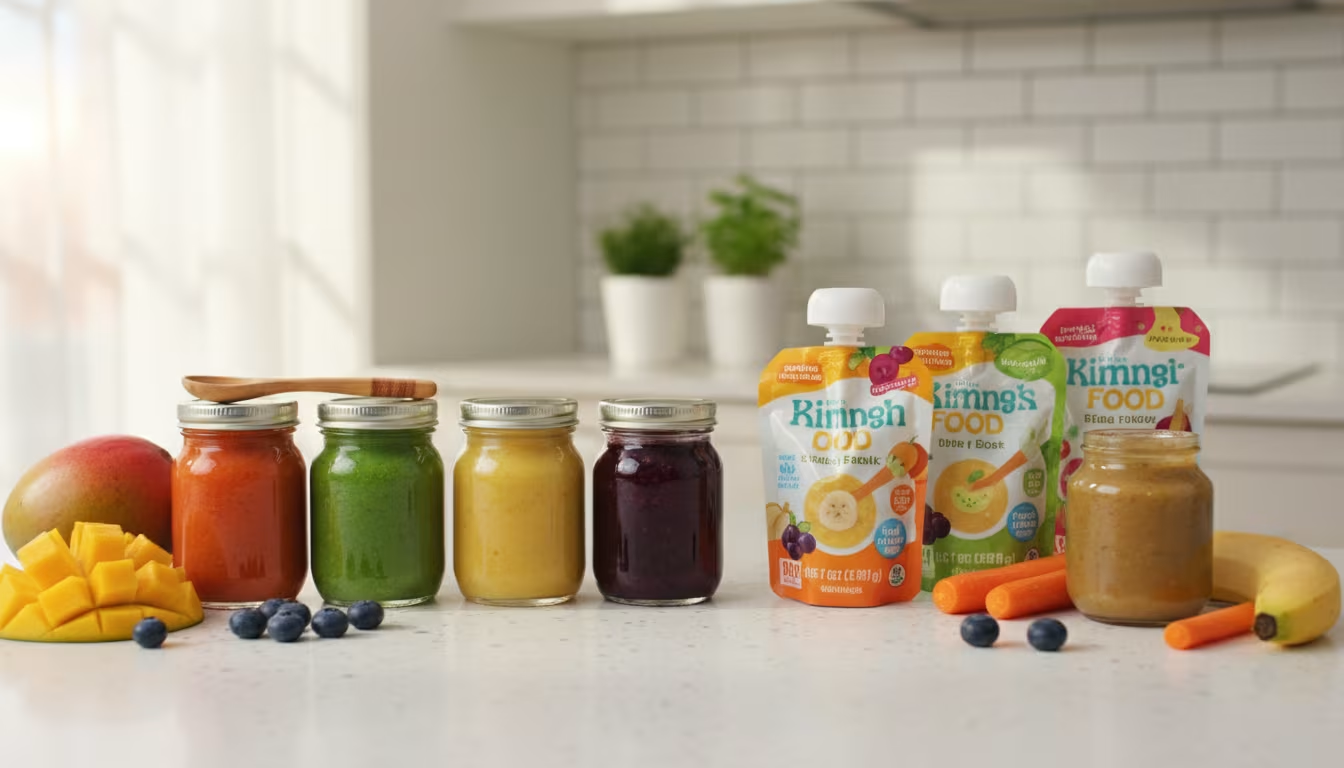
Both can be perfectly good. Homemade puree gives caregivers control over ingredients, texture, and flavor, but it demands clean prep, careful portioning, and safe storage. Commercial baby food is convenient, portable, and consistent, though it asks you to read labels for added sugar, sodium, age guidance, and package damage. Most families end up using both, leaning on jars for travel and tired days and homemade for variety and cost.
| Factor | Homemade | Store-bought |
|---|---|---|
| Control | Full control of ingredients and texture | Fixed recipe set by the manufacturer |
| Convenience | Requires cooking, cooling, and storage | Ready to serve, easy to pack |
| Cost | Usually cheaper per portion | Higher per portion |
| Consistency | Varies batch to batch | Uniform texture and flavor |
| Shelf life | Short; refrigerate 1–2 days or freeze | Long shelf life until opened |
Convenience is not a moral failure. A jar can be the safer choice on a chaotic day or during travel, just as a homemade batch can be the better one on a calm weekend. If you already batch-cook family meals such as an easy chicken dish, set aside the baby's portion before any salt, honey, or hard-to-chew pieces enter the pot.
Never make homemade infant formula
Baby food and infant formula are two entirely different issues, and the distinction matters. The FDA advises parents and caregivers not to make homemade infant formula, citing serious risks of contamination and nutrient imbalances that can harm an infant. Its homemade formula warning is unambiguous on this point.
Pureeing your own carrots is fine; improvising a formula recipe from the internet is not. If formula access is a problem, contact a pediatrician, a WIC office, or a local health resource rather than turning to online recipes, because the margin for error with an infant's sole nutrition source is very small. The same caution applies to watering down formula to stretch a supply or swapping in cow's milk or plant milks before a doctor advises it — these shortcuts can leave a baby short on the nutrients and calories they need, and a health professional can point you to safe alternatives quickly.
Texture and safe storage
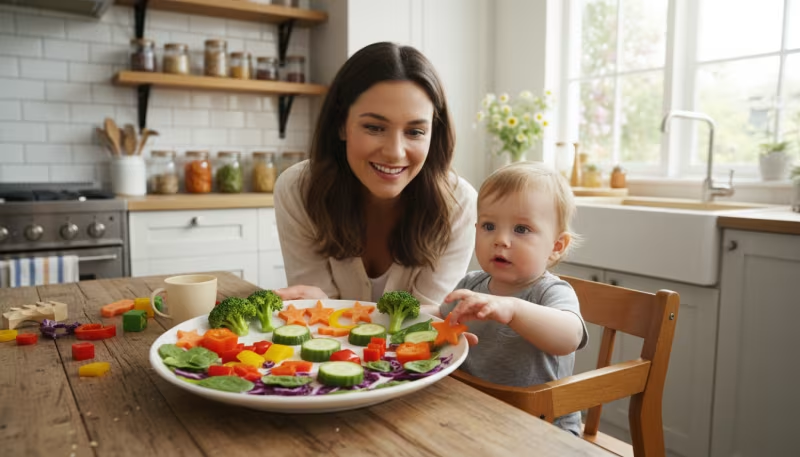
Texture should advance in steps, not leaps. Smooth purees give way to mashed foods, then soft lumps, then finger foods as the baby develops the skills to handle them, and each stage carries its own choking risks to watch for. A vegetable side that suits the rest of the family is still adult food until its texture and seasoning are adapted for a baby.
Storage is where homemade food most often goes wrong. Refrigerate homemade baby food in covered containers and use it within one to two days, or freeze it in labeled portions — an ice-cube tray makes convenient single servings that pop out one meal at a time. Serve from a separate small dish rather than the storage container, because food touched by the spoon and the baby's mouth should never go back into the batch, where saliva can speed spoilage. Label every frozen portion with its contents and date so nothing lingers past its useful life.
A few ingredients call for extra caution regardless of who makes the food. Honey should not be given before a baby's first birthday because of the risk of infant botulism. Added salt and sugar are unnecessary for babies and worth avoiding, which is one reason to set aside a plain portion before seasoning family food. Certain homemade vegetable purees, such as spinach, beets, and carrots, can be higher in nitrates, so many pediatric sources suggest using store-bought versions of those particular vegetables for very young infants, since commercial producers test for nitrate levels.
Choosing between them day to day
The practical answer shifts with the day. On a rushed morning, a clean-label jar that meets the baby's stage is a good choice. On an unhurried afternoon, homemade puree lets you introduce a new vegetable cheaply and match the exact texture your baby is ready for. Neither approach earns extra credit; what matters is that the food is age-appropriate, safe, and something the baby will actually eat.
Keep the checks that genuinely change the outcome front and center: readiness, safe texture, choking risk, no added salt or honey before one year, short storage times, and a firm line against homemade formula. Save one useful detail after each try — the brand that worked, the texture your baby accepted, the vegetable that got refused — so the next round starts from evidence in your own kitchen rather than guesswork. That small habit turns a one-time decision into a routine you can trust.
Frequently Asked Questions
Is homemade baby food better?
Not automatically. It gives more control over ingredients and texture, but safety and storage have to be managed carefully. Store-bought can be just as good.
Can I make infant formula at home?
No. The FDA advises against homemade infant formula because of contamination and nutrient risks. Ask a health professional for safe options.
How long does homemade baby food last?
Refrigerate it for only one to two days, or freeze it in labeled portions. Follow trusted storage guidance and discard anything left too long.
What texture should I start with?
Begin with smooth, soft textures once the baby shows readiness, then progress gradually with guidance, always watching for choking risks.

Cashie Evans
Covers parenting and practical household topics with clear steps, safety notes and links to current guidance.


Leave a reply
Replying to