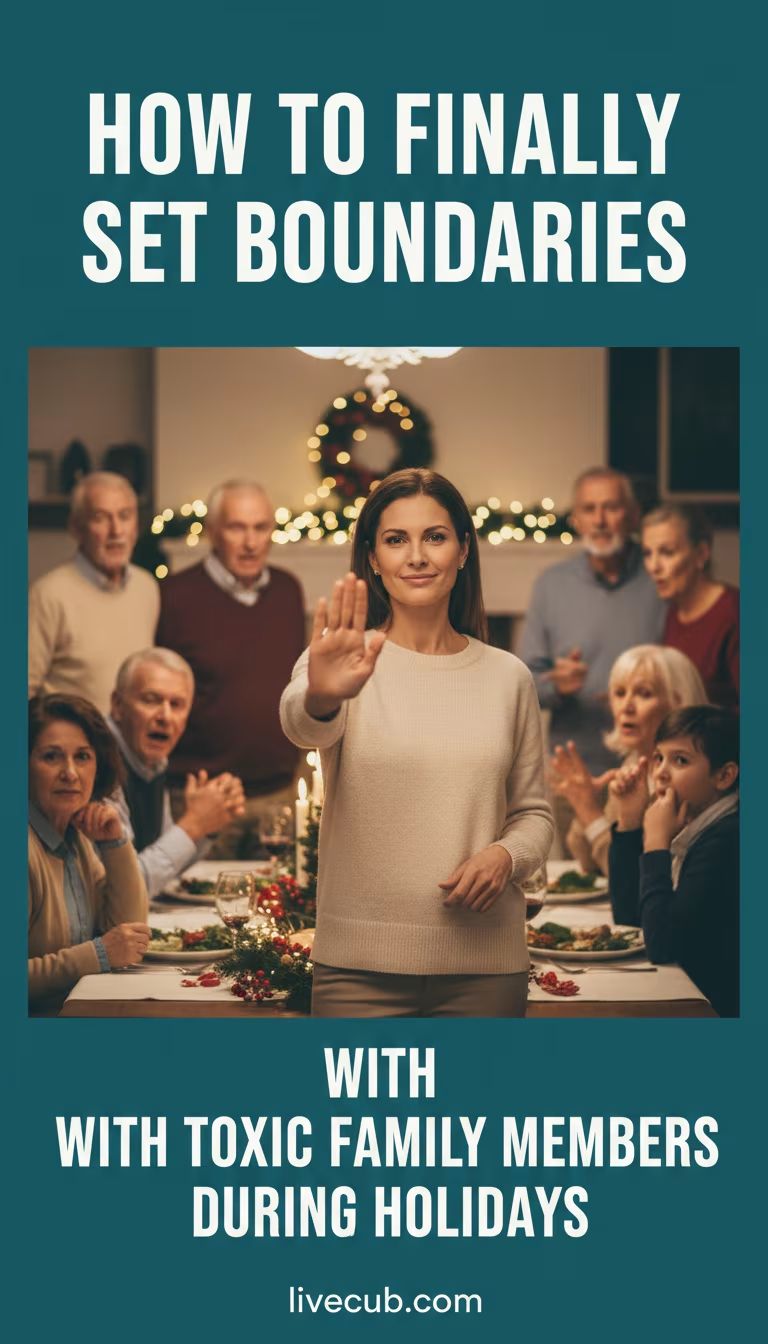
How to Set Boundaries With Toxic Family Members During Holidays
Picture this: the twinkling lights are up, the smell of cinnamon fills the air, and your favorite holiday playlist is softly humming in the background. Sounds pretty idyllic, right? For so many of us, the holidays bring this kind of warm, fuzzy feeling. But then there's the other side of the coin – the subtle dread that creeps in when you think about certain family gatherings.
You know the ones I'm talking about. The events where you walk in feeling optimistic, and leave feeling utterly drained, misunderstood, or even just plain angry. It’s a real buzzkill, and frankly, it doesn’t have to be this way. I’ve been there, more times than I care to admit, walking on eggshells, trying to anticipate every potential landmine, only to step on one anyway.
But here’s the thing: you actually have more control than you think over your holiday experience, even when dealing with those tricky family dynamics. It’s all about setting boundaries, and trust me, it’s a skill worth mastering.
Why This Matters
You might be wondering, "Is it really that big of a deal? Can't I just grin and bear it for a few hours?" And I hear you. For years, that was my go-to strategy. I'd put on my best 'everything's fine' face, nod along, and internally count down the minutes until I could escape.
But what I started to realize, especially as I got older and really began to prioritize my own well-being, is that that approach comes with a serious cost. Constantly suppressing your feelings, tolerating disrespectful behavior, or bracing yourself for conflict isn't just unpleasant; it’s genuinely damaging to your mental and emotional health. You deserve to enjoy your holidays, to feel safe and respected in your own family circle, even if that circle isn't perfect. When we don't set boundaries, we're essentially giving others permission to treat us however they please, and that's not a healthy foundation for any relationship, especially with family.
It can lead to increased stress, anxiety, resentment, and even physical symptoms like headaches or stomach upset. Seriously, our bodies often tell us when something isn't right long before our minds fully process it. My own gut used to tie itself in knots just thinking about certain holiday meals, and it took me a long time to connect that physical discomfort to the emotional toll those interactions were taking. Learning to protect your peace isn't selfish; it's a vital act of self-care.
It allows you to show up as your best self, not just for yourself, but for the people who genuinely uplift you.
Identifying Your Triggers & Their Tactics
Before you can effectively set boundaries, you really need to understand what you're up against. What exactly makes a family member "toxic" for you? It's not always as overt as a screaming match; often, it’s far more subtle and insidious. Is it the constant unsolicited advice about your career, your relationship, or your parenting choices?
Is it the backhanded compliments that leave you feeling deflated instead of flattered? Or maybe it's the way they always manage to bring up past mistakes, creating an atmosphere of shame and guilt. For me, it was always the passive-aggressive comments disguised as concern, or the way my life choices would be compared (unfavorably, of course) to my cousins'. Recognizing these patterns is the first, huge step toward reclaiming your power.
It’s like mapping the battlefield before you head into the fight – you know where the landmines are, and you can plan your route accordingly. When you identify these specific behaviors, you can start to anticipate them and prepare your responses, rather than being caught off guard and reacting from a place of frustration or hurt. Understanding your own emotional triggers is just as important. What makes your blood boil?
What makes you want to retreat into yourself? For example, if you know that any mention of your weight sends you into a spiral, you can proactively steer conversations away from that topic. If political arguments always end in yelling, you can decide ahead of time that you won't engage. Being clear about what you won't tolerate, and what specifically upsets you, arms you with the knowledge you need to protect your peace.
It gives you an internal signal, a little alarm bell that says, "Okay, this is happening, prepare to deploy your boundary!".
Recognizing the Red Flags of Toxic Behavior
- The Constant Critic: This person always has something negative to say, whether it's about your outfit, your job, your partner, or even your choice of appetizer. Their comments might be cloaked in "helpful advice" or "just telling it like it is," but their true intent feels more like a subtle put-down. In my experience, these folks aren't really trying to help; they're often projecting their own insecurities or trying to maintain a sense of superiority. They thrive on making others feel small.
- The Drama Magnet: Do you have a family member who seems to stir up conflict wherever they go? They might gossip, exaggerate problems, or pit people against each other, all while claiming to be the innocent victim. These individuals often thrive on attention, positive or negative, and for them, drama is attention. They might drag you into an argument you don't want to be part of or share personal information about you without your consent.
- The Boundary Buster: This person simply doesn't respect your "no" or your personal space. They might show up uninvited, call at all hours, or try to strong-arm you into doing things you’ve already declined. They often disregard your feelings or opinions, making you feel unheard and unimportant. What I've learned is that for these people, your boundaries are simply suggestions to be ignored, and it's up to you to reinforce them consistently.
- The Guilt-Tripper: Ah, the classic manipulator. This person uses guilt or obligation to get what they want. They might say things like, "After all I've done for you..." or imply that you're a bad family member if you don't comply with their wishes. They make you feel responsible for their emotions, which is a heavy and unfair burden to carry, especially during a time that should be joyful.
Crafting Your Boundary Toolkit: Practical Strategies for the Holidays
Once you’ve identified the specific behaviors and triggers, it’s time to arm yourself with some concrete strategies. Think of this as your personal boundary toolkit, filled with ready-to-use techniques you can deploy as needed. The key here is proactive planning, not just reactive damage control. Before you even walk into that holiday gathering, take some time to mentally rehearse how you’ll handle potential situations.
What's your escape route if things get too intense? Who can you discreetly signal for help? Having a clear plan can significantly reduce anxiety and give you a sense of control. For me, knowing I had a friend or partner on standby for a quick text rescue always made a difference.
It’s like having a safety net. This proactive approach isn't about being cynical; it's about being prepared and taking responsibility for your own emotional well-being. You wouldn’t go on a long trip without checking your car's oil, right? Consider this your emotional oil check before the holiday journey.
What I've found incredibly useful is to visualize positive interactions, but also to mentally walk through the tougher scenarios and how I'll respond calmly and effectively. This mental rehearsal can truly build your confidence. It also helps to remember that you're not trying to change the other person; you're simply changing your response to them, which is where your power lies. You can't control their actions, but you absolutely can control your reactions and your choices.
Specific Tools to Add to Your Toolkit
- Pre-Event Prep & Exit Strategy: Before the gathering, set clear intentions for yourself. How long do you plan to stay? What topics are off-limits? How will you excuse yourself if needed? Have an "escape clause" ready, like "I've got an early start tomorrow" or "I promised I'd check in on the pets." If you're driving, park your car in a way that makes leaving easy. If you're carpooling, arrange a specific pick-up time or have a backup ride. Knowing you have an out can significantly reduce the pressure to endure.
- The "Grey Rock" Technique: This is a powerful, subtle boundary. When a toxic person tries to engage you in drama, criticism, or gossip, respond in a way that is utterly boring and unremarkable, like a "grey rock." Give short, noncommittal answers: "Hmm," "Oh, really?" "That's one way to look at it." Don't offer information, don't react emotionally, and don't take the bait. Their goal is often a reaction, and by not giving it to them, you make yourself an uninteresting target. I've used this many times, and it's amazing how quickly some people will move on when they're not getting any fuel for their fire.
- Change the Subject & Redirect: When a conversation veers into uncomfortable territory, gently but firmly redirect it. "That's an interesting point, Aunt Susan, but you know what I was just thinking about? How beautiful the decorations are this year!" or "Let's talk about something more festive, like everyone's favorite holiday treat." You don't have to engage with every topic thrown your way. You have the right to steer the conversation to a more positive or neutral ground.
- Time Limits & Physical Distance: This is a simple but effective one. Limit the amount of time you spend with the toxic individual or group. You don't need to stay for the entire 8-hour marathon. A polite "It was lovely seeing everyone, but we've got to run!" is perfectly acceptable. Physically remove yourself from the immediate vicinity when tensions rise. Step into another room, go help in the kitchen, offer to get someone a drink, or take a "fresh air break" outside. Even a few minutes away can give you space to regroup.
- The Power of "No": This might sound obvious, but it's often the hardest word to say, especially to family. You don't need to give long explanations or justifications. A simple, firm "No, thank you," or "I won't be able to do that," is a complete sentence. Practicing it beforehand can make it easier in the moment. Remember, your "no" to someone else's request is a "yes" to your own well-being and priorities.
Communicating Your Boundaries (Without Starting a War)
Okay, so you've identified the issues and you've got your strategies. Now comes the potentially tricky part: communicating those boundaries. This doesn't mean you need to stand up at the dinner table and give a formal speech. In fact, that's probably not the best approach!
Effective boundary communication is often subtle, clear, and focused on your needs, not on blaming the other person. The goal isn't to pick a fight, but to protect your peace. One technique I've found incredibly helpful is using "I" statements. Instead of saying, "You always criticize my choices," which can sound accusatory and put someone on the defensive, try, "I feel uncomfortable when my career choices are discussed in this way," or "I need this holiday to be a drama-free zone." This shifts the focus from their perceived wrongdoing to your personal experience and needs, making it less likely to escalate into an argument.
Remember, you’re stating a boundary, not asking for permission. Another great tool is the "broken record" technique. Toxic family members often don't respect boundaries initially, so you might need to repeat yourself calmly and consistently without getting drawn into a debate. "I'm not discussing that, thank you." If they push, "As I said, I'm not discussing that." No need to justify, explain, or get emotional.
Just repeat your boundary. It takes practice, but it's incredibly effective in establishing that you mean what you say. It's about setting an expectation for how you want to be treated, and then reinforcing that expectation. You might not get an apology or an immediate change from them, but you will feel more in control of your own reactions and the flow of the interaction, and that's a huge win.
Establishing and Reinforcing Boundaries Effectively
Setting a boundary isn't a one-and-done deal, especially with family members who might have a long history of ignoring them. It's an ongoing process of establishment and reinforcement. Think of it like training a puppy – it takes consistency and patience! The first time you assert a boundary, it might feel awkward, and the other person might even test it.
That’s totally normal. What’s important is how you respond to that test. Do you back down, or do you gently but firmly hold your ground? This consistency is what eventually teaches others how to treat you.
In my early days of boundary setting, I’d often say something, then feel guilty and give in. All that did was teach the other person that if they pushed hard enough, I'd eventually relent. It wasn't until I started consistently upholding my boundaries that things slowly began to shift. Another key aspect is to keep your communication concise and direct. Avoid rambling explanations or getting pulled into a long discussion about why you're setting a boundary.
"I'm not able to stay up that late," is sufficient. You don't need to explain that you have trouble sleeping, that you get anxious, or that you need more 'me' time. Your boundaries are valid simply because they are your boundaries. Also, remember that your boundaries might not be perfectly received.
Some family members might react with anger, defensiveness, or even feigned hurt. This is often a sign that your boundary is actually working, and it’s hitting a nerve because it’s disrupting their established patterns of relating to you. Be prepared for this potential pushback and remind yourself that their reaction is their responsibility, not yours. Your job is to protect your peace, not to manage their emotions.
Finally, don’t forget to celebrate your small wins! Every time you successfully uphold a boundary, even if it feels tiny, acknowledge that progress. It builds confidence and makes the next time a little bit easier. It's a journey, not a destination, but every step forward is a step towards a more peaceful you.
Common Mistakes to Avoid
Setting boundaries, especially with family, is a skill, and like any skill, you’re bound to make a few missteps along the way. That’s totally okay! The important thing is to learn from them. One of the biggest mistakes I see people make is over-explaining or justifying their boundaries.
You feel like you owe a full dissertation on why you can't come to dinner or why you don't want to talk about your dating life. But here’s the truth: you don’t. When you over-explain, you open the door for debate, negotiation, and guilt-tripping. A simple, firm statement is usually all you need.
"I won't be able to make it," or "I'm not comfortable discussing that topic." No need for elaborate excuses. Another common pitfall is expecting immediate change from the toxic person. You set a boundary, and you hope they'll instantly respect it and transform into a perfectly understanding human. Spoiler alert: they probably won't, at least not right away.
Boundary setting is a process, and their initial reaction might be resistance or even anger. Don't take it as a failure; see it as part of the process. Your consistency is what will eventually teach them, not your initial statement. Also, don't fall into the trap of getting drawn into old patterns or arguments.
Toxic family members are pros at pushing your buttons because they installed them! When they start a familiar argument, it's easy to get sucked back in. Remember your grey rock technique, or your redirect. You don't have to play their game. Finally, and this is a big one, don't feel guilty for protecting yourself.
This guilt is a powerful tool toxic people use to maintain control. You are not responsible for someone else's feelings or reactions when you are simply asserting your own right to peace and respect. Prioritizing your well-being isn't selfish; it's essential. It allows you to actually enjoy the holidays, rather than just survive them.
Expert Tips for Long-Term Boundary Success
For those of us who've been navigating these complex family waters for a while, we know that boundary setting isn't just for the holidays; it's a lifelong practice. To truly master it and create lasting change, there are a few advanced strategies you can add to your repertoire. First, consider enlisting a trusted ally. This could be a partner, a sibling who also gets it, or a close friend.
This person can offer support, validate your feelings, and even act as a buffer during events. Having someone who understands and can subtly step in, change the subject, or even just make eye contact with you to signal "I'm here for you" can be incredibly empowering. In my experience, even just knowing someone else is in your corner makes a world of difference. Second, if you're consistently struggling with severe family dynamics, don't hesitate to seek professional support.
A therapist or counselor can provide personalized strategies, help you process emotions, and give you tools to navigate these relationships in a healthy way. They can help you understand the deeper roots of the toxicity and develop coping mechanisms that go beyond just holiday survival. This isn't about blaming your family; it's about investing in your own mental health and growth. Another powerful tool is to understand that non-reaction is a reaction.
When a toxic person is trying to provoke you, your calm, measured, or even silent response can be the most powerful boundary of all. They expect an argument, an upset, a justification. When you don't give them that, you're not only maintaining your peace but also sending a clear message that their tactics won't work on you anymore. It's disarming.
Finally, remember that some relationships simply aren't healthy for you, regardless of blood ties. Sometimes, the most profound boundary you can set is to limit contact significantly, or even step away from the relationship entirely. This is a difficult choice, and one that should be made with careful consideration and support, but it's a valid option when all other boundary attempts fail and your well-being is consistently compromised. Your peace is paramount.
Final Thoughts
The holidays are meant to be a time of joy, connection, and relaxation, not dread and anxiety. While we can’t choose our family, we absolutely can choose how we engage with them and, more importantly, how we protect our own energy and mental health. Setting boundaries isn't about being mean or selfish; it's about self-respect and creating space for the kind of peace and happiness you deserve. It’s a brave act of self-care that allows you to show up more fully for the people and moments that truly matter.
It won't always be easy, and there might be some uncomfortable moments, especially at first. But trust me, the long-term benefits of living authentically and protecting your inner peace far outweigh the temporary discomfort of setting a firm boundary. So, this holiday season, give yourself the gift of clear boundaries. Arm yourself with these tools, practice them with intention, and remind yourself that your well-being is non-negotiable.
You've got this. Go forth and reclaim your holiday cheer!
Save for later
Found this helpful?
Pin this article to your Pinterest board and come back to it whenever you need a reminder.
Save to Pinterest