
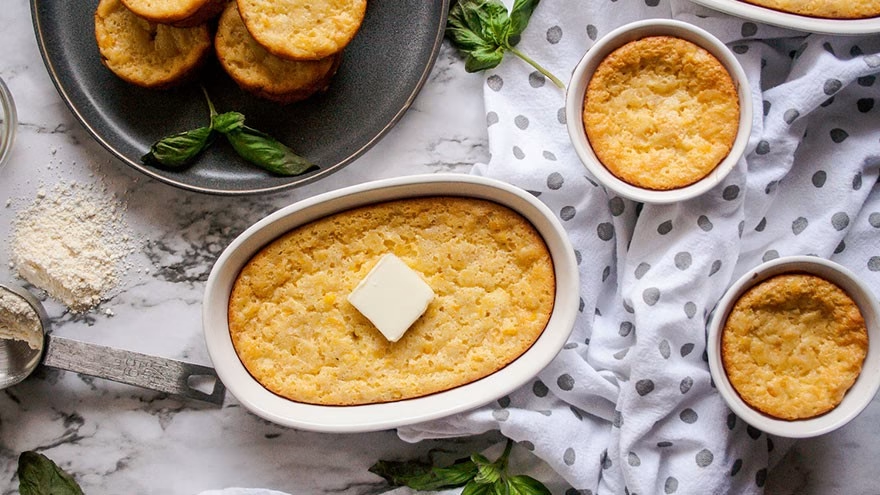
What is corn soufflé — and how is it different from a dessert soufflé?
Let's set the record straight before anything else: corn soufflé is a savory side dish, not a dessert. If you've seen it described otherwise, that's a mistake that has confused plenty of home cooks. A corn soufflé recipe belongs on the Thanksgiving table next to the roast turkey and green beans — not at the end of the meal with a scoop of ice cream.
The name borrows from the French soufflé tradition, which is where the confusion starts. A classic French soufflé is a technical achievement — you fold stiffly beaten egg whites into a flavored base, slide it into the oven, and then serve it the moment it comes out before it deflates. That technique requires precision and timing and has earned a reputation for being difficult. The American corn soufflé shares the name and some of the spirit, but it's a much more relaxed animal.
In American cooking — particularly in the South and Midwest — corn soufflé sits somewhere between a corn pudding and a corn casserole. It has a lighter, fluffier texture than a dense casserole, and a custardy interior that's richer than a simple pudding, but it doesn't demand the drama of French technique. The eggs provide lift; the creamed corn provides moisture and body; the sour cream or half-and-half brings richness and a gentle tang. The result is a dish that's simultaneously fluffy, creamy, and deeply savory — comfort food at its most reliable.
Corn does carry a natural sweetness, and a small pinch of sugar in some recipes acknowledges that. But that's balance, not dessert. Think of it the way you'd think of a sweet potato casserole or glazed carrots — sweetness in service of a side dish, not the main event.
The dish has roots that stretch back to Indigenous corn traditions and early colonial baked puddings. By the 19th century, corn pudding was a staple of Southern cooking, appearing at church suppers and farm tables wherever corn grew in abundance. The version most Americans recognize today — particularly the Jiffy-mix shortcut version — became a Thanksgiving institution once Jiffy corn muffin mix became a pantry staple in the mid-20th century. The little blue box provided the leavening and structure that simplified the technique dramatically, and home cooks embraced it immediately.
The classic Jiffy corn soufflé recipe
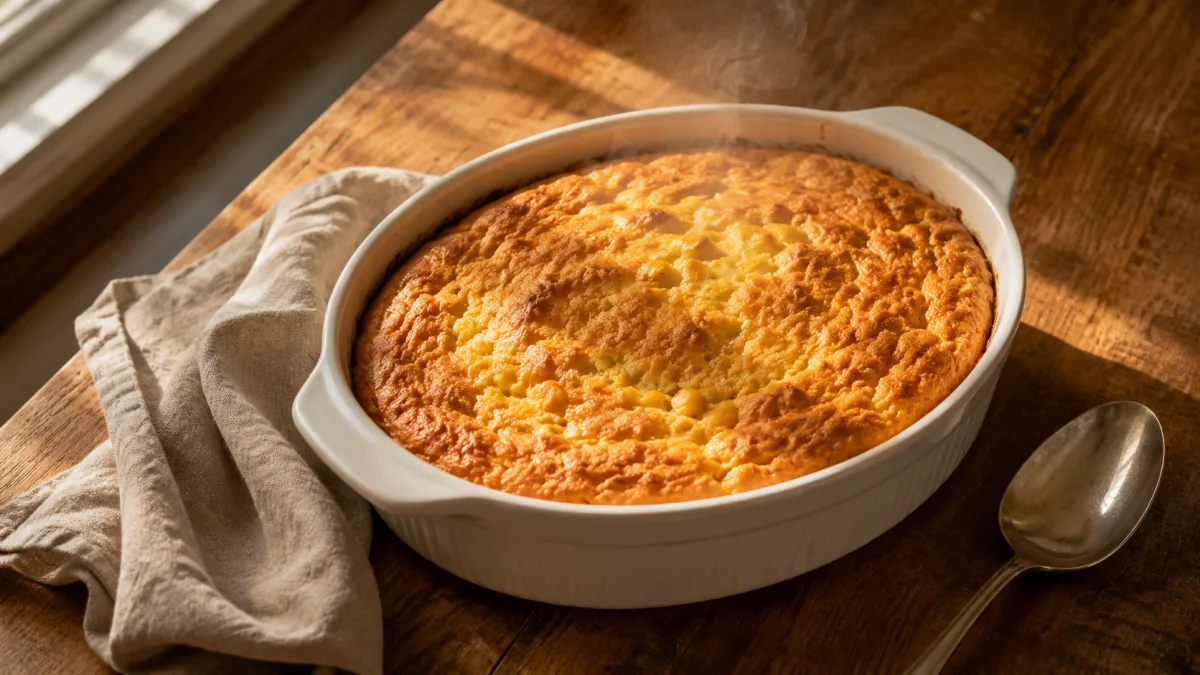
This is the version that has shown up on American holiday tables for decades, and for good reason. Six ingredients, one bowl, and a casserole dish — that's all it takes. The Jiffy corn muffin mix does the structural work here: it contains flour, cornmeal, leavening, and a touch of sweetness, which means you don't have to whip egg whites or make a roux. Everything binds together, puffs in the oven, and comes out golden and set with a slightly creamy center.
The creamed corn is non-negotiable. It provides moisture that keeps the soufflé from drying out, and it incorporates into the batter in a way that gives the finished dish a soft, almost custardy interior. The whole kernel corn adds texture and those pockets of sweet corn you want in every bite. Together they create the contrast that makes this dish interesting rather than just fluffy.
Ingredients (serves 8)
- 1 can (15 oz) whole kernel corn, drained
- 1 can (15 oz) cream-style corn
- 1 large egg, lightly beaten
- 4 tablespoons unsalted butter, melted
- 1 cup sour cream
- 1 box (8.5 oz) Jiffy corn muffin mix
Instructions
- Preheat the oven to 350°F. Butter a 2-quart casserole dish.
- Combine all ingredients in a large bowl and stir until just combined — no need to overwork it.
- Pour into the prepared dish and bake for 45 to 55 minutes, until the top is golden brown and the center is set but not stiff. A deeper dish will need more time; a wider, shallower dish will be done sooner. Start checking at 45 minutes.
- Let rest 5 minutes before serving. The center will firm up slightly as it cools.
One note on doneness: the center should not jiggle like liquid, but it also shouldn't feel rock solid when you press it. A slight give in the middle is exactly what you want. If a toothpick inserted about an inch from the edge comes out clean, the soufflé is done even if the center still seems a little soft.
From-scratch corn soufflé
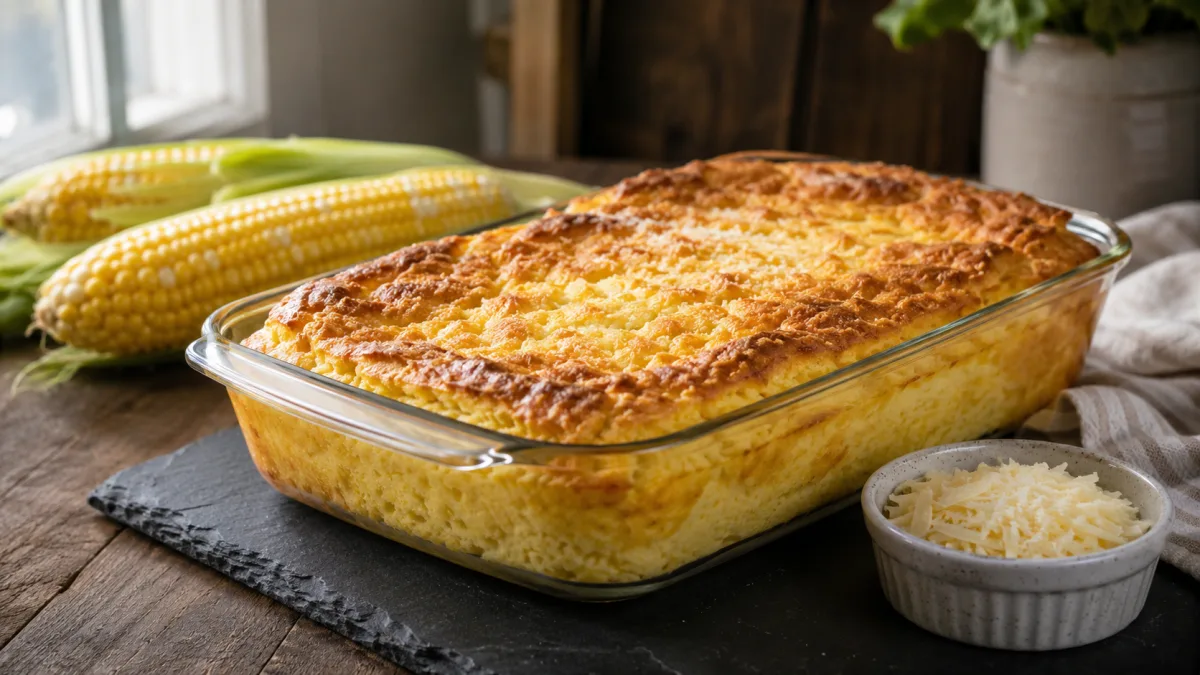
If you'd rather skip the box mix — whether for dietary reasons, to control ingredients, or simply because you want a cleaner, more refined result — the from-scratch version delivers. It takes a few more steps and ingredients, but the payoff is a soufflé with a more complex, nuanced flavor and a texture that's genuinely airy rather than cornbread-adjacent.
The key difference in this version is the whipped egg whites. Separating the eggs and beating the whites to soft peaks introduces air into the batter that the Jiffy mix achieves chemically. Folding the whites in three additions prevents deflation and keeps the batter light. This is the one step that requires a bit of care — fold gently with a rubber spatula, using a motion that cuts down through the center and sweeps up the sides. You're not stirring; you're incorporating. A few white streaks remaining are fine. Overfolding is the only real risk.
This version also works beautifully with fresh corn in summer. Cut from the cob, blanched briefly in salted water, and partially pureed — it produces a soufflé with a brighter, more vibrant corn flavor than canned.
Ingredients (serves 6)
- 2 cups fresh corn kernels (or frozen, fully thawed and drained)
- 1 cup half-and-half
- 3 tablespoons unsalted butter, melted and cooled
- 3 large egg yolks
- 4 large egg whites, at room temperature
- 3 tablespoons fine cornmeal
- 2 teaspoons honey (or a pinch of sugar)
- ½ teaspoon fine sea salt
- ¼ teaspoon white or black pepper
- 1 pinch cayenne pepper
- ½ cup finely grated Parmesan cheese
- ½ cup grated Gruyère or sharp white cheddar
Instructions
- Preheat the oven to 375°F. Grease a 2-quart baking dish (an 11×7 glass dish works well).
- If using fresh corn, cook the kernels in boiling salted water for 3 minutes, then drain and cool. Frozen corn can be used as-is once fully thawed.
- Blend 1 cup of the corn with the half-and-half until smooth. Reserve the remaining cup of whole kernels.
- In a medium bowl, whisk together the egg yolks and melted butter until smooth. Whisk in the cornmeal, salt, pepper, cayenne, and honey. Pour in the blended corn mixture and stir to combine. Fold in the whole corn kernels and both cheeses.
- In a separate clean bowl, beat the egg whites with a hand mixer until soft peaks form.
- Gently fold the egg whites into the corn base in three additions, stopping when just incorporated.
- Pour into the prepared baking dish. Sprinkle a little extra Parmesan over the top if you like.
- Bake for 30 to 35 minutes, until the top is puffed and golden and the center feels just set when lightly pressed. Serve immediately.
Variations — cheese, jalapeño, and beyond
Both versions of this recipe take well to variations, and the modifications don't require any technique changes — just stir them into the batter before baking. The Hungry Bluebird's classic recipe is a reliable reference point for the base Jiffy version.
Cheddar corn soufflé: Add 1 cup of shredded sharp cheddar to either version. It deepens the savory character and creates irresistible cheesy pockets throughout. For the Jiffy version, the cheddar adds a welcome complexity that lifts the dish beyond its humble ingredient list.
Jalapeño corn soufflé: Stir in 1 to 2 tablespoons of finely diced pickled or fresh jalapeños. The heat cuts through the richness nicely. If you want more complexity, add a tablespoon of drained canned green chiles alongside the jalapeño. This version pairs particularly well with smoked pork or chili.
Herb version: Fold in 2 to 3 tablespoons of chopped fresh chives or flat-leaf parsley. The brightness works especially well with the from-scratch version, where the cleaner corn flavor benefits from a fresh counterpoint.
Mexican-style: Add a roasted poblano pepper (peeled, seeded, and diced), a cup of pepper jack, and a pinch of smoked paprika. A handful of cilantro stirred in at the end is optional but good. This goes well alongside roasted chicken or grilled meats.
Making it ahead — storage and reheating
The single best piece of advice for holiday cooking is this: assemble your corn soufflé the night before. Mix all the ingredients (for the Jiffy version, just combine everything in the casserole dish), cover tightly with plastic wrap, and refrigerate. When you're ready to bake, pull it out and let it sit at room temperature for about 15 minutes while the oven preheats. Add 5 to 10 extra minutes to the bake time to account for the cold start. That's it. One less thing to juggle on the day itself.
For the from-scratch version with egg whites, prepare the base through step 4 and refrigerate that separately. When you're ready to bake, take it out to warm slightly, then beat and fold in the egg whites just before it goes in the oven. The whites can't be whipped and held — they need to go in fresh.
Leftovers keep well in the refrigerator for up to 4 days. Reheat individual portions in the microwave with a damp paper towel draped over the top, or warm the whole dish, loosely covered with foil, at 325°F until heated through. The texture softens slightly after refrigeration but the flavor is just as good — some people prefer leftover corn soufflé as a breakfast dish the next morning, which is not a bad call.
Freezing is technically possible but not recommended for the from-scratch version — the whipped egg whites deflate completely and the texture becomes dense. The Jiffy version holds up better to freezing, though it won't be as fluffy as fresh.
What to serve with corn soufflé
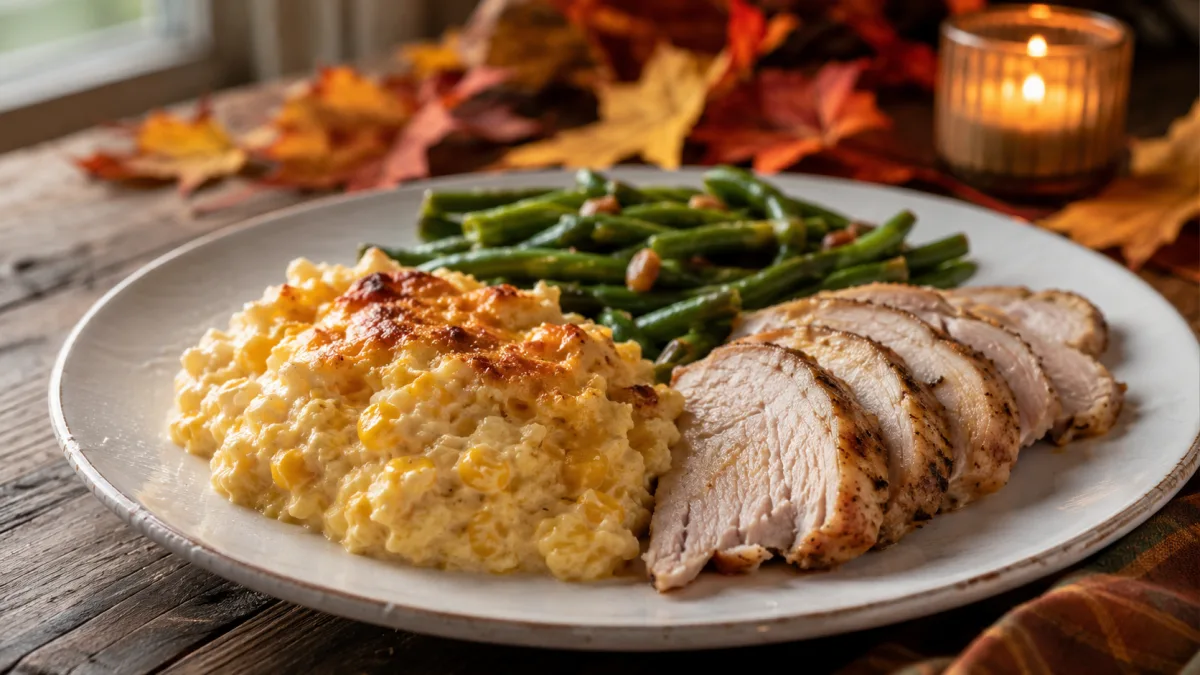
Corn soufflé is one of the most versatile side dishes in American cooking because its creamy, savory, slightly sweet character works against almost any protein. The obvious pairing is roast turkey — the soufflé's richness balances the lean meat, and it plays nicely with gravy, cranberry sauce, and all the rest of the Thanksgiving spread.
Beyond Thanksgiving, it goes exceptionally well with:
- Ham and pork — the sweetness of the corn complements glazed ham or pork chops in the same way apple sauce does
- Brisket — the soufflé's creaminess cuts through the fat of a good braised brisket
- Roast chicken — straightforward and satisfying; try it alongside an herbed roasted chicken for a complete meal
- Grilled duck — the richness of duck and corn soufflé is a natural match; if you're trying something ambitious at the grill, a grilled whole duck makes an impressive centerpiece
- Seafood spreads — it's less obvious but corn soufflé holds its own at a summer table; it works alongside something like an easy clambake for a crowd-pleasing combination
On a holiday table, pair it with roasted asparagus — the slight bitterness of the vegetable provides contrast, and if you want a lighter appetizer course first, asparagus rolls make a clean, elegant starter before a rich main and sides.
Technique tips — getting the texture right
Most corn soufflé failures come from one of two things: overbaking or underbaking. Overbaking dries out the interior and makes it rubbery. Underbaking leaves a wet, unset center that won't hold when you spoon it out. The target is a soufflé that's golden and firm around the edges with a center that yields slightly to pressure but doesn't slosh.
A few things that make the difference, and these hold If you're making the Jiffy version or the from-scratch one (for a deeper look at technique, Food52's piece on the Jiffy corn casserole is worth reading):
Room-temperature ingredients: Cold butter and cold eggs don't incorporate as smoothly. Take the eggs out 30 minutes before you start. Melted butter should be warm but not hot — if it's too hot, it can scramble the yolks in the from-scratch version.
Don't crowd the oven: If corn soufflé is baking alongside other dishes, make sure there's air circulation around it. A soufflé that's wedged between two other pans will bake unevenly, with the sides cooking faster than the top.
Grease the pan generously: Butter or non-stick spray applied thoroughly prevents the soufflé from sticking around the edges, which affects both the texture and presentation. For the Jiffy version, the batter can stick aggressively if the dish isn't well-greased.
The wobble test: Pull the dish out and give it a gentle shake. The edges should be completely set — no movement at all. The center can have a slight wobble, similar to a just-set custard or cheesecake. If the whole thing moves like liquid, put it back in for another 8 to 10 minutes. The soufflé will continue to firm up for about 5 minutes after it comes out of the oven, so don't wait for it to look completely solid before you pull it.
Depth of dish matters: A deeper, narrower dish produces a taller, fluffier soufflé that takes longer to cook. A wide, shallow dish spreads the batter thin and cooks faster. Neither is wrong, but adjust your baking time accordingly and always watch the center rather than the clock.
Frequently Asked Questions
Is corn soufflé the same as corn pudding?
They're closely related but not identical. Corn pudding tends to have a looser, more custard-like texture and typically relies on a higher proportion of liquid ingredients. Corn soufflé is slightly firmer and lighter, with a bit more structure. Corn casserole, particularly the Jiffy-mix version, is denser still — more like cornbread that's been made creamy. The three names are often used interchangeably in American cooking, which adds to the confusion, but in practical terms they're all variations on the same idea: corn, dairy, eggs, and heat.
Why does my corn soufflé come out dry?
Overbaking is almost always the culprit. Corn soufflé has a narrow window between underdone and overdone. Check it at the early end of the baking time range and rely on the wobble test rather than a set clock. Also, make sure you're using cream-style corn in addition to whole kernel — the creamed corn is what keeps the interior moist. Skipping it or substituting a second can of drained kernel corn will produce a drier result.
Can I make corn soufflé without sour cream?
Yes. Full-fat Greek yogurt is the best direct substitute — it has a similar tang and fat content. Cream cheese (softened and mixed in well) produces a richer, denser result. In a pinch, heavy cream works in the Jiffy version though it loses some of the tanginess that makes the dish interesting. Don't use low-fat alternatives; the fat is doing real work in terms of texture and richness.
Can I double the recipe for a crowd?
Doubling the Jiffy version is straightforward — use a 9×13-inch baking dish and add about 10 to 15 minutes to the bake time. The from-scratch version can also be doubled, but whipping four egg whites to soft peaks is easier in two batches rather than one large one if your mixing bowl is small. Either way, watch the center and don't assume the time will simply double linearly — a larger mass takes longer to heat through but not proportionally so.
What's the difference between the Jiffy version and from-scratch?
The Jiffy version is simpler, more forgiving, and has that familiar cornbread-adjacent quality — slightly denser, with a gentle sweetness from the mix itself. The from-scratch version is lighter, airier, and more nuanced, with cleaner corn flavor and a texture closer to what the name "soufflé" implies. Both are excellent. The Jiffy version is ideal when you need something reliable and quick; the from-scratch version is worth the extra effort when you want to impress or when you're cooking for someone with dietary restrictions around processed ingredients.

Chiara Bradshaw
Covers education, culture and creative topics with an emphasis on readable explanations and verifiable references.




Leave a reply
Replying to