
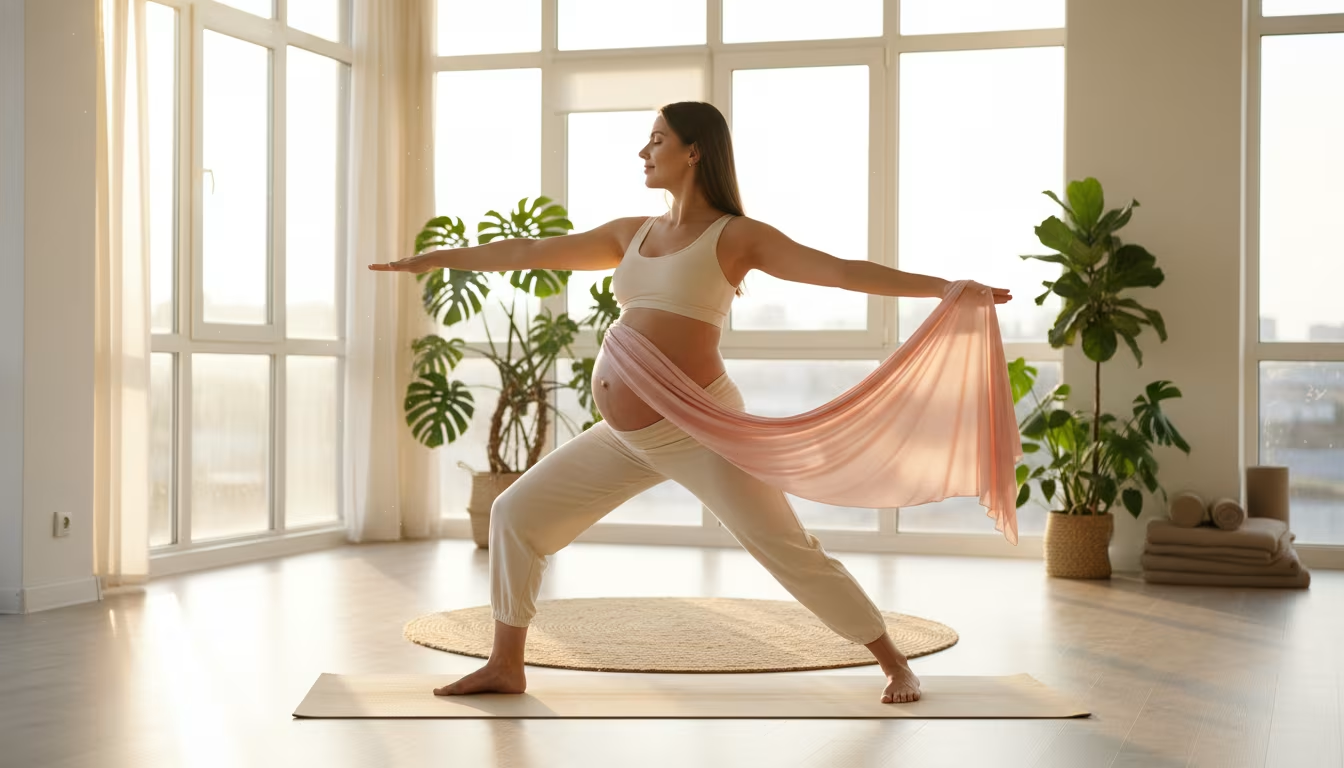
Movement in pregnancy is less about proving toughness and more about staying strong for a body that is changing every week. Regular activity can ease back pain, help with sleep and mood, support healthy weight gain, and prepare you for the physical work of labor and recovery. The right plan starts with your own history and your clinician's sign-off, then builds from there.
Is It Actually Safe?
For most healthy pregnancies, the answer is yes. The American College of Obstetricians and Gynecologists says it is safe and encouraged to continue or begin regular physical activity during pregnancy, with only a small number of absolute contraindications. Their patient page on exercise during pregnancy is a solid starting point.
"Most" is the key word. Certain conditions change the picture: bleeding, some placenta positions, a cervix at risk, preterm labor, poorly controlled blood pressure, and heart or lung disease can all mean exercise needs to be modified or paused. This is exactly why a quick conversation at a prenatal visit matters before you commit to a routine, especially if you are starting from a mostly inactive baseline.
The benefits are worth the check-in. Regular movement is associated with easier management of back and pelvic pain, steadier energy and mood, better sleep, and support for healthy gestational weight gain. It can also help condition the muscles you will lean on during labor and in the demanding first weeks afterward. None of that requires a punishing schedule — consistency at a comfortable intensity does far more than occasional bursts of effort you cannot sustain through nausea and fatigue.
What "Moderate" Really Means
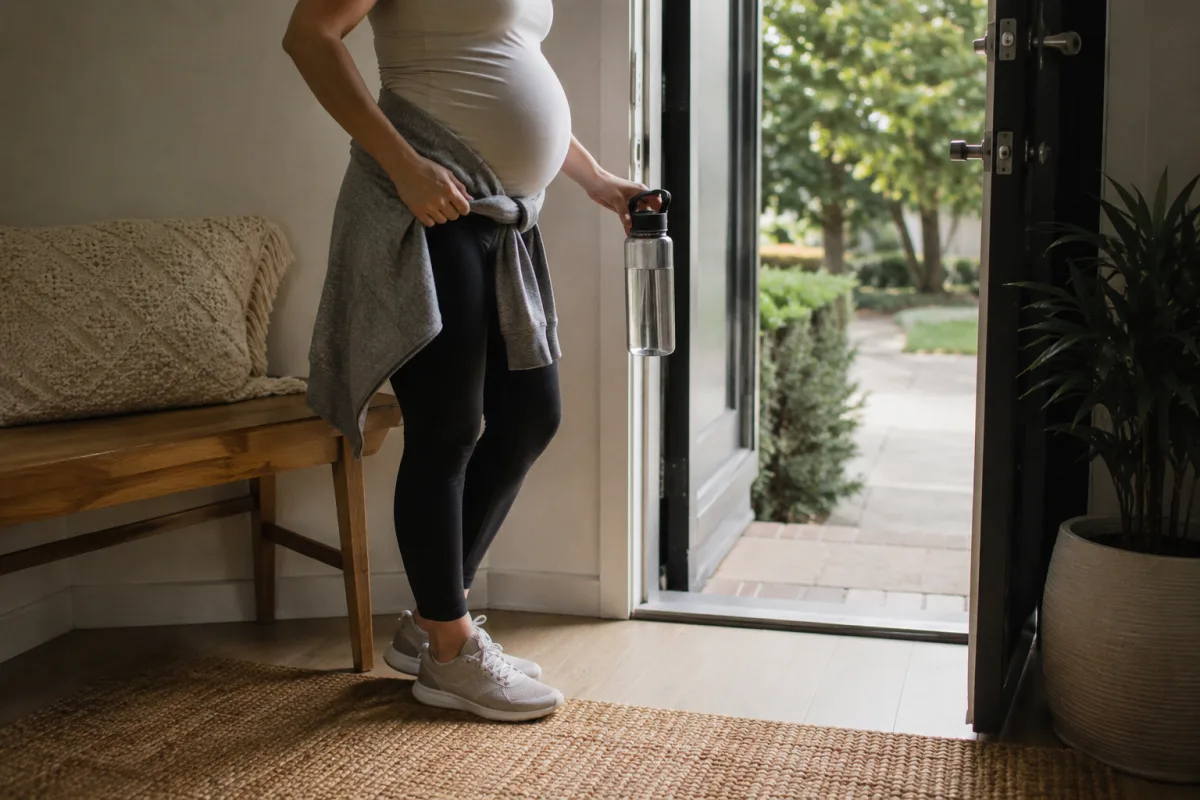
Aim for moderate intensity rather than maximum effort. A useful gauge is the talk test: at a moderate pace you can hold a conversation but not sing. General guidance points many people toward roughly 150 minutes of moderate activity spread across the week, but that is a target to build toward, not a rule to hit on day one — pregnancy fatigue, nausea, and a shifting center of gravity all matter.
Good options for many pregnancies include brisk walking, swimming and water aerobics, stationary cycling, prenatal strength training with lighter loads, and modified prenatal yoga or Pilates. The changes to avoid are less about specific sports and more about specific risks: overheating, dehydration, lying flat on your back for long stretches later in pregnancy, and anything with a real chance of falling or a blow to the abdomen.
A Quick Activity Guide
Use the table below as a general orientation, then let your own clinician overrule any line based on your history. It is a map, not a prescription.
| Category | Examples | Notes |
|---|---|---|
| Generally suitable | Walking, swimming, water aerobics, stationary cycling, prenatal yoga, light strength work | Low fall risk, easy to scale down on tired days |
| Modify as pregnancy progresses | Running (if already a runner), floor core work, group fitness classes | Adjust intensity and positions; avoid long spells lying flat later on |
| Approach with caution | Heavy lifting, high-intensity intervals, hot yoga | Watch for overheating and dehydration; get clinician input first |
| Usually avoid | Contact sports, downhill skiing, horseback riding, scuba diving, high-fall activities | Trauma, fall, or pressure-change risk to you or the baby |
The clinical detail behind these categories is laid out in ACOG's committee opinion on physical activity and exercise, which is the reference clinicians themselves use.
Warning Signs That Mean Stop
Exercise should leave you steadier and a little more energized, not frightened or wiped out. Stop and contact your care team if you notice vaginal bleeding, regular painful contractions, fluid leaking from the vagina, chest pain, dizziness or feeling faint, a bad headache, calf pain or swelling, or shortness of breath before you have even started. These are not signs to push through.
Two everyday cautions round this out. Heat is a genuine concern, so avoid exercising in hot, humid conditions, keep water nearby, and stop if you feel overheated. And listen to daily fluctuations: nausea, poor sleep, or low food intake can turn an easy routine into too much. On those days, gentler and shorter wins. If nausea is making both eating and moving hard, planning around bland foods for pregnancy can help you keep enough fuel in the tank.
Building a Routine You Will Keep
A plan you can repeat beats a heroic week you abandon. Start where your body actually is: if you were active before, scale back intensity rather than stopping entirely; if you were mostly sedentary, begin with five to ten minutes of walking and add time gradually. Warm up, cool down, and favor supportive shoes and a bra that fits your changing shape.
Expect the routine to shift by trimester. The first often brings fatigue and nausea, so short and gentle usually wins. The second tends to feel most comfortable, which is a good window to settle into a steady habit. The third brings a bigger bump, more pressure on the pelvic floor, and a higher premium on balance, so many people move toward walking, water-based activity, and stretching rather than anything jarring.
Balance is worth guarding as your center of gravity shifts — hold a rail on stairs, and choose stable surfaces over uneven trails late in pregnancy. Pelvic floor and gentle core work now can pay off in labor and postpartum recovery, and it is fine to trade a workout for a nap when you need it. The point is a body that feels supported through pregnancy, birth, and the weeks after, when postpartum recovery asks a lot of the same muscles.
Frequently Asked Questions
Can I start exercising if I was inactive before pregnancy?
Often yes, but check with your clinician first and start small — short walks that build up gradually are a safe way in for most people.
Is running safe during pregnancy?
Many people who already run can continue with modifications and clinician approval. It is not usually the time to take up running for the first time.
How will I know if I am overdoing it?
Use the talk test: if you cannot hold a conversation, ease off. Stop entirely for bleeding, contractions, dizziness, chest pain, or fluid leakage.
Do I really need to avoid lying on my back?
Long periods flat on your back are best avoided later in pregnancy because of pressure on a major vein. Ask your clinician about position swaps for floor exercises.
How much exercise is enough?
Many guidelines point toward roughly 150 minutes of moderate activity weekly, but treat that as a goal to build toward around your energy, symptoms, and clinician's advice.
Keep it simple and consistent: choose activities with low fall risk, stay cool and hydrated, respect the warning signs, and adjust the plan as your body and your pregnancy change. A short walk you take most days does far more than an ambitious routine that never survives the first trimester.
This article is for general information only and is not medical advice. Talk with your obstetric care team before starting or changing an exercise routine during pregnancy.

Chiara Bradshaw
Covers education, culture and creative topics with an emphasis on readable explanations and verifiable references.



Leave a reply
Replying to