
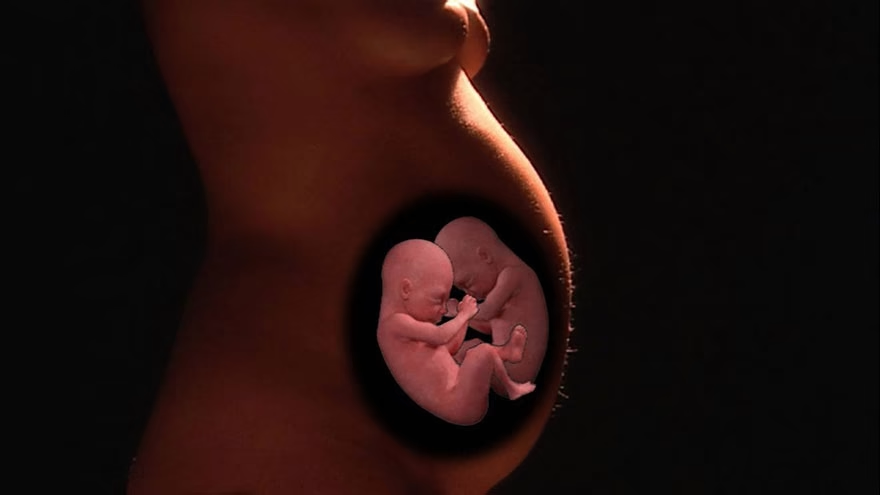
Can Twins Switch Sides in the Womb? Usually, twins can change position, but they do not truly trade places in the simple way people imagine, especially later in pregnancy. Early on, there may be enough room for movement. Later, each baby is more limited by placenta location, membranes, amniotic fluid, size, and the shape of the uterus.
This is general pregnancy education, not medical advice. Twin pregnancies need individualized prenatal care. Call your maternity team for decreased movement, bleeding, fluid leak, regular contractions, severe pain, severe headache, vision changes, or any sudden concern.
Movement Is Normal
Twins move, stretch, kick, roll, and shift. On ultrasound, one baby may be head down one week and breech another week, especially before the third trimester. That kind of position change is normal. Parents may feel kicks in new places and wonder if the babies swapped sides.
ACOG's multiple pregnancy FAQ explains that twin pregnancies need closer monitoring because risks and delivery planning differ from singleton pregnancy.
Switching Sides Is Different

True side switching would mean Baby A and Baby B trade their general locations. That is less likely as pregnancy advances. Baby A is usually the twin closer to the cervix on ultrasound, not necessarily the baby on the left or right side all pregnancy. Labels help clinicians track growth and anatomy.
If you are early in pregnancy and still confirming symptoms, Livecub's first week pregnancy signs article can help with early timing language.
Membranes Matter
Many twins have separate amniotic sacs. A membrane between them limits how much they can cross into each other's space. Monoamniotic twins share a sac, which is a higher-risk situation with different monitoring. Your ultrasound report may use terms such as di-di, mono-di, or mono-mono.
Ask your clinician what type of twin pregnancy you have. That detail affects monitoring more than where you feel kicks.
Baby A And Baby B
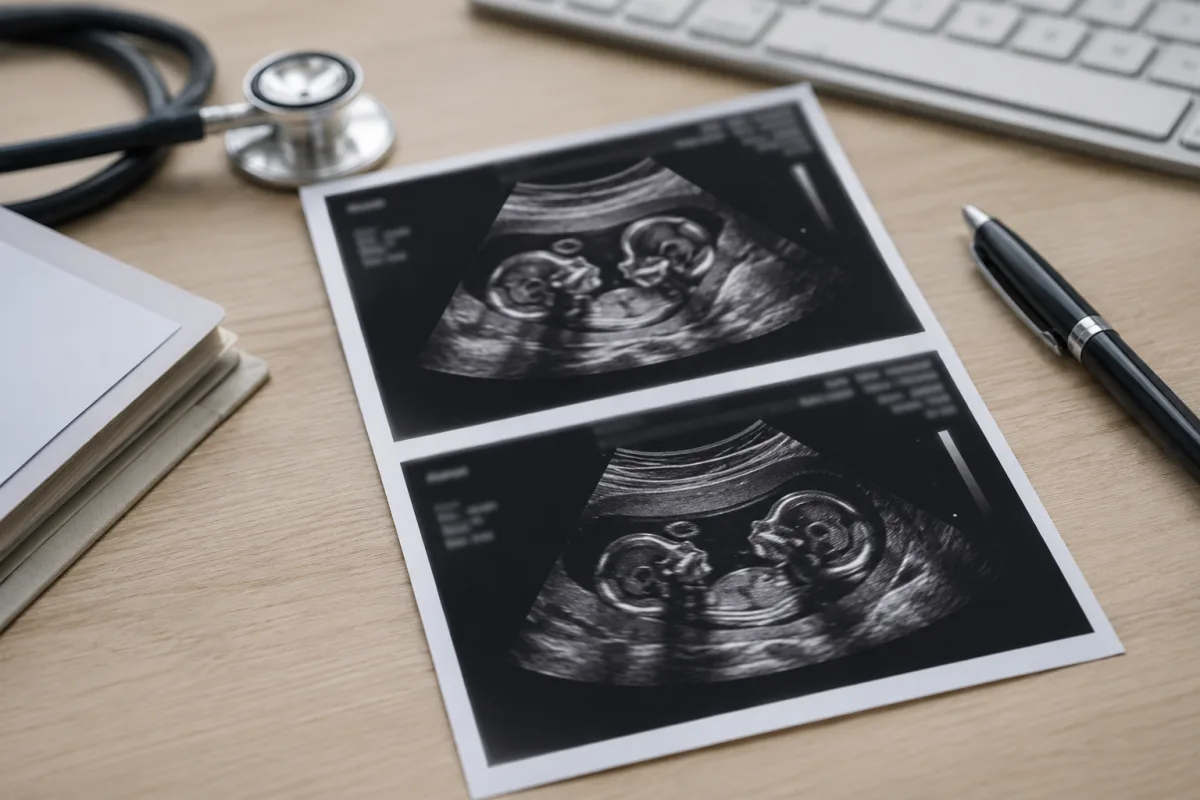
Baby A is usually the baby closest to the cervix, and Baby B is the other baby. The labels are used to track measurements, fluid, anatomy, and presentation. Sometimes labels can seem confusing if babies move or imaging angles change, but the ultrasound team works to keep identification consistent.
For pregnancy relationship context during a more closely watched pregnancy, Livecub's staying intimate during pregnancy article can help couples keep communication open.
Why Kicks Seem To Move
Kicks can feel like they moved because a baby changed from breech to head down, stretched differently, or pressed feet against a new area. The uterus also stretches, and the parent's posture changes the sensation. Feeling movement on the other side does not prove the babies swapped places.
Cleveland Clinic's fetal movement overview explains quickening and fetal movement, including how movement can vary.
Early Pregnancy Has More Room
Before the babies grow larger, position changes are common. Ultrasound may show both babies moving actively. Parents may not feel all of that movement yet. Early movement does not predict final birth position.
If you are thinking about how to announce or explain pregnancy news, Livecub's gender reveal ideas article is an internal planning read, though fetal sex and position are separate topics.
Later Pregnancy Is Tighter
In the third trimester, twins have less space for big rotations. They can still move, but full flips or side changes may be harder. Delivery planning often depends on the presenting twin's position, gestational age, estimated weights, placenta, prior births, and clinician judgment.
Do not assume a baby is stuck forever, but do not rely on a dramatic last-minute switch either.
Ultrasound Is The Best Check
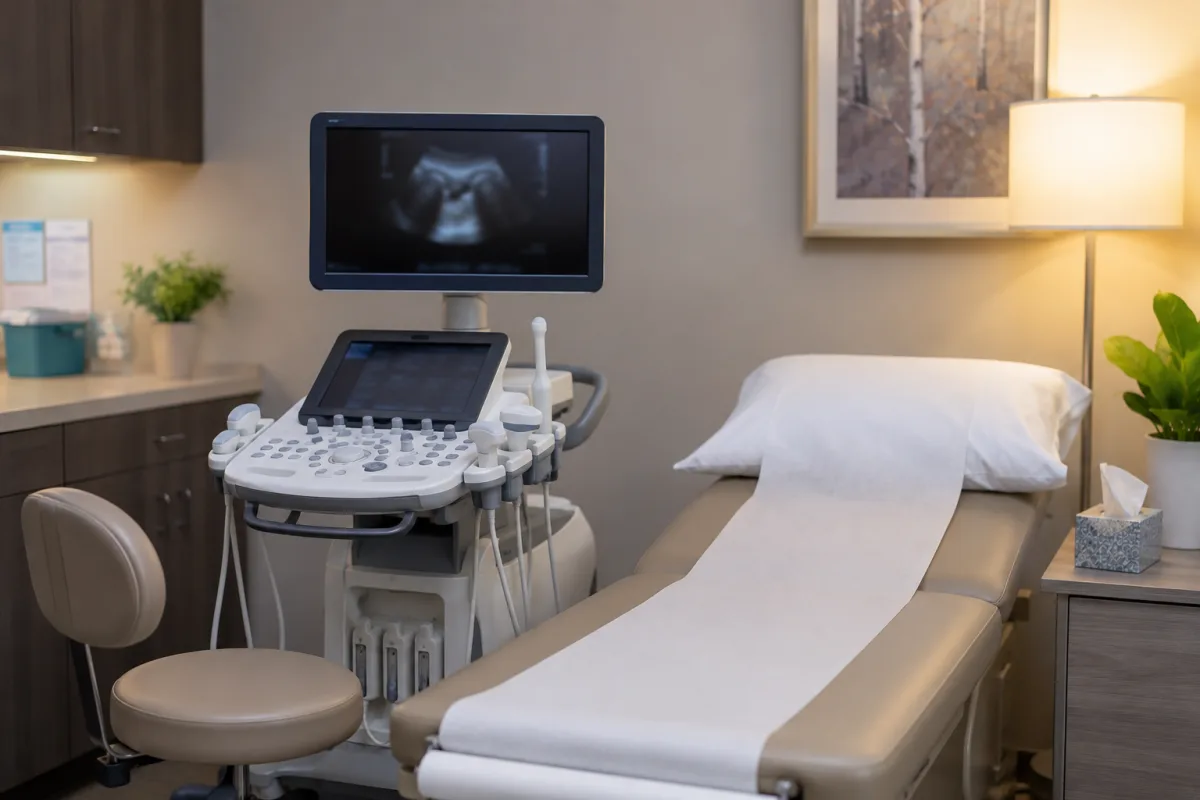
The most reliable way to know positions is ultrasound. A clinician can identify which baby is closer to the cervix, where each placenta is, how much fluid surrounds each baby, and whether growth is similar. Feeling kicks is useful for bonding and noticing change, but it cannot map the twins precisely.
For keepsake pregnancy projects, Livecub's belly bowl cast article may be fun, but it cannot tell baby positions.
Movement Patterns Still Matter
Even if exact position is hard to feel, a change in movement pattern should be taken seriously. Many clinicians advise calling if movement decreases or feels very different. Twin movement tracking can be harder because two babies overlap, so ask your care team how they want you to monitor.
Do not wait because you think one twin is just hiding behind the other.
Delivery Position
Twin delivery planning is individualized. Some twins are both head down. Sometimes Baby A is head down and Baby B is breech or transverse. Sometimes a cesarean is recommended. The relevant question is not only whether twins can move, but what each baby's position means at the time of delivery.
Your clinician may repeat ultrasound near delivery to confirm presentation.
Questions To Ask
Ask what type of twin pregnancy you have, which baby is Baby A, where each placenta is, what positions the babies are in today, how often positions will be checked, and what symptoms should prompt a call. Write the answers down after the visit.
Twin pregnancy is easier to follow when the labels and anatomy are clear.
Chorionicity And Amnionicity
The terms chorionicity and amnionicity describe placentas and amniotic sacs. Di-di twins have two placentas or a fused-looking pair and two sacs. Mono-di twins share a placenta but have separate sacs. Mono-mono twins share both placenta and sac. These details affect monitoring and movement limits.
Parents do not need to memorize every term, but they should know which type their pregnancy is.
Why Ultrasound Labels Can Feel Confusing
During an ultrasound, the view changes as the probe moves. A baby who looks left on the screen is not always left in the body. The sonographer may use placenta location, membrane insertion, anatomy, and position relative to the cervix to keep the twins straight.
If you are confused, ask: which baby is closer to my cervix today, and how are you confirming that label?
Do Not Compare Twin Pregnancies Too Closely
One twin pregnancy may have active babies who flip often. Another may have babies who settle earlier. Placenta position, body size, fluid, and gestational age affect what is felt. Social media stories about twins switching places may not match your anatomy or your ultrasound report.
Your own care team's measurements are more useful than another parent's memory of kicks.
What Changes Near Delivery
Near delivery, the presenting twin matters because that baby is closest to being born first. The second twin's position also matters, but the plan depends on clinician skill, hospital policy, gestational age, fetal size, and safety factors. A late position check helps avoid guessing.
Ask how often positions will be checked as you get closer to delivery.
Kick Counting With Twins
Kick counting in twin pregnancy can be tricky because movements overlap. Some clinicians give individualized instructions instead of a strict app-based count. Ask whether they want you to track each baby separately, overall movement, or changes from your usual pattern.
If you feel that movement has dropped, call. Do not wait to prove which twin changed.
Position Myths
A rounder belly on one side, hiccups low in the pelvis, or kicks near the ribs can suggest a position, but these clues are not exact. Placenta placement and the parent's body shape can change sensation. Ultrasound is still the check that matters.
Guessing can be fun. Medical decisions should use imaging and the care team's exam.
Ask At Each Scan
Twin positions can change between appointments, so ask for the current position at each scan. A short note after the visit can prevent confusion later.
Frequently Asked Questions
Can twins trade places completely?
Early movement can be large, but true side trading becomes less likely as space tightens and membranes limit movement.
Can Baby A become Baby B?
Baby A is usually the baby closest to the cervix. Labels can be complex, so ask the ultrasound team how they track them.
Why do kicks feel different?
A baby may rotate, stretch, or press feet into a new area. Sensation does not always map exact position.
How do doctors know twin positions?
Ultrasound is the best way to check position, fluid, placenta location, and growth.
When should I call my provider?
Call for decreased movement, bleeding, fluid leak, regular contractions, severe pain, or sudden worrying symptoms.
The Practical Takeaway
Twins can move and change presentation, especially earlier in pregnancy, but true side switching is limited by space, membranes, placentas, and growth. Ultrasound is the reliable way to know positions.

Cashie Evans
Covers parenting and practical household topics with clear steps, safety notes and links to current guidance.




Leave a reply
Replying to