
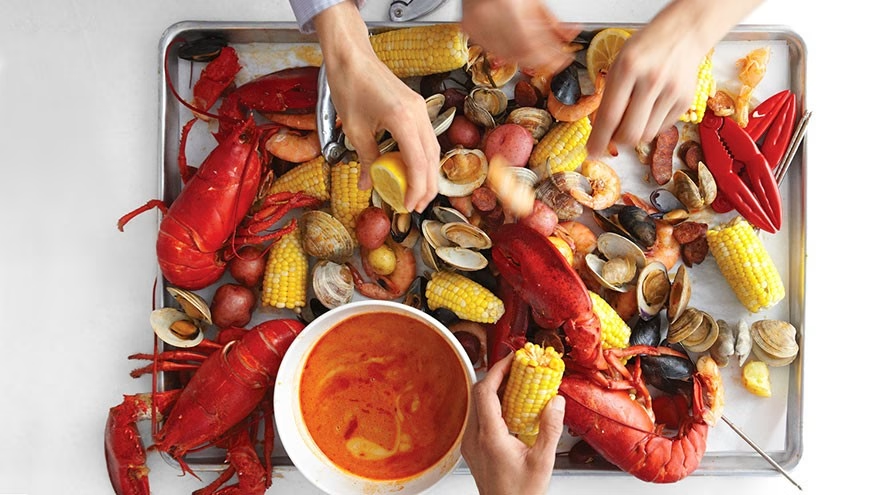
What Is a Clambake — Tradition and Origin
Long before it became a fixture of summer cookout culture, the clambake was a ceremony. The Wampanoag people of coastal Massachusetts — who called their clambakes appanaugs — had been pit-cooking shellfish on the shores of Cape Cod for at least two thousand years. The method was inseparable from their relationship with the land and sea: dig a pit in the sand, heat granite stones in a hardwood fire until they glow, layer fresh rockweed over the hot rocks, then pile on clams, fish, and whatever else the coast had provided. Cover it all with seawater-soaked burlap, wait, and let steam do the rest. Cleanup was handled by the tide.
European settlers learned this clambake recipe technique in the 1600s and 1700s, and by the nineteenth century the clambake had become a New England summer institution — political rallies, church picnics, and family reunions all centered on the pit. What the settlers kept was the method. What they altered was the meaning: a ceremony became a party, and the party became a tradition. That lineage matters. Every stovetop or backyard clambake today carries the shape of something much older.
What makes a clambake more than a seafood dinner is that shared waiting. As Atlas Obscura notes of the tradition, the clambake's agreeable inefficiency is kind of the point — the hours of waiting with nothing to do but talk, take in shoreline views, and open a beverage or two. A clambake recipe is an excuse to gather people and let them stay.
The Traditional Pit Clambake vs. the Stovetop Method
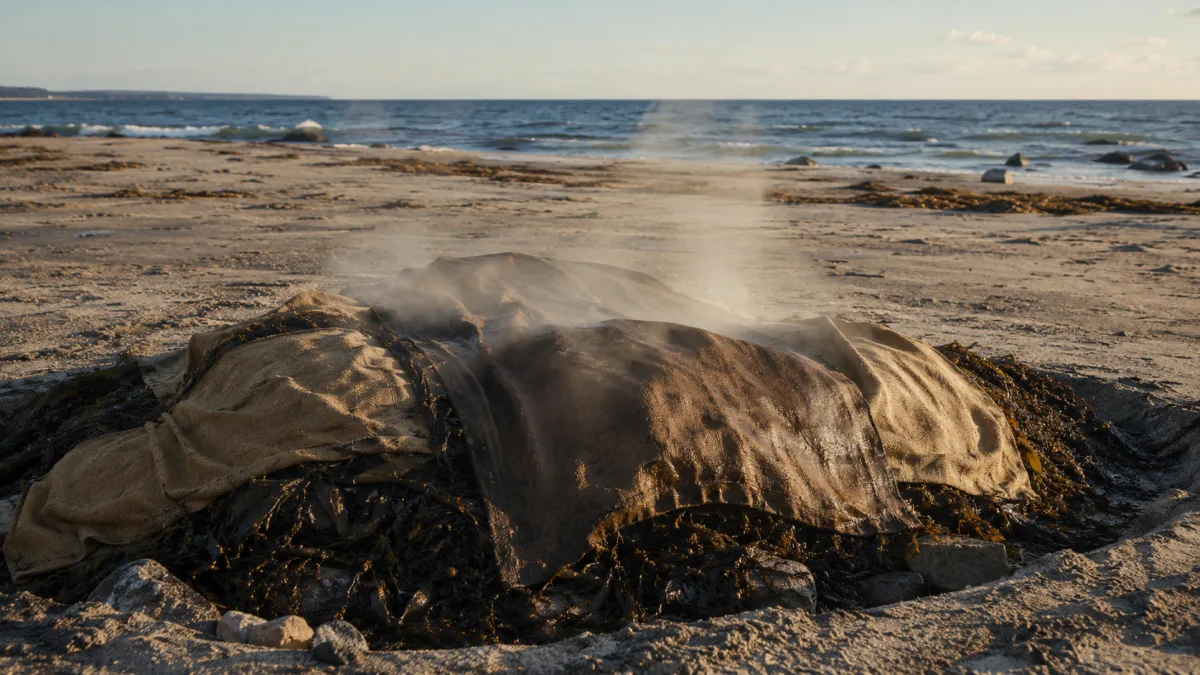
The pit method is spectacular and demanding in equal measure. You dig a hole in sand or earth, fill it with round granite stones (never porous rocks, which can crack explosively when superheated), and burn hardwood on top of those stones for three to four hours. Once the fire burns down, you scrape away the embers, cover the glowing rocks with a generous bed of rockweed — the bladder wrack seaweed whose small, water-filled fronds burst open under heat — and layer your ingredients on top. A final canopy of more rockweed and seawater-soaked burlap seals in the steam, and the whole thing cooks in residual heat for one to two hours. The briny steam from the popping seaweed does the flavoring as much as any spice blend.
The stovetop version sacrifices the drama but keeps the essential mechanism: steam. A large stockpot stands in for the pit; beer and water replace the seaweed's moisture. The pot's liquid heats and creates an upward column of steam that cooks everything from below. Layering order replicates the pit's physics — dense ingredients that need the most time go on the bottom, closest to the heat source, while delicate shellfish that overcook in minutes go on top, where the steam is gentler. Get the layering right and everything finishes at the same moment. Get it wrong and you'll have rubbery shrimp sitting on raw potatoes.
For most cooks, the stovetop method is the right call. You get the same flavors, the same communal table, and you don't need a beach or a four-hour fire.
How to Select and Store Live Shellfish
A clambake recipe rises or falls on the quality of its shellfish. This is not a dish where you can compensate for subpar ingredients with technique.
At the fish counter, apply two simple tests. For clams and mussels: tap the shell firmly. A live bivalve will close. One that stays gaping is dead and should be discarded. Feel the weight — a live clam or mussel is full of seawater and feels heavy for its size. Pass on anything with cracked or broken shells, and let your nose have a vote: fresh shellfish smells clean and briny, like the ocean. A sour or ammonia note means the animal has died and begun to decompose.
According to the FDA's seafood safety guidelines, look for certification tags on bags of live shellfish — these confirm the mollusks were harvested under national safety controls. For live lobsters, leg movement is the indicator; a lobster that hangs limp without moving its claws is not safe to cook.
Once home, store live shellfish in a breathable container — a mesh bag or a bowl loosely covered with a damp cloth — in the refrigerator. Never seal them in an airtight plastic bag; they breathe and will suffocate. Clams and hard-shell mussels keep two to three days refrigerated; plan to cook them the same day or the day after you buy them for best results. Do not store them submerged in fresh water, which will kill them.
Clambake Ingredients and What They Contribute
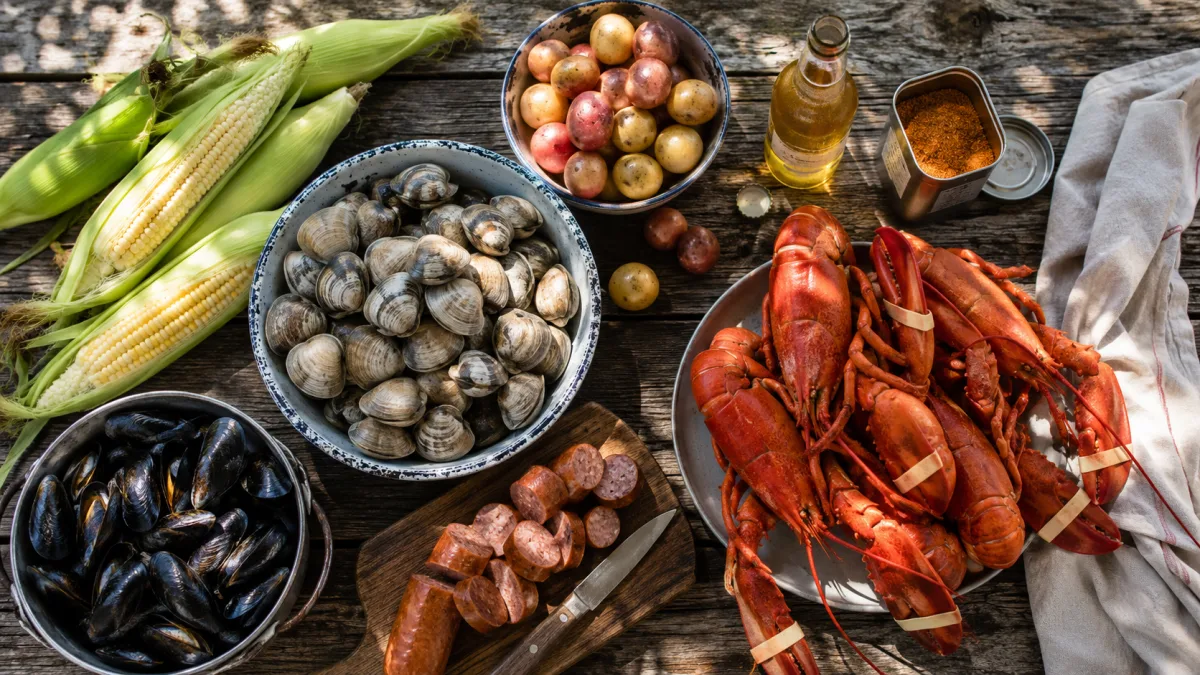
Every ingredient in a clambake earns its place.
Littleneck clams are the heart of the dish — small, sweet, and they release their briny liquor into the pot as they open, enriching the steam and the potatoes below. Mussels cook faster than clams and add a slightly sweeter, more oceanic flavor. Together, figure on about a dozen clams and six to eight mussels per person.
Shrimp (shelled and deveined) need only a few minutes of steam and provide a contrast in texture to the denser shellfish. Lobster is the centerpiece: a whole live lobster or two tails per person, the shells turning vivid red as the heat penetrates. Lobster tails work well if live lobsters are unavailable, though the whole animal gives more flavor to the pot.
Andouille sausage (sliced into rounds) sits near the bottom of the pot and does two jobs — it seasons the steaming liquid with its smoky spice and provides a rich, meaty counterpoint to the lean shellfish. Linguiça, a Portuguese sausage common in New England coastal communities, is an equally good substitute.
Small new potatoes absorb the steaming liquid better than large ones and hold their shape through the long cook. Corn on the cob, cut into rounds, is sweet and sturdy. Both go in early, near the bottom, because they need the full cooking time.
Beer and water provide the steam. A pale lager or a wheat beer works well — nothing too bitter, since the flavor concentrates as it reduces. The onion and garlic halved into the pot dissolve into the background, adding roundness without dominating.
Old Bay seasoning is the spice blend that binds everything together. Created in 1940 by Gustav Brunn, a German-Jewish immigrant who set up shop across from Baltimore's wholesale fish market, Old Bay is a blend of 18 herbs and spices — celery salt, red and black pepper, paprika, mustard, bay leaves, and a careful hand with cardamom, cloves, and ginger. It became the defining seasoning of Mid-Atlantic shellfish cookery and migrated north to New England clambakes for good reason: the blend was built for steamed crustaceans and bivalves.
Clarified butter for dipping is non-negotiable. Whole butter contains milk solids that burn and cloud when hot shellfish hits them; clarified butter — the pure butterfat with solids removed — stays liquid, golden, and clean at serving temperature. It coats the shellfish without competing with their flavor and won't solidify on your fingers the way whole butter does.
Step-by-Step Stovetop Clambake Recipe
This recipe serves four to six people generously. You'll need the largest stockpot you own — a 20-quart lobster pot is ideal.
Ingredients
- 24 littleneck clams, scrubbed
- 1 lb mussels, scrubbed and debearded
- 1 lb large shrimp, shelled and deveined
- 2 lb small new potatoes
- 2 ears corn, husked and cut into 3-inch rounds
- 4 live lobsters (1–1.5 lb each) or 4 lobster tails
- 1 lb andouille sausage, sliced into 1-inch rounds
- 1 large onion, quartered
- 4 garlic cloves, smashed
- 1 bottle (12 oz) pale lager or wheat beer
- 2 cups water
- 2 tablespoons Old Bay seasoning, plus more to taste
- Clarified butter and crusty bread for serving
Instructions
- Pour the beer and water into the bottom of your stockpot. Add the onion, garlic, and Old Bay seasoning. Place the pot over high heat.
- While the liquid comes to a boil, layer in the potatoes, then the sausage rounds on top of the potatoes. These dense ingredients need the full cooking time and the direct heat from the liquid below.
- Once the liquid is boiling and steam is rising, add the corn rounds over the sausage layer. Cover the pot tightly and cook for 10 minutes.
- Uncover and add the clams and mussels in a single layer over the corn. Cover again and steam for 5 minutes.
- Add the lobsters (head first, or tails flesh-side down) on top of the shellfish, and scatter the shrimp around them. Cover tightly and continue steaming over high heat for 12 to 15 minutes, until the lobster shells are bright red and the clams and mussels have opened.
- Use tongs or a spider to transfer everything to a large platter or a newspaper-lined table. Ladle some of the pot liquid over everything. Discard any clams or mussels that did not open — they were dead before cooking and are not safe to eat.
- Serve immediately with small bowls of warm clarified butter, extra Old Bay, and plenty of crusty bread to soak up the broth.
How to Know When Everything Is Done — Timing and Safety
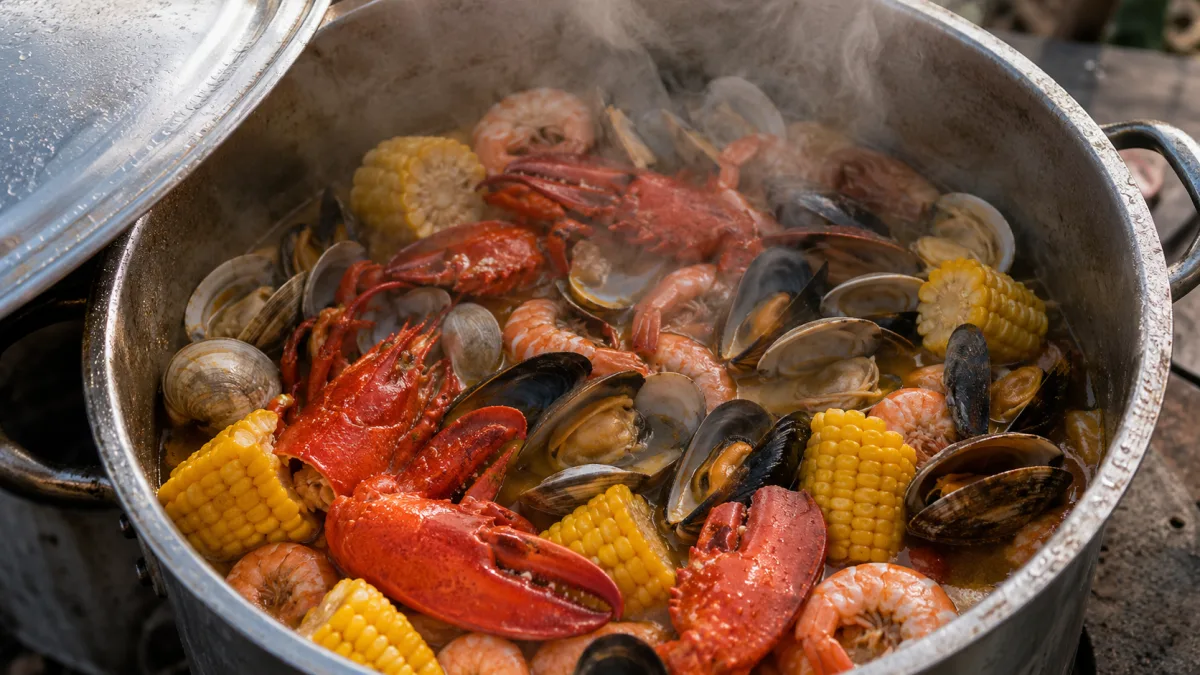
The shellfish tell you when a clambake is ready. Clams and mussels open when the protein in their adductor muscle reaches temperature — a fully opened shell means the animal inside has cooked through. Any that remain sealed after the full cooking time were dead before they went into the pot; the shell closure is a defense mechanism that only a living bivalve can perform. Discard them without debate.
Lobster is done when the shell has turned uniformly bright red — the pigment astaxanthin is released from its protein binding at heat — and the tail meat is white and firm with no translucency at the center. The FDA recommends an internal temperature of 145°F for all shellfish and seafood; a quick-read thermometer inserted into the thickest part of a lobster tail will confirm this if you're cooking for a crowd and want certainty.
Shrimp are cooked through when they curl into a loose C-shape and turn pink-opaque. If they curl into a tight O, they're overcooked — pull them off heat the moment they change color. This is why shrimp go in last, not first.
For food safety, never leave cooked shellfish sitting at room temperature for more than two hours. Bacteria multiply quickly in the warm zone between 40°F and 140°F, and shellfish are particularly susceptible.
Serving, Sides, and What to Drink
The traditional serving style is casual to the point of theatrical: newspaper spread over a long table, the pot's contents dumped directly onto it, everyone reaching in. Small bowls of clarified butter, a shaker of Old Bay, and stacks of napkins complete the setup. Crusty sourdough or Portuguese rolls are essential — you need something to mop the broth from the platter and from your hands.
Good sides are simple: a green salad dressed with lemon vinaigrette (not heavy cream-based — the meal is already rich), coleslaw with a sharp vinegar dressing, or a loaf of warm corn bread. Chilled corn soufflé works beautifully as a counterpoint to all that salt and spice.
For drinks, cold lager is the obvious and correct choice. A dry Albariño or a Muscadet also works well — both white wines have enough acidity to cut through the butter without competing with the brine. Iced tea and lemonade handle the non-drinking crowd. Keep the beverages ice-cold; a warm drink at a clambake is a small tragedy.
For something sweet afterward, a pan of rich chocolate fudge icing over a simple cake, or sugar cookies for the younger crowd, round things out without competing with what came before.
Regional Clambake Variations
The New England pit clambake is the original, but it has relatives along the coast.
The Portuguese New England clam boil swaps andouille for linguiça and sometimes adds kale to the pot — a nod to the large Portuguese-American fishing community around New Bedford and Provincetown. The flavor is smokier and slightly more pungent, with less of Old Bay's celery-forward character.
The Low Country boil — the Southern answer — drops the lobster entirely and goes heavy on the andouille and raw peanuts. Shrimp are the star, corn and small potatoes the supporting cast. Old Bay gives way to Cajun seasoning, and the whole thing is dumped onto a picnic table covered in wax paper. It's louder, spicier, and equally communal. Grilled meats often appear alongside at larger gatherings.
The sheet pan clambake is an oven-roasted version suited to smaller gatherings or apartment kitchens without a large stockpot. Potatoes and sausage roast first on oiled sheet pans at 425°F; shellfish and corn go on top in the final 15 minutes. You lose the steam-cooked texture of the stovetop version but gain caramelization and char that the pot method can't deliver.
All of them share the same logic: cook what the coast or the season gives you, cook it together, and eat it with people you want to spend time with.
Frequently Asked Questions
Can I make a clambake without lobster?
Yes, and many people do. Crab legs are an excellent substitute — snow crab or Dungeness, added in the final 10 minutes of steaming. You can also simply increase the quantity of clams and mussels and lean on the sausage for richness. The dish is flexible; the shellfish and the steam are what define it, not any single ingredient.
What if some clams or mussels don't open after cooking?
Discard them. An unopened shell after cooking indicates the bivalve was dead before it went into the pot. Dead bivalves do not close their shells on their own, but some were already sealed shut from rigor — you can't force them open and safely eat what's inside. It's a food safety rule with no exceptions.
How much seafood should I buy per person?
A useful guideline: 1 dozen littleneck clams, 6 to 8 mussels, a quarter-pound of shrimp, and one lobster (or one tail) per person. Add a quarter-pound of sausage, one ear of corn, and a few small potatoes per head. These quantities look enormous before cooking; they reduce significantly after shells are removed and liquid evaporates.
Can I prepare any of this in advance?
You can scrub and store the clams and mussels up to a day ahead (keep them in a breathable container in the refrigerator). Slice the sausage and prep the potatoes, corn, garlic, and onion the morning of. Do not shell the shrimp more than a few hours before cooking, and keep the lobsters alive until the moment they go into the pot. The actual cooking takes about 25 minutes — it's not a dish that benefits from advance preparation, only advance organization.
What is the best substitute for beer in the steaming liquid?
Dry white wine — Sauvignon Blanc or Pinot Grigio — gives a slightly brighter, more acidic steam. Chicken broth with a splash of white wine vinegar is a non-alcoholic option. Avoid anything too sweet or heavily hopped; both can turn bitter as they concentrate under heat. The steaming liquid ultimately absorbs into the potatoes and flavors the broth you'll ladle at the end, so use something you'd drink.

Chiara Bradshaw
Covers education, culture and creative topics with an emphasis on readable explanations and verifiable references.



Leave a reply
Replying to