
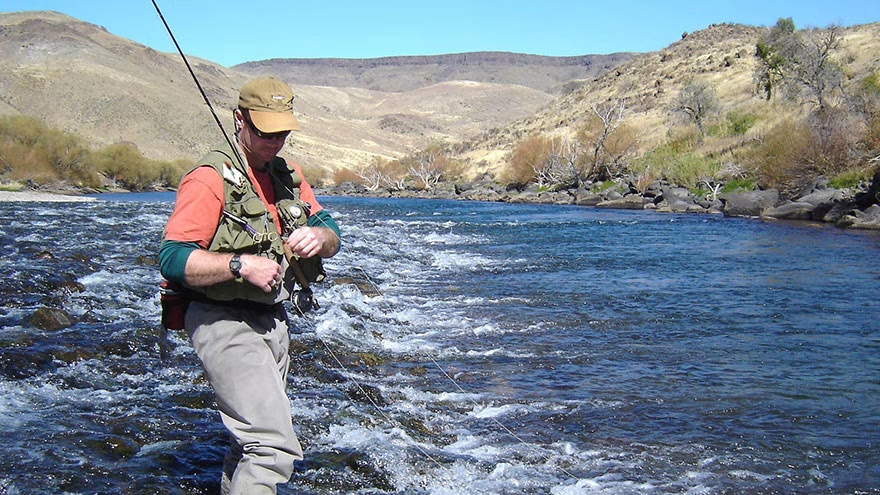
Arizona camping near water can mean a cool pine lake, a desert reservoir, a slow river corridor, or a state park campground with cabins and boat ramps. The mistake is treating all of them like the same weekend. Good fishing and camping in Arizona starts with a license check, a water plan, heat timing, campground rules, and an honest look at how far the next store, ranger station, or cell signal may be.
Where should you start planning?
Start with the official fishing rules, then choose the campground. Arizona waters can have different species, bag limits, closures, boat rules, fire restrictions, and seasonal access. A campsite that looks perfect on a map can become a poor fit if the fishing rule, road condition, or heat forecast does not match your group.
The Arizona Game and Fish Department maintains a central fishing page with license, regulation, and location resources. Use the AZGFD fishing page before relying on an old blog post or a campground review.
If your trip includes a long drive to an unusual landscape, Livecub's Spiral Jetty travel guide shows the same planning habit: remote water destinations need current access checks, not memory.
Build the plan around three questions: who is fishing, where everyone will sleep, and what heat or cold will do to the day. A strong angler may enjoy a rugged shoreline, but that does not help a family with small children, an older camper, or a dog that cannot handle exposed ground.
What license and rule checks come first?
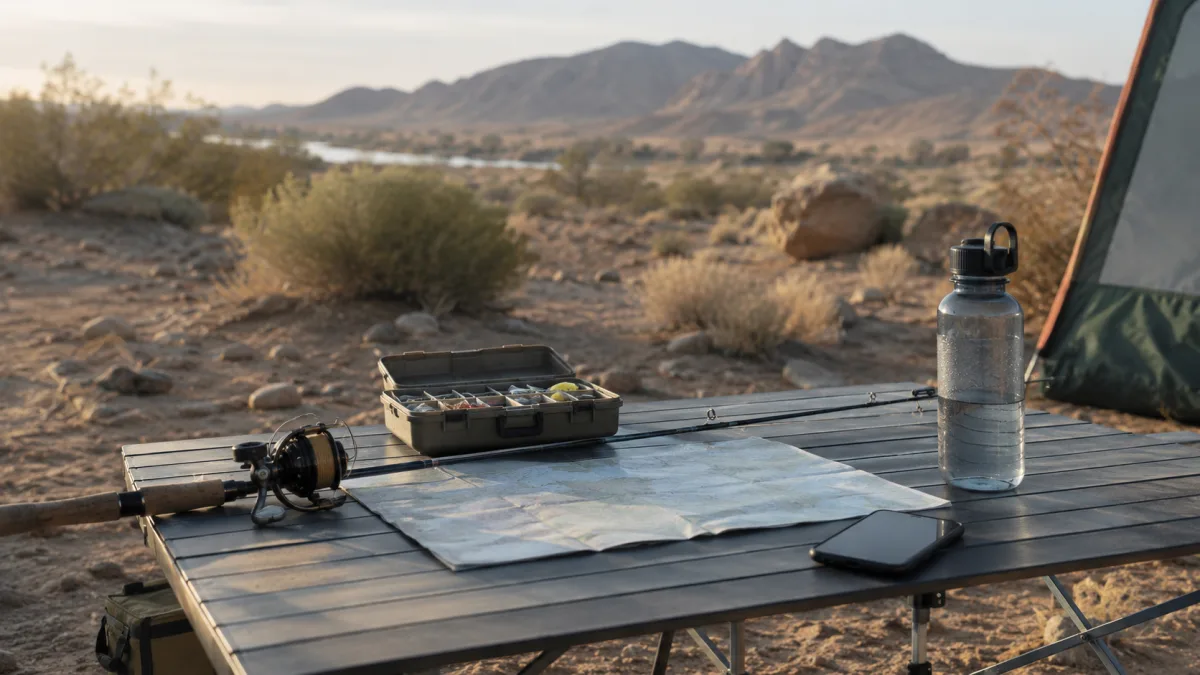
Check the current license requirement, the current fishing regulation booklet, special water rules, and any posted advisories. Arizona's official license and regulations page points anglers toward the current 2025 and 2026 fishing regulations, plus special-regulation tools.
Use the AZGFD licenses and regulations page before buying bait, booking a site, or promising kids a certain fish. The rule that matters is the one in effect for that water at the time of the trip.
Do not guess on limits. Species, size rules, and legal methods can change by water. A quick official check is cheaper than a citation and better for the fishery.
Which Arizona lakes are easy camping-and-fishing choices?
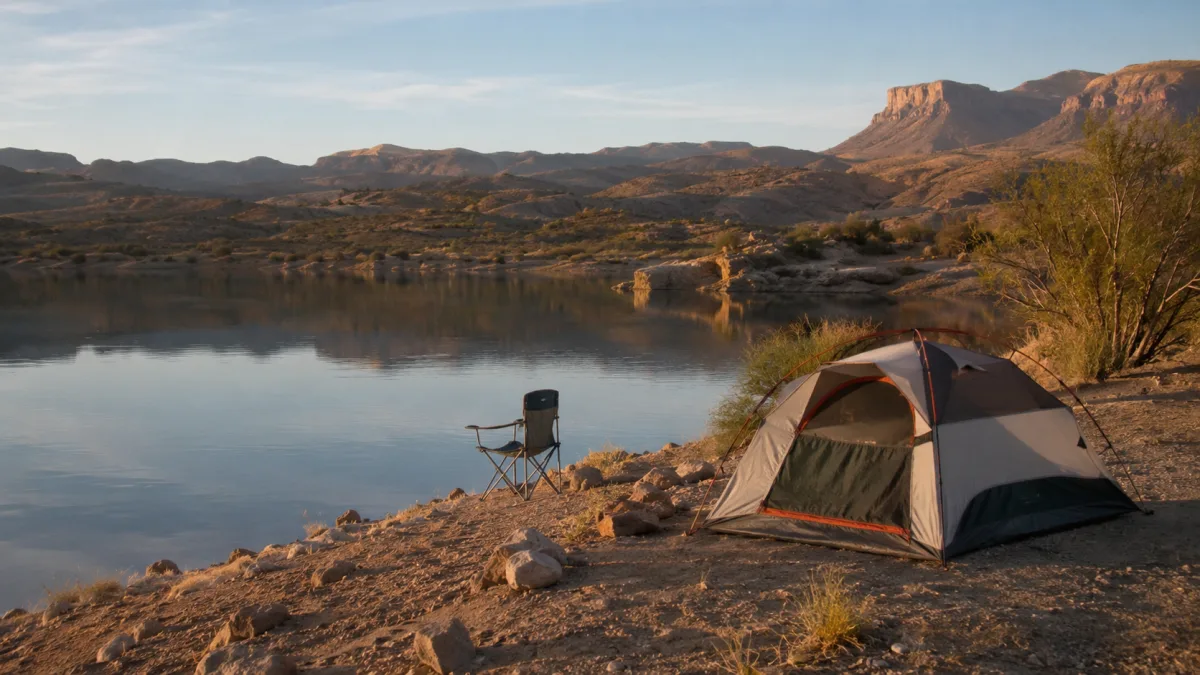
Easy does not mean identical. Some lakes are better for RV hookups, some for tent camping, some for cabins, and some for day-use fishing with a hotel nearby. Match the lake to your group before matching the lure to the fish.
Patagonia Lake
Patagonia Lake State Park is a southern Arizona option where camping, boating, fishing, hiking, and water recreation sit close together. The state park page describes anglers catching crappie, bass, bluegill, catfish, and trout, but current fishing expectations should still be checked with AZGFD.
Roper Lake
Roper Lake State Park near Safford offers lakeside camping, cabins, fishing, birding, and views toward Mount Graham. It can make sense for travelers who want a more contained park setting rather than a large reservoir with heavy boat traffic.
Fool Hollow and Lyman Lake
Fool Hollow Lake Recreation Area and Lyman Lake State Park are useful northern or eastern choices for campers who want cooler elevation, developed sites, and lake access. The Arizona State Parks Patagonia Lake page is one example of why park pages should be checked for facility and activity details before booking.
How do desert rivers change the plan?
Rivers are less predictable than a campground loop around a lake. Flow, access points, heat, flash-flood risk, private land, and shuttle logistics can change the whole day. A river plan should include entry, exit, backup water, and a way to stop early.
The Salt, Verde, Colorado, and Little Colorado corridors can create very different experiences. Some stretches feel like a busy recreation zone, while others require permits, local knowledge, or careful seasonal judgment. Do not use a social media photo as a map.
Water in the desert is not always easy water. A shallow-looking crossing, slick bank, or hot walk back to camp can turn a casual fishing stop into a hard afternoon.
River camps also need better trash control. Wind can move bait packaging, food wrappers, and line scraps quickly along a bank. Pack a small trash bag in the fishing kit itself so cleanup does not depend on walking back to camp after everyone is tired.
What gear and campsite choices matter most?
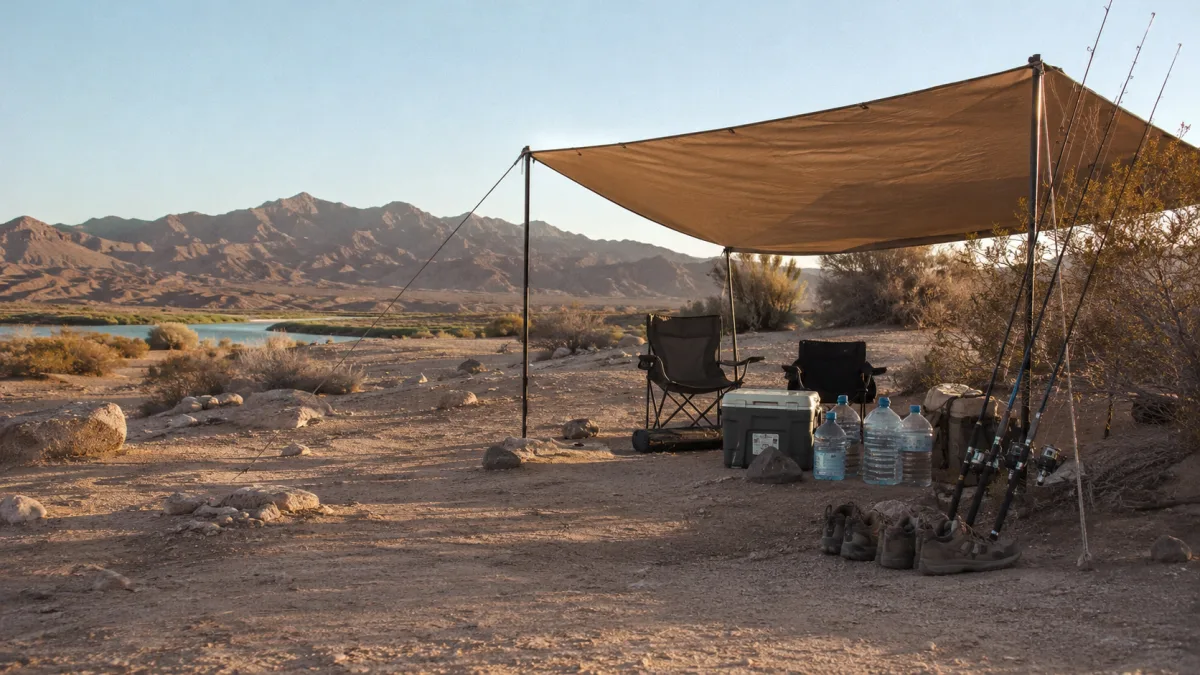
Bring shade, water, a cooler plan, a legal fishing setup, closed-toe shoes, headlamps, a first-aid kit, trash bags, and a way to secure food. In high country, add cold-night layers. In desert parks, add sun sleeves, electrolyte packets, and more water than the group expects to drink.
For walking from camp to shore, a simple adjustment can matter. Livecub's walking-stick adjustment guide is useful if the shoreline hike includes uneven rock, sand, or steep paths.
Book for the weakest camper, not the most excited camper. A site without shade, water nearby, or a reasonable bathroom walk may be fine for one adult and miserable for a tired child or older traveler.
Look at the campground map before choosing a site. Distance to water, bathrooms, dumpsters, and the boat ramp can shape the whole weekend. A quiet loop may be perfect for sleep and poor for carrying rods, chairs, and a cooler to the bank twice a day.
How do seasons affect Arizona fishing and camping?
Season is the trip design. Summer can push low-elevation camping into unsafe heat, while winter can bring cold nights at higher elevations. Monsoon storms can change roads, washes, lightning exposure, and river conditions quickly.
Spring and fall often give the broadest comfort range, but popular parks can fill. Check reservation windows, fire restrictions, and local alerts. A beautiful lake weekend can still fail if every shaded site is gone and the afternoon wind makes cooking difficult.
If you are planning a water-focused trip outside Arizona, Livecub's Skyline Drive waterfalls guide shows the same weather lesson: water access and foot safety change with conditions.
Elevation can surprise visitors. A desert city forecast does not describe a pine lake night, and a cool high-country morning does not remove sun exposure on open water. Bring layers and shade rather than assuming one weather app tile explains the whole route.
How can you keep the trip low impact?
Pack out fishing line, bait containers, broken gear, food scraps, and campsite trash. Monofilament can injure birds and wildlife long after a camper leaves. Keep fish cleaning waste where the park or agency allows it, not beside a swimming area or picnic table.
Respect quiet hours, boat ramp etiquette, and shoreline space. Anglers, families, paddlers, birders, and RV campers often share the same small access points. A clean, patient camp makes the lake better for everyone nearby.
Leave the shore boringly clean. That is the standard that keeps access open when heavy recreation pressure builds.
What should you do before leaving home?
Download maps, save reservation details, check license status, review the regulation page, confirm fire restrictions, and tell someone your route. If the park uses a gate code or late-arrival process, store it offline. Some rural areas do not reward phone-only planning.
Build a simple menu that works in wind and heat. Keep raw food cold, bring backup snacks, and do not rely on catching dinner. Fishing is better when the group still eats if the fish do not cooperate.
Check the vehicle too. Fuel range, tire condition, jumper cables, and a real spare tire matter more when the campground is far from town. A good campsite can feel remote in the wrong way if the truck will not start after sunset.
Frequently Asked Questions
Do you need a fishing license in Arizona?
Many anglers do. Check AZGFD's current license rules before the trip because age, residency, and water type can affect requirements.
Can you camp right beside Arizona lakes?
Sometimes. State parks, national forest sites, and recreation areas vary by site, reservation system, shoreline rule, and season.
What is the best season for Arizona lake camping?
Spring and fall are often easier for comfort, but higher elevations and desert reservoirs have different weather patterns.
Should beginners fish rivers or lakes first?
Lakes are usually simpler for beginners because access, parking, and safety boundaries are easier to read than river corridors.
Pick the water only after checking the rules. In Arizona, the better trip is usually the one planned around heat, access, current agency information, and actual campsite distance from the shore.

Chiara Bradshaw
Covers education, culture and creative topics with an emphasis on readable explanations and verifiable references.

Leave a reply
Replying to