
Pilates Calorie Burn Is Real, but It Varies
How many calories Pilates burns depends on body weight, class length, pace, exercise selection, rest time, resistance, and experience. A slow beginner mat class and a fast reformer jump-board class should not be treated like the same workout.
The Compendium of Physical Activities is a standard reference for estimating activity intensity with MET values. It is useful because calorie burn is best understood as an estimate, not a promise.
Pilates is not one calorie number. It is a method that can be gentle, moderate, or quite demanding depending on how it is taught.
Why Body Weight Changes the Number
Larger bodies generally burn more calories doing the same activity because moving and stabilizing more mass takes more energy. That does not make one workout better than another. It simply explains why two people in the same class can have different calorie totals.
Time matters too. A focused 20-minute session burns less than a 55-minute class, even if the exercises are similar. Rest periods, transitions, and instructor pacing also change the final estimate.
If weight loss is the main goal, Livecub's Tae Bo weight-loss guide is a useful contrast because higher-impact cardio usually has a different calorie profile than controlled Pilates work.
Mat Pilates vs. Reformer Pilates
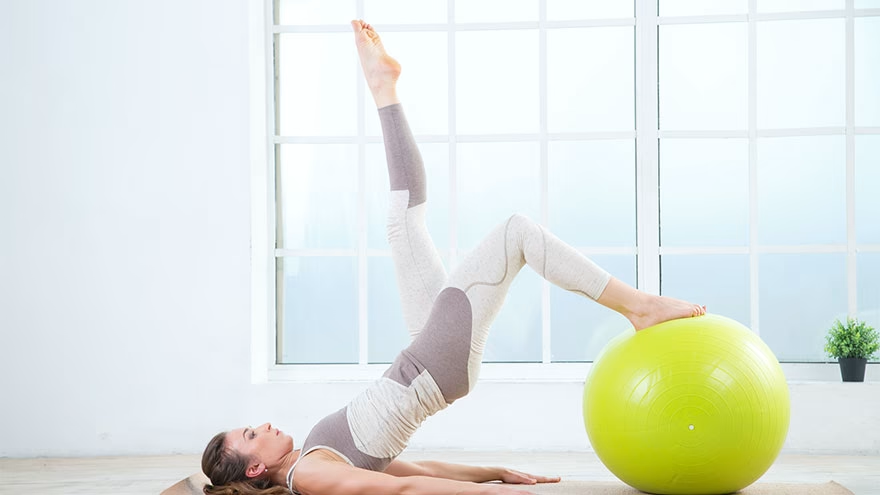
Mat Pilates uses body weight, floor positions, and sometimes small props. It can be gentle or difficult depending on tempo, range, and exercise choices. Beginners often spend more time learning control, which may keep intensity modest.
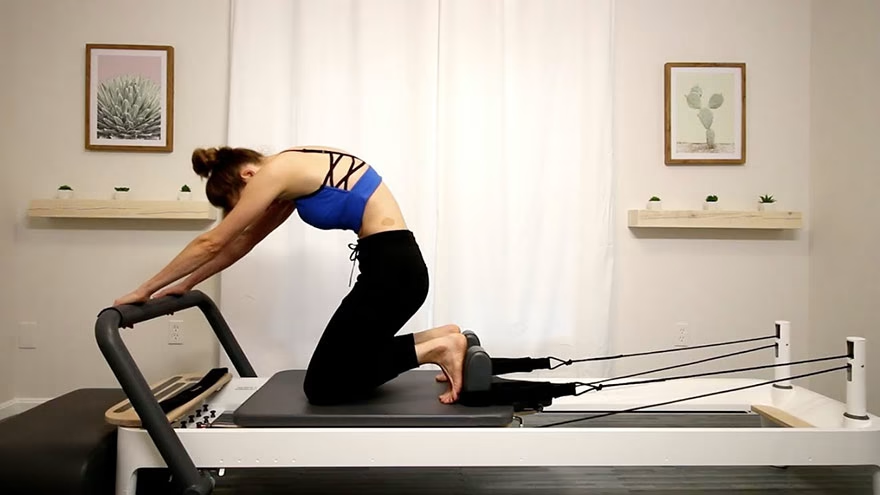
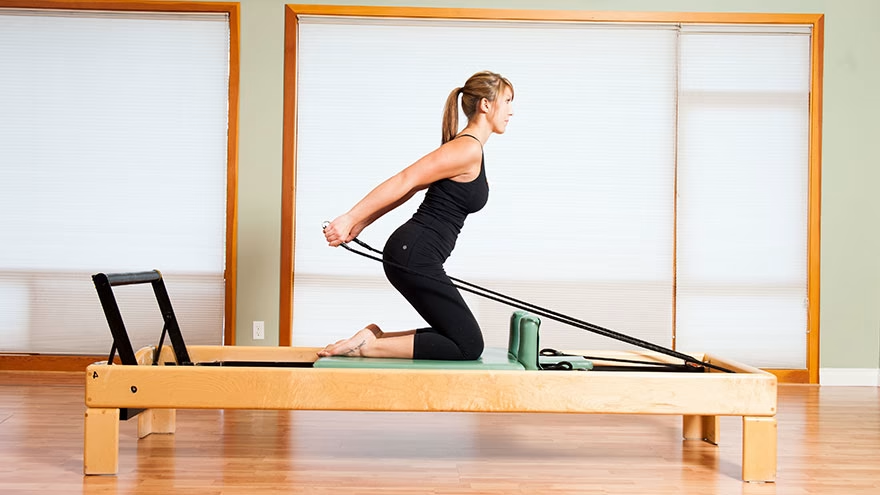
Reformer Pilates uses springs, a moving carriage, straps, and footbar work. The springs can add assistance or resistance. A reformer class may burn more calories than a quiet mat class if it moves quickly and uses larger muscle groups.
Livecub's jump board on the Pilates reformer guide shows how some reformer sessions can add more dynamic lower-body work.
Equipment changes the options, not the guarantee.
Beginner, Intermediate, and Advanced Classes
Beginner Pilates often burns fewer calories because the pace is slower and the focus is learning alignment, breathing, and control. That does not make it wasted time. Good form lets you work harder later without turning every move into strain.
Intermediate classes may reduce rest, add flow, use harder variations, and keep more muscles active at once. Advanced classes can feel intense, especially when they combine core work, balance, tempo, and resistance.
The American Council on Exercise's Pilates overview describes Pilates as a system focused on controlled movement, core strength, and alignment. That control is part of why the calorie number is not the only measure of value.
How to Estimate Your Own Burn
A simple estimate uses intensity, body weight, and time. Many fitness calculators use MET-based formulas, but the result is still an estimate because no formula knows how hard your specific class felt, how much you rested, or how skilled you were.
Wearable devices can help spot trends, but they can be wrong for floor-based exercise, isometric work, and resistance sessions. Treat the number as a rough guide, not a grade.
Use calorie estimates to compare patterns, not to judge one class in isolation.
A Simple Example
Imagine two people taking the same 45-minute Pilates class. One weighs less, one weighs more, and one knows the exercises well enough to move with less stopping. Their calorie numbers will differ even though the class title is identical.
Now change the class itself. A slow class with long explanations may feel educational but burn fewer calories. A continuous class with planks, standing work, resistance, and short transitions may raise effort noticeably.
This is why a calorie range is more honest than a single number. The class name is only the beginning of the estimate.
What Makes Pilates Feel Harder
Pilates feels harder when movements are slower, cleaner, deeper, and more continuous. Holding alignment while moving one limb can be more demanding than rushing through many sloppy repetitions.
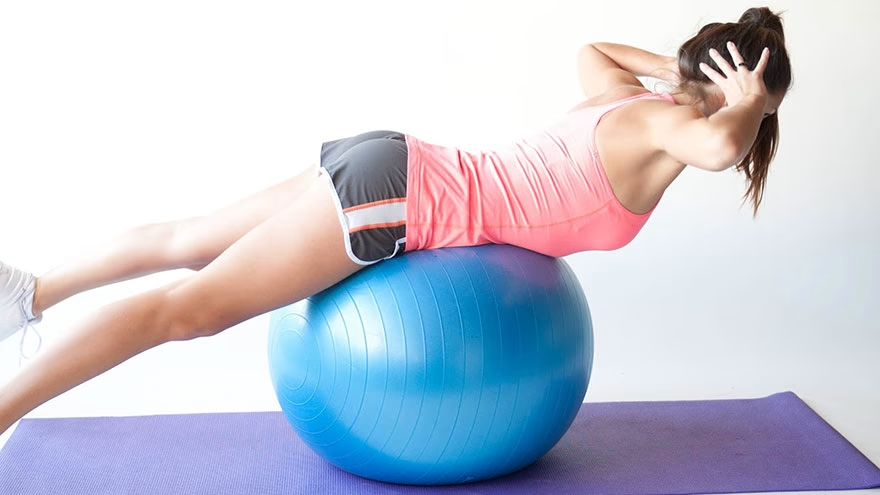
Resistance also matters. Springs, rings, bands, balls, ankle weights, and jump boards can increase effort when used well. So can transitions that keep the class moving.
Livecub's Pilates or Tai Chi comparison can help readers think beyond calorie burn and compare control, balance, mobility, and training feel.
Intensity Clues During Class
You can usually tell whether a Pilates class is light, moderate, or hard by paying attention to breathing, heat, muscle fatigue, and how much conversation is possible. If you can chat easily the whole time, the calorie burn is probably modest.
If breathing is deeper, transitions are steady, and muscles are working without sharp pain, the class is likely more demanding. If form collapses, the class may be too hard for that day, even if the calorie estimate looks appealing.
Harder is useful only when control stays present.
Calories Are Not the Only Reason to Do Pilates
Pilates may help people build body awareness, core endurance, posture habits, mobility, breathing control, and strength through range. Those benefits do not always show up neatly in a calorie total.
CDC's adult physical activity guidance encourages adults to add movement in ways that fit their lives. Pilates can be one part of that routine, especially when paired with walking, cardio, or strength work if those goals matter.
If you want more traditional cardio vocabulary, Livecub's basic aerobic steps article gives a different lens for movement intensity.
Pairing Pilates With Other Training
If you want a higher weekly calorie burn, Pilates may work best beside walking, cycling, swimming, dance, strength training, or another cardio activity. That pairing lets Pilates support control and strength while other sessions add more sustained movement.
Do not stack hard workouts without recovery. A sore, tired body often moves worse, and poor form can make Pilates less useful. Build a week you can repeat instead of chasing one impressive session.
Livecub's running bleachers benefits article shows a more intense conditioning option, but it should be matched to fitness level and joints.
Food, Weight Goals, and Expectations
Calorie burn from Pilates is only one side of weight management. Food intake, sleep, stress, hormones, medication, health conditions, and total daily movement all matter. A class can be worthwhile even if it does not create dramatic scale change.
Be careful with online claims that promise a flat stomach or guaranteed fat loss from one Pilates routine. Pilates can build strength and body awareness, but no single class controls every factor that affects weight.
Realistic expectations make consistency easier.
Better Ways to Track Progress
If calorie numbers feel unreliable, track signals that Pilates is actually changing your practice. Notice whether you can hold positions longer, transition with more control, breathe more steadily, or recover faster between exercises.
You can also track attendance, class level, perceived effort, sleep, soreness, and how your body feels during daily tasks. Those measures often show progress before a wearable number does.
For weight-focused goals, use a wider view. Look at weekly movement, nutrition habits, and consistency rather than judging one Pilates class as a success or failure.
How to Burn More Calories Safely
To increase calorie burn, extend class length, reduce unnecessary rest, choose a more active class, add reformer resistance, try a jump-board session, or pair Pilates with walking or cardio. Do this gradually.
Do not trade form for speed. Rushing through Pilates can reduce the training effect and raise the chance of irritation. If a class hurts in a sharp or unusual way, stop and ask for modification.
Increase one variable at a time. Add minutes, pace, resistance, or weekly frequency slowly so you can tell what your body handles well and what leaves you overly sore the next day.
That feedback is more useful than chasing a perfect calorie estimate after every single class session.
Effort should feel controlled, not chaotic.
Frequently Asked Questions
How many calories does a 30-minute Pilates class burn?
It varies by body weight, class type, and intensity. A gentle mat session may burn modestly, while a harder reformer class may burn more.
Does reformer Pilates burn more than mat Pilates?
It can, especially when the class moves quickly or uses stronger resistance, but class design matters more than equipment alone.
Is Pilates good for weight loss?
Pilates can support a fitness routine, but weight change depends on total activity, food intake, sleep, stress, health factors, and consistency.
Should I track Pilates calories with a watch?
You can, but treat the number as an estimate. Use it for trends rather than exact accounting.

Linda Fehrman
Edits general wellness and relationship explainers. Health material is educational, avoids diagnosis and links to health-authority guidance.
Leave a reply
Replying to