
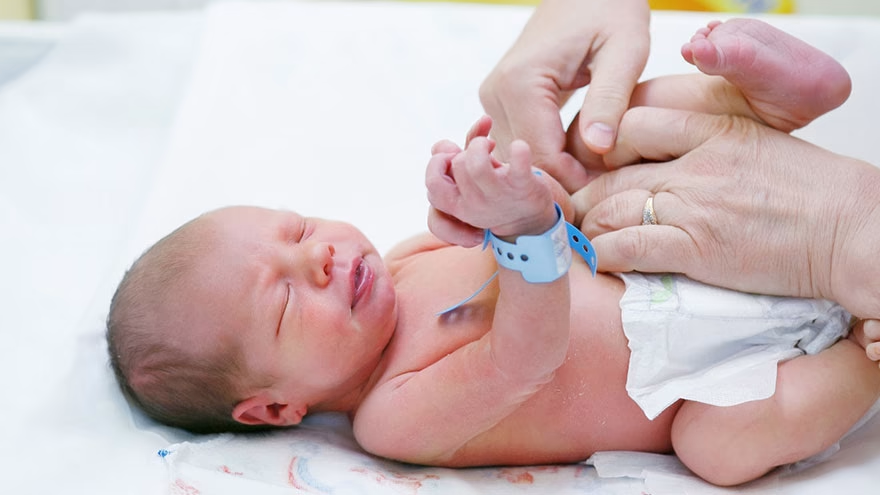
How to Care for a Circumcised Infant is a medical aftercare topic, so the safest guide is specific, calm, and clear about when to call a doctor. Follow the instructions from your baby's clinician because devices, dressings, and healing expectations can differ by procedure and hospital.
This article is educational and does not replace pediatric care. Call your baby's doctor, hospital nursery, or urgent care line if you are unsure about bleeding, swelling, urination, fever, pain, or the way the area looks.
Know What Instructions You Were Given
Before leaving the hospital or clinic, confirm whether the circumcision has a gauze dressing, petroleum jelly only, a plastic ring device, or other specific care. Ask how long healing should take, how to clean, when bathing is allowed, and what bleeding is too much.
If your baby was premature or had medical issues, care may need extra caution. Livecub's premature baby development guide is not about circumcision, but it reminds parents that smaller or medically fragile babies may need more individualized follow-up.
Write the instructions down or take a photo of the discharge sheet. Tired parents are expected to forget details. Keep the office number, after-hours number, and pharmacy number in the same place as the diaper supplies for the first few days.
Change Diapers Often

Change wet or dirty diapers promptly so urine and stool do not sit against the healing area. Use gentle handling and avoid rubbing. Fast diaper changes also give you more chances to check that the baby is urinating normally.
A newborn should have wet diapers as expected for age. If your baby does not urinate within the time frame your clinician gave, call. Many aftercare instructions use no urine within 6 to 8 hours as a reason to contact a doctor, but follow your discharge sheet.
During the first day, it can help to write down diaper times and wet diapers. This is not meant to make parents anxious. It gives you clear information if you need to call the nursery or pediatrician. Clear notes can make a late-night call easier.
Clean With Plain Water Unless Told Otherwise
HealthyChildren's circumcision guidance tells parents to keep the area clean and to follow the clinician's instructions. In general, plain warm water and a soft cloth are enough. Avoid alcohol wipes, hydrogen peroxide, powders, fragranced products, and strong soap on the healing area unless your baby's doctor says otherwise.
Livecub's infant washing guide can help with gentle bath thinking, but circumcision aftercare should follow medical instructions first. Until the area heals, many clinicians recommend sponge baths instead of soaking.
If stool gets on the area, clean gently from cleanest to dirtiest with warm water. Do not scrub off every bit of yellow healing film. If you cannot tell the difference between normal healing and drainage, call and describe what you see.
Use Petroleum Jelly If Directed
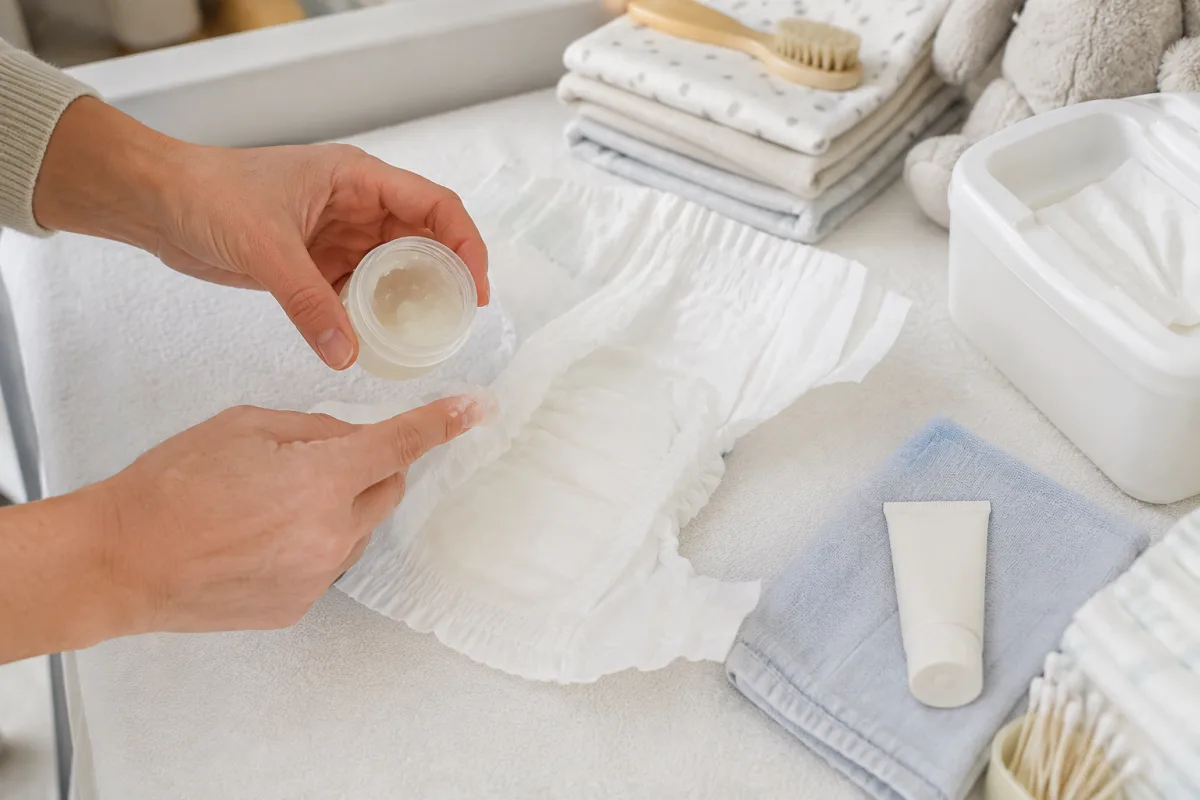
Many clinicians advise petroleum jelly on the tip of the penis or on the diaper to keep the area from sticking. KidsHealth's circumcision overview notes that petroleum jelly may be used on the circumcision area during diaper changes.
Use clean hands and a clean amount each time. Do not dig fingers into a jar after touching the diaper area. If gauze is used, change it exactly as directed. Some devices do not need gauze, so do not copy another parent's instructions.
If the diaper sticks, do not yank it away. Moisten the area with warm water if your instructions allow, wait a moment, and loosen gently. Pulling stuck gauze or diaper material can restart bleeding.
What Normal Healing Can Look Like
The tip may look red, swollen, shiny, or yellowish while healing. A small amount of spotting can happen. Mild fussiness during diaper changes is also common. Healing usually improves day by day, not hour by hour.
Mayo Clinic's circumcision page says parents should contact the doctor if there is persistent bleeding, trouble urinating, fever, or signs of infection. Use those warning signs seriously.
Take a daily photo only if your clinician recommends monitoring and you can store it privately. Some parents find photos useful when calling the office, but the image is sensitive medical information and should not be shared casually.
Bleeding: What To Watch
A few spots in the diaper can be expected, but active bleeding is different. Call right away if blood soaks the diaper, keeps dripping, forms clots, or does not stop with the pressure method your clinician taught. Do not guess with a newborn.
If your discharge instructions include gentle pressure with clean gauze, follow them. If you were not taught what to do, call the doctor instead of improvising.
Swelling, Redness, And Infection Signs
Call for increasing redness, spreading swelling, pus, bad odor, fever, the baby becoming very sleepy or hard to wake, poor feeding, or worsening pain. Cleveland Clinic's circumcision information also lists bleeding, infection, and urination problems among concerns to discuss with a provider.
Livecub's baby rash and blister guide may help with general skin awareness, but do not self-treat circumcision swelling or drainage as a simple rash.
Handle Your Baby Comfortably
Support the baby during diaper changes and avoid pressing the diaper tightly against the area. Point the penis downward into the diaper if your clinician recommends it. Fasten the diaper loosely enough to avoid friction but securely enough to prevent leaks.
Comfort can include feeding, holding, swaddling if safe for the baby's age and sleep plan, and a calm room. If your baby seems inconsolable or pain seems severe, call the clinician.
Ask before giving any pain medicine. Newborn dosing depends on age and weight, and some medicines are not appropriate. Do not use numbing creams, herbal products, powders, or leftover medication on the area unless the baby's clinician prescribed it.
Bathing And The First Week
Ask when soaking baths can resume. Many families are told to use sponge baths until the circumcision has healed, but timing varies. Do not pull at a ring device or dressing. Let healing happen according to the method used.
Set up the changing area before you begin: clean diaper, wipes or soft cloth, petroleum jelly if directed, clean gauze if directed, and a bag for trash. Livecub's baby-proofing guide is for older movement stages, but the same preparation mindset helps newborn care feel less frantic.
If a plastic ring was used, ask when it should fall off and what to do if it shifts, hangs unevenly, or does not come off in the expected window. Different methods have different normal timelines.
When To Call Immediately

Call urgently for no urination in the instructed time frame, fever, persistent bleeding, baby not feeding, baby hard to wake, blue or black discoloration, worsening swelling, foul drainage, or any concern that feels serious. If your baby looks very ill, seek emergency care.
Do not wait for an online article to reassure you if your instincts say something is wrong. Newborns change quickly, and medical teams would rather answer a cautious call than miss a complication.
When calling, say the baby's age, circumcision date and method, last wet diaper, temperature, feeding pattern, what you see, and whether bleeding is spotting or active flow. Specific details help the nurse or doctor decide how fast the baby needs to be seen.
Frequently Asked Questions
How long does circumcision healing take?
Many newborns heal over about a week to 10 days, but timing depends on the method and the baby. Follow your clinician's guidance.
Is yellow color on the tip normal?
A yellowish film can be part of healing, but pus, foul odor, fever, or worsening redness should be checked.
Should I use petroleum jelly?
Use it if your baby's clinician instructed it. Some methods require different dressing care.
Can I give a full bath?
Ask your clinician. Many parents are told to use sponge baths until healing is farther along.
What bleeding is too much?
More than small spotting, bleeding that soaks a diaper, clots, or bleeding that does not stop should be reported right away.
Should I pull back any remaining skin?
No. Do not pull, stretch, or force skin around the area. Ask your baby's clinician what gentle cleaning should look like.
Calm, Clean, And Watchful
Care for a circumcised infant by following the discharge instructions, changing diapers often, cleaning gently, using petroleum jelly or gauze only as directed, and calling promptly for bleeding, fever, urination trouble, or infection signs.

Cashie Evans
Covers parenting and practical household topics with clear steps, safety notes and links to current guidance.




Leave a reply
Replying to