
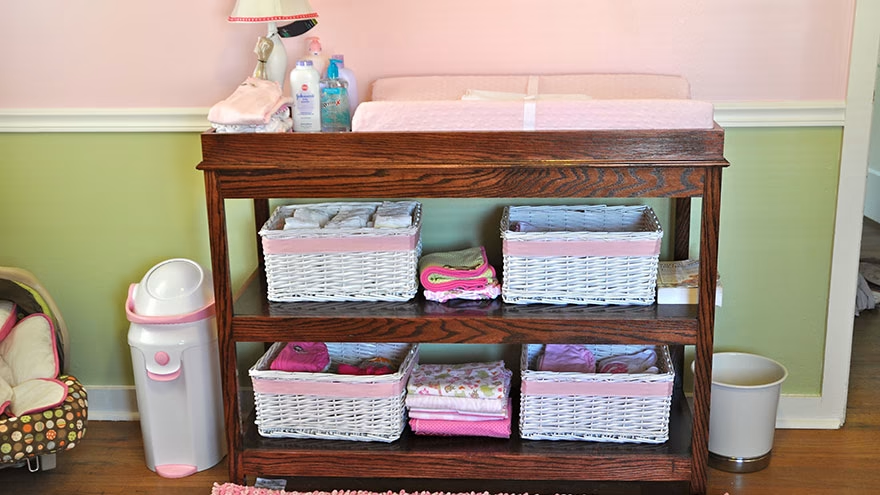
A stocked changing table should not look like a store shelf. It should help one tired adult change one baby without turning away.
The rule is simple: everyday supplies within reach, hazards out of reach, and one hand on the baby.
Stock For Reach, Not Clutter
AAP's changing table safety guidance warns that falls from a high surface can be serious: AAP changing table safety. A stocked changing table should let an adult keep one hand on the baby and avoid turning away.
The right supplies are the ones used every day, placed where they can be reached safely.
Start With Diapers And Wipes
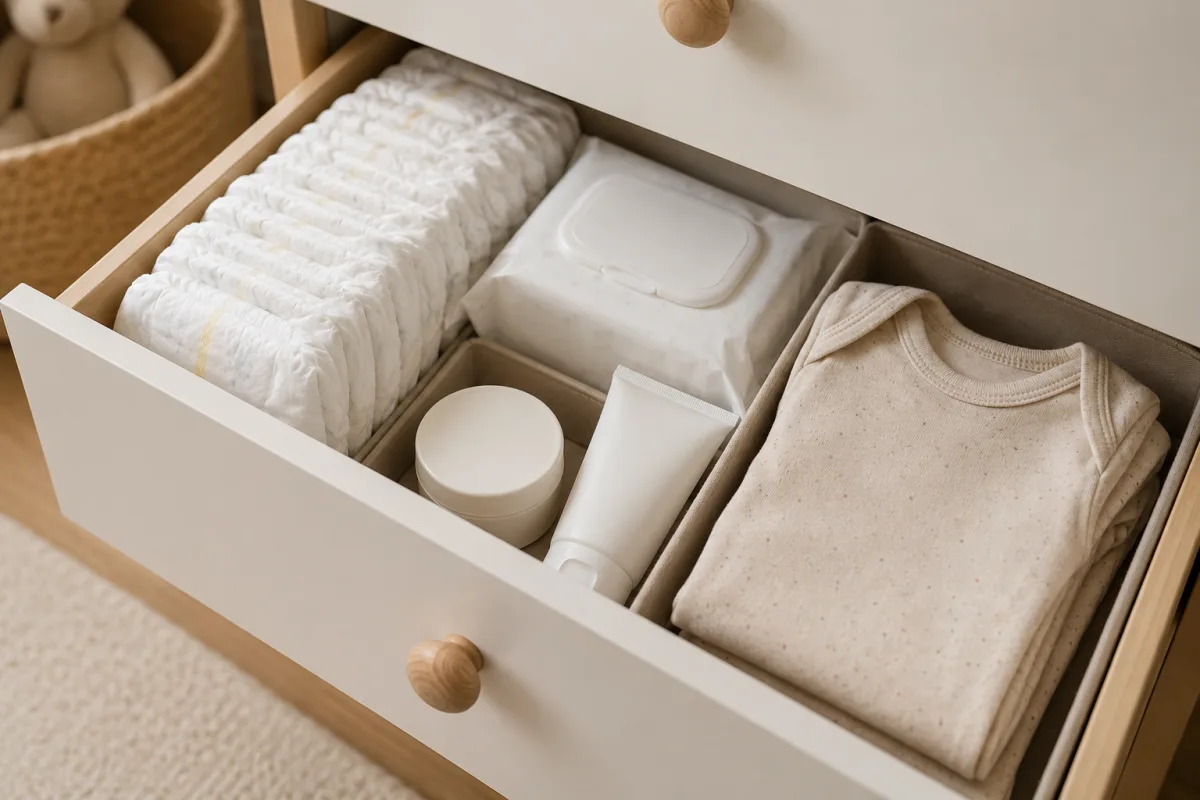
Keep the current diaper size, wipes, diaper cream if used, a few spare covers or clothes, a changing pad cover, and a trash or diaper pail nearby.
If you are planning before birth, Livecub's guide to emotional support during early labor can help a support person prepare the station while the birthing parent rests.
Keep Hazards Out Of Reach
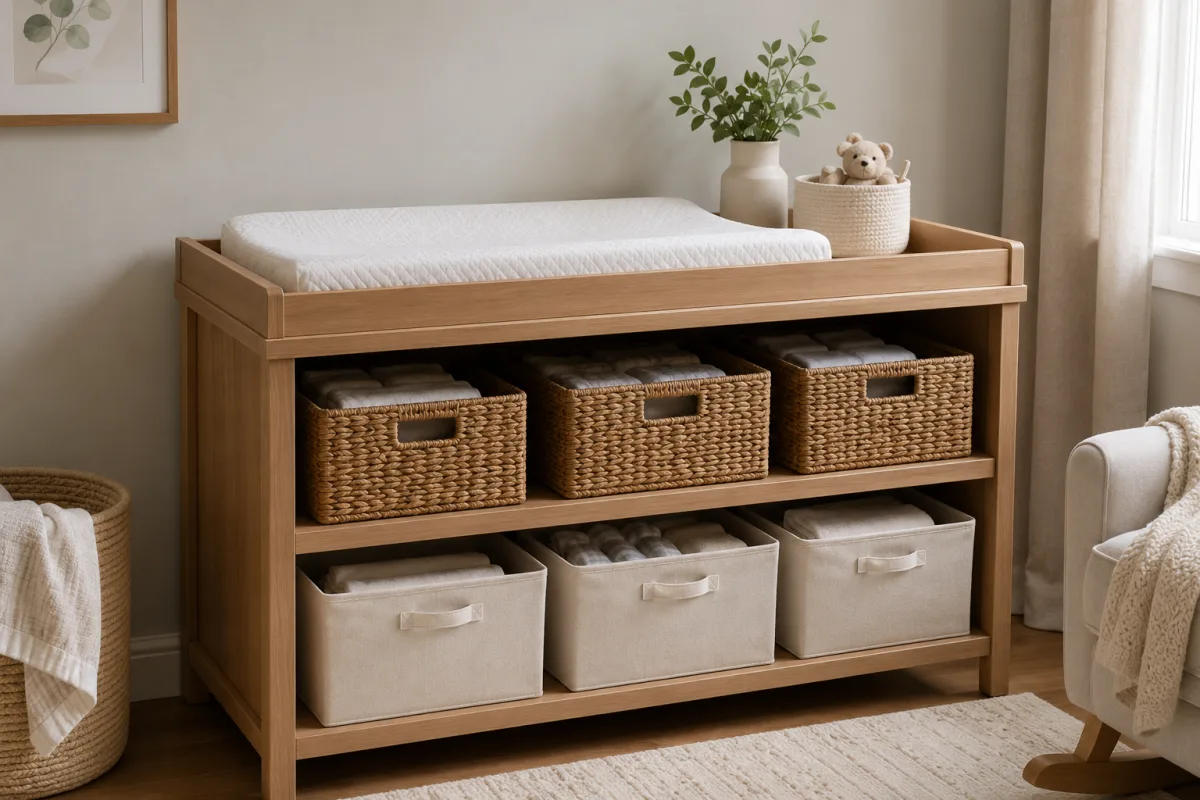
CPSC baby changing product guidance describes changing tables as products meant to support and retain a child during diaper changes: CPSC baby changing products guidance. That does not make it safe to leave medicines, creams, cords, plastic bags, or small objects where the baby can grab them.
Store adult items away from the changing surface.
Use The Floor When Needed
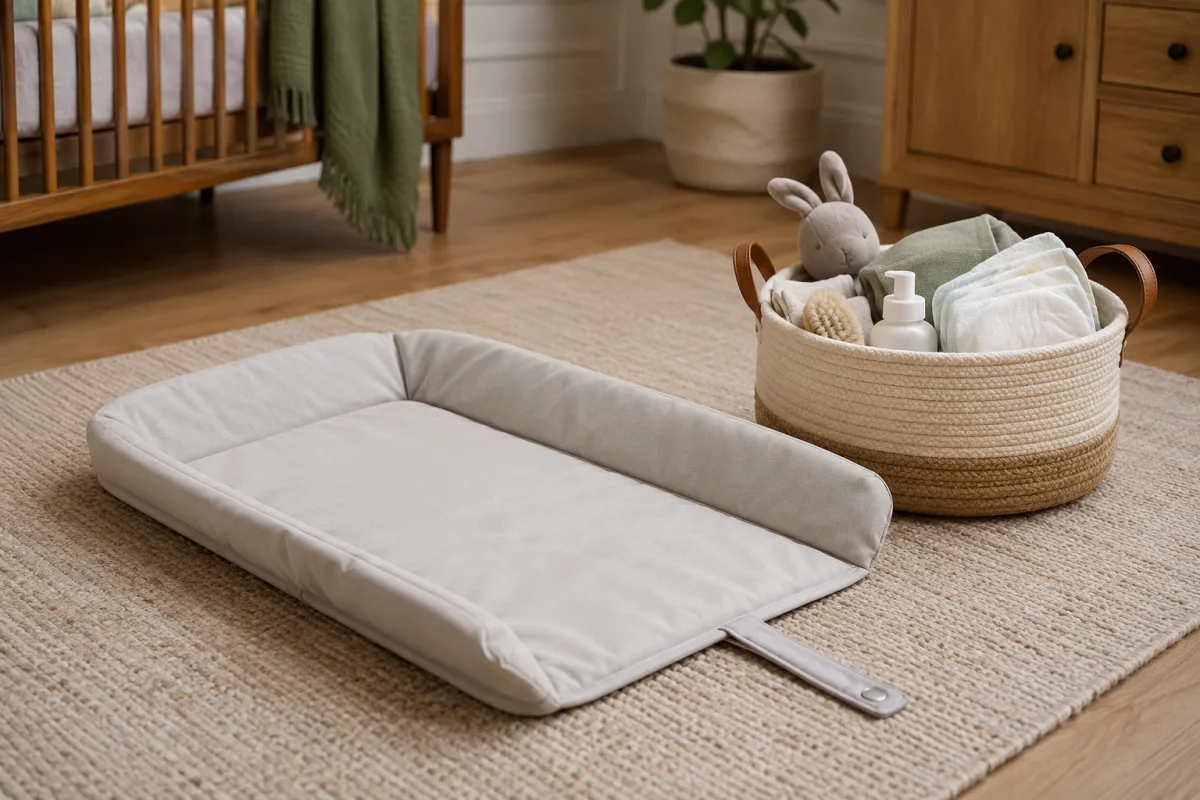
AAP's baby room checklist also notes the seriousness of changing table falls: AAP baby room safety checklist. If the baby is rolling hard, the adult is dizzy, or the surface feels crowded, use a clean pad on the floor.
Safe beats convenient every time.
Add Comfort For The Adult
Keep water, a burp cloth, and a clean shirt nearby if recovery or feeding makes changes harder. Livecub's guide to depression during pregnancy can help if postpartum or pregnancy mood symptoms make basic care feel overwhelming.
If body changes are still raw, Livecub's guide to feeling attractive during pregnancy can help keep comfort and self-respect in the room too.
Start With Safety Before Style
For stock a changing table, the safest setup is usually the simplest one. Before choosing colors, baskets, or matching furniture, decide where the baby will sleep, where diapers will be changed, and where supplies will be stored.
Style can come later. The early layout should make the safest action easy when an adult is tired, sore, or holding a crying baby.
Measure The Room On Paper
Write down wall lengths, door swings, outlets, window locations, vents, closet clearance, and the path from bed to crib. Then place furniture on paper before moving anything.
A small room often works better when the crib, changing area, and feeding chair are planned as separate jobs rather than one decorated corner.
Keep Sleep Space Boring
A safe sleep space does not need pillows, plush toys, loose blankets, bumpers, wedges, or decorative extras. Those items can look sweet in photos and still create risk.
Use the product manual, a firm flat sleep surface, and a fitted sheet that belongs with that mattress size.
Anchor Tall Furniture
Dressers, bookcases, storage cubes, and shelves should be anchored before the baby is mobile. A newborn cannot climb, but the room will be used for years.
Do not wait for crawling to start. Anchoring is easier before drawers are full and the room is crowded.
Store Supplies One-Handed
Diapers, wipes, cream, spare clothes, trash bags, and burp cloths should be reachable without stepping away from the baby.
If something cannot be reached with one hand, move it lower or closer. The best storage plan prevents the adult from turning away at the wrong moment.
Check Recalls And Manuals
Secondhand gear should be checked for recalls, missing parts, broken locks, loose screws, and the correct manual. A bargain is not useful if the product cannot be set up as designed.
Save manuals in one folder or phone album. Sleep products and changing products often have weight, height, mattress, and assembly limits.
Practice The Night Version
Walk through the room in low light. Can you reach diapers, find a clean outfit, place a bottle or water glass safely, and move without tripping?
Night use exposes problems that daylight decorating misses. Fix those now, not during a 3 a.m. diaper change.
Revisit After Baby Moves
The setup that works for a newborn may need changes once rolling, grabbing, sitting, crawling, or pulling up begins.
Plan to edit the room. Remove hanging cords, move small objects, lower the crib mattress when needed, and retire gear that the baby has outgrown.
Keep A Short Buy List
How to Stock a Changing Table can turn into a long shopping list fast. Keep the first list plain: safe sleep, diapers, wipes, changing surface, clothes, feeding needs, and a way to wash or store soiled items.
Buy the rest after you learn the baby's size, feeding pattern, skin needs, and the layout that actually works in your home.
Let Convenience Serve Safety
Convenience is useful only when it reduces risk. A basket near the changing area is helpful; loose items in the crib are not.
The best nursery choices are usually quiet ones: stable furniture, clear floor space, working lights, and fewer things within reach.
Put Heavy Things Low
Heavy items belong low and secured. High shelves can be useful for spare wipes or extra sheets, but they should not hold anything that could injure a baby or caregiver if it falls.
In small rooms, low closed storage often works better than tall open storage that invites overpacking.
Keep Cords Away From Sleep And Change Areas
Window cords, monitor cords, lamp cords, and charger cords should not hang near the crib, changing surface, or future play area.
Move furniture away from windows if cords or blinds cannot be made safe. A tidy cord is still a hazard if it is within reach.
Choose Washable Over Decorative
Baby spaces get milk, spit-up, diaper leaks, and ointment on them. Washable surfaces and spare covers save more stress than delicate decor.
If an item cannot be cleaned easily, it should earn its place before it enters the room.
Make The Exit Path Clear
A caregiver may need to leave the room quickly while holding the baby. Keep the path to the door clear of hampers, boxes, bags, and loose rugs.
This matters more at night, when balance and attention are not at their best.
Create A Refill Spot
Keep bulk diapers, wipes, sheets, and clothes somewhere outside the working zone. The changing area only needs a short supply within reach.
A refill spot keeps the main surface clear while still making restocking easy.
Edit After The First Week
After the baby arrives, the room will tell you what is too far away, what is unused, and what keeps landing on the floor.
Edit the setup after a few real nights. A practical nursery is built through use, not only before birth.
Keep Manuals With The Gear
Tape the manual inside a closet door, save the PDF on your phone, or keep all manuals in one folder. The safest setup is easier when the instructions are not missing.
Manuals also help grandparents, babysitters, and partners use the product without relying on memory.
Avoid Aftermarket Fixes
Extra pads, replacement mattresses, clip-on accessories, straps, wedges, and improvised repairs can change how a baby product works.
If a part is missing or broken, contact the manufacturer or stop using the product. A homemade fix is not the same as a tested setup.
Plan For Laundry Flow
Small baby spaces fail when dirty clothes, sheets, and burp cloths have nowhere to go. Add a washable hamper or bin before the first week gets messy.
A clear laundry path keeps the crib, chair, and changing surface from becoming storage spots.
Keep Visitors From Rearranging Safety
Visitors may add blankets, toys, pillows, or keepsakes because they look sweet. Decide in advance where gifts go when they are not safe for the crib.
A simple basket outside the sleep area protects the setup without turning every visit into an argument.
Frequently Asked Questions
What should be on a changing table?
Diapers, wipes, cream if used, spare clothes, covers, trash bags, and a few burp cloths are good basics.
What should not be on it?
Keep medicines, cords, plastic bags, small objects, open creams, and breakable items away from the baby.
Should I use straps?
Use products as directed, but never rely on straps as a reason to step away.
When should I change on the floor?
Use the floor if the baby rolls, the surface is crowded, or the adult cannot keep a hand on the baby.
How many diapers should I keep there?
Keep enough for a day or two, then refill. Overloading the surface creates clutter.
This article is for general information only and is not medical, pregnancy, labor, or emergency advice. Contact your obstetric care team for personal guidance and call emergency services for urgent symptoms.

Linda Fehrman
Edits general wellness and relationship explainers. Health material is educational, avoids diagnosis and links to health-authority guidance.



Leave a reply
Replying to