
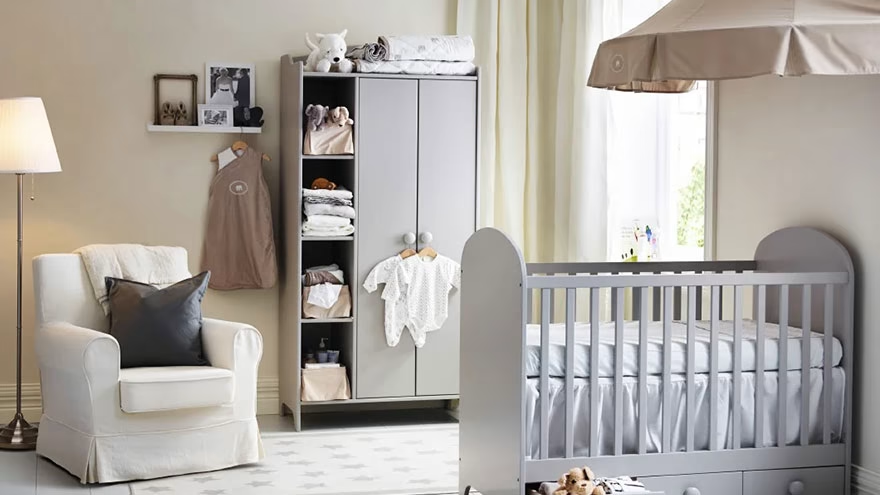
Preparing an Apartment for a Newborn is mostly about safe sleep, clean air, simple storage, feeding stations, and making nighttime care possible in a small space.
A newborn does not need a perfect nursery. In an apartment, the best setup is usually compact, boring, washable, and easy to use when everyone is tired.
Start With The Sleep Space
Choose a crib, bassinet, or play yard that is intended for infant sleep and fits your room. The sleep area should be flat, firm, and separate from the adult bed.
AAP safe sleep guidance says babies should sleep on their backs, in their own sleep space, on a firm flat mattress with a fitted sheet: AAP safe sleep guidance.
In a small apartment, room sharing often makes more sense than trying to create a separate nursery.
Keep The Sleep Space Bare
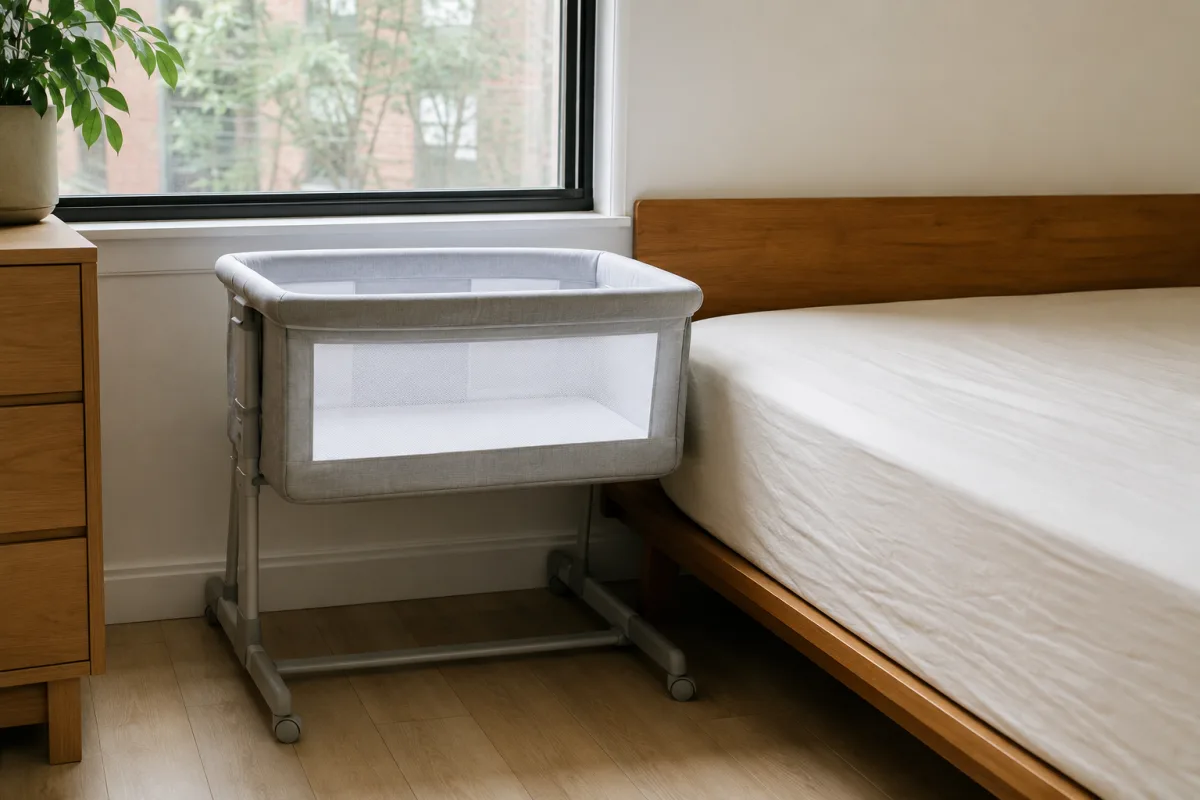
Skip pillows, loose blankets, crib bumpers, stuffed animals, positioners, and decorative bedding in the baby's sleep area.
CPSC's safe sleep page says to use products intended for sleep and remembers Bare is Best, with nothing but a fitted sheet in the crib, bassinet, or play yard: CPSC safe sleep.
A plain sleep space can look unfinished online, but it is the safer choice.
Plan For Smoke-Free Air
Secondhand smoke can travel through shared buildings, hallways, balconies, and open windows. Set a no-smoking rule for the apartment and car before the baby arrives.
CDC says secondhand smoke is harmful and is linked with SIDS, respiratory infections, ear disease, and asthma problems in children: CDC secondhand smoke.
If neighbors smoke and it enters your unit, document when it happens and ask the landlord about sealing gaps or smoke-free policies.
Create A Night Station
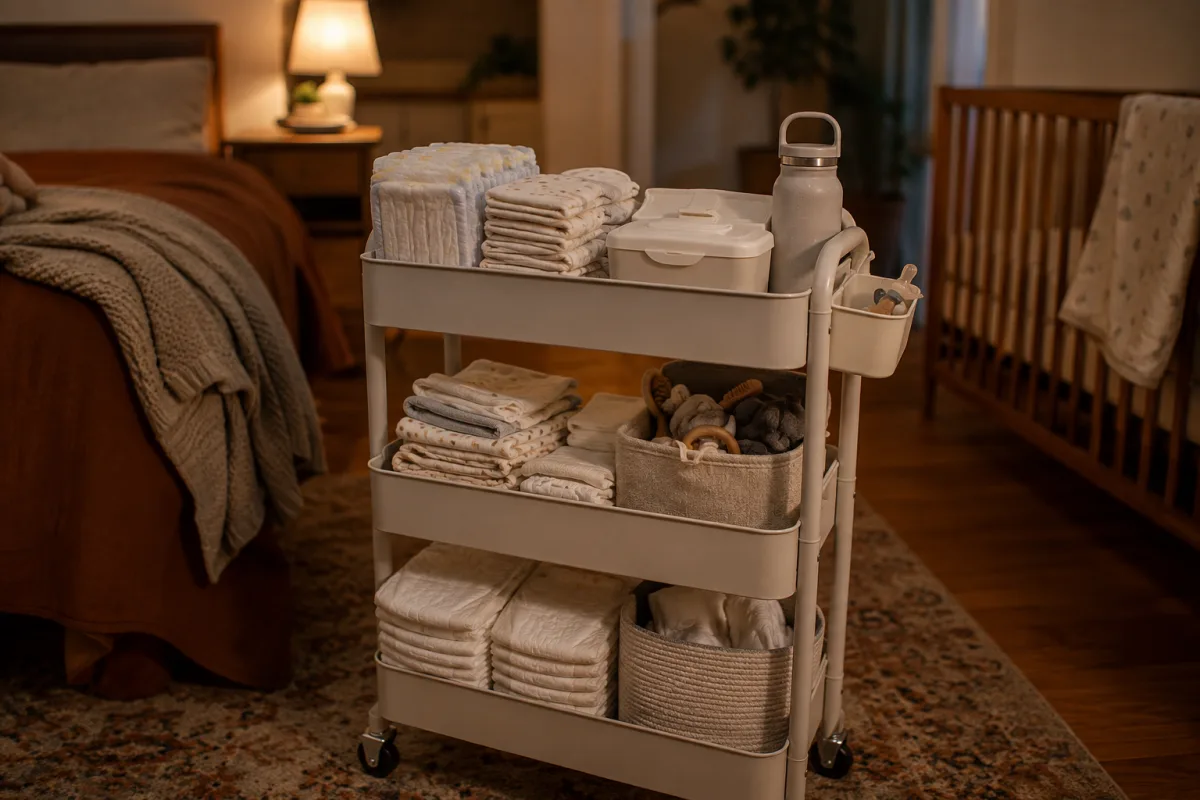
Put diapers, wipes, burp cloths, a change of clothes, water, snacks, and a dim light within reach of the sleep area.
Use a small cart, drawer, or basket instead of spreading supplies across the apartment. Night care gets harder when supplies migrate.
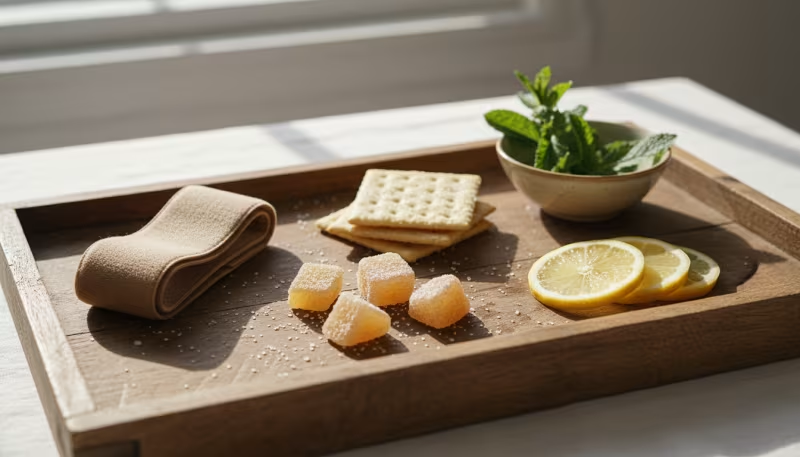
If you are still pregnant and nausea is making prep hard, bland pregnancy foods may help you keep simple food nearby.
Make Feeding Practical
For breastfeeding, set up water, snacks, burp cloths, nipple care if recommended, and a place to put your phone safely. For formula, plan clean bottle storage and washing space.
Do not let a tiny kitchen become chaotic. One drying rack, one bin for clean bottles, and one place for formula or pump parts can prevent mess.
If visitors want to help, ask them to wash bottles, refill water, or bring food instead of holding the baby the whole time.
Use Vertical Storage
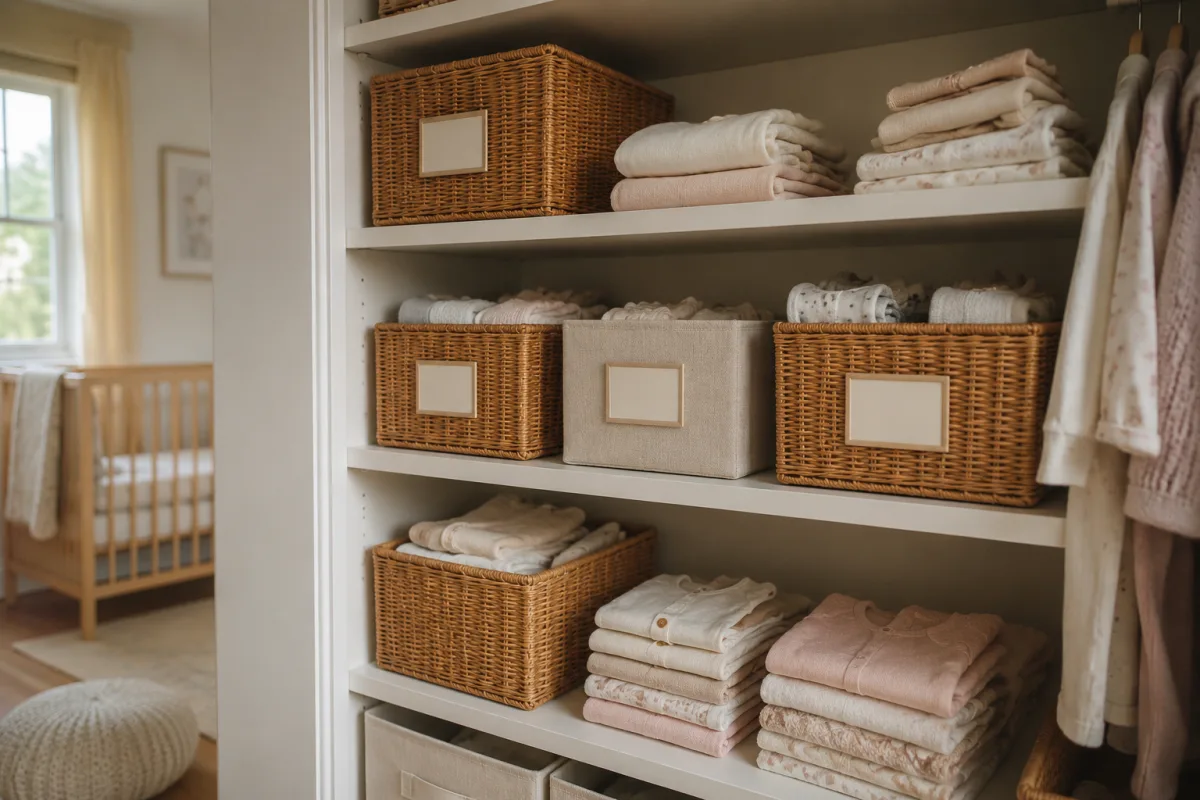
Apartments often lack floor space. Use door organizers, under-bed bins, closet shelves, and labeled baskets for diapers, clothes, blankets, and medical supplies.
Keep daily items reachable and extras stored away. Newborn laundry is small, but the volume grows quickly.
Avoid stacking heavy items above the changing area or sleep space.
Set Up A Safe Changing Area
A changing pad on a low dresser, a floor mat, or a portable pad can work. The safest changing area is one where supplies are close and the baby is never left unattended.
Use one hand on the baby if changing on a raised surface. Newborns can surprise you with movement.
Keep creams, nail clippers, medication, and plastic bags out of reach as the baby grows.
Reduce Trip Hazards
Night feeds and diaper changes happen when adults are half awake. Clear cords, loose rugs, laundry piles, and boxes from the walking path.
Use a dim night light in the route from bed to bathroom or kitchen. Bright overhead lights can wake everyone more than needed.
If you have stairs or a long hallway, think through carrying the baby while tired before the first night home.
Prepare For Visitors
Small apartments can become crowded fast. Decide visitor rules before birth: who can come, how long they stay, handwashing, illness rules, smoking rules, and food help.
A sign on the door or a text template can feel awkward, but it saves energy when you are recovering.
If family announcements are still being planned, gender announcement ideas may help with the fun part before the practical rules.
Make A Recovery Corner
The birthing parent needs supplies too: pads, peri bottle if given, medications, water, snacks, comfortable clothes, and a place to sit without climbing over gear.
If a partner or support person is learning how to help, early labor support has support basics that still matter after birth.
A home set up only around the baby will fail quickly. Adult recovery needs space.
Do Not Overbuy Gear
Many newborn products solve problems you may not have. Start with sleep space, diapers, wipes, feeding supplies, a few clothes, thermometer, car seat if needed, and safe bathing basics.
Wait on bulky swings, loungers, extra furniture, and large toys until you know your baby and your apartment flow.
If a product is not designed for sleep, do not use it as a sleep shortcut.
Think About Sound And Light
Apartments can be noisy. White noise may help some families, but keep volume moderate and place the machine away from the baby's head.
Use curtains or shades if streetlight is bright. You do not need total silence or darkness, just a workable setup.
Ask neighbors about quiet hours kindly before the baby arrives if sound travels easily.
Check Emergency Basics
Know the closest urgent care, pediatrician, pharmacy, and emergency department. Save phone numbers before you are sleep deprived.
Keep a working smoke detector, carbon monoxide detector if applicable, and clear exit path. Ask the landlord to fix safety problems now.
If pregnancy stress is making preparation feel impossible, depression during pregnancy may help you decide when to ask for more support.
Plan Laundry And Trash Flow
Newborns create steady laundry and trash. In an apartment, the problem is often not volume; it is where damp cloths, diaper trash, and stained clothes sit until you can deal with them.
Choose one laundry basket, one stain-rinse spot, and one sealed trash routine. If the building laundry room is far away, keep extra fitted sheets and simple baby clothes.
Do not store dirty diapers near the sleep space if odor or pests are an issue.
Set Entryway Rules
The entryway needs room for a stroller, carrier, diaper bag, shoes, and packages. Clear it before birth so you are not stepping over boxes with a baby in your arms.
If stairs are involved, practice the path with an empty carrier. Decide where the stroller will live without blocking exits.
Ask visitors to leave shoes, smoke smell, and strong fragrance away from the baby's main area if those are concerns.
Make Pet And Sibling Boundaries
Pets and older children need clear rules before the newborn arrives. No climbing into the sleep space, no blankets over the baby, no picking up the baby without an adult.
Use gates, closed doors, or supervised zones if needed. A small apartment can still have boundaries.
Praise gentle behavior and separate anyone who is too excited to be safe.
Keep The Setup Flexible
The first layout may not survive the first week. You may discover the wipes are too far away, the bassinet blocks a drawer, or the feeding chair hurts your back.
Change the setup without treating it as failure. A newborn apartment works when it supports real nights, not when it matches the first plan.
After the baby arrives, remove items you are not using so the safe paths stay clear.
Pack A Small Go Bag
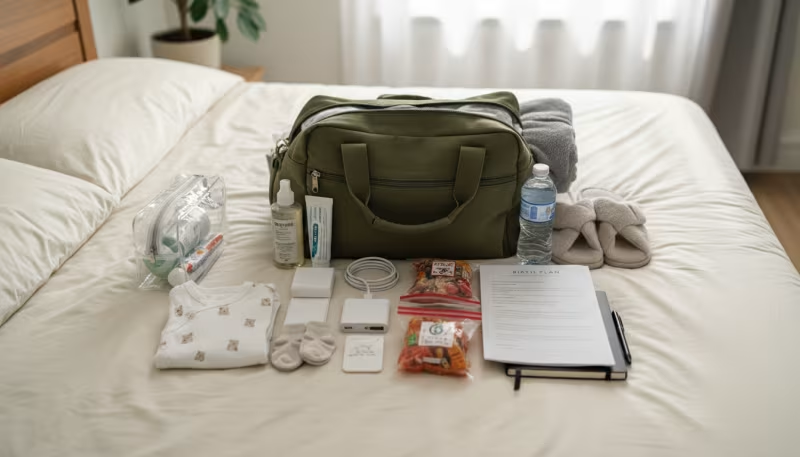
Keep a compact bag near the door with diapers, wipes, a spare outfit, a burp cloth, feeding supplies if needed, and a clean shirt for the adult.
Apartment errands can take longer with elevators, stairs, parking, or shared laundry. A ready bag prevents every outing from becoming a search.
Restock it when you come home, not right before leaving again.
Frequently Asked Questions
Do newborns need their own room?
No. Many newborns sleep in the parents' room in a separate safe sleep space.
What should be in the crib?
A firm flat mattress and fitted sheet. Keep pillows, blankets, bumpers, and toys out.
How do I prepare a small kitchen?
Create one clean bottle or pump-parts area and avoid spreading supplies everywhere.
What should visitors know?
Set rules for illness, smoking, handwashing, visit length, and practical help.
What should I buy first?
Safe sleep space, diapers, feeding basics, clothes, thermometer, and recovery supplies are better than bulky extras.
This article is for general information only and isn't a substitute for medical advice. Talk to a clinician who knows your full history before making changes.

Linda Fehrman
Edits general wellness and relationship explainers. Health material is educational, avoids diagnosis and links to health-authority guidance.


Leave a reply
Replying to