
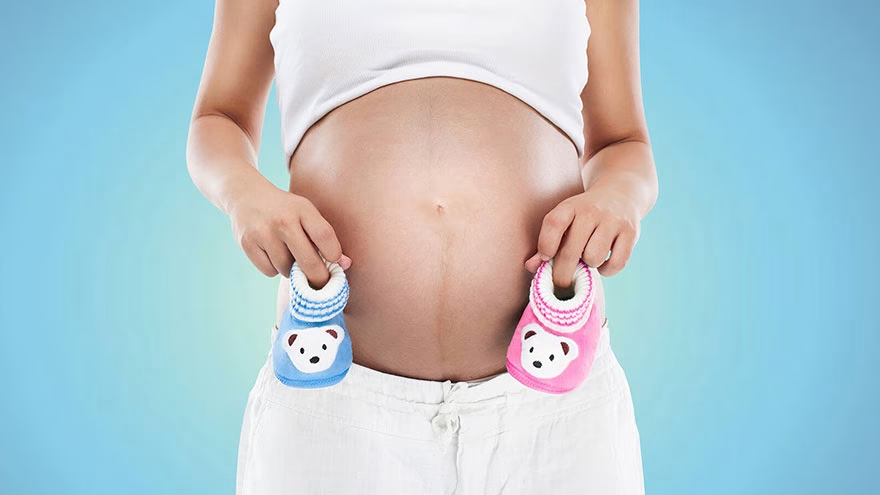
Sharing the news that you are expecting a boy or a girl can feel strangely high pressure. Family members may be excited, opinionated, emotional, far away, or all of those at once. The best reveal is not always the biggest one. It is the one that matches your pregnancy, your privacy, and the people who will receive the news. Some families love a room full of confetti. Others do better with a phone call, a quiet dinner, or a small mailed card that lets everyone react in their own kitchen.
A quick wording note helps keep expectations clear. Most medical results and ultrasounds report fetal sex, while families often call the celebration a gender reveal. This article uses the common wording in the title, but the practical question is simpler: how do you tell loved ones what you have learned, without letting the reveal become more important than the pregnancy itself?
Start with how the information was confirmed
Before planning the reveal, be clear on what you actually know. Some parents learn fetal sex during a mid-pregnancy anatomy scan. Others learn it through genetic screening or diagnostic testing ordered for medical reasons. Some decide not to find out at all. If your result came from a medical appointment, keep the medical part separate from the party part.
MedlinePlus explains that pregnancy ultrasound is used to view how the baby is developing and may sometimes show fetal sex in the second or third trimester. The important word is sometimes. Position, gestational age, image quality, and the type of test can all affect confidence. If the result matters for your reveal plan, ask your clinician how certain the information is and whether any follow-up is expected.
Do not schedule an extra scan only because a party date is coming up. The U.S. Food and Drug Administration states that ultrasound is generally safe when used prudently by trained health care providers, but it also discourages nonmedical keepsake imaging that adds unnecessary exposure. If you already have a medically indicated scan and receive photos from that visit, sharing them is different from booking a scan only for a reveal.
Timing also protects feelings. Many parents wait until after the anatomy scan or after their clinician has reviewed results. Others share earlier with a small circle and keep the wider reveal for later. If you are still sorting through pregnancy symptoms, anxiety, or early uncertainty, it may help to revisit basic early-pregnancy context such as signs of pregnancy in the first week before deciding how much to tell everyone.
Choose a reveal that fits your family, not the internet

Social media makes gender reveals look like events that need smoke, stadiums, or a camera crew. Most families do not need that. Ask three questions first: who needs to know in person, who would rather receive a private message, and who might turn the moment into a debate. A reveal should reduce stress, not create a new one.
If your family is warm but loud, control the setting. A short dessert reveal at the end of dinner gives everyone a moment without stretching the suspense for hours. If relatives have a habit of making comments about names, bodies, or parenting choices, use a format with boundaries: a card, a video message, or a small photo instead of a live group scene where you feel trapped.
Couples should agree on the reveal style before involving anyone else. One partner may want surprise; the other may want privacy. One may want grandparents first; the other may worry about unequal treatment. Talk through the order and wording. Pregnancy already changes intimacy, routines, and emotions, so a reveal plan is a small chance to practice the same teamwork described in staying intimate during pregnancy.
If family members live far apart, do not rank people by who gets the news first unless that matters to you. A same-day plan works well: call immediate relatives in the morning, send mailed cards that arrive the same week, then post publicly only after close family has heard directly. That keeps the announcement personal without requiring everyone to be in the same room.
Quiet ways to tell close relatives
A private reveal often lands better with grandparents, siblings, or relatives who have waited through fertility treatment, pregnancy loss, or family strain. A tiny pair of socks in a gift bag, a handwritten note, or a framed ultrasound copy can feel more human than a big countdown. The point is not to hide joy; it is to give people enough space to feel it.
Food can work if it is simple. Bake cupcakes with colored filling, serve a cake with a colored center, or bring two small dessert boxes labeled for the family to open together. Keep the color cue obvious but not messy. If you use frosting, avoid dye-heavy desserts that stain everyone's hands and turn the rest of the visit into cleanup.
Small keepsakes are useful when relatives live nearby but cannot attend a party. A card that says the baby's first initial if you have one, a tiny color-coded blanket, or a photo of baby shoes can be saved. If you enjoy hands-on pregnancy mementos, a later project like making a belly bowl cast can become a separate family memory instead of crowding the reveal.
For emotionally tender families, consider telling one person at a time. This can be especially kind when someone is grieving, struggling with infertility, or dealing with depression. Their joy for you can be real and complicated at the same time. If pregnancy has brought emotional lows for you, too, resources on depression during pregnancy may be more important than any announcement idea.
Group reveal ideas that still feel personal

If you want a group reveal, build it around one clean moment. A cake cut, a sealed envelope read aloud, a box of balloons opened indoors, or a family photo where everyone turns over a card at once can all work. The more moving parts you add, the more the reveal becomes a production that can fail in front of people.
A dinner reveal is reliable because everyone already understands the setting. Use neutral table decor, then bring out the reveal dessert after the meal. If you have children, let them carry the envelope, open the box, or wear a shirt under a sweater. Give them one job only. A toddler asked to keep a secret and perform on cue may do neither.
A photo reveal can be gentler. Hand each family member a card and ask them to open it while someone takes photos. You get real reactions without smoke, noise, or a public crowd. For relatives who dislike surprises, tell them ahead of time that you are sharing baby news and that they can step away if they prefer.
Skip anything that creates a fire risk, projectile risk, environmental mess, or neighborhood disturbance. Powder cannons, fireworks, and outdoor balloon releases can turn a happy moment into cleanup or danger. March of Dimes emphasizes that ultrasound is part of prenatal care, not entertainment; the same spirit applies here. Celebrate, but keep the celebration smaller than the care.
How to include faraway family

Distance does not require a second-rate reveal. Mail a small envelope with a card inside and ask relatives to call or video chat when they open it. If time zones make a live call awkward, record a short video that shows the reveal object, then send it to everyone in the same hour. Keep the video short enough that people actually watch it.
For grandparents, a photo book page or printed ultrasound copy can be more meaningful than a disappearing story post. Write the date and the baby's expected season if you know it. If you do not want the photo shared, say that clearly: "We are sending this just for you for now. Please do not post it yet." People are less likely to cross a line when the line is plainly stated.
Faraway siblings or cousins may enjoy a tiny package: a colored cookie, a pacifier in a small box, or a note from the baby. If mailing food, choose something shelf-stable and avoid anything that will melt. If the family has several children, send one reveal item per household rather than separate surprises that could arrive on different days.
Video calls need structure. Start by saying you have baby news, give everyone a minute to join, then reveal. Do not spend twenty minutes waiting for one person while everyone else guesses. If someone misses the call, send them a personal message afterward so they still hear from you directly.
What should you avoid before sharing the news?
Avoid promising certainty that your clinician did not give. Avoid using the reveal to pressure relatives into buying gendered clothes, choosing names, or taking sides. Avoid jokes that insult one sex or suggest a parent is disappointed. Children in the family hear those comments, and so do pregnant people.
Also avoid letting others take over the announcement. A grandparent may want to post, a sibling may want to plan the reveal, or a friend may think a bigger party is more fun. You can accept help without handing over control. Say what you want shared, when, and with whom. If you need emotional backup during a larger family moment, the same steady presence discussed in early labor support applies long before labor: calm people make hard moments easier.
Do not use old wives' tales as if they are medical tests. Carrying high, craving sweets, morning sickness patterns, heart rate guesses, and calendar tricks are not reliable ways to know fetal sex. They may be harmless games if everyone treats them as games, but they should not replace results from a qualified care team.
This pregnancy content is general information, not medical advice. Ask your obstetrician, midwife, genetic counselor, or qualified health care professional about ultrasound timing, test results, and any concerns in your pregnancy.
The best reveal leaves you feeling more connected, not more exposed. Whether you choose a cake, a call, a card, or a quiet dinner, the news belongs to the parents first. Let the format serve that fact.
Frequently Asked Questions
When do most parents find out the baby's sex?
Many learn it around the mid-pregnancy anatomy scan, often near 18 to 20 weeks, though timing varies. Some genetic tests may provide the information earlier when ordered for medical reasons.
Is a keepsake ultrasound a good idea for a reveal?
Medical organizations and the FDA discourage ultrasound use only for nonmedical keepsake images. Use information from medically indicated care and talk with your provider before adding any scan.
How can I tell family without having a party?
Send a card, make a short video, call close relatives one by one, or bring a small dessert to dinner. Private reveals often feel warmer than large events.
What if I do not want relatives to post the news?
Say so before the reveal: "Please keep this off social media until we share it ourselves." Clear wording prevents many accidental posts.
Can I use the word gender reveal?
Yes, many families do. Just understand that medical tests usually report fetal sex, while a child's gender identity is personal and develops over time.

Cashie Evans
Covers parenting and practical household topics with clear steps, safety notes and links to current guidance.



Leave a reply
Replying to