
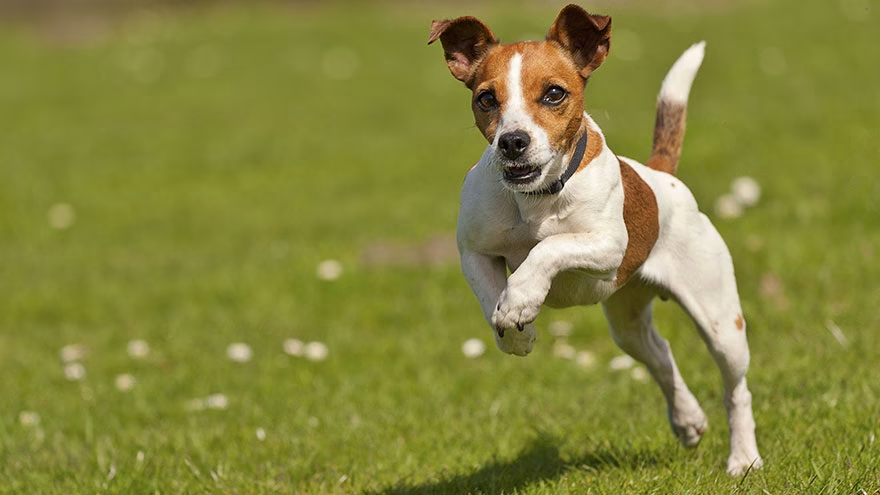
Care starts with respecting the terrier
A Jack Russell Terrier is not a low-energy lap ornament. The breed was developed for work, movement, and problem solving. Many behavior issues begin when owners choose the size but ignore the drive.
The Jack Russell Terrier Club of America describes itself as preserving the working heritage of the breed on its national breed club site. That heritage should shape daily care.
Know the naming confusion
In the United States, people use Jack Russell Terrier, Russell Terrier, and Parson Russell Terrier in ways that can confuse buyers. Registry, leg length, working style, and show recognition may differ depending on the organization.
The AKC Russell Terrier page gives one recognized breed context, while many working-dog people still use Jack Russell language. Ask breeders or rescues exactly what they mean.
Exercise needs structure
A daily walk around the block may not be enough for many Jack Russells. They often need walks, training games, sniffing, safe fetch, puzzle feeding, and controlled digging or scent work. The mind needs a job as much as the legs do.
That does not mean endless high-impact exercise. Young dogs and older dogs still need rest, joint care, and sensible surfaces.
Train before the dog invents work
Teach come, wait, leave it, drop it, leash manners, mat settle, and polite greetings early. Jack Russells are quick learners, but they also learn loopholes quickly.
Consistency is kinder than chaos. Clear rules reduce the need for constant correction later.
Manage prey drive honestly
Many Jack Russells have strong interest in squirrels, rabbits, cats, birds, and fast movement. Do not assume love will erase instinct. Use leashes, secure fencing, supervised introductions, and realistic expectations around small animals.
If the household includes other pets, work slowly and safely. Some terriers can live with cats or small dogs; others cannot be trusted unsupervised.
Secure the yard and doors
Fences should be checked for gaps, climb points, weak gates, and digging areas. A bored terrier can treat a fence like a puzzle. Door manners also matter because a small fast dog can slip out quickly.
Compare this with larger or drivey breeds discussed in articles such as Rottweiler questions or German Shorthaired Pointer questions: the body changes, but management still matters.
Give digging a legal place
Digging is normal for many terriers. Instead of only punishing holes, create a legal digging box or yard zone. Hide toys or treats there and praise the dog for using that spot.
A dog with no permitted outlet may choose the flower bed, sofa, or fence line. Better to channel the behavior than pretend it does not exist.
Groom by coat type
Jack Russells may have smooth, rough, or broken coats. Smooth coats need regular brushing to remove loose hair. Rough or broken coats may need different coat care, including hand-stripping in some cases.
Grooming expectations differ from long-coated breeds such as those covered in longhair dachshund grooming. Ask a groomer or breeder what your dog's coat needs.
Socialize without letting rudeness grow
Early socialization should include people, dogs, sounds, handling, surfaces, and calm public places. It should not mean letting the terrier bark, chase, or bully every dog it meets.
Reward calm observation and polite disengagement. A confident terrier should still have manners.
Plan health and aging care
Routine veterinary care, dental checks, parasite prevention, weight control, and injury monitoring are part of terrier ownership. Active small dogs can hide discomfort until a limp, behavior change, or reluctance to jump appears.
For breed comparison, small-dog health topics such as miniature schnauzer questions or Staffordshire Bull Terrier health problems show why every breed needs its own care plan.
Teach a real recall with management
A Jack Russell can learn a strong recall, but prey drive can still override training in unsafe areas. Practice with rewards, long lines, and controlled distractions before trusting freedom.
Recall training and leashes work together. One does not replace the other in risky places.
Rotate enrichment instead of buying piles
Terriers do not need endless toys on the floor. Rotate puzzle feeders, scent games, chew items, training drills, and tug sessions. Novelty works better when it is organized.
A bored terrier finds its own project. Give the dog legal projects first.
Use crates and gates kindly
Crates, gates, and pens can protect the dog and the house when used with training, comfort, and reasonable duration. They should not become punishment boxes or substitutes for exercise.
Teach confinement gradually with treats, naps, and calm departures. A terrier that can settle safely is easier to live with.
Watch for overconfidence around larger dogs
Some Jack Russells act bigger than they are. They may challenge dogs that can injure them quickly. Supervise greetings and interrupt stiff posture, staring, or rude rushing early.
Bravery still needs judgment. Small dogs deserve the same careful social management as large dogs.
Train settle after exercise
Many owners exercise a terrier and then wonder why the dog stays wound up. Teach a post-walk routine: water, a chew, a mat, and quiet time. The dog needs help learning how to come down.
Recovery is a trained skill. It turns activity into a livable home rhythm.
Keep games from becoming arguments
Fetch, tug, and chase should have rules. Teach drop, wait, and all done. If the dog grabs hands, barks in frustration, or refuses to release, lower the intensity and rebuild the game.
Terrier enthusiasm needs boundaries. Boundaries make play last longer.
Use scent work on bad-weather days
Hide treats, use cardboard boxes, lay short scent trails, or feed meals through puzzle toys when weather blocks long walks. Nose work can tire a smart dog without pounding joints or increasing arousal.
This is especially useful for small homes. A few focused searches can change the whole evening.
Choose dog friends carefully
Jack Russells often do better with known, well-matched dogs than random crowded play groups. Look for balanced play, breaks, loose bodies, and easy interruption. Leave when play gets sharp.
Social time should not be a free-for-all. Management keeps confidence from becoming conflict.
Keep training portable
Practice cues in the kitchen, yard, sidewalk, park edge, and car area. Jack Russells learn context quickly, so a cue that works indoors may need practice around real distractions.
Portable training makes daily life easier, not just class performance.
Use vet checks for sudden behavior changes
If a terrier suddenly becomes snappy, avoids jumping, resists handling, or loses interest in play, consider pain or illness. Active dogs may hide discomfort until behavior changes.
Protect the dog from boredom after maturity
Adult Jack Russells still need work. Do not stop enrichment just because puppy chaos has faded. A mature terrier can become destructive if life becomes too empty.
Use calm handling for feet and mouth
Practice gentle paw, ear, and mouth handling in tiny sessions. Terriers that accept handling are easier to groom, examine, and treat when something hurts.
Plan for senior terrier brains
Older Jack Russells may still want jobs even when speed fades. Use easier scent games, short walks, and soft training to keep the mind engaged.
Keep work legal and safe
Terrier instincts do not mean the dog should be allowed to chase wildlife, harass livestock, or roam. Give legal outlets through training games, scent work, and supervised play instead.
Use meals as training chances
Instead of serving every meal in a bowl, use part of the food for recall, settle, leave it, and handling practice. A terrier learns faster when daily life becomes training.
Keep exits boring
Doorways can excite terriers. Practice calm waits before opening doors so leaving the house does not become a sprint or barking event.
Frequently Asked Questions
Are Jack Russell Terriers easy to care for?
They are manageable for active, consistent homes, but they are not easy in the sense of low-effort.
They need training, exercise, secure management, and mental work.
How much exercise does a Jack Russell need?
Many need daily walks plus training, play, and problem-solving outlets. The exact amount depends on age, health, and temperament.
Mental work can tire them in a better way than endless frantic running.
Can Jack Russells live with cats?
Some can, especially with careful introductions and management, but prey drive can be strong.
Never assume a terrier is safe with small animals without supervision and a realistic plan.
Do Jack Russells shed?
Yes. Coat type affects how shedding looks and what grooming is needed.
Regular brushing helps, and rough or broken coats may need special care.

Linda Fehrman
Edits general wellness and relationship explainers. Health material is educational, avoids diagnosis and links to health-authority guidance.


Leave a reply
Replying to