
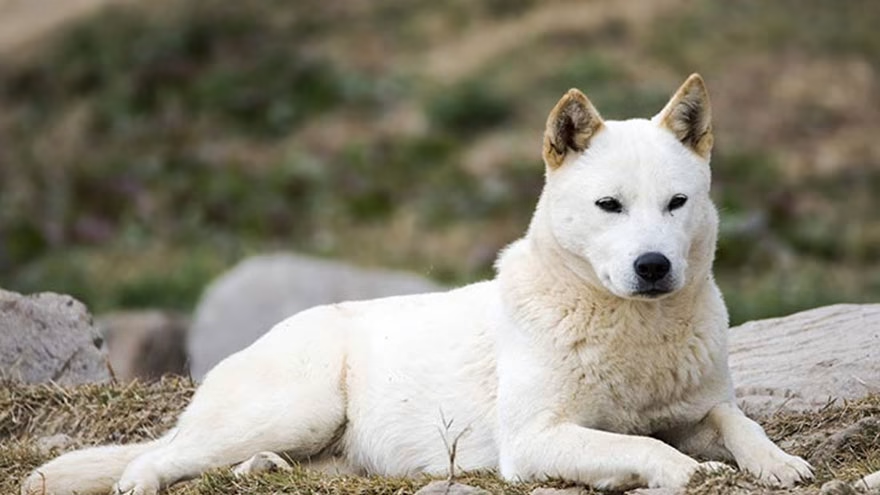
A Jindo can look easy at first: clean coat, medium size, sharp expression, and a quiet way of watching the room. The work starts after that first impression. To care for a Jindo well, you have to plan for an independent hunting breed that bonds hard, notices weak routines, and often treats recall as a negotiation unless it has been built carefully. The payoff is a steady, loyal companion, but the daily system matters more than charm.
What does daily Jindo care actually require?
Daily care starts with structure: two purposeful outings, a predictable feeding routine, short training sessions, and enough quiet time that the dog can settle without being micromanaged. The American Kennel Club's Korean Jindo profile describes the breed as loyal, watchful, intelligent, and developed on an island off South Korea, which helps explain why many Jindos read their surroundings before they relax.
A good routine does not mean hours of frantic exercise. It means clear patterns. Morning can be a leash walk with sniffing and one recall drill. Evening can be a longer walk, food puzzle, or quiet training game. A bored Jindo may not destroy the sofa every time; some simply start scanning fences, gates, small animals, and household habits.
The breed suits owners who like consistency. If the rules change by the hour, a Jindo usually notices. If the rules are calm and repeatable, the dog learns what earns freedom, food, play, and access to the yard.
How much exercise does a Jindo need?
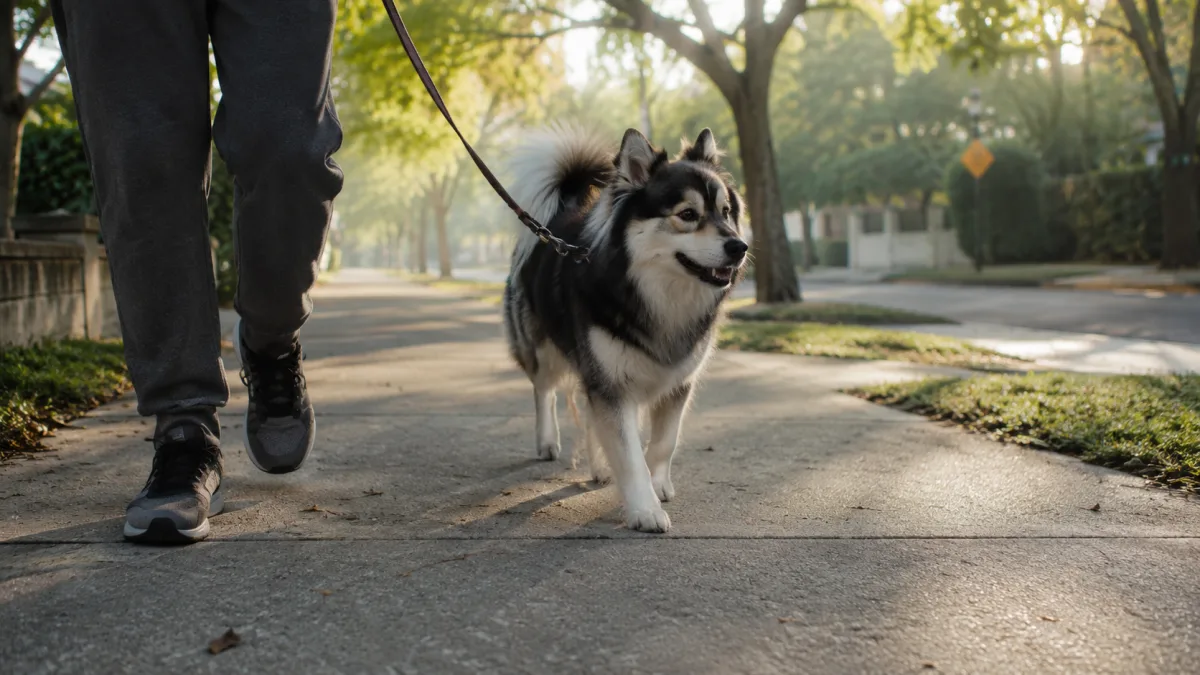
Most healthy adult Jindos need daily movement plus mental work, not just yard time. A fenced yard helps with bathroom breaks and supervised play, but it is not a substitute for walking, training, and controlled exposure to the outside world. The difference is engagement: a walk asks the dog to process smells, traffic, people, dogs, and handler cues.
For many homes, two walks plus one short training or scent session is a workable baseline. Puppies need shorter, softer sessions because joints and attention spans are still developing. Older dogs may need less distance but still benefit from sniffing routes and gentle mobility work.
Do not rely on off-leash exercise unless recall is proven in fenced, low-risk spaces first. Jindos often have prey drive and strong environmental focus. A squirrel, loose cat, or open gate can beat a half-trained cue. People comparing active breeds can also read Livecub's German Shorthaired Pointer questions, but the Jindo's challenge is less raw speed and more independent decision-making.
Rotate the route when the dog is confident, but keep the rules familiar. A new street, a quiet trail, or a short hill can tire the brain more than another loop around the same block. If the dog becomes frantic, stiff, or unable to take food, the outing is too hard for that day. The best exercise plan builds steady recovery, not constant arousal.
How should you train a Jindo without turning every cue into a contest?
Training works best when the Jindo sees a reason to cooperate. That does not mean bribing forever. It means building a clean pattern: cue, behavior, reward, release. The dog learns that listening creates access to what it already wants, such as movement, food, a door opening, a toy, or permission to sniff.
Recall
Recall should begin indoors, move to a fenced yard, then to a long line in quiet places. Reward heavily when the dog turns away from a smell or distraction. Never call a Jindo only to end fun, clip nails, or leave the park. If the cue predicts loss every time, the dog learns to delay.
Leash manners
Loose-leash walking is not about overpowering the dog. Stop when the leash tightens, reward check-ins, and change direction before the dog locks onto a target. Front-clip walking gear may help management, but it does not replace training. For grooming-sensitive dogs, the patience used in longhair Dachshund grooming applies here too: small steps beat wrestling.
Handling
Teach collar touches, paw handling, ear checks, and mouth checks as paid exercises. Today's Veterinary Practice notes that puppies respond best to positive reinforcement and consistent cues, and that handling practice makes grooming and veterinary care easier. That advice fits Jindos because restraint battles can quickly become a habit.
What grooming does a Jindo's coat need?
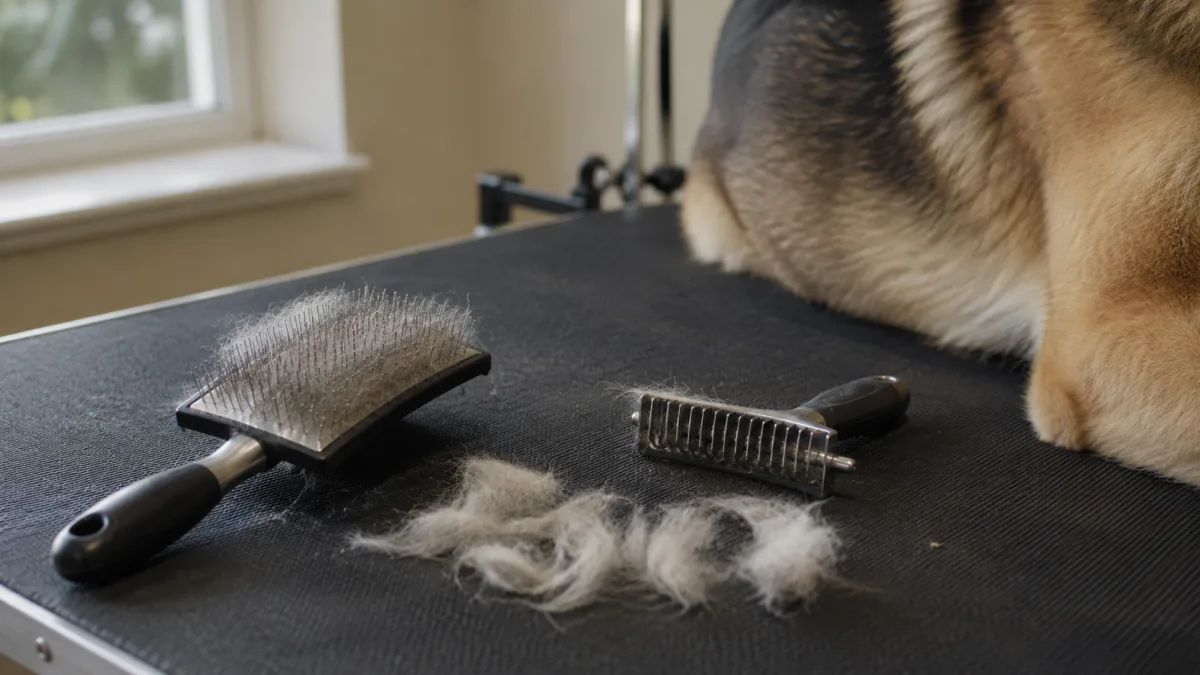
The Jindo coat is practical but not maintenance-free. It is a double coat, so the goal is to remove loose undercoat without damaging the outer coat. Weekly brushing is usually enough during quiet shedding periods. During seasonal coat drop, brushing may need to become a near-daily routine for a short stretch.
Use a slicker brush, undercoat rake, or comb with a light hand. The point is to lift loose coat, not scrape skin. Bathing should be occasional unless the dog is dirty or has a veterinary skin plan. Too much bathing, harsh shampoo, or aggressive deshedding can leave the skin dry and the coat dull.
Nails, teeth, and ears matter as much as brushing. Trim nails before they change the dog's stance on hard floors. Brush teeth with dog-safe toothpaste. Check ears for odor, redness, or debris, especially after wet weather. A Jindo that dislikes handling will improve faster if each body part is paired with food and stopped before the dog panics.
How do you feed a Jindo and keep weight steady?
Feed for body condition, not for a number copied from another owner. A healthy Jindo should have a visible waist from above and ribs that are easy to feel under light cover. Food labels give a starting point; the dog's waist, stool quality, coat, activity level, and veterinary checks tell you whether the amount fits.
Scheduled meals also make appetite changes easier to spot. A dog that normally eats at 7 a.m. and leaves breakfast untouched gives you information. Free feeding hides that signal, attracts pests in some homes, and makes training rewards less valuable.
Scheduled meals make weight easier to manage and turn food into a training resource. Some Jindos self-regulate, but others gain weight if treats, table scraps, and chews are not counted. Use part of the daily ration for training so rewards do not quietly double the calorie intake.
Avoid sudden diet changes. If you switch foods, do it gradually unless a veterinarian says otherwise. Persistent vomiting, diarrhea, appetite loss, itching, or weight change deserves a veterinary call rather than another online diet experiment.
What health and safety routines should a Jindo owner keep?
Build a veterinary baseline early: vaccines, parasite prevention, dental care, weight checks, and a discussion about spay or neuter timing. The Kennel Club's Korean Jindo standard stresses soundness and avoiding exaggerations that could harm welfare. For owners, that translates into watching movement, breathing, skin, teeth, and behavior rather than treating appearance as the whole story.
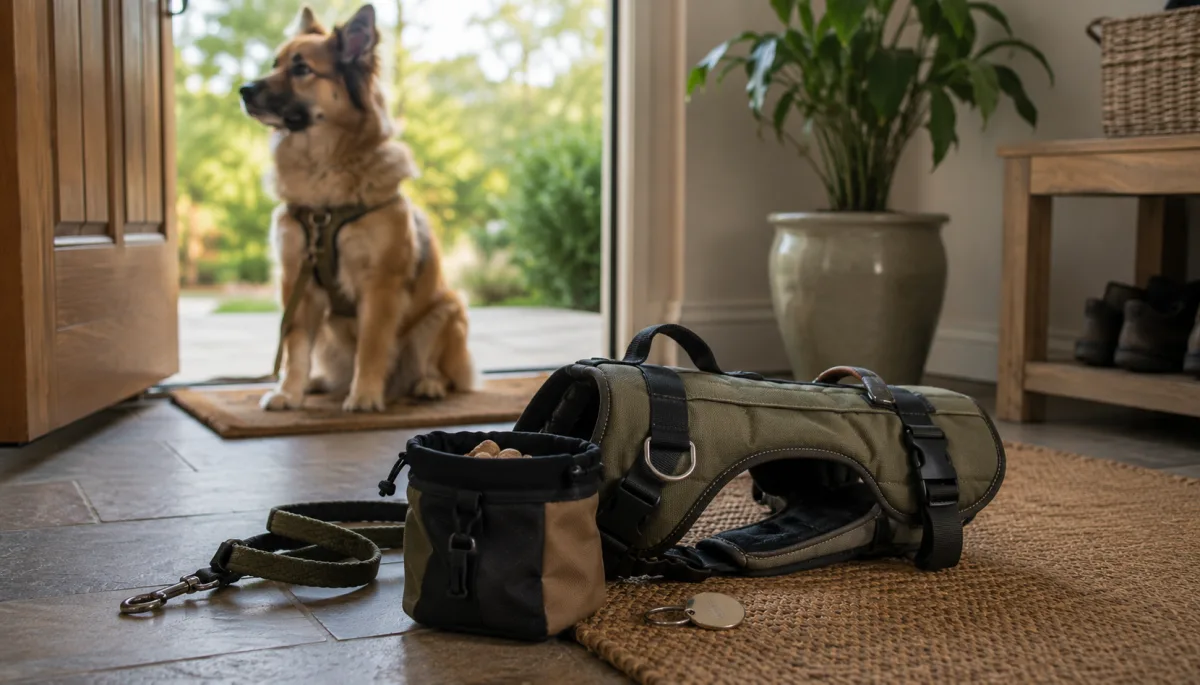
Secure containment is part of care, not an afterthought. Use gates that latch, a collar with ID, a microchip registered to current details, and leash gear the dog cannot back out of. A frightened or hunting-focused Jindo can move fast. If your dog is new, use a martingale-style collar or well-fitted walking vest until you know how it reacts to noise, traffic, and wildlife.
Do not wait for a crisis to find local support. Identify a veterinarian, emergency clinic, trainer who uses reward-based methods, and a groomer who will not rush a sensitive dog. Owners who like independent breeds may also compare expectations with Miniature Schnauzer questions, since both reward consistency, but the Jindo usually brings stronger primitive-breed judgment.
Frequently Asked Questions
Are Jindos good apartment dogs?
Some Jindos can live in apartments if they get daily walks, training, and quiet management. The hard part is not square footage; it is preventing boredom, barking at hallway noise, and unsafe off-leash moments.
Can a Jindo live with cats?
Some can, especially when raised carefully with a confident cat, but prey drive makes management necessary. Use barriers, supervised introductions, and escape routes for the cat. Never trust early silence as proof of safety.
How often should you brush a Jindo?
Weekly brushing works for many Jindos outside shedding season. During heavy coat drop, brushing several times a week or daily may be needed until the undercoat loosens and clears.
Is a Jindo a good first dog?
A Jindo can be too independent for many first-time owners. A prepared beginner with a trainer, secure fencing, and patience can succeed, but this is not a breed for casual recall or loose household rules.
The simplest care plan is also the one most owners skip: secure the dog, reward cooperation, brush before the coat gets ahead of you, and make every day predictable enough that the Jindo does not need to invent its own job.

Timothy Davidson
Edits step-by-step general-interest guides for clarity, realistic limits and source verification.

Leave a reply
Replying to