

How to Find a Notary Public in Your Area is easier if you know what a notary can and cannot do before you start calling around.
A notary public verifies identity, watches a signature or administers an oath when the document requires it, and completes the notarial certificate. A notary is not automatically your legal adviser and usually cannot explain what the document means.
Start With The Document
Read the signature page first. Does it ask for an acknowledgement, jurat, oath, witness, seal, electronic notarization, or remote online notarization? Those words affect who can help and what you need to bring.
If the document involves a will, trust, power of attorney, deed, adoption, divorce, immigration, or court filing, do not rely on the notary to choose the certificate or fix the legal language.
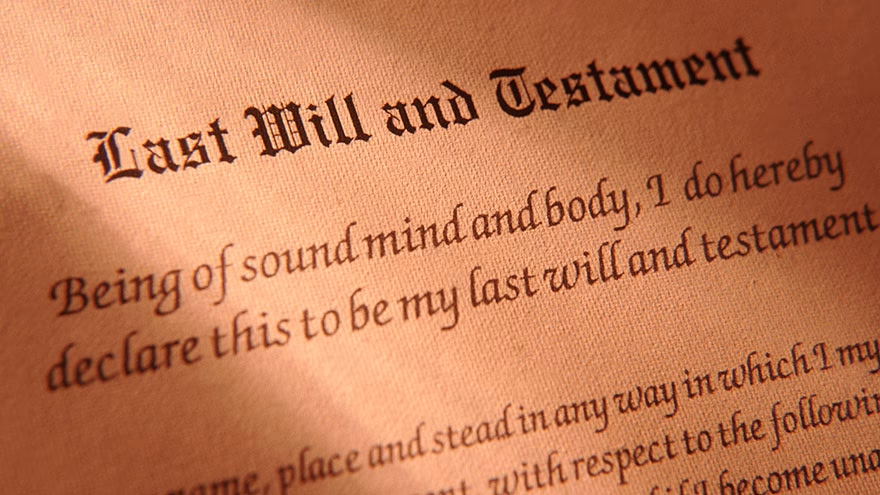
For estate-related documents, questions to ask an estate lawyer and power of attorney form basics can help you prepare before the notarization appointment.
Check Common Local Places

Banks and credit unions are often the first stop. Many offer notary services to customers, and some help noncustomers for a fee. Call ahead because branch staffing varies.
Shipping stores, mailbox centers, law offices, tax offices, real estate offices, hospitals, senior centers, universities, and local government offices may also have commissioned notaries.
Courthouses and clerk offices may be useful for court-related documents, but they may not notarize every outside document. Ask before you travel.
Call Before You Travel
A two-minute phone call can save a wasted trip. Ask whether a notary is on duty, what hours they are available, whether appointments are required, and what fee applies.
Describe the document in plain terms without sharing private details. For example, say it is a deed, school form, consent form, affidavit, power of attorney, or vehicle title. Different documents may need different handling.
Ask whether every signer must appear at the same time. If two people need notarized signatures, one signer usually cannot bring the other person's ID and sign later.
If the document needs witnesses, ask whether the location provides them. Some offices will not supply witnesses because witnesses must be neutral and may need to know what they are signing.
Use State And Professional Directories
The National Notary Association has a public locator for finding walk-in, mobile, and online notary options: NNA find a notary.
Some states also provide official notary search tools. Minnesota's notary search, for example, says it can verify a notary's commission and authority to perform notarial acts: Minnesota Find A Notary.
Official state search pages are especially useful when you want to verify a commission, not only find the nearest person with a stamp.
Know What To Bring

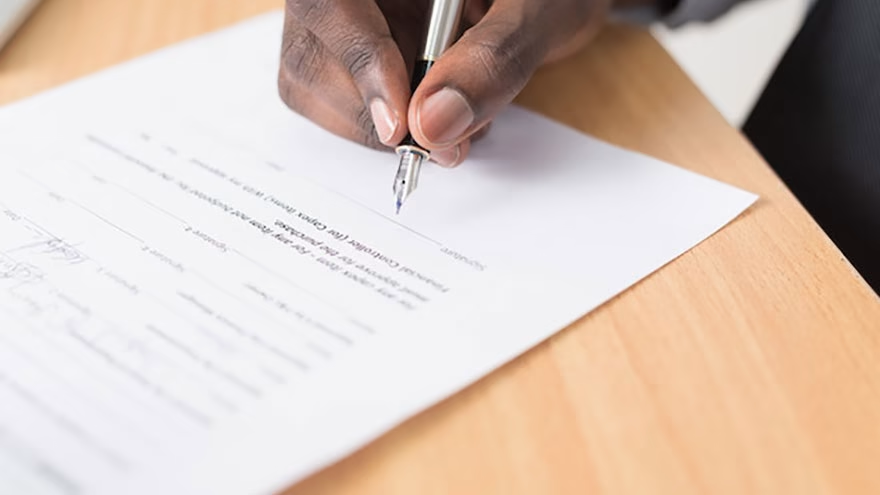
Bring the unsigned document, unless the instructions say otherwise. Many notarizations require the notary to watch you sign. If you signed too early, you may need a fresh copy.
Bring current identification that meets your state's rules. NNA's preparation guide lists common items such as the completed document, acceptable photo ID, and any other signers who need to appear: NNA notarization preparation.
Bring payment, witnesses if the document requires them, and any instructions from the agency or attorney requesting the notarized document.
Mobile And Remote Notary Options
A mobile notary travels to you. This can help for hospital rooms, elder care, real estate closings, or busy work schedules. Confirm travel fees, ID requirements, and whether witnesses are included.
Remote online notarization is allowed in some states and for some documents, but not every receiving agency accepts it. Ask the document recipient before using an online service.
If the document will be used in another state or country, confirm acceptance before paying. Apostilles, consular rules, and recording offices can have narrow requirements.
Before You Sign
Do not sign blank pages. Do not let someone else pressure a person to sign. A notary may refuse if identity, willingness, awareness, or document completeness is questionable.
If the signer is elderly, ill, or under pressure, slow down. A notarized signature does not cure fraud, undue influence, lack of capacity, or a bad document.
Documents tied to death, probate, or estate administration often require extra care. probate court basics and revoking a POA are relevant when authority or estate control is unclear.
Fees And Timing
Fees vary by state and service type. A bank appointment may be free for customers; a mobile notary may charge a travel fee; online notarization may have platform fees.
Ask for the total before the appointment: notarization fee, travel fee, printing fee, extra signer fee, witness fee, and after-hours fee if any.
If the document must be recorded, filed, mailed, or delivered by a deadline, leave time to correct notary certificate errors. A small notarial mistake can delay a real estate or court filing.
What The Notary Will Record
Many states require a notary journal. The journal may include date, type of act, document description, signer name, identification method, fee, and signature. Some states require a thumbprint for certain documents.
A careful journal protects both sides. If someone later questions the signature, the notary record may show who appeared, what ID was used, and what notarial act was performed.
The notary certificate should be filled out completely. Look for venue, date, signer name, notary signature, printed name, commission expiration, and seal if required.
Before you leave, check that every required signature line, initial line, notary block, and witness line has been handled. It is easier to fix a missed blank at the desk than after mailing the document.
Red Flags

Be careful if a notary offers legal advice, tells you which document to use, asks you to sign before appearing, ignores ID rules, notarizes for an absent signer, or rushes a vulnerable person.
Also be cautious with notarization for foreign-language documents if the notary cannot communicate with the signer and state law requires direct communication.
A good appointment feels boring: identity checked, document reviewed for notarial wording, signature witnessed if needed, certificate completed, seal applied, journal entry made where required.
Special Cases
Power of attorney documents may need witnesses, special wording, or recording if used for real estate. Trust and estate documents can have state-specific signing rules.
Death-related paperwork may require certified copies before a notarized document matters. searching for a death certificate can help with that separate step.
If funeral or benefit paperwork is part of the reason, SSI and funeral benefits may help you separate benefit questions from notarization questions.
If The Document Gets Rejected
A receiving office may reject a notarized document because the certificate wording is missing, the venue is wrong, the seal is unclear, the notary commission expired, or a required witness did not sign.
Ask the rejecting office for the exact reason in writing if possible. Do not guess. A new notarization may be needed, or the receiving office may only need a corrected certificate from the same notary.
If the document is a deed, court affidavit, estate form, immigration support document, or medical authorization, talk to the agency or attorney before changing pages. Replacing one page can create a new problem.
Keep the rejected copy, envelope, receipt, and any rejection notice. Those details help the notary, lawyer, or agency understand what failed and how to fix it.
If you need the same document notarized again, bring the whole packet back, not only the signature page. The notary may need to see context to complete the certificate correctly and avoid attaching wording to the wrong document.
For deadline-driven filings, ask whether the receiving office accepts a corrected notary certificate or requires a fresh signature. The answer can change how quickly you need to schedule another appointment. Timing matters.
Frequently Asked Questions
Where is the easiest place to find a notary?
Banks, credit unions, shipping stores, law offices, and state or professional notary directories are common starting points.
Can a notary give legal advice?
Usually no. A notary verifies identity and completes notarial acts; legal advice belongs with an attorney.
Should I sign before meeting the notary?
Usually no. Many notarizations require the notary to watch the signature.
Can I use an online notary?
Maybe. State law and the receiving agency's rules decide whether remote notarization works.
What ID do I need?
Bring current government photo ID unless your state or document instructions require something different.
This article is for general information only and isn't legal advice. Laws vary by state and facts; talk to a licensed attorney in your jurisdiction before acting.

Tory Stearns
Edits practical household, travel and lifestyle explainers. Claims that can change are linked to current primary or subject-authority sources.


Leave a reply
Replying to