

How to Get Rid of Negative Beliefs is really about testing beliefs, building new evidence, and changing behavior over time. Beliefs rarely disappear because someone tells themselves to be positive.
This is general mental-health education, not therapy. If negative beliefs are tied to trauma, abuse, self-harm, eating disorder symptoms, or severe depression, seek licensed support.
Name The Belief
Write the belief as a sentence: I always fail, I am unsafe, nobody likes me, I cannot change, or I do not deserve help.
A belief that stays vague is hard to test. A sentence can be examined.
Separate Fact From Story
A fact is what happened. A story is what your mind says it means. Negative beliefs often turn one painful event into a permanent identity.
Ask: What happened? What did I conclude? What else could explain it?
Use CBT Tools
APA describes cognitive behavioral therapy as treatment that helps people learn to identify and change unhelpful thinking and behavior patterns. See APA's CBT overview.
CBT is not pretending everything is good. It is learning to test thoughts more fairly.
Look For Evidence
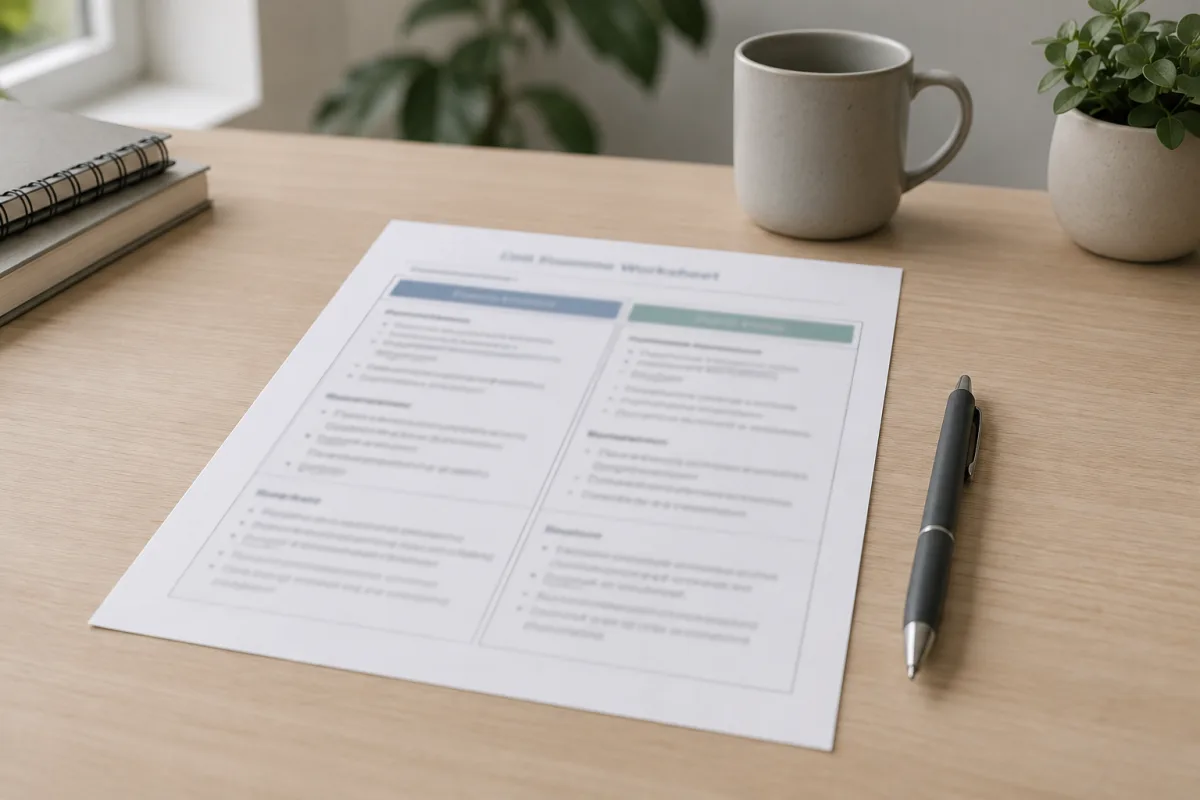
Draw two columns: evidence for the belief and evidence against it. Include boring evidence, not only dramatic memories.
If the against column feels impossible, ask a therapist or trusted person to help. Depression and anxiety can filter memory.
Try A Balanced Thought
A balanced thought is believable, not sugary. Instead of I always fail, try I struggled with that task, and I can plan one different step next time.
The new thought should be something you can practice, not a slogan you secretly reject.
Behavior Experiments

A belief changes faster when behavior creates new evidence. If the belief is I bother everyone, send one reasonable text and notice the actual response.
Keep experiments small and safe. The goal is learning, not proving your worth in one dramatic test.
Track Patterns
Use a log: situation, emotion, negative belief, action, outcome, and alternative thought. Patterns become easier to spot after several entries.
Livecub's food journal guide is about food tracking, but the same structure works for belief tracking.
Mindfulness
Mindfulness can help you see a belief as a mental event, not a command. NCCIH notes mindfulness practices may help anxiety and depression for some people in its mindfulness guidance.
Use short practices if long meditation makes thoughts louder. Naming the thought may be enough: I am having the belief that I am not good enough.
Avoid Thought Suppression
Trying not to think a thought can make it stick harder. Instead, notice it, label it, and move toward a useful action.
A negative belief loses power when it no longer decides every behavior.
Stage Fright And Beliefs
Some negative beliefs show up in public speaking or performance: everyone will laugh, I will freeze, I cannot handle attention.
Livecub's stage fright guide can help with that specific fear pattern.
Communication Beliefs
If a belief blocks speech in certain settings, treatment may need more than self-talk. Livecub's selective mutism article is a related mental-health topic.
Support should be patient and structured, not shaming.
Depression And Safety
Negative beliefs can become dangerous when they say life is not worth living or people would be better off without you. Those thoughts need immediate support.
NIMH lists help resources for mental illness on its find help page. In the United States, call or text 988 for crisis support.
Get Support
A therapist can help when beliefs are old, trauma-based, obsessive, or linked to avoidance. Clinical CBT resources often focus on becoming aware of thinking patterns that create problems in life.
Support matters because some beliefs were learned in relationships and need safe relationships to change.
Repeat The New Evidence
One good day usually does not erase a long-held belief. Repeat small actions, collect evidence, and expect the old belief to argue back sometimes.
Change is often quieter than a breakthrough: fewer spirals, faster recovery, and more choices.
Core Beliefs
Some beliefs are core beliefs, meaning they sit underneath many automatic thoughts. Examples include I am unsafe, I am unlovable, or I cannot cope.
Core beliefs often need repeated work and may be best handled with a therapist.
Compassion
Compassion is not letting yourself off the hook. It is creating enough safety to tell the truth and try again.
A harsh inner voice may feel productive, but it often keeps the old belief alive.
Relapse Plan
Old beliefs may return during stress, illness, grief, or conflict. A relapse plan lists signs, coping steps, people to contact, and professional resources.
Planning for a return of the belief is practical, not failure.
Origin Stories
Ask where the belief may have started, but do not get stuck proving the exact origin. Some beliefs come from repeated small messages, not one event.
Understanding can help, but current practice changes the belief.
Language Shifts
Change always to often, never to not yet, and I am to I am having the thought that I am. Small wording changes create space.
Space is useful because a belief cannot be tested while it feels like identity.
Supportive People
Tell one grounded person what belief you are practicing against. Ask them for realistic feedback, not empty praise.
Helpful support sounds specific: I saw you make that call, not you are amazing in every way.
Avoid Doom Research
Searching online for proof that a negative belief is true can become a compulsion. Set limits on searches that feed fear.
Use that time for an action that creates new evidence instead.
Celebrate Evidence
When you act against a belief, write it down the same day. The mind often forgets evidence that does not fit the old story.
A small evidence list can be useful during low moods, conflict, or setbacks.
Body-Based Beliefs
Some beliefs live in the body as tension, shrinking, stomach drop, or numbness. A body cue can show up before the sentence appears.
Use grounding, breathing, or movement before challenging the thought if the body is highly activated.
Small Promises
Keep one small promise to yourself daily. It might be drinking water, answering one email, walking for five minutes, or going to bed without one extra scroll.
Kept promises create evidence that the old belief does not own every action.
Setback Review
After a setback, ask what happened, what helped even slightly, and what you will try next time. Do not use a setback as proof that nothing changed.
The review should be short and practical, not a trial where you prosecute yourself.
Professional Fit
If therapy has not helped before, the fit or method may have been wrong. CBT, ACT, EMDR, trauma therapy, group therapy, or medication support can serve different needs.
Trying again with clearer goals can be reasonable, especially when beliefs are affecting work, relationships, health, or safety.
Values-Based Action
Choose an action because it fits your values, not because you feel confident. Confidence often arrives after action, not before.
If the belief says do nothing, a values-based action can be very small and still matter.
Rumination Versus Reflection
Reflection ends with a next step. Rumination repeats the same pain without new information. Notice which one you are doing.
If you are ruminating, shift to a grounding activity, a support call, or a written action plan.
Memory Bias
Negative beliefs often use selective memory. They pull up failures quickly and hide neutral or successful moments.
That is why written evidence helps. It gives the future mind something more reliable than mood.
Boundaries With Critics
If certain people reinforce the belief through insults, pressure, or contempt, limit how much power their voice gets in your recovery work.
Boundaries may include shorter visits, fewer details shared, or support after contact.
Practice Scripts
Prepare a script for common belief moments: This is the old belief, I am checking facts, and I will take one useful step. Keep it plain.
A script is not magic. It is a handle you can grab when the thought gets loud.
Frequently Asked Questions
Can negative beliefs go away completely?
Some fade a lot, while others lose power because you respond to them differently.
Is positive thinking enough?
Usually no. Testing beliefs, changing behavior, and getting support are more useful than forced positivity.
What is a balanced thought?
It is a believable alternative that includes facts without turning one event into a permanent identity.
Can CBT help negative beliefs?
Yes, CBT often helps people identify, test, and change unhelpful thoughts and behaviors.
When should I get help?
Seek help if beliefs involve self-harm, trauma, severe depression, compulsions, or major life impairment.
Getting rid of negative beliefs means naming them, testing them, acting differently, gathering new evidence, and getting support when the belief is too heavy alone.

Linda Fehrman
Edits general wellness and relationship explainers. Health material is educational, avoids diagnosis and links to health-authority guidance.




Leave a reply
Replying to